

Dear Classical Wisdom Reader,
It’s a bit of a knee-jerk reaction.
These days, whenever someone mentions social media, I almost instinctively roll my eyes.
So many of the problems the modern world experiences seem to be linked to social media: political polarization, misinformation, and skyrocketing levels of anxiety and loneliness…
Yet, when I really think about it, that’s not the full picture at all.
I can keep in touch with friends spread across the globe instantaneously thanks to social media. Yes, we can waste our time endlessly scrolling, but we also can discover insightful writing, music, and art we wouldn’t be exposed to otherwise.
After all, we’re on social media right now (even if Substack doesn’t quite feel like it).
Without getting too big-headed about it, I do like to think what we do here at Classical Wisdom as something of an antidote to some of uglier excesses across the web.
So, I suppose what I’m saying is: there’s good out there amongst the bad… And maybe what we really need is a guide on how to navigate it all.
And, well… who better than Aristotle?
Yes, I know, he lived and died millennia before an internet modem ever existed. Yet something that hasn’t changed in all that time is human behavior.
We’re still given to the same flaws and worries… and the same solutions still apply.
So read on to discover how the ethical philosophy of Aristotle maps neatly on to modern technologies, and how the real key to a better social media experience is through the contentment found in mastering ourselves.
It really is something worth posting about.
All the best,
Sean Kelly
Managing Editor
Classical Wisdom
Get the best out of Social Media! Become a Free or Paid Subscriber to bring ancient, practical wisdom to your inbox.
Aristotle’s Guide to Social Media?
By Ben Shehadi
Aristotle is arguably the single-most important thinker in all Western culture, who penned insights into everything from philosophy, science, and even literary criticism. It is no mystery, therefore, that Aristotle’s secrets to happiness would be so relevant to our digital age.
Aristotle’s theory of virtue ethics, written in 350 BC, gives us a blueprint for health and wellness today. It remains strikingly relevant in the modern world, where loneliness and depression have grown endemic. This alarming trend has been declared a public health emergency by medical authorities worldwide. Fitness gurus recommend us to the gym, while meditation apps claim to cope with crippling anxiety. Yet In his meticulous description of human psychology, Aristotle offers us a simple, timeless truth: moderation is the secret to happiness.
Aristotle’s fundamental insight is that every personality trait requires a delicate balance between two extremes. To live properly, we must find the correct balance, or “golden mean” between the two. Basic as it may sound, most people rarely follow Aristotle’s advice, even though he gives us many specific examples. Moreover, what Aristotle teaches is remarkably relevant to the contemporary, fraught world of social media and online interactions.
Aristotle and Social Media
While honesty is the virtue of telling the truth, even that can be taken to extremes. Indiscretion means revealing sensitive information at the wrong time, or the wrong place, or to the wrong people. In modern times, we often imagine honesty to be an unconditional virtue and, to our modern ears, Aristotle’s advice may sound counterintuitive or old-fashioned.
Yet we don’t have to look far nowadays to see all too pertinent examples of what he meant. On social media, we observe a total lack of discretion: something that would make Aristotle roll in his grave!

People reveal all kinds of sordid details about their private lives, which is not anyone’s business to know. They may talk openly about their unhappy marriage, or financial and personal difficulties. While breaking silence can be beneficial, self-disclosure should be reserved for the appropriate time, place, and audience. Most people do not care about your personal life, and some may even wish you harm. Self-disclosure should be reserved for intimate relationships, not for the entire universe.
Paranoia is the opposite extreme, which Aristotle also warns against. Again, the online world is rife with examples of this. One should not be dishonest or completely opaque; this makes you untrustworthy. Aristotle recommends that we simply exercise discretion about to whom, when and where we reveal sensitive information about ourselves or other people. The golden mean is to be truthful, saying what is both honest and appropriate for a given situation.
Get the COMPLETE Classical Wisdom experience!
Membership unlocks ALL our resources, including exclusive podcasts, e-books, magazines, and in-depth articles,
Member can now access this week’s in-depth article on Rome’s first ever Empress, Livia Drusilla. Discover the treacherous world of the Roman court… and how one woman secured her place in history.
So don’t miss out! Become a Member today:
How to deal with people
Similarly, Aristotle urges us to be friendly toward the people we encounter. Although it was far before his time, I’m sure this would extend to social media interactions as well; after all friendliness is indeed a virtue. People who are virtuous should be capable of forming solid friendships, based on rational considerations of honor and mutual usefulness. Friendliness, however, should not be taken to extremes: do not praise people indiscriminately. You should not be friendly to people who are vicious or harmful. Nor should you participate in harmful activity, even if your friends urge you to do so. At the same time, do not be quarrelsome either. There is nothing praiseworthy or authentic about somebody who is offensive and ill-mannered.
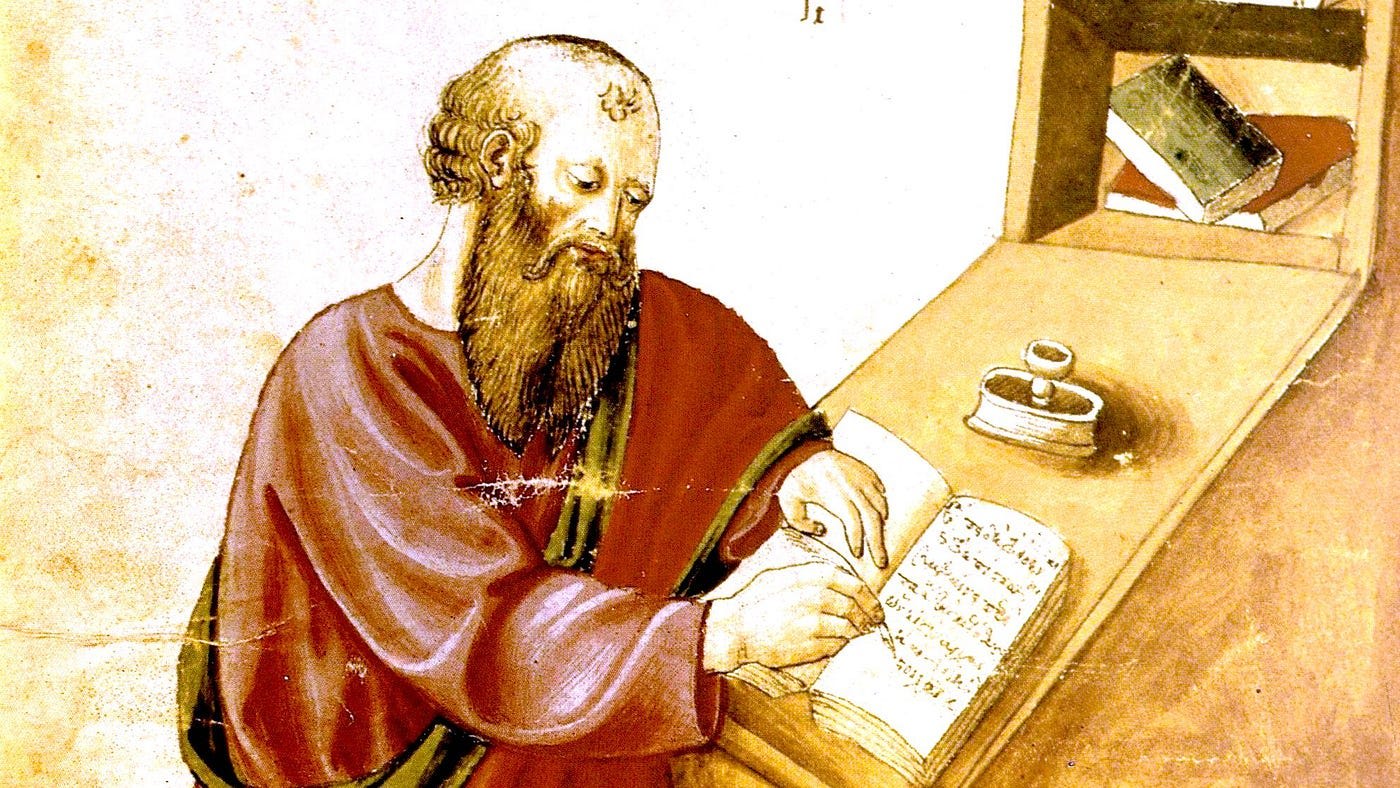
Pride, or magnanimity, is the virtue of deserving praise from others. It lies between the two extremes of humility and vanity. Some people lack pride, and are overly humble. They lack confidence in themselves, and they fail to earn the praise of the people around them. Other people have the other extreme: the vice of vanity. They believe they are God’s gift to Earth, but do not have the skill or competence to match their inflated ego. In a world filled with influencers and online celebrities, the same character flaws can be seen today as in the ancient world. Arrogant people love to be praised and admired, even for dubious or immoral reasons. Too much ego is bad, but so is too little. Aim for great things, Aristotle tells us, as long as you do not overestimate your worth.
Keeping Your Cool
Everybody knows that patience is a virtue, right? Well, for Aristotle, not necessarily. Unlike other Greek philosophers, such as the Stoics and Epicureans, Aristotle did not believe that anger was a vice. In fact, he saw it as a very natural and healthy response against a perceived provocation or injustice. Patience, as he understood it, represented the golden mean between two extremes of anger. We all know people who are far too angry, flipping out over the smallest things. But irritability is not merely “too much” anger; it means being provoked by the wrong things, the wrong people, or at the wrong time and place.
“Displaced” anger occurs when somebody vents their frustration against an undeserving target. Say somebody is angry at their boss; instead of confronting the boss, they might yell at a co-worker instead. The “vice” is not the anger itself, but where and when it gets expressed. Suppressing one’s anger can be very dangerous. Usually, there is a logical reason why you might feel hostility toward somebody. Without a healthy expression, one’s hostility will usually re-appear in some unhealthy form. These days it might be re-appear through online rants or social media aggression towards a complete stranger.
Of course, anger can be immensely destructive. People get so extreme about their beliefs, such as religion or politics, that they even kill and go to war. Entire civilizations have been fractured by this tribal instinct. To temper this, we must cultivate the power of logical thinking, which requires calm analysis rather than a visceral, hate-filled outburst. While anger was actually a virtue for the pagan Aristotle, nevertheless he would have agreed that the best attitude is to be good-tempered and try to keep your cool.
Use common sense
Ultimately, Aristotle realized that life cannot be broken down to a strict set of rules. To be a truly good person, it requires lots of practice. In the heat of a moment, it can be difficult to determine where the golden mean lies. If you practice enough, however, you’ll eventually develop good habits to know the difference. This is the virtue of prudence, or practical wisdom.
For Aristotle, the greatest human activity is philosophy itself. Contemplation, which is the most godlike of the virtues, is the one which connects us to the highest truths of reality. We might not have all of life’s answers. In fact, nobody does. Yet by studying philosophy, such as Aristotle’s ethics, we can learn how to live a fuller, more meaningful existence as human beings.
Más info en https://ift.tt/mD07aQP / Tfno. & WA 607725547 Centro MENADEL (Frasco Martín) Psicología Clínica y Tradicional en Mijas. #Menadel #Psicología #Clínica #Tradicional #MijasPueblo
*No suscribimos necesariamente las opiniones o artículos aquí compartidos. No todo es lo que parece.
No hay comentarios:
Publicar un comentario