
Dear Classical Wisdom Reader,
OK, OK, I know it's a bit geeky...
So, I recently saw an advertisement for a new book titled Ellmann's Joyce.
It's an in-depth look at how James Joyce's biographer, Richard Ellmann, came to write his legacy-defining and famously massive biography of the famed Irish writer.
And I really do mean massive: depending on print size and edition, it's usually somewhere around eight and nine hundred pages.
So now the process of writing that huge tome has been deeply researched, resulting in an entirely new book. Meaning that this new book is essentially a biography of a biography.
It may sound like a strange concept, but of course, anyone familiar with ancient history will know that biographers and historians themselves can be colorful characters... and deserving of having their own history recorded.
So with that in mind, today we're looking at the life of the historian Xenophon, the Ernest Hemingway of the ancient world. At once a great writer and historian, he was also a military leader, as well as a pupil and chronicler of no less than Socrates himself.
His writings inspired Alexander the Great, and he is a key source for our understanding of Spartan culture.
In fact, his life was so accomplished, there’s some debate as to what so whether we should think of Xenophon primarily as a historian, philosopher or military leader...
For me, I like to think of him primarily as a writer. Not only were his life experiences extraordinary, but the way he documented them brings them to vivid life, in a way that still speaks to us today.
So I suppose I’ll leave the last word to Richard Ellmann himself. Talking about how Joyce drew so much of his writing from his own life, I think the words also could easily apply to Xenophon:
“He shapes again the experiences which have shaped him.”
All the best,
Sean Kelly
Managing Editor
Classical Wisdom
Cleopatra: The Early Years Members can now access a special in-depth article on the origins of one of the most iconic women of the ancient world.
Xenophon: Warrior, Philosopher, Historian
By Eldar Balta
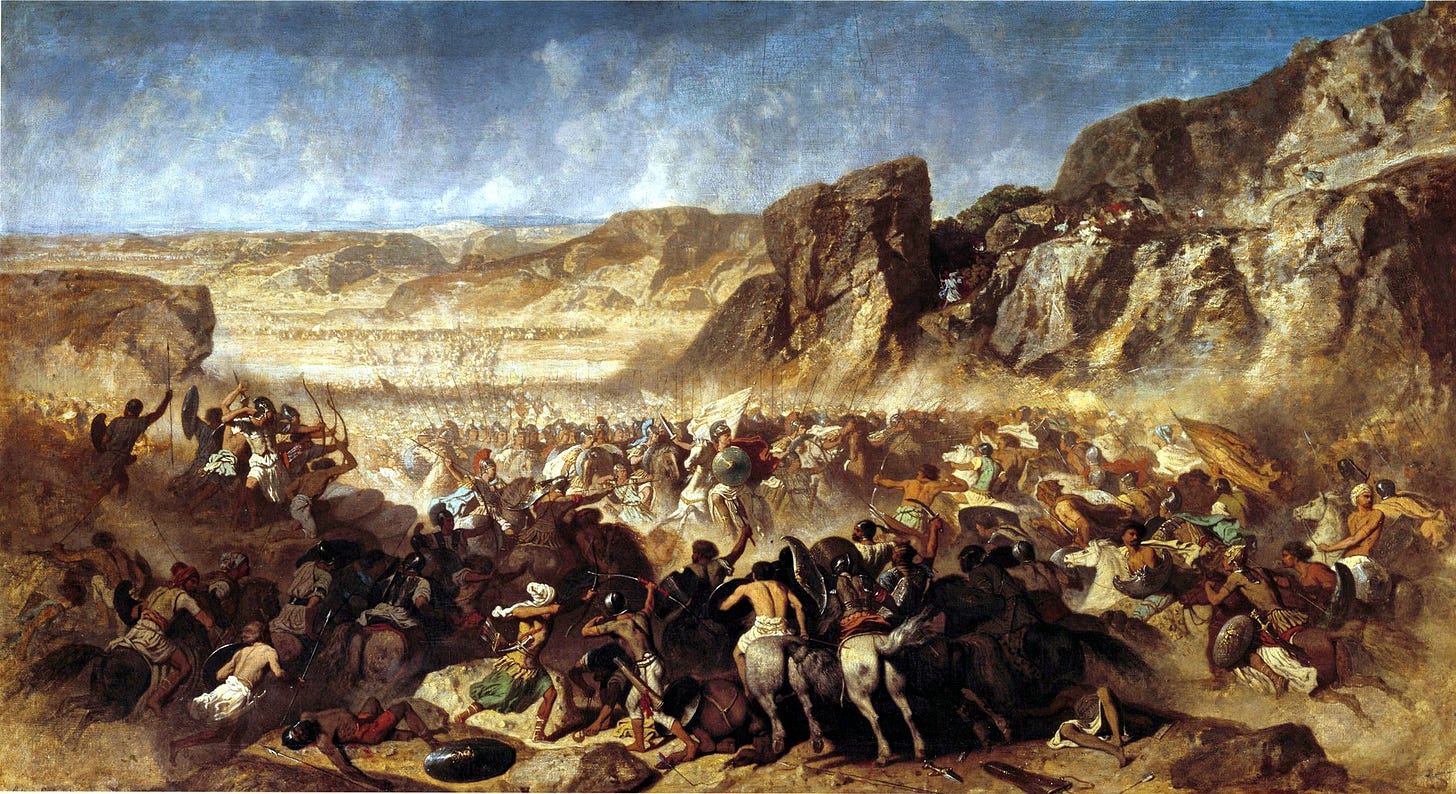
In 401 BC, according to his work Anabasis, Xenophon was invited by his friend Proxenus to join a military expedition…one that would marked his life forever. Not much of his life before this is known, except that he was son of Gryllus, a wealthy citizen of Erchia, a suburb of Athens.
Xenophon became a mercenary for Cyrus the Younger against Cyrus’ brother, King Artaxerxes II of Persia. In the end, it provided important lessons on military logistical operations, flanking maneuvers, feints, attacks in specifics and retreat, in general.
Why retreat, you ask? Well, mostly because that’s exactly what the Greeks did. They were expecting a much easier obstacle. Instead, they faced a great Persian army. Moreover, soon into the expedition, Cyrus, the main financial and logistical provider, was killed in the middle of a battle. The chain of events got even worse when shortly thereafter, Greek leaders, generals, and captains were invited to a peace conference… where they were betrayed and executed.
So, the Greek army was left with a simple plan. One, retreat. Two, have Xenophon lead the way back home.
Anabasis, one of Xenophon’s greatest works, is where you can read in detail his struggles and strategies. This epic adventure is the reason why “the centuries since have devised nothing to surpass the genius of this warrior”, as quotes military historian Theodore Ayrault Dodge. We, however, will cut the story short here and say that he got his men safely back home.
Tissaphernes
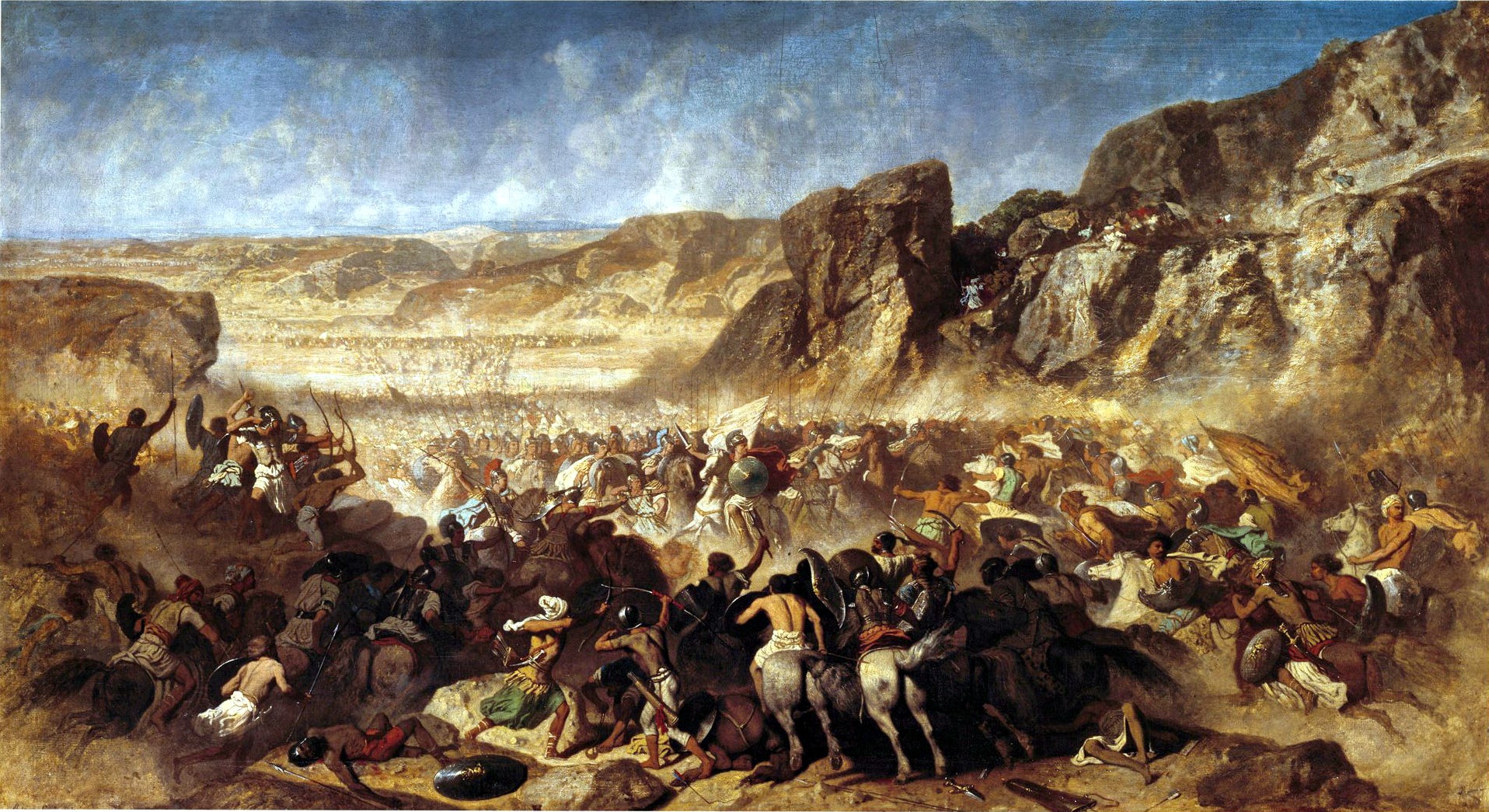
After first betraying Cyrus, and later killing him at the Battle of Cunaxa, the Persian satrap Tissaphernes pursued Xenophon and his Ten Thousand men in retreat with a vast force. We already said that Xenophon brought his men home, but Tissaphernes became an enemy of both Sparta and Athens because of all the events mentioned above.
Now, it’s important to remember at this moment that Athens and Sparta were not particularly friendly to each other… indeed, they were sworn enemies. Despite this, Xenophon of Athens (as he was called) did not hide his profound admiration for Sparta and Spartan leaders (Agesilaus II and Lysander, in particular).
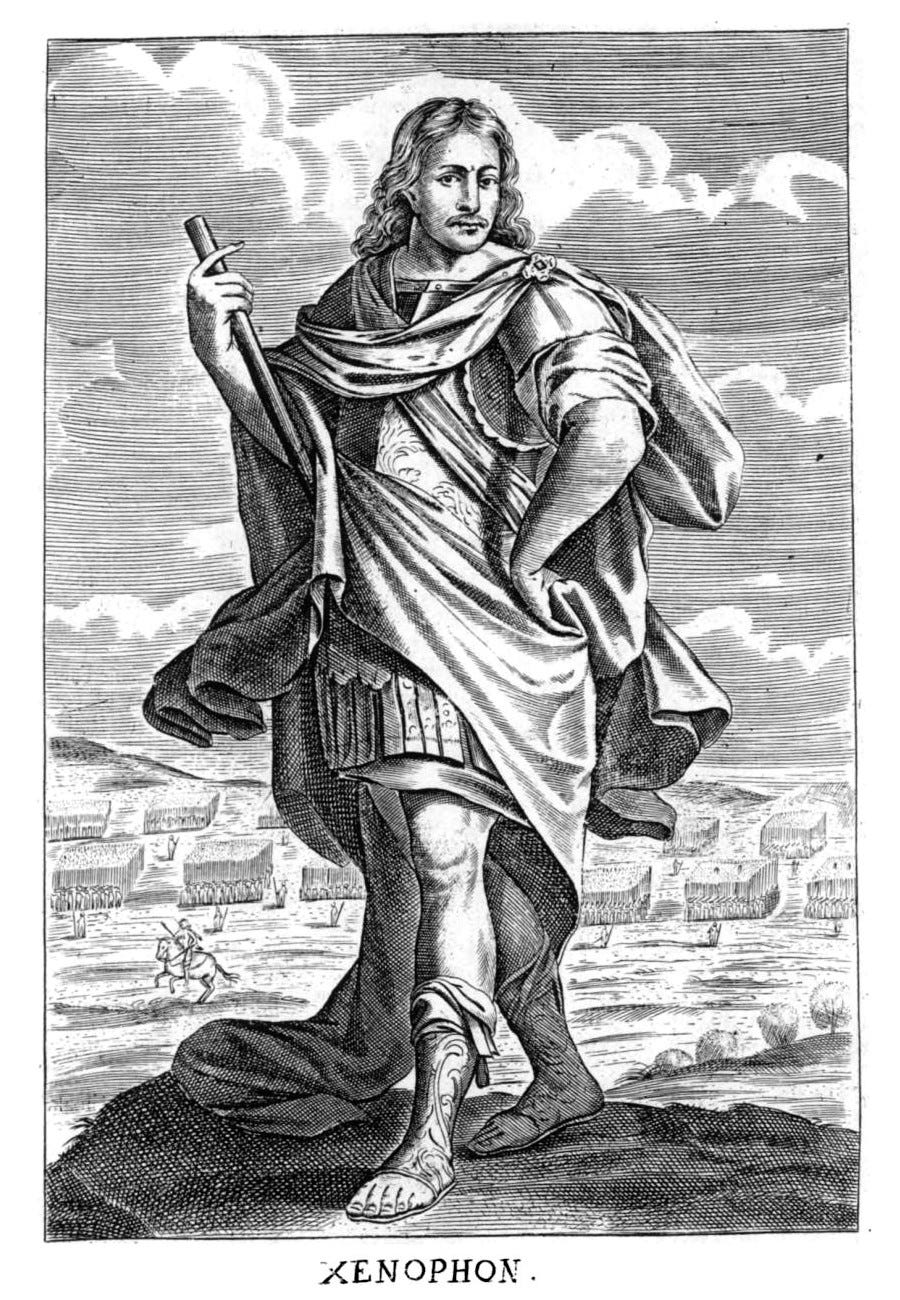
But Tissaphernes was the main reason why Xenophon came to respect the military wisdom of the Spartans. While he was seeking refuge from Tissaphernes, he noticed the respect Spartan leaders had for one another while successfully fighting the Persian satrap in Asia Minor.
So much, in fact, that he mentioned them extensively in his works Anabasis, Agesilaus, Polity of the Lacedaemonians, and Hellenica.
In an excerpt from Agesilaus, Xenophon writes:
«It would be hard to discover, I imagine, anyone who in the prime of manhood was as formidable to his foes as Agesilaus when he had reached the limit of mortal life. Never, I suppose, was there a foe whose removal came with a greater sense of relief to the enemy than that of Agesilaus, though a veteran when he died. Never was there a leader who inspired stouter courage in the hearts of fellow-combatants than this man with one foot planted in the grave. Never was a young man snatched from a circle of loving friends with tenderer regret than this old graybeard.»
Apostle of Socrates
From Xenophon’s writings on Sparta, as well as from other historical facts, we must understand two things before we can go to one of the most important roles Xenophon played in the history of ancient Greece.
One, Athens was on its decline. The trial of Socrates only illustrated how Athens represented, or rather failed to represent, a pedestal of democracy. Sparta, on the other side was, according to Xenophon:
“even though among the most thinly populated of states, was evidently the most powerful and most celebrated city in Greece. And I fell to wondering how this could have happened. But when I considered the institutions of the Spartans, I wondered no longer.”
Sparta was admired by Xenophon because of its unity. While Athens could produce magnificent individuals, in the end it had lead to a fall, as Socrates clearly demonstrated for him.
Thus, it is very important to appreciate this polarity both in general and with regards to Xenophon specifically. Xenophon had the opportunity to perceive both sides and thus produce works that reflect a wider, more honest, spectrum of ancient Greece.
Xenophon’s admiration for Sparta was only equalled by his love for his mentor, the first moral philosopher of the Western ethical tradition of thought, Socrates.
Memorabilia, Apology, Oeconomicus, and Symposium were all Xenophon’s gospels to Socrates. He admired his teacher very much (along with fellow protege Plato). So much so that some conjecture that Socrates would not have been sentenced to death if Xenophon had been in Athens instead of on a military expedition in Persia.
Per Diogenes Laërtius, a biographer of the Greek philosophers:
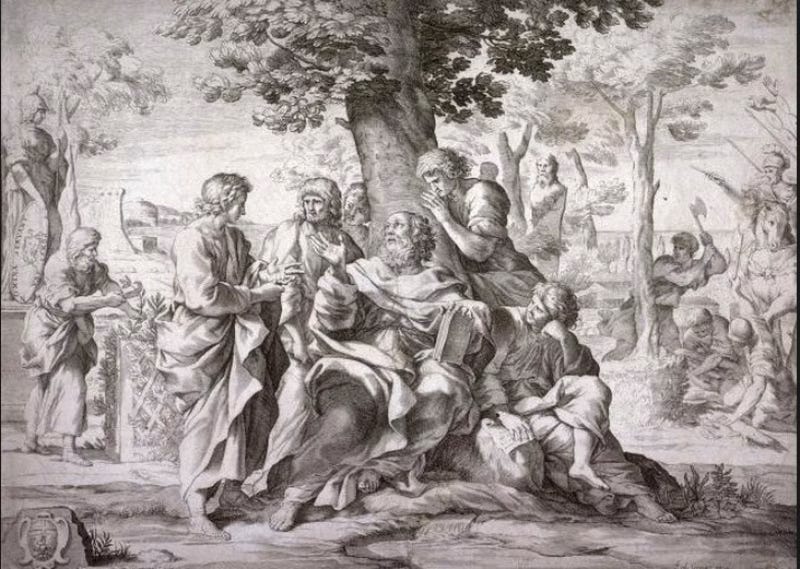
“They say that Socrates met Xenophon in a narrow lane, and put his stick across it and prevented him from passing by, asking him where all kinds of necessary things were sold. And when he had answered him, he asked him again where men were made good and virtuous. And as he did not know, he said, ‘Follow me, then, and learn.’ And from this time forth, Xenophon became a follower of Socrates.”
Xenophon’s Writings
Xenophon was greatly prolific in his writing. Of the 14 works we know of, they can be broadly categorized into three categories. His ‘Historical and biographical’ works include: Anabasis, Cyropaedia, Hellenica, Agesilaus, and Constitution of the Lacedaemonians.
Next are his ‘Socratic’ works, which are: Memorabilia, Apology, Oeconomicus, and Symposium. Finally his ‘other’ works are: Hiero, On Horsemanship, Hipparchikos, Hunting with Dogs, and Ways and Means.
There is no firm record on how Xenophon spent his last days. There is one version of him being exiled (or self-exiled) from Athens to Scillus and later in Corinth. It is estimated that he died circa 354 BC. It is recorded that he had two sons, Gryllus and Diodorus, who fought at the Battle of Mantinea as members of the Athenian army.
It is important to emphasize that Xenophon was a practical philosopher. This is what made him a successful military strategist, leader, soldier, politician, poet, and historian.
His Anabasis was used as a field guide by none other than Alexander the Great during the early phases of his expedition into Persia. Moreover, Memorabilia had a huge and important impact on the Founding Fathers of the United States, Benjamin Franklin and John Adams, in particular. Clearly Xenophon’s influence on mankind can not be overstated.
Más info en https://ift.tt/tOhANQR / Tfno. & WA 607725547 Centro MENADEL (Frasco Martín) Psicología Clínica y Tradicional en Mijas. #Menadel #Psicología #Clínica #Tradicional #MijasPueblo
*No suscribimos necesariamente las opiniones o artículos aquí compartidos. No todo es lo que parece.

No hay comentarios:
Publicar un comentario