
Dear Classical Wisdom Reader,
What a difference a week makes…
Last week, I prefaced our article on ‘the Homeric question’ by assuring you that, even though it sounded strange, it’s a crucial debate in the history of ancient literature.
This week I’m doing the opposite.
The idea that the Roman Emperor Titus helped originate Christianity really is among the more outlandish theories surrounding the ancient world…
Yet it has also gained some followers over the years.
So today we’re looking at Titus as a nexus point of ancient Roman, Jewish, and Christian history, and sorting facts from fiction, man from myth.
Discover the truth about Titus and Christianity just below… and what exactly dolphins have to do with it all!
All the best,
Sean Kelly
Managing Editor
Classical Wisdom
Exclusive E-book Members can celebrate Virgil’s birthday with our exclusive e-book edition of his epic poem the Aeneid, one of the undisputed masterpieces of ancient literature.
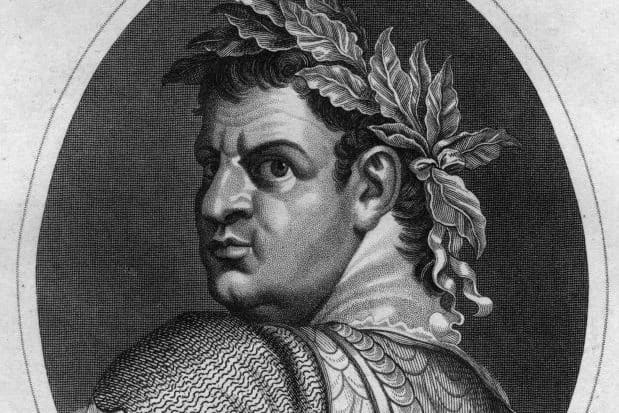
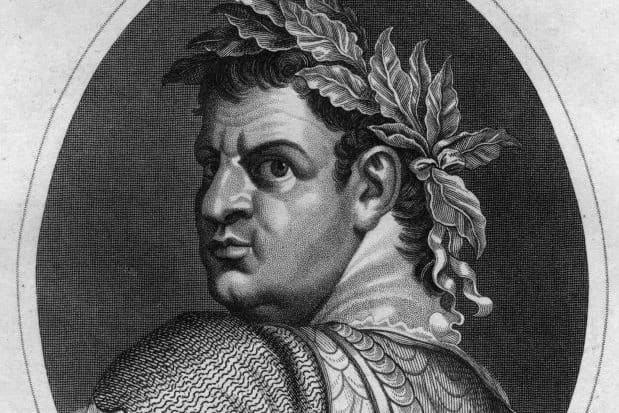
Did Emperor Titus invent Christianity?
By Marc Hayden
Celebrated general, builder, and emperor, the Romans hailed Titus as one of their most beloved leaders. Despite his many exploits, both good and bad, modern historical revisionists have attempted to add a shocking feat to his lengthy curriculum vitae: creating or at least co-opting Christianity. Proponents even claim to have a “smoking gun” that irrefutably proves the matter.
If proven, this would be a paradigm-shifting revelation that would reverberate through the ages, but you don’t have to be a Christian to find this conspiracy theory entirely unconvincing.
There is more than one version of the theory, but they can generally be distilled down to a few points: Titus, perhaps along with his father Vespasian, concocted the idea of creating a pro-Roman, docile version of Judaism that would not rebel against the state. With the help of some intellectuals (possibly including Jewish historian Josephus), Titus and his conspirators manufactured Christianity, drafted the gospels sometime after the Temple’s razing in 70 CE, and may have even modelled Jesus Christ after Titus. Then they tried to convert the Jews to the new religion.
Despite all the bluster about this theory being well-supported, it relies heavily on flimsy circumstantial evidence and enormous (il)logical leaps, which other historians have happily pointed out. However, there are some other matters that merit addressing.
For starters, secular academics assert that only one of the New Testament gospels - Mark - was certainly written in Titus’ lifetime. Matthew, Luke and John may have come later. Many historians believe they were finalized after Titus had died, which discounts the theory that Titus or possibly his father ordered the gospels’ publication. Further, ancient pagan writers attested that Christianity existed before Titus or even his father rose to power, although modern mythicists suggest with no proof that the ancient writers were sorely mistaken.
Then there’s the issue of the Apostle Paul. His mission and death also occurred before Vespasian seized the throne. Even so, another fringe theory suggests that Paul was a Roman agent who was tasked with converting Jews to Christianity. It’s hard to square that with the facts we know about Paul’s life. Firstly, Paul spent years converting Gentiles, not Jews, to Christianity. Moreover, he was in and out of Roman prisons, and it was the Romans who ultimately executed him.
These issues aside, putting Josephus at the center of this conspiracy is improbable. While he was exceptionally close to Vespasian and Titus and wrote works that glorified them, Josephus was a Pharisee from a priestly family. It is virtually inconceivable that he would commit an egregious act of heresy, fabricating a messiah to lead his people astray.
This doesn’t hold revisionists back. In fact, they still maintain that pro-Roman intellectuals modelled Jesus after Titus. Evidence of this supposedly stems, in part, from Jesus and Titus both starting their ministry/campaign in Galilee and then heading to Jerusalem, as if they are the only people who ever travelled from Galilee to Jerusalem.
Never mind these problems, proponents believe they have undeniable proof to buttress their theory. The “smoking gun” purportedly supporting some of these theories is that the image of a dolphin and an anchor appeared on Titus’ coinage, and Christians also used some of this same imagery. Case closed, right? Not so fast.
Unfortunately for these mythicists, the Romans lived around the Mediterranean. So anchors, dolphins and fish were pretty common to just about everyone. Moreover, the authors behind this theory effectively undermine their own position. They readily admit that the aforementioned symbolism predated Titus and is related to the god Apollo, and they even acknowledge that the Christians didn’t use the dolphin and anchor motif on a large-scale during Titus’ life.
The fact that Christians at some point adopted a symbol similar to those found on Titus’ coins doesn’t prove that Titus invented Christianity any more than the Egyptian ankh, which resembles a cross, proves the Egyptians invented Christianity. There’s nothing to suggest they did.
The theory’s flaws don’t end there. If Titus had invented Christianity, then why did some of his closest family members convert to the religion, as ancient accounts go? And why did his brother, Domitian, supposedly commence a Christian persecution? Were they not privy to this grand conspiracy? Evidently not.
One of the biggest problems with this theory is that no ancient Roman historian mentioned it. Suetonius salivated over salacious stories - even if they were only rumors - and would have gleefully published accounts of Titus duping the masses. Cassius Dio similarly would have done so. Like many ancient writers, Tacitus explicitly affirmed early Christianity’s existence, but he was silent on Titus’ alleged involvement in its rise, which is telling.
Nevertheless, mythicists believe that Titus understood that a new form of Judaism was needed to subdue the Jews for good. By the end of the Romano-Jewish War, Titus had levelled Jerusalem, and according to Josephus, more than one million Jews had died. In Titus’ mind, there was no need to pacify Judaism; the Romans thought they had already, and if they believed otherwise, fabricating a religion might not have been their first strategy for dealing with rebellious Jews.
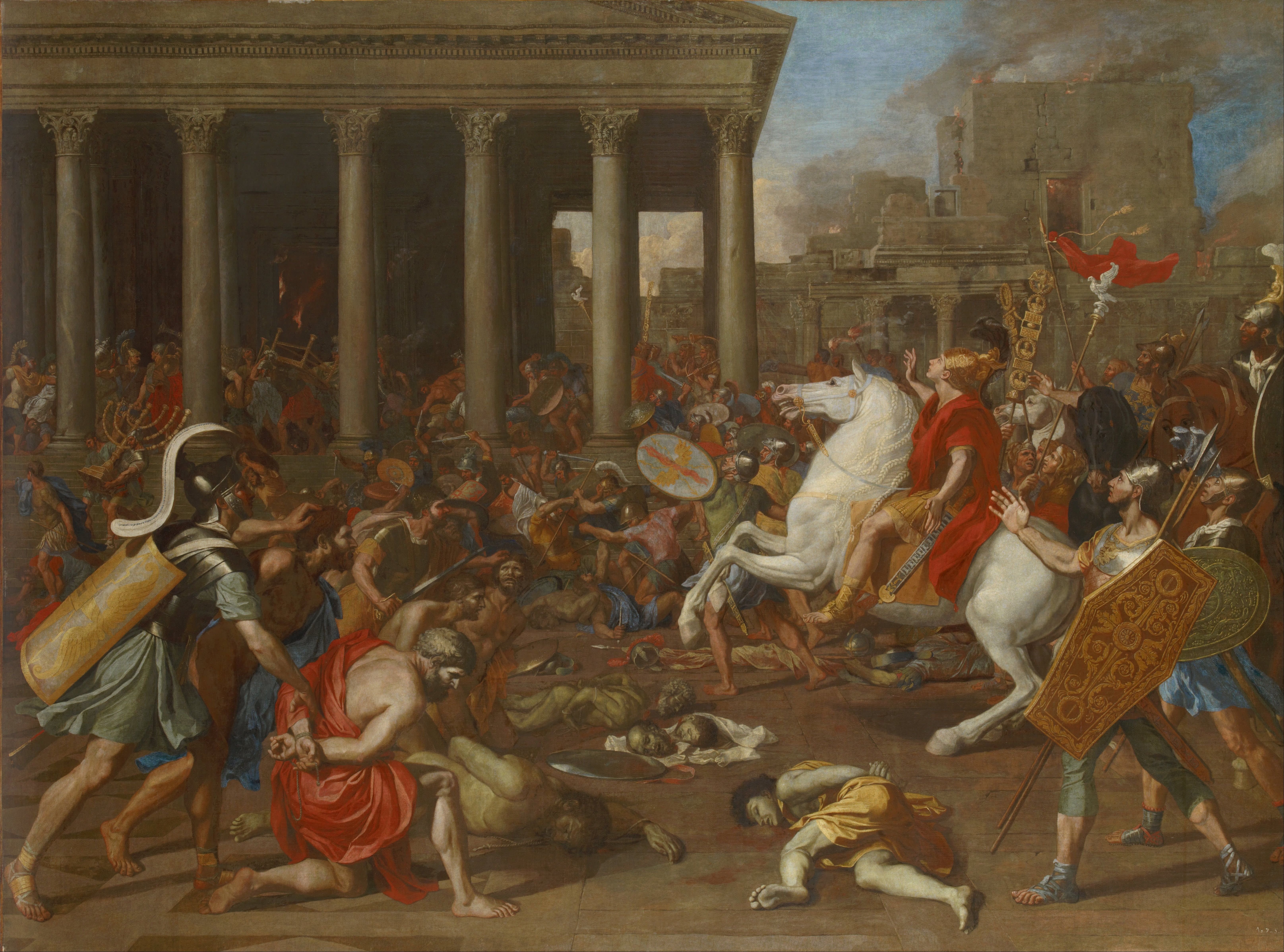
As Rome’s history has shown, if the Romans wanted to ensure the Jewish people were further subdued, they would have gladly used violent government force to do so. The truth is that they felt relatively comfortable with their settlement following the First Jewish War and probably preferred that many Jews remain adherents to Judaism because the Romans levied a tax on Jews, known as the fiscus Judaicus. If they and their descendants abandoned their ancestral faith for Christianity, the Romans might not enjoy this revenue stream any longer.
The last and most damning counter-point is if the Romans wanted to make Jews more amenable to their rule by persuading them to adopt a new religion, then why would the Romans portray themselves as killing the savior of that religion? That would be counterintuitive and could drive a deeper wedge between the Jews and Romans.
In the end, this theory simply does not live up to its billing, and there’s no supporting concrete evidence whatsoever: just coincidence and a misunderstanding of Roman, Jewish and Christian history. Many of my readers are certainly Christians, while others are not. That’s up to you, but don’t let a critically flawed conspiracy theory that’s a better fit for a Dan Brown novel influence your faith or lack thereof.
Marc Hyden is a Roman historian and the author of “Emperor Titus: The Right Hand of Vespasian.”
Más info en https://ift.tt/fKqcFmA / Tfno. & WA 607725547 Centro MENADEL (Frasco Martín) Psicología Clínica y Tradicional en Mijas. #Menadel #Psicología #Clínica #Tradicional #MijasPueblo
*No suscribimos necesariamente las opiniones o artículos aquí compartidos. No todo es lo que parece.

No hay comentarios:
Publicar un comentario