
Dear Classical Wisdom Reader,
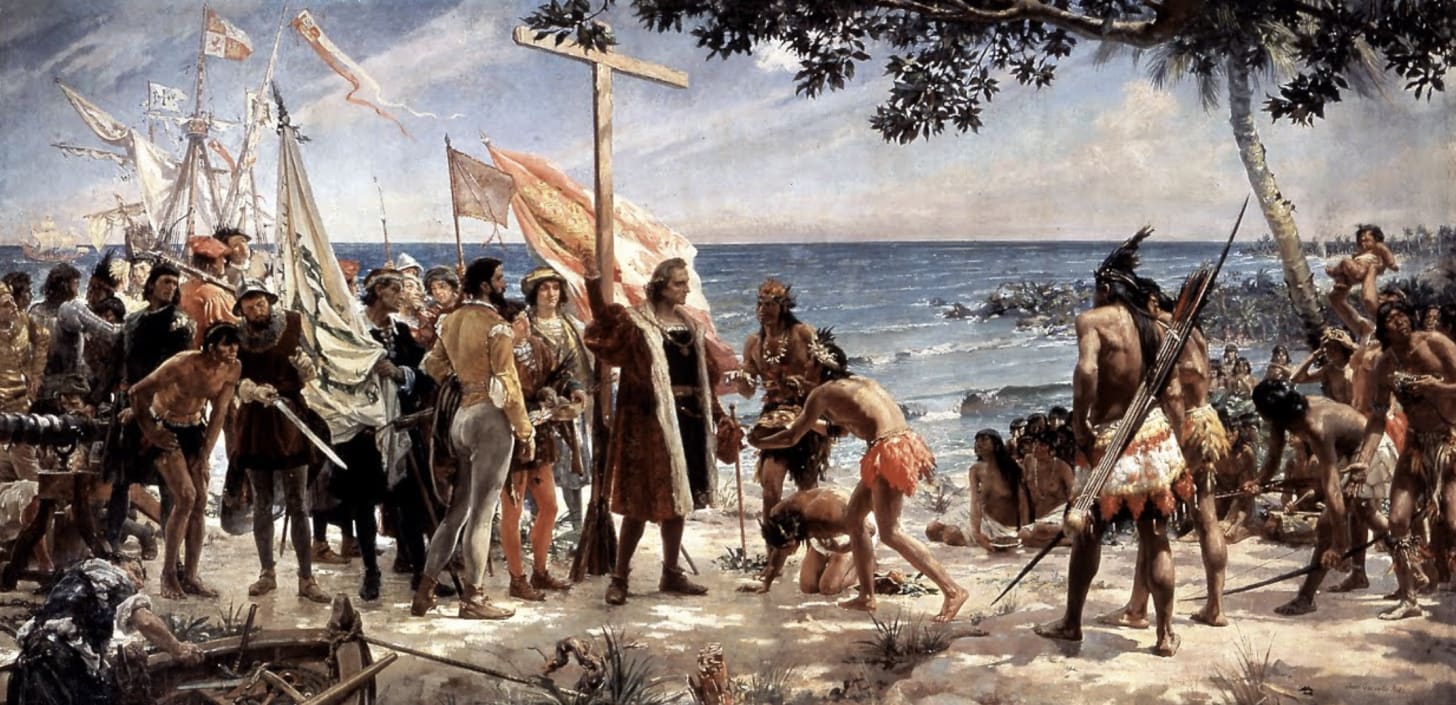
Yesterday two young environmental activists were arrested in Spain. Their charge: Throwing red paint on José Garnelo’s 1892 work First Tribute to Christopher Columbus, which was displayed near the entrance of the Naval Museum in Madrid.
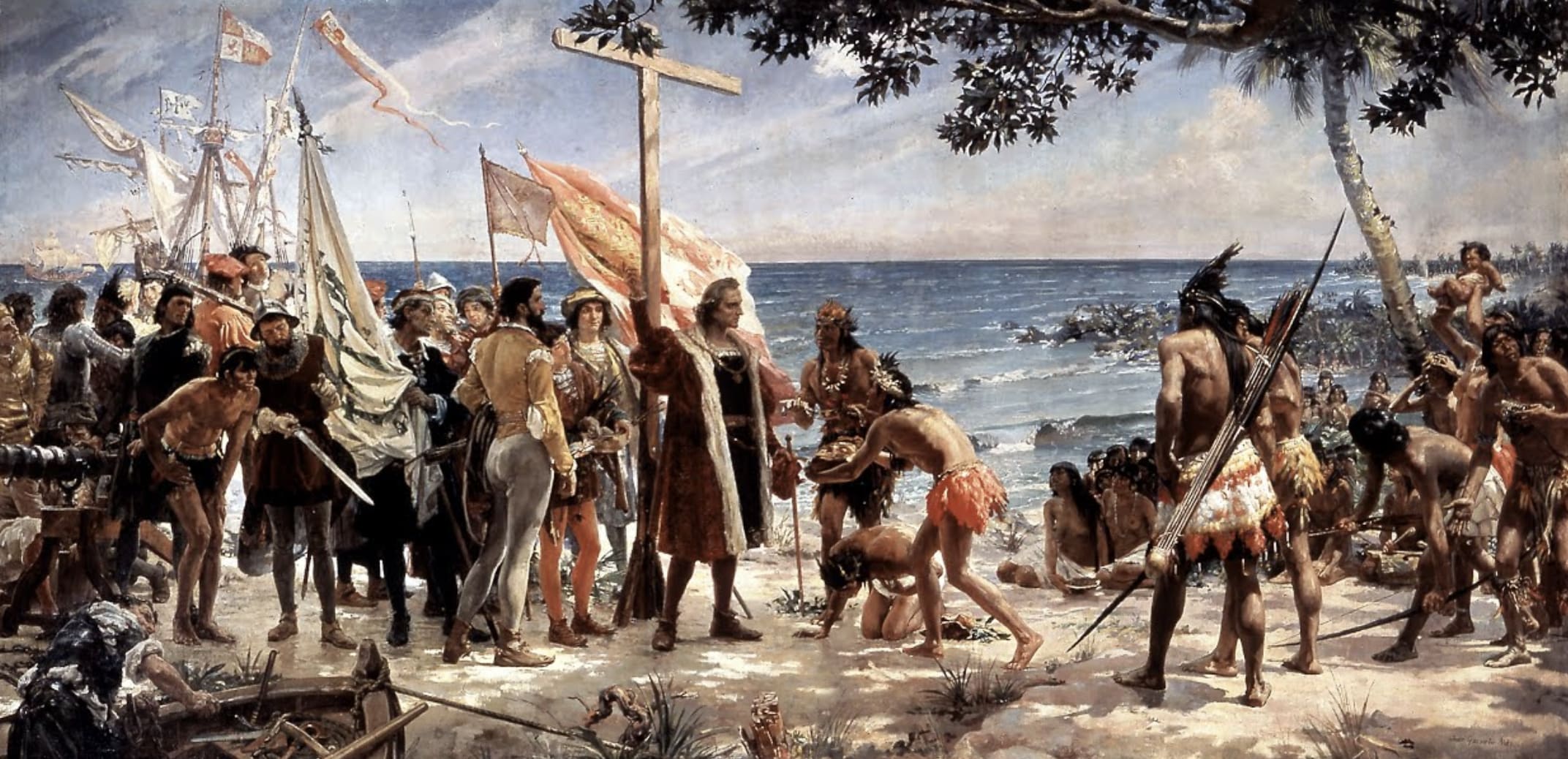
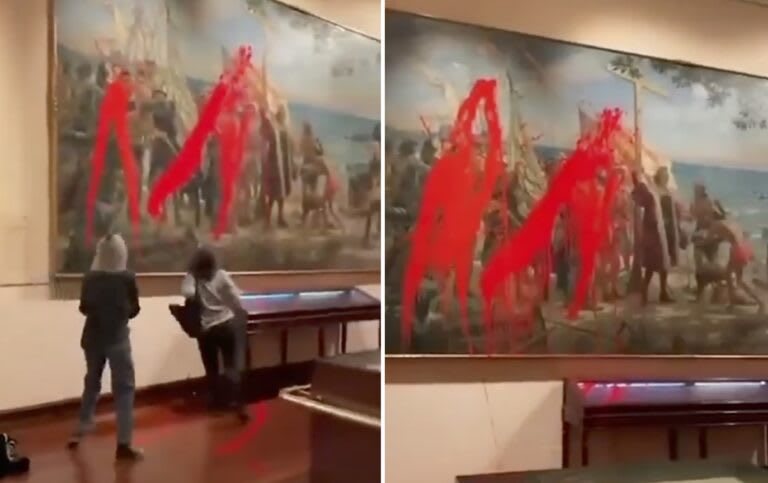
For those living under a rock (and I salute your perseverance!), the historical memory and depiction of Christopher Columbus has faced fierce scrutiny and criticisms over the last few years. Consequently, there has been a denunciation of the national day, October 12th, which was traditionally commemorated throughout the Americas and Spain.
What Señor Colón’s legacy and the objectives of radical environmentalism have in common, I can not pretend to understand... It is clear only that these young ladies, along with many other activists in recent history, feel they can express themselves by destroying art.
Of course, effacing works that depict historical figures is nothing new. The ancients had a penchant for artistic destruction and toppling statues from time to time as well. It’s just for the ancient world, they have a much cooler term for it:
Damnatio Memoriae – the damnation of memory.
Okay, okay, the term wasn’t actually used by Romans (I know, I’m gutted also), but the practice was certainly employed. The Romans adopted the tradition, which they deemed worse than death, from the peoples of Ephesus who attempted (though clearly ultimately failed) to erase the arsonist Herostratus, who set fire to the Temple of Artemis, one of the Seven Wonders of antiquity.
Statues of vicious Caligula, as decreed by the senate, came crashing down like the likenesses of Stalin or Saddam. His coins were recalled and his vainglorious projects (including the ingenious inventions therein) were sunk to the bottom of a lake.
The same powerful iconography and collective catharsis was used on Emperor Nero, Emperor Commodus, Emperor Geta as well as Tiberius’ archetypal villainous advisor, Lucius Aelius Sejanus, to name just a few.
-
Read more: Was the Gladiator Emperor Misunderstood?
But this official scrubbing, the burning of community memory palaces, goes even further back than that… all the way to the fifteenth century BC.
The fifth pharaoh of the Eighteenth Dynasty of Egypt and the second historically-confirmed female pharaoh, Hatshepsut, was expunged in the most literal way possible. Her cartouches and images were chiseled off some stone walls, and the erasure of Hatshepsut’s name—whatever the reason or the person ordering it—almost caused her to entirely disappear from Egypt’s archaeological and written records.
So clearly, it’s a thing.
And clearly it’s something that happens -in all its forms- today as well, especially for historical characters who have been deemed...difficult. Whether through ‘painting’ or toppling, people make their views about the past known.
So considering all these historical precedents, as well as its modern expressions, it’s time to ask: what should we do today? Whether in public squares or stored in museums, how should we handle history’s (sometimes newly) crowned villains?
Should we take down monuments? Can it be decided by individuals? Should we enact a modern Damnatio Memoriae?
And if not, what should we do with those who do?
Comment below and let me know your thoughts:
Also: A brief and important reminder! Our Essential Greeks Course will begin THIS Wednesday...
So if you are keen on cementing the foundations of the ancient Greeks, this is your opportunity. It’s a great course for both newbies and long time lovers of the Classics.
Previous students have raved about it over the years, and have very kindly let me know what they think! Here are just a few examples from our last class:
“Words can hardly express the love I have for your Course. I’ve been through it a few times and just can’t get enough of it. I will listen over and over so that it can go deeper and deeper within me.” - Linda
“I want to thank you for this awesome course. Preparing for it was a welcomed part of my day! Very enjoyable and relevant. The course provided a great overview of “the essential Greeks”, without shortchanging their substantive contributions.” -George
“I never thought I could return to study at 80. You’ve proved how wrong I was! The course is for me is engrossing. I am delighted with the high standards of the materials and am overjoyed there are academics who have a passion to enable people like me to study and enter the fascinating world of our intellectual, political and cultural origins. (And at a reasonable price that even someone on a restricted budget can afford.) Thank you, may your journey continue.” Cheers!!!” - James
As regular readers know, we usually offer it once - maybe twice - a year. So if you are interested in joining us, make sure to register today! Even if you can’t join all the live webinars and Q&A, you will get all the recordings and can still keep pace with the class in the discussions.
I hope you can join us!
All the best,
Anya Leonard
Founder and Director
Classical Wisdom
Más info en https://ift.tt/Yd8h3Mc / Tfno. & WA 607725547 Centro MENADEL (Frasco Martín) Psicología Clínica y Tradicional en Mijas. #Menadel #Psicología #Clínica #Tradicional #MijasPueblo
*No suscribimos necesariamente las opiniones o artículos aquí compartidos. No todo es lo que parece.

No hay comentarios:
Publicar un comentario