Psicología

Centro MENADEL PSICOLOGÍA Clínica y Tradicional

Psicoterapia Clínica cognitivo-conductual (una revisión vital, herramientas para el cambio y ayuda en la toma de consciencia de los mecanismos de nuestro ego) y Tradicional (una aproximación a la Espiritualidad desde una concepción de la psicología que contempla al ser humano en su visión ternaria Tradicional: cuerpo, alma y Espíritu).

“La psicología tradicional y sagrada da por establecido que la vida es un medio hacia un fin más allá de sí misma, no que haya de ser vivida a toda costa. La psicología tradicional no se basa en la observación; es una ciencia de la experiencia subjetiva. Su verdad no es del tipo susceptible de demostración estadística; es una verdad que solo puede ser verificada por el contemplativo experto. En otras palabras, su verdad solo puede ser verificada por aquellos que adoptan el procedimiento prescrito por sus proponedores, y que se llama una ‘Vía’.” (Ananda K Coomaraswamy)

La Psicoterapia es un proceso de superación que, a través de la observación, análisis, control y transformación del pensamiento y modificación de hábitos de conducta te ayudará a vencer:

Depresión / Melancolía
Neurosis - Estrés
Ansiedad / Angustia
Miedos / Fobias
Adicciones / Dependencias (Drogas, Juego, Sexo...)
Obsesiones Problemas Familiares y de Pareja e Hijos
Trastornos de Personalidad...

La Psicología no trata únicamente patologías. ¿Qué sentido tiene mi vida?: el Autoconocimiento, el desarrollo interior es una necesidad de interés creciente en una sociedad de prisas, consumo compulsivo, incertidumbre, soledad y vacío. Conocerte a Ti mismo como clave para encontrar la verdadera felicidad.

Estudio de las estructuras subyacentes de Personalidad
Técnicas de Relajación
Visualización Creativa
Concentración
Cambio de Hábitos
Desbloqueo Emocional
Exploración de la Consciencia

Desde la Psicología Cognitivo-Conductual hasta la Psicología Tradicional, adaptándonos a la naturaleza, necesidades y condiciones de nuestros pacientes desde 1992.

miércoles, 8 de abril de 2026

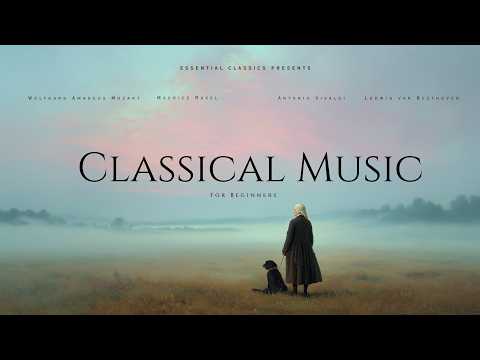
Classical Music for Beginners


Starting classical music can feel overwhelming, but it doesn’t have to be. This collection is designed as a gentle introduction, bringing together some of the most beautiful, accessible, and enjoyable pieces to help you explore the world of classical music with ease.

From Mozart’s clear and elegant melodies to Beethoven’s expressive power and Bach’s balanced beauty, these works are easy to listen to and instantly engaging. No background knowledge needed, just press play and enjoy.

Perfect for discovering classical music for the first time, relaxing, studying, or finding new favorites. Let this be the beginning of a journey into a timeless and inspiring musical world 🤍

📌𝐃𝐨𝐰𝐧𝐥𝐨𝐚𝐝 𝐄𝐬𝐬𝐞𝐧𝐭𝐢𝐚𝐥 𝐂𝐥𝐚𝐬𝐬𝐢𝐜𝐬 𝐀𝐩𝐩: https://app.essential-classics.com/


🟢 Follow us and our playlists on Spotify:
https://open.spotify.com/user/cugate-music?si=2d9adbc210b64a2b


𝐏𝐋𝐀𝐘𝐋𝐈𝐒𝐓
--------------------
0:00:00 Maurice Ravel - Boléro, M. 81
00:15:51 Johann Sebastian Bach - Harpsichord Concerto No. 5 in F Minor, BWV 1056: II. Largo
00:19:06 Johann Strauss II - The Blue Danube, Op. 314
00:30:04 Franz Schubert - Ave Maria
00:36:05 Samuel Barber - Adagio for Strings (arr. from Quartet for Strings) Op. 11
00:43:35 Wolfgang Amadeus Mozart - Symphony No. 40 in G Minor, K. 550: IV. Finale - Allegro assai
00:50:46 Wolfgang Amadeus Mozart - Requiem Mass in D Minor, K. 626: VII. Lacrimosa
00:54:44 Johann Sebastian Bach - Goldberg-Variationen, BWV 988: Aria
00:57:00 Claude Debussy - Suite Bergamasque, L 75: III. Clair De Lune
01:03:11 Léo Delibes - Coppélia, Act I: 2. Valse et jalousie
01:05:37 Sergei Rachmaninoff - Symphony No. 2 in E Minor, Op. 27: III. Adagio
01:21:22 Ludwig van Beethoven - Piano Sonata No. 8, Op. 13: II. Adagio Cantabile
01:27:09 Giuseppe Verdi - La Traviata: Overture
01:31:11 Pyotr Ilyich Tchaikovsky - Piano Concerto No. 1 In B-Flat Minor, Op. 23: III. Allegro con fuoco
01:38:24 César Franck - Symphony in D Minor: II. Allegretto
01:49:54 Johann Pachelbel - Canon and Gigue in D Major: I. Canon
01:57:13 Franz Liszt - Liebesträume, S. 541: No. 3, Oh Lieb, so lang du lieben kannst in A-Flat Major
02:03:08 Frédéric Chopin - 24 Préludes, Op. 28: No. 4, Largo in E Minor
02:05:53 Felix Mendelssohn - Lieder ohne Worte, Op. 62: 6. Allegretto grazioso


𝐏𝐞𝐫𝐟𝐨𝐫𝐦𝐞𝐫𝐬
----------------------
(1) Aldona Dvarionaitė
(2) Andrei Ivanovich
(3) Capriccio Quintet
(4) Chamber Orchestra Renaissance
(5) Konzerthaus Kammerorchester Berlin
(6) Lithuanian Chamber Orchestra
(7) Nodar Gabunia
(8) Saint Petersburg Radio and TV Symphony Orchestra
(9) Sergei Beloglazov
(10) Tbilisi Symphony Orchestra


Please follow and subscribe to our channel. We appreciate your support.

🔔 Click the bell to stay updated on the great classical songs

📧 info@cugate.com
🌐 www.cugate.com

🎧 Essential Classics is dedicated to sharing and promoting classical music. We strive to present the best classical music for you! Our hope is to make your days more beautiful and peaceful with classical music.

All audio and visual content on Essential Classics is created by Cugate AG a well-known music company. We have all legal rights of the audiovisual materials used in this video and our music is protected by copyright laws. If you have any questions regarding copyright or cooperation, please contact us.

#classicalmusic #mozart #bach #beethoven #classical

- Enlace a artículo -

Más info en https://ift.tt/uY6r8oA / Tfno. & WA 607725547 Centro MENADEL (Frasco Martín) Psicología Clínica y Tradicional en Mijas. #Menadel #Psicología #Clínica #Tradicional #MijasPueblo

*No suscribimos necesariamente las opiniones o artículos aquí compartidos. No todo es lo que parece.

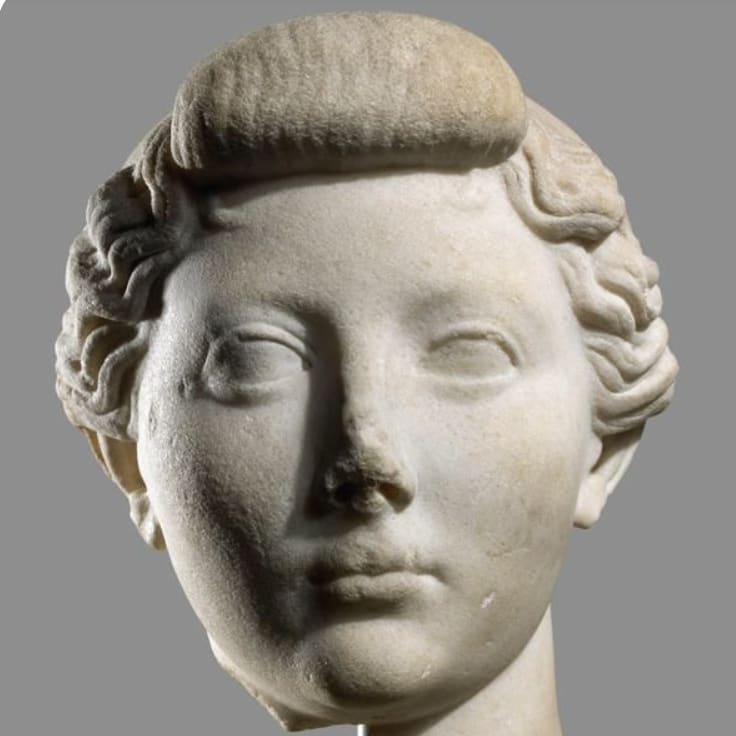
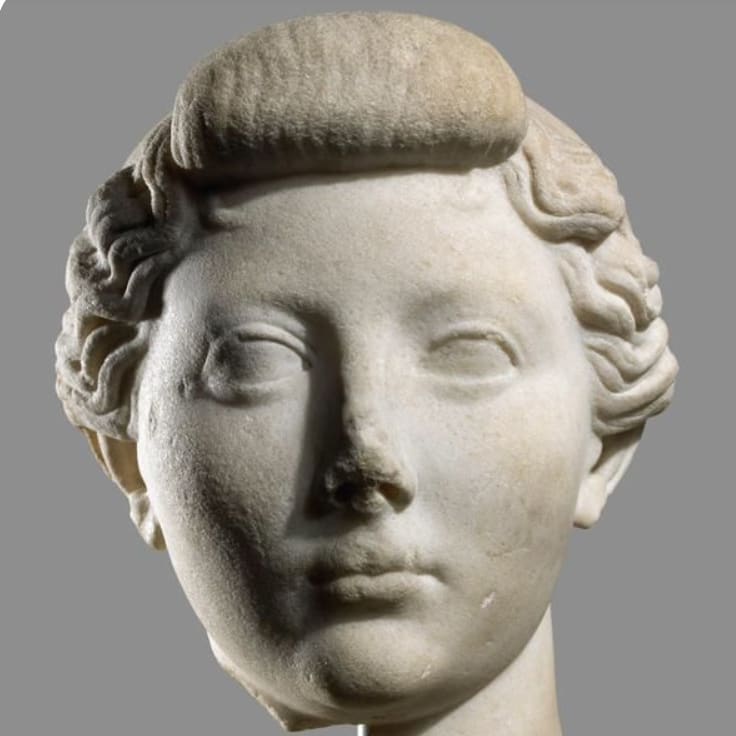
The Empress and the Empire


Dear Classical Wisdom Reader,

Few periods in history pulse with as much intrigue, ambition, and quiet terror as the early years of the Julio-Claudian dynasty. Violence, murder, deceit, along with emperors and queens and civil wars.

It’s sort of like Days of our Lives meets the Godfather meets the Crown. You literally can’t make this stuff up!

But you can try to make sense of it all and get immersed in the sheer intrigue of the story. As such, in Part One, we glimpsed the formidable rise of Livia Drusilla, a woman who stood at the heart of Rome’s transformation from republic to empire.

But if her ascent was remarkable, what followed was nothing short of dramatic...

Behind the marble facades and triumphal processions of Augustus’s reign lay a far more precarious reality: a relentless and tragic struggle for succession. Promising heirs regularly and prematurely gave up the ghost... struck down by illness, misfortune, or perhaps something more sinister.

And with each death, there was a sudden shift in the balance of power, fueling only more intrigue and rumors. At the center of so many of these scandals stood Livia.

Was she the devoted wife and matriarch the Augustan propaganda made her out to be, carefully safeguarding Rome’s future?

Or a calculating force, as described by later historians, quietly shaping destiny in the shadows to secure the rise of her son, Tiberius?

These are not merely ancient questions. I think we all know that in our modern world too, power, perception, and narrative remain deeply intertwined. Trying to sort fact from fiction is no simple task... And too easily does rumor become “history” when repeated often enough...

In Part Two of our Member’s in-depth article on Livia Drusilla, we enter a world of sudden deaths, political marriages, exile, and suspicion, a world where truth is elusive and reputations are forged as much by gossip as by fact.

It is a story that forces us to confront not only what happened in ancient Rome, but how history itself is written… and rewritten.

Read on and contemplate the enduring tension between power and perception, and the stories we choose to believe.

All the best,
Anya Leonard

Founder and Director

Classical Wisdom

P.S. If you haven’t yet joined our growing community, do so today to access all our resources, including our extensive E-book library, Classical Wisdom Litterae Magazines, Podcasts with Professors and in-depth articles, like today’s feature piece.

Commit to the Classics and Enjoy the Wisdom of the Past:

Livia Drusilla: “Mother of the Country” or “Evil Stepmother”? Part Two

By Mary Naples, author of Unsung Heroes: Women of the Ancient World

(If you haven’t already, you can read part one here)

Empress Livia Drusilla, the wife of Rome’s first emperor, Caesar Augustus, was the quintessential matriarch of the Julio-Claudian dynasty. Throughout her more than forty years as a steadfast and loyal empress, Livia Drusilla received unprecedented honors; but, she also has long been suspected of hastening the untimely ends of numerous successors to Augustus to secure the throne for her son, Tiberius.

Given that these claims originate from writers who were unfriendly toward her, should we question the validity of the accusations? How can we separate fact from fiction?

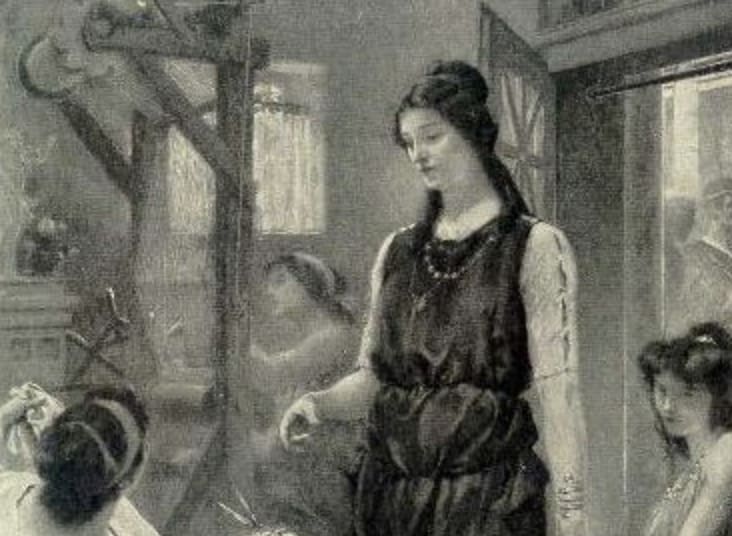
From a drawing of André Castaigne. Livia, the wife of Augustus, superintending the weaving of robes for her family.

After just two years of marriage between Augustus’ daughter Julia and her first cousin, Marcellus, an epidemic swept through Rome that nearly killed Augustus. When Marcellus became ill as well, everyone expected his nineteen-year-old heir to make a full recovery.

But when the promising young Marcellus died, it set off a period of mourning and began the long succession crisis that would plague Augustus’s reign from 23 BCE to 4 CE.

Within a short year, he betrothed his freshly-widowed daughter, Julia, to his close friend and war hero, the mighty general and consul, Marcus Vipsanius Agrippa, a man twenty-five years her senior. There was one pesky detail that had to be attended to, Agrippa was already married… and Augustus himself had arranged the union years ago with Marcellus’s sister, Claudia Marcella Major.

Augustus—ever prioritizing political expediency over marital bonds—dissolved this marriage, allowing Agrippa and Julia to wed shortly thereafter.

Why did Augustus choose Agrippa to be Julia’s husband instead of the young Tiberius? The reason was because General Agrippa had been disappointed in Augustus’s selection of Marcellus as heir two years prior, something that made him a threat. The emperor’s close friend and poet Gaius Maecenas wrote about Agrippa:

“You have made him so great that he must either become your son-in-law or be slain.”

Read more

- Enlace a artículo -

Más info en https://ift.tt/uY6r8oA / Tfno. & WA 607725547 Centro MENADEL (Frasco Martín) Psicología Clínica y Tradicional en Mijas. #Menadel #Psicología #Clínica #Tradicional #MijasPueblo

*No suscribimos necesariamente las opiniones o artículos aquí compartidos. No todo es lo que parece.

El curioso viaje de la palabra “baladí”


932CB4BD-B8A9-417E-911A-57A85638F487.jpe
Dobla nazarí del reinado de Mohammed IX
expuesta en el Museo Arqueológico Nacional 
de Madrid; una dobla granadina valía 107
maravedíes, mientras que un maravedí
equivaldría en la actualidad a 16 euros 

El Reino nazarí de Granada fue el último bastión de al-Ándalus en la Península Ibérica, un territorio que resistió hasta finales del siglo XV mientras el resto de dominios islámicos ya habían sido conquistados por los reinos cristianos. Sin embargo, más allá de su importancia política y militar, este reino dejó una huella cultural profunda que aún hoy pervive en nuestra lengua cotidiana. Un ejemplo sorprendente de ello es la palabra “baladí”.

Según explicó José Luis Díaz Prieto, colaborador del programa de radio SER Historia, en su sección dedicada al origen y evolución de las palabras, términos que usamos a diario esconden historias fascinantes. En uno de sus análisis recientes, centrado en el significado de “baladí”, se revela cómo una simple palabra puede conectar directamente con la historia del Reino nazarí de Granada.

Hoy en día, cuando decimos que algo “no es una cuestión baladí”, estamos afirmando que se trata de un asunto importante, serio y digno de atención. Es decir, negamos su carácter trivial para enfatizar su relevancia. Pero lo interesante es que “baladí”, por sí sola, significa precisamente lo contrario: algo de poca importancia, superficial o de escaso valor.

Para entender este significado hay que viajar hasta el siglo XV. En el Reino nazarí se acuñaban monedas de oro conocidas como doblas, término de origen latino que hacía referencia a su valor, equivalente al doble de otras monedas anteriores. Sin embargo, no todas las doblas gozaban del mismo prestigio.

En la Península Ibérica, las monedas granadinas comenzaron a distinguirse como “doblas de aquí”, en contraposición a otras procedentes de Italia o de los Países Bajos. Estas doblas locales, además, tenían una reputación dudosa: con frecuencia eran recortadas para reducir su contenido en oro, lo que implicaba una pérdida de valor. Esa práctica generó desconfianza y un matiz claramente peyorativo.

Así surgió el término “doblas baladí”. La palabra “baladí” procede del árabe y significa literalmente “de mi pueblo” o “nacional”. En principio, no tenía ninguna connotación negativa; simplemente indicaba procedencia local. Sin embargo, debido a la mala calidad atribuida a estas monedas, el término acabó asociándose con algo inferior o de poco valor.

Las fuentes históricas reflejan este uso. En las Cortes de Castilla (tomo 57, página 433) se menciona: “…e porque muy alto señor, en las doblas baladís que hoy corren en vuestros reynos hay muchos engaños…”. También aparece en textos literarios, como en el Marqués de Santillana o en Santa Teresa de Jesús, quien escribe: “el amor de Cristo es el que merece ese nombre, no estos amorcitos desastrados, valadíes de por acá”. Resulta llamativo observar cómo la palabra aparece transcrita como “valadí”, lo que evidencia su evolución fonética hasta la forma actual “baladí”.

Con el paso del tiempo, el término perdió su vínculo directo con las monedas y se consolidó en el lenguaje común como sinónimo de trivial o insignificante. Sin embargo, su origen nos recuerda cómo la economía, la política y la percepción social pueden influir en el significado de las palabras.

Curiosamente, en el mundo árabe la palabra sigue viva con su sentido original. Un ejemplo es el “Aish Baladi” (عيش بلدي), un pan tradicional egipcio cuyo nombre puede traducirse como “pan de aquí” o “pan del pueblo”. Lejos de cualquier connotación negativa, se trata de un alimento básico, profundamente arraigado en la cultura cotidiana.

Así, el recorrido de “baladí” nos muestra cómo una palabra nacida en el contexto del Reino nazarí de Granada ha atravesado siglos de historia para llegar hasta nosotros con un significado transformado. Lo que comenzó siendo simplemente “lo local” acabó convirtiéndose en “lo insignificante”. Y, sin embargo, cada vez que la usamos, estamos evocando —aunque no lo sepamos— un fragmento de aquel último reino andalusí.

- Enlace a artículo -

Más info en https://ift.tt/uY6r8oA / Tfno. & WA 607725547 Centro MENADEL (Frasco Martín) Psicología Clínica y Tradicional en Mijas. #Menadel #Psicología #Clínica #Tradicional #MijasPueblo

*No suscribimos necesariamente las opiniones o artículos aquí compartidos. No todo es lo que parece.
Chopin: Waltz, Op. 34, No. 1 | Lang Lang, piano


His waltzes were not intended for dancing: Frédéric Chopin (1810–1849) composed the three Piano Waltzes, Op. 34, for the salons of Parisian high society under the title "Grande valses brillantes." Chinese star pianist Lang Lang performed Waltz No. 1 in A-flat major as an encore on January 28, 2010, in the Golden Hall of the Vienna Musikverein as part of his major three-day Vienna Concert.

The waltz is one of the oldest social dances of the modern bourgeois era. By the mid-19th century, this couple’s dance in triple meter had reached the height of its popularity. In the second half of the century, Johann Strauss II helped make the Viennese waltz famous around the world as a popular dance form. Frédéric Chopin, too, was captivated by the waltz during his time in Vienna. Yet his "Grande valses brillantes," Op. 34, were composed later, after he had settled in France. Unlike the orchestral waltzes associated with dancing, Chopin’s were written exclusively for solo piano — an innovative choice at the time. The three waltzes of Op. 34 were published as a set in 1838.

Chopin had written the three pieces not only to entertain the guests at Parisian artists’ salons, but to demonstrate his virtuosic skill to wealthy aristocrats — especially with Op. 34, No. 1, which he composed in 1835. He earned his living not only as a composer and a renowned piano virtuoso, but above all as a piano teacher. Chopin commanded such high fees for his lessons that he could afford to live lavish lifestyle in Paris, complete with servants and his own carriage. He dedicated the Waltz, Op. 34, No. 1 to his piano student Josefina von Thun-Hohenstein, who came from a Bohemian noble family.

The fast, virtuosic waltz in A-flat major requires a high degree of skill. The piano piece is technically demanding. The first theme flows like a stream, at times lyrically gentle, then again lively and swirling. The piece's middle section of the piece is contemplatively dreamy, before parts of the beginning return, with virtuoso runs and leaps alternating at impressive speed. The coda culminates in two striking final chords.

Chopin composed around 25 waltzes; many of them have been lost or were not intended for public release, having been given as gifts to various women in his life. In the spring of 2024, a manuscript of a previously unknown waltz, now called Walz in A minor, approximately 1:30 in length, was discovered in a New York library. Scholars believe it was composed by Chopin, based on its musical characteristics, the handwriting and the ink.

The world premiere of the piece was performed in 2024 by none other than the Chinese pianist Lang Lang. He had already recorded Op. 34 No. 1 for Sony in 2010 during the grand Vienna Concert in the Golden Hall of the Vienna Musikverein — in the city where the waltz became famous.

Text: Gaby Reucher

© 2010 Sony Classical International

Find more concerts here: https://www.youtube.com/playlist?list=PL_SdnzPd3eBV5A14dyRWy1KSkwcG8LEey

in our playlist featuring pieces for solo piano: https://www.youtube.com/playlist?list=PL_SdnzPd3eBV8VQOtGGTUYSryvB_k8Wl-

and in our playlist with piano concertos: https://www.youtube.com/playlist?list=PL_SdnzPd3eBU7k2TJgrgNCc9aygnNkaGZ

Subscribe to DW Classical Music: https://www.youtube.com/dwclassicalmusic

#chopin #solopiano #langlang

- Enlace a artículo -

Más info en https://ift.tt/uY6r8oA / Tfno. & WA 607725547 Centro MENADEL (Frasco Martín) Psicología Clínica y Tradicional en Mijas. #Menadel #Psicología #Clínica #Tradicional #MijasPueblo

*No suscribimos necesariamente las opiniones o artículos aquí compartidos. No todo es lo que parece.
Rûmî y el ney de Neyzen Rifat Varol


Rûmî y el ney de Neyzen Rifat Varol


En la presentación de mi libro "Rûmî, alquimista del corazón, maestro de derviches" (Herder Editorial, 2024), en el Instituto Cervantes de Istanbul. Gracias a Fernando Vara de Rey, director del Instituto, y a todo su equipo por la magnífica organización. Gracias, igualmente, al profesor Andrés Vicens por tan enriquecedor diálogo, y a mi amigo y maestro Neyzen Rifat Varol por la embriagante música de Ney que sonó en el acto. Y, cómo no, gracias al público asistente, que dejó pequeña la sala. ¡Sevgili arkadaşlarım, çok teşekkür ederim!

- Enlace a artículo -

Más info en https://ift.tt/uY6r8oA / Tfno. & WA 607725547 Centro MENADEL (Frasco Martín) Psicología Clínica y Tradicional en Mijas. #Menadel #Psicología #Clínica #Tradicional #MijasPueblo

*No suscribimos necesariamente las opiniones o artículos aquí compartidos. No todo es lo que parece.
En Istanbul, con Rûmî


En Istanbul, con Rûmî

Halil Bárcena

AVvXsEiB2p_mITTRF4gPP59WPrwyw85lRR8nzQR9


En Istanbul, con motivo de la presentación de mi libro Rûmî, alquimista del corazón, maestro de derviches (Herder Editorial, 2024) en el Instituto Cervantes de Istanbul, ciudad que me acoge con los brazos abiertos cada vez que vengo a ella.
Resulta muy fácil hablar acerca del sufismo a audiencias que conocen poco, muy poco, casi nada, sobre el tema, como ocurre en Europa, incluido nuestro país. El verdadero reto es hacerlo ante una audiencia que conoce bien el taṣawwuf o sufismo islámico, en general, y la senda mevleví de Mawlānā Rûmī (q.a.s.), en particular. Y es que toda palabra pronunciada tiene que ser reconocida, en primer lugar, por la propia tradición.
Que algunos de tus mejores amigos y maestros acudan hoy a escucharte es un placer, un honor y una tremenda responsabilidad.

- Enlace a artículo -

Más info en https://ift.tt/uY6r8oA / Tfno. & WA 607725547 Centro MENADEL (Frasco Martín) Psicología Clínica y Tradicional en Mijas. #Menadel #Psicología #Clínica #Tradicional #MijasPueblo

*No suscribimos necesariamente las opiniones o artículos aquí compartidos. No todo es lo que parece.

Interview with Rusmir Mahmutćehajić - Islam: Under the Veil of Reification


A Conversation with the Philosopher, Academic, and Muslim Statesman, Rusmir Mahmutćehajić, Former Vice-President of Bosnia-Herzegovina. Professor Mahmutćehajić was interviewed in Sarajevo, Bosnia‑Herzegovina, in September 2015 by Mateus Soares de Azevedo, with the assistance of Iara Biderman de Azevedo. The interview was first published in Volume 36 of Sacred Web in December 2015. Professor Mahmutćehajić, who died on April 5, 2026, was regarded as an influential Muslim, a champion of pluralism, and he was one of Bosnia’s leading intellectuals and public figures.

Reification is a comprehensive concept (more on this later), one that is present in the vocabulary of one of Bosnia’s most influential voices. Born in 1948, in the traditional town of Stolac, in Southern Bosnia, Rusmir Mahmutćehajić graduated from Sarajevo University as an electrical engineer, in 1973, and has been for many years professor there of both this discipline and of Islamic phenomenology.

A prolific writer, he authored more than twenty books on philosophy, comparative religion, and the history of his country, several of which have been translated into English; these include Bosnia the Good: Tolerance and Tradition (Central European University Press, 2000), Sarajevo Essays: Politics, Ideology and Tradition (SUNY, 2003), Learning from Bosnia: Approaching Tradition (Fordham University Press, 2005), On Love: In the Muslim Tradition (Fordham University Press, 2007), and Maintaining the Sacred Center: The Bosnian City of Stolac (World Wisdom, Indiana, 2011). He is also a regular contributor to traditionalist journals such as Sacred Web: A Journal of Tradition and Modernity and Sophia.

Professor Mahmutćehajić served, without being attached to any political party, as a vice‑president and energy minister of his country during the tragic Balkan war (1991‑95).

Today, having abandoned any direct political activism, he chairs the International Forum Bosnia, an institution founded after the war and dedicated to the promotion of, in general terms, the “transcendent unity of religions”.

A Slavic of Muslim religion, Mahmutćehajić condemns the “reification” of religion and the disruptive role of fundamentalism. He believes that the unique plural character of Bosnia can be a model for the coexistence in contemporary Europe, which he envisions as embracing a tolerant and inclusive Islam, and he is focused on building a common space for the plurality of beliefs and opinions. Mahmutćehajić dreams and works towards the goal of returning Bosnia to a privileged space of diverse cultures whose inhabitants live together and reap the fruits of their rich exchange.

Contrary to the events of neighboring countries that have adopted strong nationalist and exclusivist policies since the collapse of Yugoslavia, Mahmutćehajić defends a pluralistic and inclusive Bosnia, where Muslims (about half the population), Orthodox Serbs (30%), Catholic Croats (16%), Jews and other communities (4%) can live together harmoniously. In his view, Bosnia has been a locus of an autochthonous and original European Islamic tradition for several centuries, and he sees his country’s diversity as a font of vigor, not of frailty, of entente, not of collision, of creative interaction, not of bigotry.

The Reification of Religion

Reification is a term that is much present in the vocabulary of Professor Mahmutćehajić. It conveys for him a broad concept, taking different forms and metamorphosing according to the different intellectual environments in which it is used, ranging from philosophy to anthropology, literature, the arts, and politics. The term derives from the Latin word res, or “thing”. Reification is the reduction into material things of those realities that pertain to a higher order. It is the reductive transformation of ideas and beings into “things”.

Reification, the reduction of a complex and hierarchical reality to the more material and basic levels, is also a form of ‘alienation’—the latter being an idea much employed in Marxist discourse, though not only by Marxists. Marxism is of course a materialistic ideology, a brute reduction of the spiritual to the level of the human animal, and as such it is opposed by traditionalists because of the nefarious character of its doctrine and praxis. Paradoxically, Marxism itself is an instance of reification, because of its materialistic reductionist bias. Nevertheless, one can find in its analyses, as a relative truth, useful critiques of certain forms of reductionism.Were this not so, Marxist ideologies would never have been able to gain a hold on almost half of the globe. Error can always transmit partial truth, on pain that otherwise it would not exist at all. The concept of reification is one such useful idea, one worth reflecting upon in an age when religion in general, and not only Islam, is under attack by its influence.

For many Muslims today, scripture and religion itself have become idols, things that covertly replace God Himself.

In the process of reification, relations among human beings, and between them and the Divinity, assume the character of relations between “things”. Reification promotes the loss of the total vision of the Real, reducing religion to a mechanism of repetition and copy. In this way, the faithful is transformed into a mere “spectator”, one who sees religion as alien from himself, independent from his will. By contrast, true religion is never separated from what one knows, believes, does, and abstains from doing. It is not alien from being. Reified religion, however, becomes merely a “commodity”—one among many—and the faithful too become commodified. The transparency of the relations that exist among men, and between men and God, becomes obscured, opaque, alienated, hindered by the veil of reification. During this process, increasingly quantity takes the place of quality; the quantitative weight of material things replaces qualitative discernment and virtue. It is for this reason that “fundamentalism”—one of the main expressions of reification in religion—despises the qualitative dimensions of religion, such as metaphysics, sacred art, and esoterism.

Explaining his views regarding the reification of religion, Professor Mahmutćehajić notes:

For many Muslims today, scripture and religion itself have become idols, things that covertly replace God Himself. Many today regard Islam as the object of worship, instead of God. It is a reified form of Islam. But, according to Islamic theology itself, God alone has the prerogative of worship, religion is no more than a means to an end. Islam does not have the property of God. It has become a victim of a reified and ideologized vision, being transformed into an idol. Just the opposite of what the rich Islamic intellectual tradition always taught.

Fundamentalism and the Intellectual Decline of Religion

In view of the challenge of reified religion, Mahmutćehajić believes the most important antidote is to revive the Islamic intellectual and spiritual tradition. Philosophers, Sufis, scholars, and especially traditionalist authors such as René Guénon, Frithjof Schuon, Titus Burckhardt, and Martin Lings—who are known in his country, in part because of Mahmutćehajić’s translations of their writings into the Bosnian‑Croatian-Serbian language—have drawn attention for decades to the problem of the intellectual decline of religion and to a malaise within Dar el Islam.

what good can one derive from fundamentalism if it opposes modern secularism outwardly while capitulating to it inwardly?

According to Mahmutćehajić, fundamentalism’s reification of religion deflects from God, and alienates man from Him. He emphasizes that fundamentalism is a form of idolatry. As he rhetorically asks, what good can one derive from fundamentalism if it opposes modern secularism outwardly while capitulating to it inwardly?

In our conversation at the International Bosnia Forum’s headquarters, in Sarajevo, in September of 2015, Mahmutćehajić spoke of the rich historical legacy of his country, a product of several civilizations, spanning the civilizations of the Greeks, Romans, Byzantines and Slavs of the past, to the Ottomans (from the fifteenth century until 1879) and Austro‑Hungarians (from 1879 to World War I).

The following passages are selected excerpts from our conversation.

On Bosnia as Bridge between Traditional Islam and the West

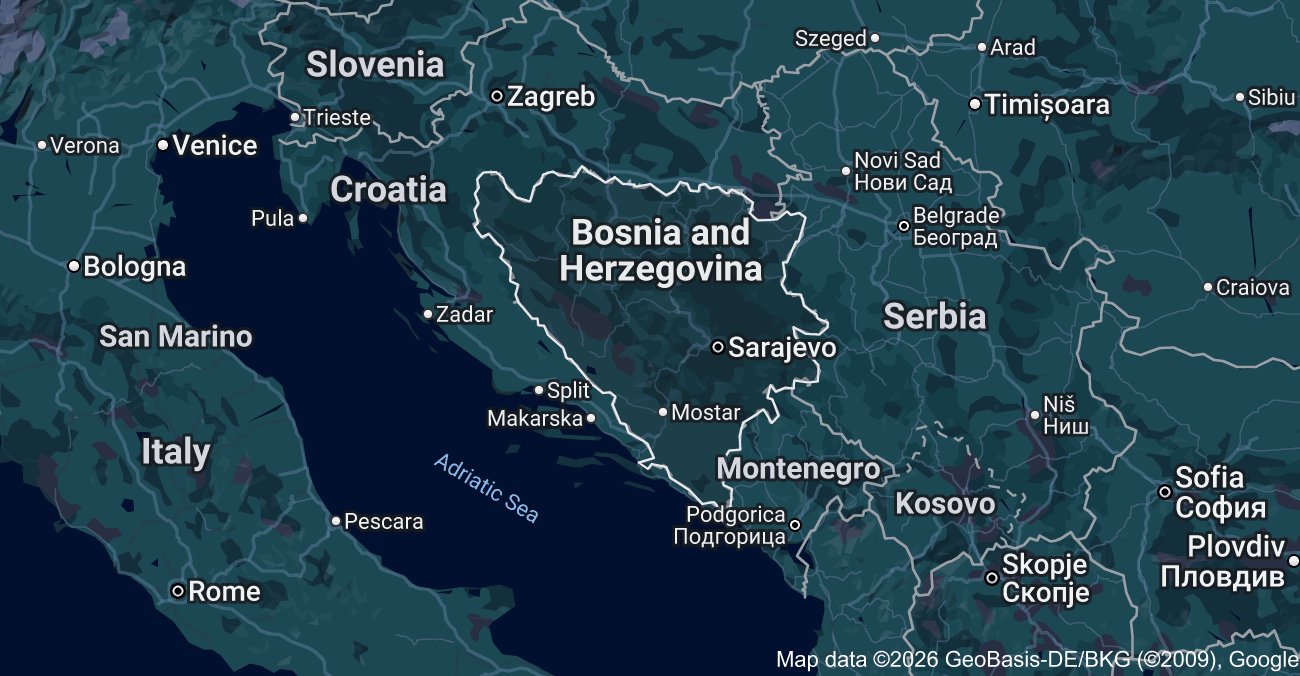
It is no coincidence that there has been a growing interest in Bosnia and Herzegovina (or simply Bosnia) for several years now. A unique nation in the European context, it is the easternmost frontier of Catholicism, the westernmost border of Eastern Christianity, and an outpost of traditional and non-extremist Islam in the contemporary world.

Despite the destruction and suffering caused by the Balkan War (1991-95), this small country in the heart of Europe is a natural bridge between Islam and the West, and has been for centuries a place of coexistence between Muslims, Catholics, Orthodox Christians, and Jews.

On the War (1991-95)

Bosnia now has a population of 4 million. In addition, about one million people fled abroad or were driven from their homes because of the war. 200,000 people were killed during the conflict. It was the most prolonged and violent armed conflict in Europe since World War II. Of all the victims, 65% were Bosnian Muslims, 25% Serbs, and 8% Croats. Nearly two million people suffered the consequences of ‘ethnic cleansing’. About a thousand mosques were destroyed. Sarajevo, Bosnia’s capital, suffered the longest siege of a city in the history of modern warfare: nearly four years of siege by Serbian forces, from April 5, 1992 to February 29, 1996.

The peace agreement reached in 1996, in Dayton, Ohio, with American mediation, is far from perfect or fair; it left the country with a back-broken constitution and allowed the ethnic cleansing gains to be preserved and the injustices it imposed to be perpetuated. However, it allowed the beginning of the country’s reconstruction.

Bosnia has a centuries-old experience of peaceful coexistence between different communities. Since the formation of the nation in the Middle Ages, its cities have exhibited an enviable tolerance, based on the concept of ‘convergence in difference’. This was already an intuitive knowledge of the ‘transcendent unity of religions’. In Bosnia’s long history, one will not find a single instance of persecution against Christians or Jews. Bosnians Muslims have lived this last century and half almost with no political protection. And yet they never persecuted Christians or Jews—occasional harassment against those communities always came from external powers. But the war has undermined this living environment and the Bosnian cities were, against the will of most of its Catholic, Orthodox, Jewish and Muslim inhabitants, transformed into spaces where the ‘other’ and the ‘different’ were forced to choose one option: conversion, escape, or death—fatalities that have their roots in the ignorance of the other’s patrimony.

On Bosnia’s Pluralist Heritage

In its history, Bosnia has always belonged to the European ambiance, but with a unique confessional pluralism, different from the rest of the continent. The aspirations of the communities of the Bosnian space initially assumed three main forms: the Orthodox Christian, the Catholic, and the Bosnian autocephalous church. This latter virtually ceased to exist in the 15th century, with the arrival of Islam, which absorbed many former Bosnian ‘krstjanos’ that were neither Catholics, nor Orthodox.

By the way, the opinion that Ottoman rule was a despotic one is wrong; for Bosnia, the Turks provided a four century period of peace and prosperity. During the first half of this long period of Ottoman government, Bosnia benefited from an administration that was as good as any in the Europe of then and Christian subjects were not worse off than serfs in other lands of Eastern Europe.

In the beginning of the 20th century, my grandfather, a very pious man and proud of Islam, father of seven children, considered leaving the country; he was planning to settle in Turkey, due to the difficulties experienced by Muslims here. It was not an isolated case. Today, only a quarter of Bosnians live in the country, while about three-quarters are now in Turkey. But my uncle persuaded my grandfather to stay. “Here is your country,” he said. And he stayed, together with my father.

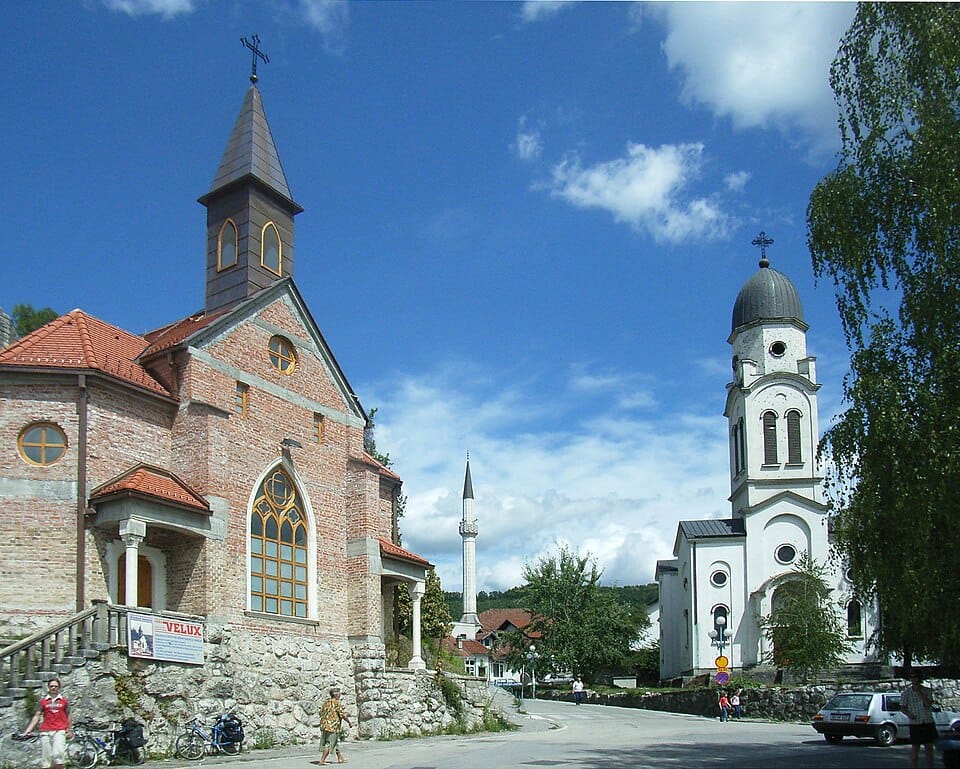
A Catholic church (left), a Serbian Orthodox church (right), and a mosque (center background) in Bosanska Krupa.

Today, Sarajevo is one of the more plural and open cities in the world. Perhaps one will encounter the most diverse society of today in the United States; in many American cities today one will find Buddhist pagodas, Sikh temples, mosques, synagogues, churches of various Christian denominations. But plurality is a matter still more alive here in Sarajevo, where any Catholic, Jew, or Orthodox Christian can freely attend his church or synagogue, can organize debates and seminars, and publish his newspapers and books. Notwithstanding this confessional pluralism, the entire Bosnian population speaks a single language (Bosnian‑Croation‑Serbian language), which is also spoken outside its borders. There are very few European societies in which one will find such a diverse society and yet so integrated and cohesive one as Bosnia.

On the Challenges of the 21st century

Bosnia entered the 20th century divided between Serbia and two empires, the Austro-Hungarian and the Ottoman. After World War I, the Kingdom of Serbs, Croats, and Slovenes came into being, and Bosnia was almost erased from the map, with the national identity deleted from the political horizon. After World War II, socialist Yugoslavia was established, according to Marxist-Leninist principles, and the Bosnian Muslims became second-class citizens, without the same rights as Serbs and Croats. We were a unique situation in Europe, a phenomenon without comparison. For Yugoslav Marxism, confessional and national identities were a mere transitional phase towards the perfect society, without classes and without religion, so that such identities were seen as resulting from a lower level of social development.

it is a living laboratory for many nations of the world

Finally, in the last decade of the 20th century, during the process of disintegration of Yugoslavia between 1991 and 1995, the social and confessional pluralism in Bosnia was an object of deep suspicion and distrust, and its more powerful neighbors invested full force against it, to the point that one can speak of genocide. Despite all these threats to our religious diversity and the trauma of persecution, Bosnia managed to survive the 20th century, and entered the 21st century as an independent state, in which adherents of different faiths continued to live together.

But the subject of pluralism remains a real issue, because the present condition is still one of an impasse as regards a truly sustainable political order in the face of threats from ultra-nationalist neighbors. The dominant tendency is to territorialize confessional and ethnic distinctions, which conflicts with the cultural uniqueness and confessional plurality in Bosnia. But I see no other future for Bosnia, as it is not an exclusively Muslim society but is also Christian and Jewish. In this sense, it is a living laboratory for many nations of the world.

- Enlace a artículo -

Más info en https://ift.tt/uY6r8oA / Tfno. & WA 607725547 Centro MENADEL (Frasco Martín) Psicología Clínica y Tradicional en Mijas. #Menadel #Psicología #Clínica #Tradicional #MijasPueblo

*No suscribimos necesariamente las opiniones o artículos aquí compartidos. No todo es lo que parece.

martes, 7 de abril de 2026

"Pax" Romana


Dear Classical Wisdom Readers,

Something a little different today…

Regular readers may recall that my husband writes the Substack Notes From the End of the World. While he prefers the genre of literary fiction (as evidenced by his two novels), he also dips into the muck and mire of geopolitics, lamenting the sorry state of the increasingly unpopular press along the way. As you can imagine, he has plenty on which to opine…

In our household, we love of history and learning the lessons of the past, so it is hardly surprising that, from time to time, his musings veer into our Classical World. In his most recent column, for example, dear husband notices how Pax Americana resembles its ancient namesake, Pax Romana.

But what was “Pax” Romana really like? How much peace was there actually… and for whom?

As the latest deadline looms large, let us explore what Roman “Peace” was all about… and whether or not it is a good mirror to our own times.

All the best,

Anya Leonard
Founder and Director

Classical Wisdom

Bring the wisdom of the classical world to your inbox and let the ancients guide you:

“Pax” Romana

By Joel Bowman

Historians, not generally known for their wry sense of humor, often refer to the period since WWII as “Pax Americana” (latin for “American Peace”).

This is the era during which U.S. hegemony shaped global trade and security, the age of supranational, alphabet soup institutions, like the UN, NATO, IMF, WTO, BIS etc. ... along with the International Atomic Energy Agency (IAEA), the International Court of Justice (ICJ), the Bretton Woods monetary system, the Group of Seven (G7), and other such branches of the so-called “Rules Based International Order.”

Fittingly enough, the period was named after the “Pax Romana” – the period from roughly 27 BC – 180 AD, during which emperors from Augustus through to Marcus Aurelius consolidated power under Roman law, securing important trade routes across Europe, North Africa, and the Middle East. And yet, for the Romans – as for the Americans – the era was not without conflict.

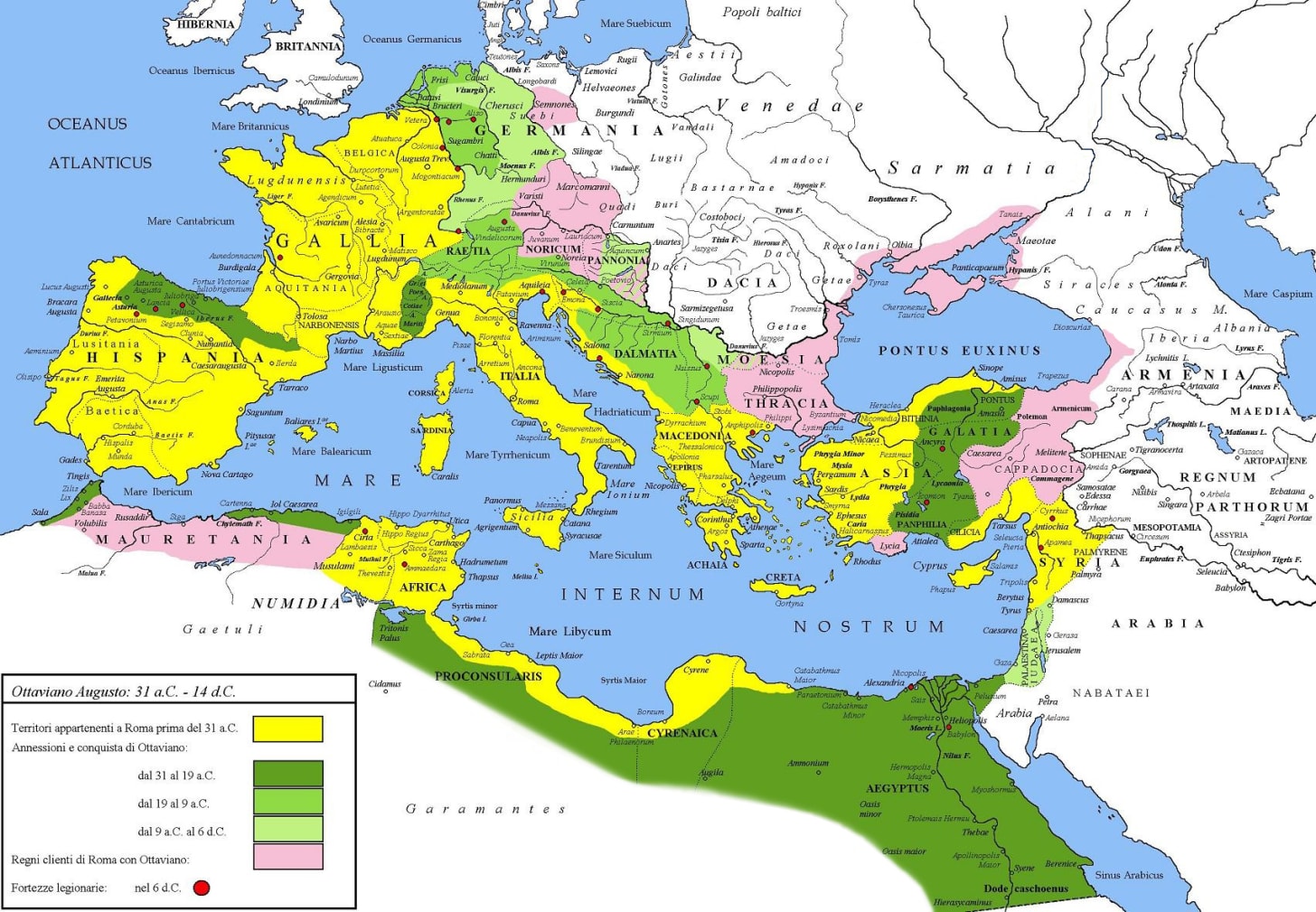
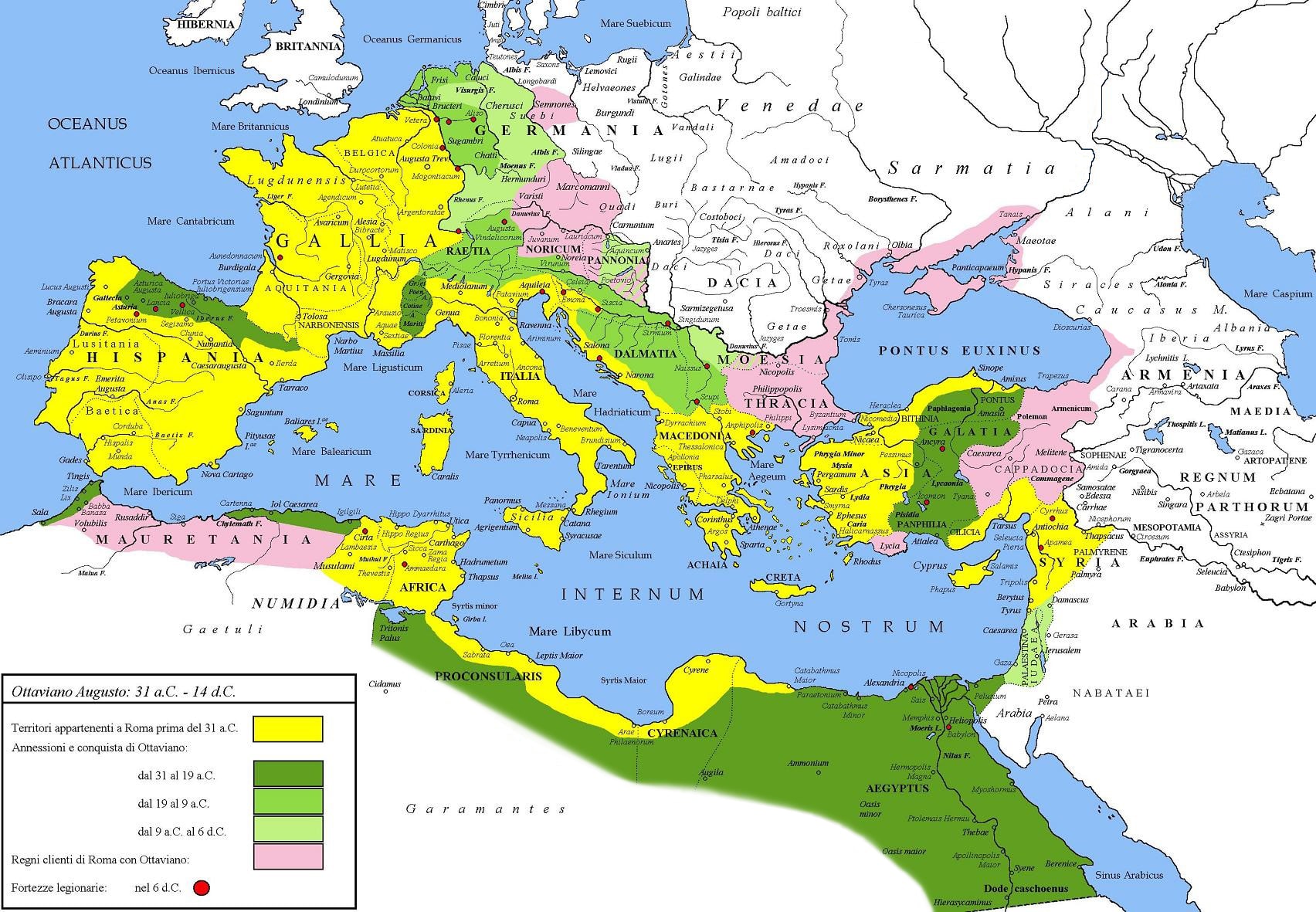
Extent of the Roman Empire under Augustus. Yellow represents the extent of the Republic in 31 BC, while green represents gradually conquered territories under the reign of Augustus, and pink areas represent client states.

One eye on the vicissitudes of fortune… the other on the calamities of others… we thumb the pages of history for possible clues regarding the future…

Though Roman citizens of the Pax Romana era enjoyed a period of relative peace inside the imperial gates, with some very notable exceptions, bloody wars raged on almost constantly outside them, as the empire fought for control of lands and trade routes near and far. Naturally, such campaigns ranged greatly in terms of ambition, reward and, ultimately, cost...

Frontier skirmishes with nomadic tribes along the Arabian Desert, for example, were relatively minor in terms of capital expenditure and “sandals on the ground,” though they were a persistent nuisance for the Great Power of the day. Mostly this entailed maintaining forts and patrols and protecting trade routes along the way, with forces of up to about ~20,000 men required at any given time for the task. Not enough to bring a mighty empire to its knees, but certainly enough to bite at its ankles.

From Gold to Lead

The Dacian Wars, meanwhile – two separate wars waged by Trajan between 101–102 and 105–106 AD – saw 100,000 soldiers take to the field in what we know as modern day Romania. A massive undertaking at the time, in which both sides suffered enormous human casualties, the spoils of the vast Dacian goldmines nonetheless helped fill Rome’s coffers, just as victory helped swell her imperial chest...and fill her head with ideas of greater glory to come.

But while the Dacian Wars were short, and the taste of their lucre sweet, the same could not be said of Rome’s other quagmires, of which there were no shortage.

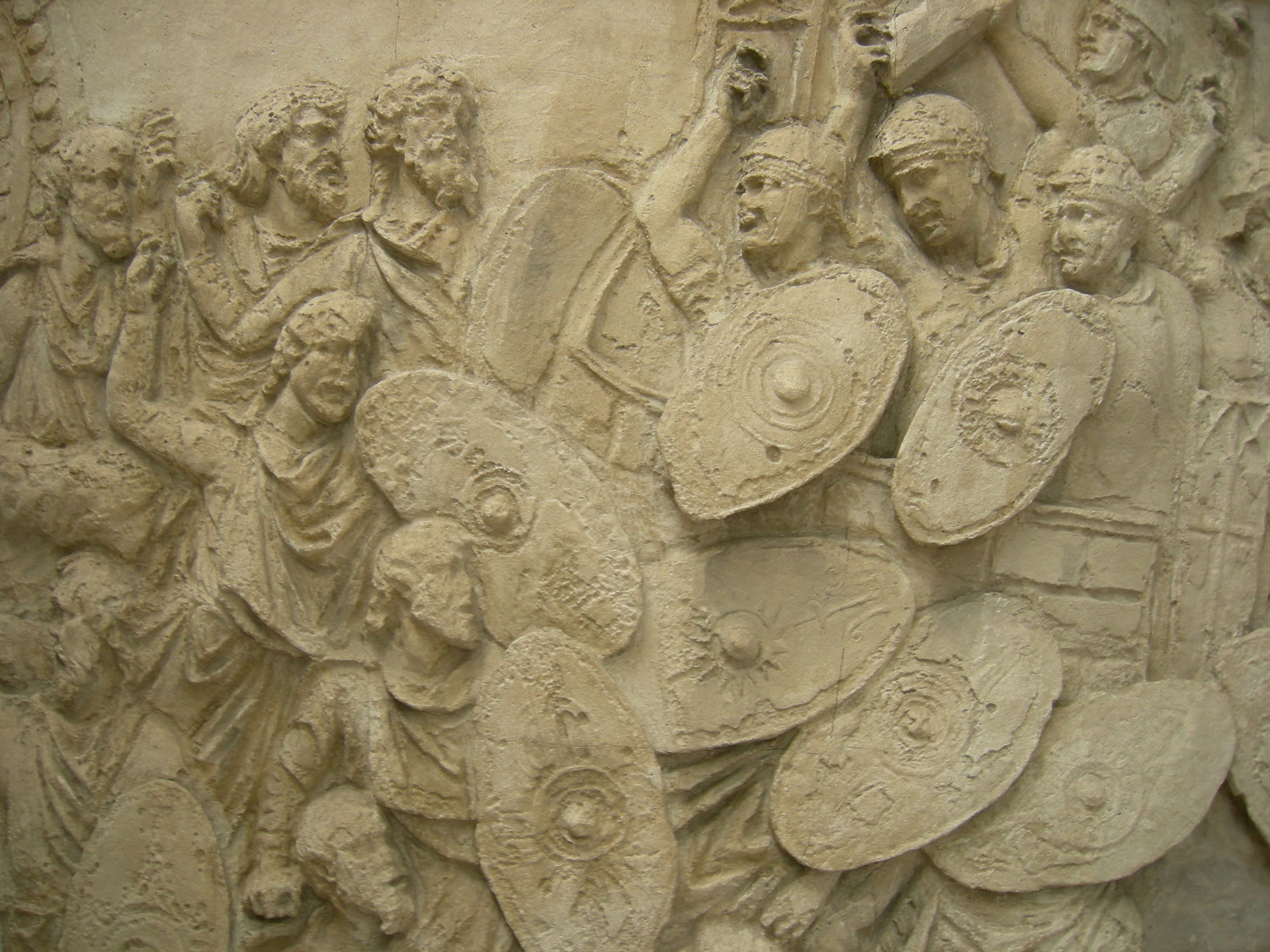
Battle scene. The Dacians (on the left) are attacking Trajan’s men. From en:Trajan’s Column; this is from the plaster-cast reproduction at the Museum of Romanian History in Bucharest, Romania

The Germanic Wars, for instance, which lasted on and off for centuries, were a virtually ceaseless drain on the imperial purse, requiring up to 80,000 soldiers on the front at a time, most of whom were housed in permanent garrisons along the Rhine and Danube Rivers. Constant battles kept the soldiers pitted against “the barbarians,” with many such encounters coming at punishing cost for the empire. In the epic Battle of the Teutoburg Forest, to name but one bloody scene, three entire Roman legions (~15,000–20,000 men) were ambushed... and annihilated... in a matter of days.

Then there were the so-named Britain & Northern Campaigns, which saw Roman soldiers marching their shiny standard into what is today Northern England. While the far flung land offered some bounty – mostly in the form of tin, lead, some agricultural land and a few slaves – the fact was Claudius needed a military victory to show his restless citizens just who was boss. And as nobody had attempted to invade the distant land since Caesar (perhaps with good reason), Briton must have seemed as good a spot as any for the wily ruler. As Cassius Dio writes two centuries later:

“Claudius desired to win glory by making a conquest… and so he undertook a campaign against Britain.”

Enjoying Our Notes ~ Support Us Here

Muck and Mire

Alas, as with the barbarians, the Romans were never fully able to bring the Britons under heel. Instead, they found themselves entrenched, bogged down, sank ever deeper into the muck and mire of their own expansionist ambitions...which would persist for some 80 more years, until Hadrian shifted gears from offense to defense... and to drawing a stone line around the empire.

Truly, few things say “high tide of empire” quite like Hadrian’s Wall, a 117kms (73 miles) fortification just south of the Scottish border... constructed more than 2,000kms (by Roman roads) from the Imperial City. That’s the fortification against those further northern tribes, such as the scrappy Picts, feisty Caledonians, and the rest of the bedraggled peasants huddled up on the very edge of those dreary isles, in what is today’s Scotland. To say the empire had overextended itself would be something of an understatement.

And yet, for all the waste and squander, the mud and the blood and the flat, warm beer... for all those protracted northern expeditions... their battling the barbarians at the gates… and tracking the Arabian nomads around and around the deserts... these misadventures amounted to little next to the losses sustained during Rome’s primary Great Power rivalry during the so-called Pax Romana...

We refer, of course, to Rome’s epic wars with the vast Parthian Empire, centered in the ancient land we know today as... Iran.

Stay tuned for more Notes From the End of the World

Cheers,

Joel Bowman

Anya’s Note: If you’re interested in following along with dear husband’s Notes From the End of the World, including part 2 of ‘Pax’ Romana, in which he casts his wry eye and sardonic humor across a world turned downside-up, all from our perch down here in Argentina, feel free to sign up for his newsletter, right here…

- Enlace a artículo -

Más info en https://ift.tt/d09PoMQ / Tfno. & WA 607725547 Centro MENADEL (Frasco Martín) Psicología Clínica y Tradicional en Mijas. #Menadel #Psicología #Clínica #Tradicional #MijasPueblo

*No suscribimos necesariamente las opiniones o artículos aquí compartidos. No todo es lo que parece.

Confesiones de un alma insignificante


confesiones-de-un-alma.jpg ¿Qué quedaría de ti si fueras completamente honesto contigo mismo? Confesiones de un alma insignificante es una exploración radical de la experiencia humana. No es un libro de autoayuda, ni una promesa de felicidad, ni una guía espiritual con respuestas fáciles. Es algo mucho más incómodo: una confesión honesta sobre el sufrimiento, el autoengaño y las historias que construimos para sostener nuestra identidad. En estas páginas, el autor se adentra en las profundidades de su propia experiencia para exponer aquello que normalmente se oculta: el miedo, la contradicción, la soledad, la falsedad del ego...

- Enlace a artículo -

Más info en https://ift.tt/d09PoMQ / Tfno. & WA 607725547 Centro MENADEL (Frasco Martín) Psicología Clínica y Tradicional en Mijas. #Menadel #Psicología #Clínica #Tradicional #MijasPueblo

*No suscribimos necesariamente las opiniones o artículos aquí compartidos. No todo es lo que parece.

The Legend of the Tollhouses


This essay by Jennifer Doane Upton was originally published in Volume 21 of Sacred Web, Summer 2008, pp.151-156.

In the Eastern Orthodox Church there is a tradition regarding the 'aerial tollhouses' which the soul encounters after death. Though it does not have the force of dogma, it is recounted by such Church Fathers as St. John Chrysostom, St. Athanasius the Great and St. Ephraim the Syrian. (The Orthodox Church maintains a certain dogmatic silence on matters such as eschatology, since these realities cannot be fully expressed in human language.)

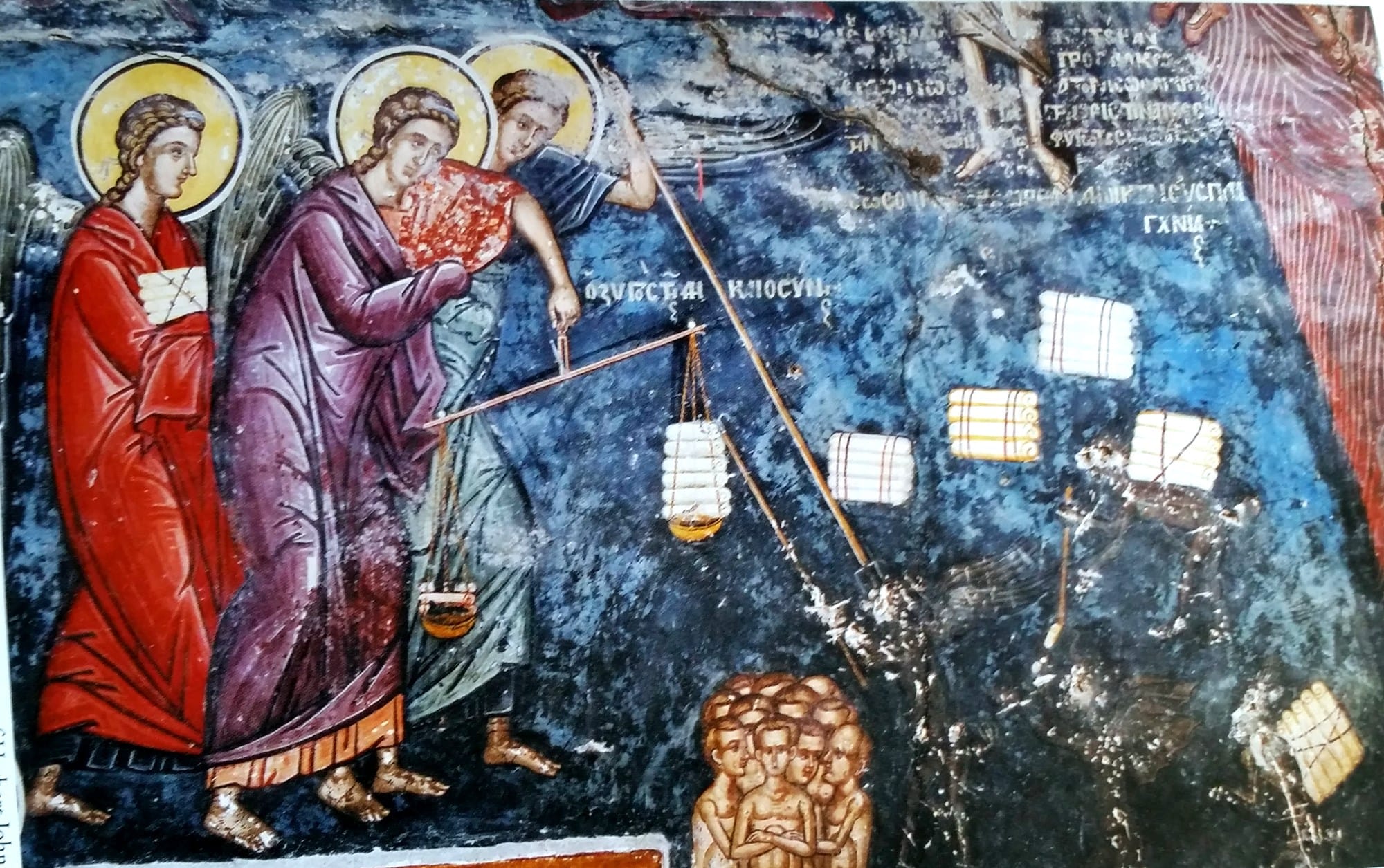
According to the tradition of the tollhouses, the soul after death encounters realms in the “air”, the psychic plane, that are ruled by demons, who tempt the soul according to its various sins, particularly those it had a special affinity for during life.

In the late 20th century it was Fr. Seraphim Rose who, in his book The Soul After Death, re‑introduced the tradition of the tollhouses to the English‑speaking world—though he is a suspect figure to many Orthodox Christians in the West due to his counterculture background.

According to the tradition of the tollhouses, the soul after death encounters realms in the 'air', the psychic plane, that are ruled by demons, who tempt the soul according to its various sins, particularly those it had a special affinity for during life. If it passes through those realms without yielding to temptation, it ascends to Paradise. If not, it may reside in Hell for a period, to be purged of those sins. The damned do not encounter the tollhouses, however, but go to Hell directly. Seraphim Rose quotes the following passages from Eastern Orthodox fathers and saints with regard to this tradition:

St. Athanasius the Great, describing a visionary experience of St. Anthony:

At the approach of the ninth hour, after beginning to pray before eating food, [he] was suddenly seized by the Spirit and raised up by the angels into the heights. The aerial demons opposed his progress: the angels, disputing with them, demanded that the reasons of their opposition be set forth, because Anthony has no sins at all. The demons strove to set forth the sins committed by him from his very birth; but the angels closed the mouths of the slanderers, telling them that they should not count the sins from his birth which had already been blotted out by the grace of Christ; but let them present—if they have any—the sins he committed after he entered into monasticism and dedicated himself to God. In their accusation the demons uttered many brazen lies; but since their slanders were wanting in proof, a free path was opened for Anthony. Immediately he came to himself and saw that he was standing in the same place where he had stood up for prayer. Forgetting about food, he spent the whole night in tears and groaning, reflecting on the multitude of man’s enemies, on the battle against such an army, on the difficulty of the path to heaven through the air, and on the words of the Apostle, who said: Our wrestling is not against flesh and blood, but against the principalities and powers of the air (Eph 6:12; Eph. 2:2). The Apostle, knowing that the aerial powers are seeking only one thing, are concerned over it with all fervor, exert themselves to deprive us of a free passage to heaven, exhorts: Take up the whole armor of God, that ye may be able to withstand in the evil day (Eph. 6:13), that the adversary may be put to shame, having no evil thing to say of us (Titus 2:8).

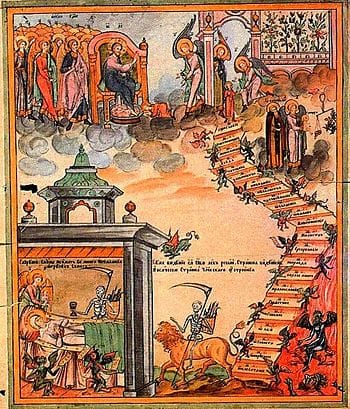
Ancient Orthodox icon depicting the spiritual testing a soul endures after leaving the body

St. John Chrysostom, describing the hour of death:

Then we will need many prayers, many helpers, many good deeds, a greater intercession from angels on the journey through the spaces of the air. If when traveling in a strange land or a strange city we are in need of a guide, how much more necessary for us are guides and helpers to guide us past the invisible dignities and powers and world-rulers of this air, who are called persecutors and publicans and tax-collectors.

St. Macarius the Great:

When you hear that there are rivers of dragons, and mouths of lions, and the dark powers under the heavens, and fire than burns and crackles in the members, you think nothing of it, not knowing that unless you receive the earnest of the Holy Spirit (II Cor. 1:22), they hold your soul as it departs from the body, and do not suffer you to rise to heaven.

St. Ephraim the Syrian:

When the fearful hosts come, when the divine takers-away command the soul to be translated from the body, when they draw us away by force and lead us away to the unavoidable judgment place—then, seeing them, the poor man…comes all into a shaking as if from an earthquake, in all in trembling… The divine takers-away, having taken the soul, ascend in the air where stand the chiefs, the authorities and world-rulers of the opposing powers. These are our accusers, the fearful publicans, registrars, tax-collectors; they meet it on the way, register, examine, and count out the sins and debts of this man—the sins of youth and old age, voluntary and involuntary, committed in deed, word and thought. Great is the fear here, great the trembling of the poor soul, indescribable the want which it suffers then from the incalculable multitudes of its enemies surrounding it there in myriads, slandering it so as not to allow it to ascend to heaven, to dwell in the light of the living, to enter the land of life. But the holy angels, taking the soul, lead it away.

St. John Damascene, from the Divine Liturgy:

O Virgin, in the hour of death rescue me from the hands of the demons, and the judgment, and the accusation, and the frightful testing, and the bitter toll-houses, and the fierce prince, and the eternal condemnation, O Mother of God.

Each toll-house tests the sins corresponding to it; each sin, each passion has its tax-collectors and testers.

St. Cyril of Alexandria:

What fear and trembling await you, O soul, in the day of death! You will see frightful, wild, cruel, unmerciful and shameless demons, like dark Ethiopians, standing before you. The very sight of them is worse than any torment. The soul, seeing them, becomes agitated, is disturbed, hastens to the angels of God. The holy angels hold the soul; passing with them through the air and rising, it encounters the toll-houses which guard the path from earth to heaven, detaining the soul and hindering it from ascending further. Each toll-house tests the sins corresponding to it; each sin, each passion has its tax-collectors and testers.

…we don’t change ontologically simply through death, and so if our love still needs to be perfected, this happens in the afterlife.

The reality which the Orthodox tradition of the tollhouses unveils is not fundamentally other than the Catholic doctrine of Purgatory. According Bishop Kallistos Ware, we don’t change ontologically simply through death, and so if our love still needs to be perfected, this happens in the afterlife. This is the truth behind both Purgatory and the legend of the tollhouses. Many Orthodox however, unwilling or unable to take a symbolic leap, are appalled by the idea of the tollhouses, which they consider to be rank superstition—an attitude due in part to the tendency of many modern Orthodox to define themselves primarily as 'not Roman Catholic,' making them highly suspicious of any doctrine that resembles the Catholic Purgatory. Also, the contemporary 'Protestantizing' of Eastern Orthodoxy, in North America at least, makes many Orthodox wary of any doctrine of after‑death purgation, though such traditions are as much Orthodox as Catholic. Kallistos Ware, for one, de‑emphasizes the difference between the Eastern and Western concepts. (Whether or not Hell and Purgatory are two different 'places', there is obviously a great difference between posthumous suffering accompanied by hope, and such suffering when it is totally without hope; this is the crux of the matter.) And a third reason for Orthodox suspicion of this tradition among many Orthodox Christians is the mistaken idea that the concept of aerial tollhouses implies that the soul, if it fails to pass these obstacles, might actually be damned. Such a doctrine would certainly go a long way toward denying the efficacy of Christ’s Atonement. But as we have seen, Orthodox tradition associates the tollhouses with the purgation of the saved, not the punishment of the lost.

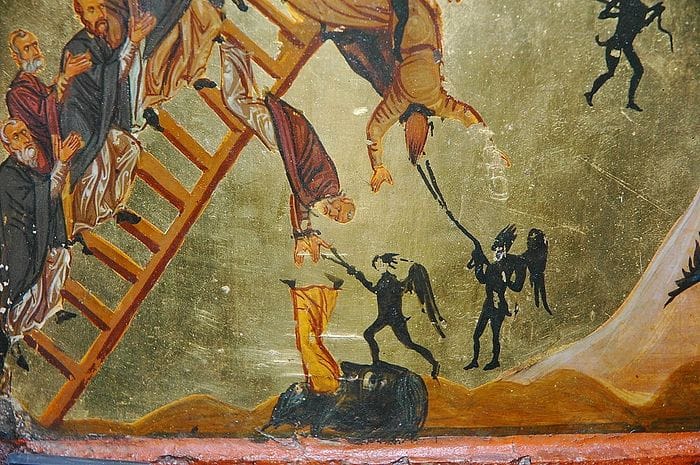
Demons warring against monks. Fragment from the icon, “The Ladder of the Virtues.”
The soul with worldly attachments, however, is left hanging in the air, as it were.

It is only believing Christians who encounter the tollhouses after death. The unbeliever gave up his soul long before his death. He saw no value in his Spirit; therefore, when the Evil One offered him worldly gain in return for his giving evil something like a spiritual valuation, he accepted the bargain without hesitation. And so, at the moment of his death, this man has nothing in his soul which can ascend even as far as the psychic realm, the only place where choice can be made, the only realm in which evil could possibly tempt him. Consequently he falls below the earth, below the human state, into the infra‑psychic realm, where he finally sees all those demonic worlds which he was mercifully forbidden to see during his terrestrial life.

The believing Christian, however, has kept the Spirit alive in his soul to a greater or a lesser degree, and that Spirit longs to ascend homeward to Paradise. The Spirit flies away toward Paradise, its one true love, with seeming unconcern for the soul it carries in its wake. The soul which had the single life‑task of conforming itself to that Spirit, has nonetheless spent a lifetime trying to hold on to its worldly attachments and to the passions which seemed to give this world such richness and stability.

At the moment of death, however, this world is gone. If the soul is pure, the Spirit enfolds the soul within itself, and becomes like a golden arrow, which delivers the soul in an instant to its true home.

The soul with worldly attachments, however, is left hanging in the air, as it were. It cannot follow with simplicity the Spirit in its ascent. The soul’s passions keep reaching for a world that is no longer there.

And the demons, who can move about with greater suppleness in the psychic realm (which the soul has just now entered) than they could in the physical one, offer themselves to the soul in lieu of the world it has lost. Here, if the soul does not listen to the angels, which have been sent to it as helpers, it will not see that the demons are in fact offering it nothing, but are instead trying to take away its eternal life. It is now more than ever that the soul needs to understand the ways of the Spirit. In life it far too often followed the ways of this world because that is all it could see through its passional vision. Had it only raised its vision higher, it would have seen the comings and goings of the Spirit creating a multitude of paths, which fall like a golden web upon everything the soul had taken to be merely 'this world.' It is here, in a world of higher vision, that the awakened soul wishes it had willed to follow the Spirit long ago.

- Enlace a artículo -

Más info en https://ift.tt/d09PoMQ / Tfno. & WA 607725547 Centro MENADEL (Frasco Martín) Psicología Clínica y Tradicional en Mijas. #Menadel #Psicología #Clínica #Tradicional #MijasPueblo

*No suscribimos necesariamente las opiniones o artículos aquí compartidos. No todo es lo que parece.

lunes, 6 de abril de 2026

Should We Turn the Other Cheek?


Dear Classical Wisdom Reader,

Should we turn the other cheek?

Nowadays, it is not a popular stance. The world rewards outrage and retaliation, thriving on division and an ever-present call to arms. We are told that silence is violence and that righteous anger is all the rage - not merely justified, but necessary.

But is that really the case? Should we fight back in the face of perceived injustice, or practice restraint and forgiveness?

Of course, regular readers will know this is not a new question, nor the first time humanity has contemplated how to respond to harm.

Indeed, the idea of non-retaliation sits at the very heart of Western culture. Most famously, it is embodied in the teachings of Christ, but it did not begin there. Long before the Sermon on the Mount, ancient philosophers, particularly the Stoics, were wrestling with the same moral challenge:

How should a rational, virtuous person respond when wronged?

What emerges is not a single tradition, but a shared inheritance, an enduring ideal that belongs as much to philosophy as to faith.

It is a place where ancient voices converge: philosophers and theologians, sages and skeptics, all grappling with the same enduring question...and all still deeply relevant today.

After all, modern life confronts us daily with conflict, whether online, at work, or within our closest relationships. The significance of this inquiry becomes unavoidable. To understand where these ideas come from is, perhaps, to better understand how we might live them.

So, this Easter Monday, let us take a moment to reflect on one of the most challenging ethical demands ever spoken: to forgive, to refrain, to turn the other cheek.

Some may dismiss this teaching as naïve, while others may embrace it as unquestioned truth. Either way, let us first step a little deeper into its origins. You may find that its roots run far wider, and far deeper, than you ever imagined...

All the best,
Anya Leonard
Founder and Director
Classical Wisdom

Turn the Other Cheek: The Stoic and Christian Ideal of Non-Retaliation

By Brittany Polat

It’s one of the most famous ethical scenes in the Bible. Jesus of Nazareth, just beginning his vocation as a faith healer and messenger of God, has been traveling around the countryside gathering his disciples and healing the sick. Everywhere he goes, “great multitudes” follow him.

Eventually he makes his way up a mountain and delivers what would later become known as the Sermon on the Mount: a series of stringent ethical teachings which begin with the Beatitudes (“Blessed are the poor in spirit, for theirs is the Kingdom of Heaven”), run through a series of homely analogies on inner purity (“You are the salt of the earth”), and exhort his listeners to forgive their enemies (“But I tell you, love your enemies, bless those who curse you, do good to those who hate you, and pray for those who mistreat you and persecute you”) and avoid retaliation (“I tell you, don’t resist him who is evil; but whoever strikes you on your right cheek, turn to him the other also”).

The message is clear. Jesus is commanding his followers to “be perfect, just as your Father in heaven is also perfect.”

Bring the Wisdom of the Ancient World into your inbox and into your life. Subscribe Today to enjoy even more Classical Wisdom:

For centuries the Sermon on the Mount, as narrated in Matthew 5-7, has challenged and inspired Christians toward compassion and brotherly love. It is an ethic requiring humility, mercy, forgiveness, charity, sincerity, and self-awareness—in short, moral perfection. But while many of Christ’s followers over the centuries have struggled to live up to this ideal, few have doubted that the call to love your enemies and turn the other cheek is a uniquely Christian message.

But is it?

Biblical scholars are increasingly finding areas of overlap between early Christianity and Greco-Roman philosophies such as Stoicism and Cynicism. Stoicism, in particular, seems to have made a mark on the early Christian communities, influencing the ethical teachings of the Apostle Paul as well as the texts that came to form the synoptic Gospels (Matthew, Mark, and Luke). While it’s unlikely that Jesus himself was influenced by the Greco-Roman tradition, the believers who later wrote down his words were living in a time and place where Stoicism was the dominant moral ideology.

The early church, therefore, was formed in an environment when Stoicism set the baseline expectation for what a system of ethics should encompass. As one theologian puts it, “Stoicism had spread throughout the empire before the birth of Jesus and there is little doubt that the soil from which the church sprang up had been watered by the Stoic philosophy.”

In this way, more than a few Stoic principles were absorbed into early Christianity. Perhaps none more so than those ethical ideals expressed in the Sermon on the Mount: love your enemies, turn the other cheek, don’t judge other people.

Stoicism was well known in antiquity for these same stringent demands. The Stoic Musonius Rufus, who was a contemporary of the Apostle Paul, was widely acclaimed as a sage and compared to Socrates and even the mythical (god-like) heroes Heracles and Odysseus. He was famous, among other things, for both practicing and preaching the doctrine of non-retaliation:

And I might mention many other men who have experienced insult, some wronged by word, others by violence and bodily harm, who do not appear to have defended their rights against their assailants nor to have proceeded against them in any other way, but very meekly bore their wrong.

And in this they were quite right. For to scheme how to bite back the biter and to return evil for evil is the act not of a human being but of a wild beast, which is incapable of reasoning that the majority of wrongs are done to men through ignorance and misunderstanding, from which man will cease as soon as he has been taught. But to accept injury not in a spirit of savage resentment and to show ourselves not implacable toward those who wrong us, but rather to be a source of good hope to them, is characteristic of a benevolent and civilized way of life.

Musonius and other Stoics advocated peaceful interactions with others under the banner of wisdom, justice, courage, and temperance—in other words, the cardinal virtues. The Stoic doctrine of oikeiōsis (appropriation) holds that humans are naturally primed to grow in wisdom and virtue throughout our lives.

Like other animals, we are born with an instinct for self-preservation, which, if allowed to grow in the wrong direction, can turn into anger and selfishness. Some people unfortunately choose to align themselves with these baser instincts, metaphorically turning themselves into the “wild beasts” Musonius cites in the passage above. But if we mature properly, we realize that harming others actually harms ourselves. We are much better off showing compassion and restraint to other people, even if we lose certain worldly advantages such as money or status. As Musonius says, “virtue is brotherly love and goodness and justice and beneficence and concern for the welfare of one’s neighbor.”

Join Our Community Here

Biblical scholar Runar Thorsteinsson reminds us, however, that while Stoicism presents the most highly developed version of this ethic, the demand for non-retaliation had in fact been salient in the Greco-Roman tradition since the time of Socrates—who famously showed compassion and forgiveness to those who condemned him to death.

In the Sermon on the Mount, Thorsteinsson argues, Matthew’s goal was not to present an entirely new ethic, but to establish Jesus as a bona fide philosopher in this distinguished lineage:

When Jesus presents his moral teaching in the Gospel of Matthew, he is following in the footsteps not only of Jewish thinkers but also of Graeco-Roman philosophers, especially the Stoics. He is not presenting anything ‘new’; rather, Matthew is confirming that Jesus stands in a long tradition of learned moralists, whether Jewish or non-Jewish, as he verifies the moral teachings and improves them (‘You have heard…But I say to you…’). Matthew, it seems, wants to emphasize that Jesus is not inferior to such moralists. Other moralists may be better known and their ethical theory may be more elaborate, but the content of Jesus’ moral teaching is as powerful as theirs, if not more powerful, and his actions show that his way of life is wholly in accordance with his teaching.

According to this reading, the gospels (and Pauline letters) were innovative not in creating a new ethic of compassion and moral perfection but in combining an existing system of Greco-Roman ethics with the new Jewish tradition springing up around Jesus of Nazareth. With respect to the Sermon on the Mount, theologian Stanley Stowers maintains that the author of Matthew “inherited a Jesus who was known as a teacher but had no clear and elaborated ethical teachings that would make him like, or rather, superior to, the other great teachers of the culture.”

Therefore he turned to the ethical teachings of Stoicism—“the most prominent and widely respected philosophy of the day”—to create a picture of “Jesus the Judean sage.”

If this is true, it would not be the first or last attempt to integrate Judaism with Greco-Roman philosophy. Philo of Alexandria was a Jewish Neo-Platonist who also incorporated elements of Stoicism into his syncretic philosophy. Paul of Tarsus, who was responsible for shepherding the early church communities, “had ‘absorbed’ a great deal of the fundamental Stoic worldview into his own,” according to New Testament scholar Troels Engberg-Pedersen.

And Christ-followers would continue to present Jesus as a philosopher even a century after his death; as Pierre Hadot notes, “certain Christians presented Christianity not only as a philosophy, that is to say a phenomenon of Greek culture, but as the philosophy, the eternal philosophy.”

Share

Of course, within a couple hundred years after the death of Jesus, the tables had been completely turned. As Christianity became the dominant belief system and the Greek philosophical schools receded from view, moral teachers and thinkers turned increasingly to the new Christian texts rather than the older philosophical ones for their spiritual instruction. And though educated theologians continued mining “pagan” books for wisdom and understanding, philosophy was now read through a Christian lens.

Congenial ideals that were once identifiably Stoic were now considered Christian teachings, not only in Biblical texts but through the ever-growing body of Christian exegetical writings, monastic tradition, and even spiritual exercises (as noted by Pierre Hadot).

However, careful readers have always recognized the affinity between Stoic and Christian ethical teachings. From early church fathers like Origen and Augustine, through Aquinas and other medieval thinkers, to Protestant reformers like Luther and Calvin, down to 20th-century theologians like Reinhold Niebuhr (commonly credited with writing the Serenity Prayer), Stoicism has consistently exerted a strong but unacknowledged influence on Christian ethics.

That lack of acknowledgement seems to be slowly changing as Stoic scholarship advances and as Stoicism continues to grow in popularity. At the same time, Christian scholars are suggesting that understanding Stoicism can help Christians to better interpret the Bible. Anyone interested in Western history, philosophy, and culture—as well as those seeking to better understand Biblical tradition—has much to learn from studying the parallels and intertwined histories of Christianity and Stoicism.

In this spirit, I’d like to close with four parallel texts that illustrate the overlap between Stoic and Christian ethics. The Biblical passages are all from the Sermon on the Mount (Matthew 5-7), and the Stoic passages come from four well-known Roman Stoics: Musonius, Seneca, Epictetus, and Marcus Aurelius.

The fact that Stoicism and Christianity both emphasize an ethic of non-retaliation does not take away or diminish the contribution of each—on the contrary, it underscores the importance of this ethical ideal in the long history of Western culture.

These passages urge us toward forgiveness, reconciliation, and non-judgment—in other words, toward the moral perfection so characteristic of these philosophers. My hope is that all readers, whatever their philosophical or religious persuasion, will be challenged and inspired toward their own version of inner peace and compassion toward other people.

Why do you see the speck that is in your brother’s eye, but don’t consider the beam that is in your own eye? Or how will you tell your brother, ‘Let me remove the speck from your eye,’ and behold, the beam is in your own eye? You hypocrite! First, remove the beam out of your own eye, and then you can see clearly to remove the speck out of your brother’s eye.

Matthew 7.3–5

~

Do not preach right-doing to people who are aware of your wrongdoing.

Musonius Rufus, Sayings, 32

Share

You have heard that it was said, “An eye for an eye, and a tooth for a tooth.” But I tell you, don’t resist him who is evil; but whoever strikes you on your right cheek, turn to him the other also.

Matthew 5.38–39

~

It is not honorable to repay injuries with injuries…Revenge and retaliation are words people use and even think to be righteous, yet they do not greatly differ from wrongdoing, except in the order in which they are done: he who renders pain for pain has more excuse for his sin; that is all.

Seneca, On Anger, 2.32

Leave a comment

If, therefore, you are offering your gift at the altar, and there remember that your brother has anything against you, leave your gift there before the altar, and go your way. First be reconciled to your brother, and then come and offer your gift.

Matthew 5.23–24

~

If we define the good as consisting in right moral purpose, then the mere preservation of our relationships becomes a good; and furthermore, the person who gives up some of their external things achieves the good. “My father is taking away my money.” But he is doing you no harm. “My brother is going to get the larger part of the farm.” Let him have all he wants. That doesn’t help him at all to get a part of your decency, does it, or of your fidelity, or of your brotherly love?

Epictetus, Discourses, 3.3, 8–9

Share

You have heard that it was said, “You shall love your neighbor and hate your enemy.” But I tell you, love your enemies, bless those who curse you, do good to those who hate you, and pray for those who mistreat you and persecute you, that you may be children of your Father who is in heaven. For he makes his sun to rise on the evil and the good, and sends rain on the just and the unjust.

Matthew 5.43–45

~

If you can, correct those who do wrong; but if you cannot, remember that compassion is given to you for this purpose. The gods, too, are compassionate to such people, for sometimes they even help them obtain health, wealth, reputation. And it’s in your power to do the same; or tell me, who is stopping you?

Marcus Aurelius, Meditations, 9.11

About the Author

Brittany Polat is a philosophical writer and community organizer who shares Stoicism with people all over the world. Her new book Jesus and Stoicism: The Parallel Sayings, was recently published. Previous books include Stoic Ethics: The Basics (with Christopher Gill) and Journal Like a Stoic.

- Enlace a artículo -

Más info en https://ift.tt/kbKGXdf / Tfno. & WA 607725547 Centro MENADEL (Frasco Martín) Psicología Clínica y Tradicional en Mijas. #Menadel #Psicología #Clínica #Tradicional #MijasPueblo

*No suscribimos necesariamente las opiniones o artículos aquí compartidos. No todo es lo que parece.
Vuélvete siempre hacia dentro


robert-adams.jpg

Buenas tardes. Les doy la bienvenida de todo corazón. Me alegra estar con ustedes de nuevo. Muchos esperan que diga algo, que hable, que dé una conferencia, un discurso. Recuerden siempre que la enseñanza más importante del mundo es el silencio. Aprendemos a callar, a estar quietos, a dejar de hablar. Recuerden que, al hablar, se pierde la verdad de nuestro corazón que quiere expresarse. Cuando vienen solo a escucharme, ocurre lo mismo en cierta medida. Cuando vienen al satsang, lo importante es estar en él. No tiene nada que ver con conferencias, discursos, sermones ni nada por el estilo...

- Enlace a artículo -

Más info en https://ift.tt/kbKGXdf / Tfno. & WA 607725547 Centro MENADEL (Frasco Martín) Psicología Clínica y Tradicional en Mijas. #Menadel #Psicología #Clínica #Tradicional #MijasPueblo

*No suscribimos necesariamente las opiniones o artículos aquí compartidos. No todo es lo que parece.
Springtime with Mozart - Peaceful Classical Music


Spring feels like a gentle awakening, and Mozart’s music captures that feeling beautifully. Light, graceful, and full of quiet joy, his melodies bring a sense of freshness and calm that fits perfectly with the season.

This collection creates an atmosphere like soft sunlight through open windows, blooming flowers, and peaceful mornings. The music flows with ease, adding brightness without overwhelming the moment.

Perfect for relaxing, reading, working, or simply enjoying the calm beauty of spring. Let Mozart’s melodies refresh your mind and fill your day with light and serenity 🌿

📌𝐃𝐨𝐰𝐧𝐥𝐨𝐚𝐝 𝐄𝐬𝐬𝐞𝐧𝐭𝐢𝐚𝐥 𝐂𝐥𝐚𝐬𝐬𝐢𝐜𝐬 𝐀𝐩𝐩: https://app.essential-classics.com/


🟢 Follow us and our playlists on Spotify:
https://open.spotify.com/user/cugate-music?si=2d9adbc210b64a2b


𝐏𝐋𝐀𝐘𝐋𝐈𝐒𝐓
--------------------
00:00:00 Symphony No. 39 in E-Flat Major, K. 543: IV. Allegro
00:06:00 Divertimento in B-flat Major, K.287/271h: II. Andante Grazioso
00:14:15 Serenade No. 13 In G Major, K. 525 "Eine kleine Nachtmusik": IV. Rondo: Allegro
00:16:15 Piano Concerto No. 23 in A Major, K. 488: I. Allegro
00:27:35 Sinfonia concertante in E-Flat Major, K.364/320d: III. Presto
00:34:12 Flute Concerto No. 1 in G Major, K. 313: I. Allegro Maestoso
00:42:53 Violin Concerto No. 5 in A Major, K. 219: I. Allegro Aperto
00:52:16 Flute Concerto in D major, K. 314/285d: I. Allegro aperto
01:00:16 Piano Concerto No. 17 in G Major, K. 453: I. Allegro
01:12:18 Symphony No. 41 in C Major, K. 551: IV. Molto Allegro
01:19:20 Rondo in C Major, K. 373
01:25:55 Andante in C Major, K.315/285e
01:32:22 Piano Concerto No. 21 in C Major, K. 467: II. Andante
01:39:47 Violin Concerto No. 5 in A Major, K. 219: III. Rondeau: Tempo Di Menuetto
01:48:45 Serenade in D Major, K. 239: II. Menuetto
01:52:25 Quartet for Flute and Strings in D Major, K. 285: II. Adagio
01:55:26 Divertimento in B-flat Major, K. 270: II. Andantino
01:57:55 Krönungs Messe in C Major, K. 317: II. Gloria


𝐏𝐞𝐫𝐟𝐨𝐫𝐦𝐞𝐫𝐬
----------------------
(1) Alexei Zes
(2) Ilya Ioff
(3) Lithuanian Chamber Orchestra
(4) New Classical Orchestra Saint Petersburg
(5) Pavlovsk Symphony Orchestra
(6) Saint Petersburg Orchestra Classic Music Studio
(7) Saint Petersburg Orchestra of the State Hermitage Museum Camerata
(8) Saint Petersburg Radio and TV Symphony Orchestra
(9) Tbilisi Symphony Orchestra


Please follow and subscribe to our channel. We appreciate your support.

🔔 Click the bell to stay updated on the great classical songs

📧 info@cugate.com
🌐 www.cugate.com

🎧 Essential Classics is dedicated to sharing and promoting classical music. We strive to present the best classical music for you! Our hope is to make your days more beautiful and peaceful with classical music.

All audio and visual content on Essential Classics is created by Cugate AG a well-known music company. We have all legal rights of the audiovisual materials used in this video and our music is protected by copyright laws. If you have any questions regarding copyright or cooperation, please contact us.

#classicalmusic

- Enlace a artículo -

Más info en https://ift.tt/kbKGXdf / Tfno. & WA 607725547 Centro MENADEL (Frasco Martín) Psicología Clínica y Tradicional en Mijas. #Menadel #Psicología #Clínica #Tradicional #MijasPueblo

*No suscribimos necesariamente las opiniones o artículos aquí compartidos. No todo es lo que parece.