
Dear Classical Wisdom Readers,
Something a little different today…
Regular readers may recall that my husband writes the Substack Notes From the End of the World. While he prefers the genre of literary fiction (as evidenced by his two novels), he also dips into the muck and mire of geopolitics, lamenting the sorry state of the increasingly unpopular press along the way. As you can imagine, he has plenty on which to opine…
In our household, we love of history and learning the lessons of the past, so it is hardly surprising that, from time to time, his musings veer into our Classical World. In his most recent column, for example, dear husband notices how Pax Americana resembles its ancient namesake, Pax Romana.
But what was “Pax” Romana really like? How much peace was there actually… and for whom?
As the latest deadline looms large, let us explore what Roman “Peace” was all about… and whether or not it is a good mirror to our own times.
All the best,
Anya Leonard
Founder and Director
Classical Wisdom
Bring the wisdom of the classical world to your inbox and let the ancients guide you:
“Pax” Romana
By Joel Bowman
Historians, not generally known for their wry sense of humor, often refer to the period since WWII as “Pax Americana” (latin for “American Peace”).
This is the era during which U.S. hegemony shaped global trade and security, the age of supranational, alphabet soup institutions, like the UN, NATO, IMF, WTO, BIS etc. ... along with the International Atomic Energy Agency (IAEA), the International Court of Justice (ICJ), the Bretton Woods monetary system, the Group of Seven (G7), and other such branches of the so-called “Rules Based International Order.”
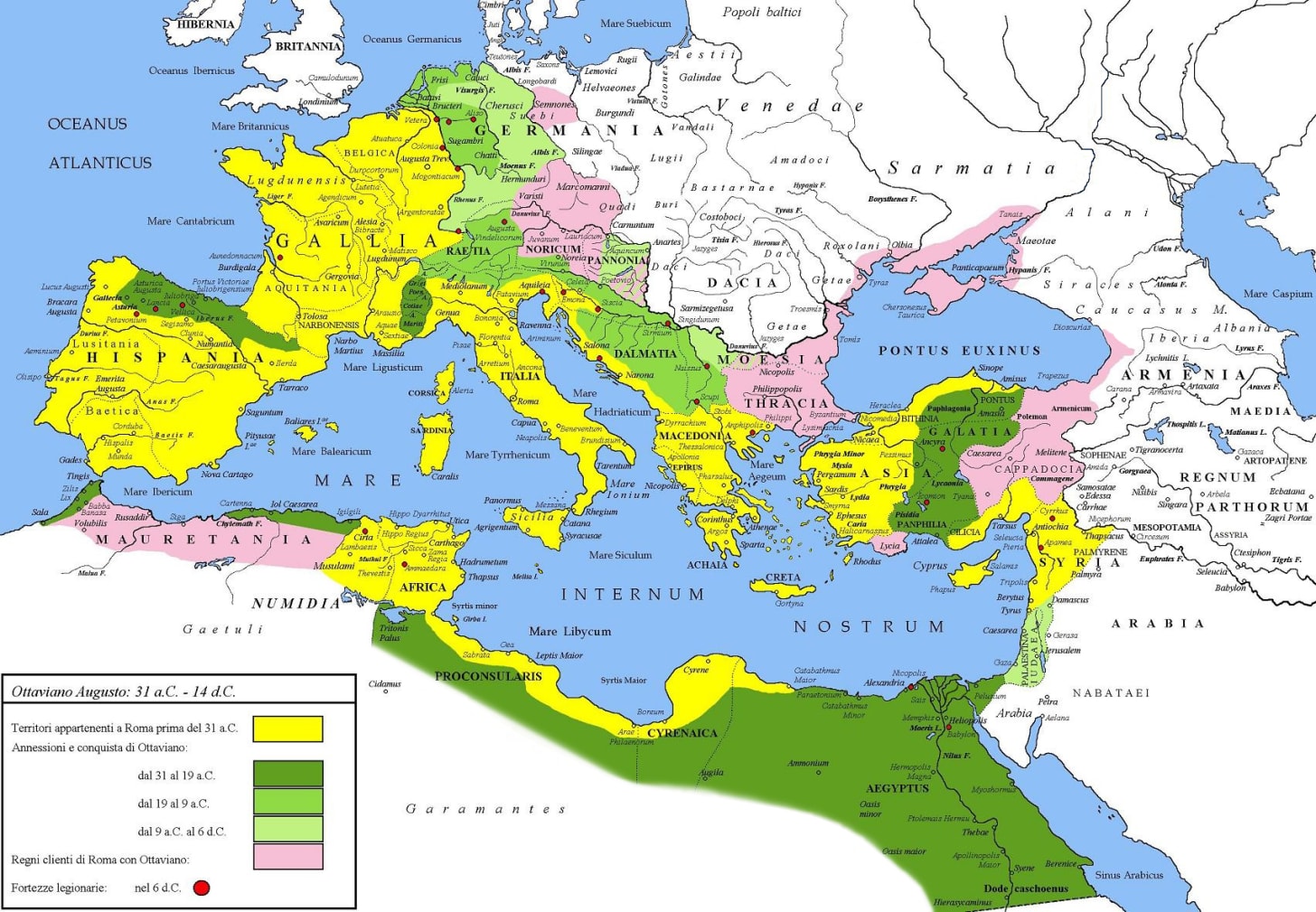
Fittingly enough, the period was named after the “Pax Romana” – the period from roughly 27 BC – 180 AD, during which emperors from Augustus through to Marcus Aurelius consolidated power under Roman law, securing important trade routes across Europe, North Africa, and the Middle East. And yet, for the Romans – as for the Americans – the era was not without conflict.
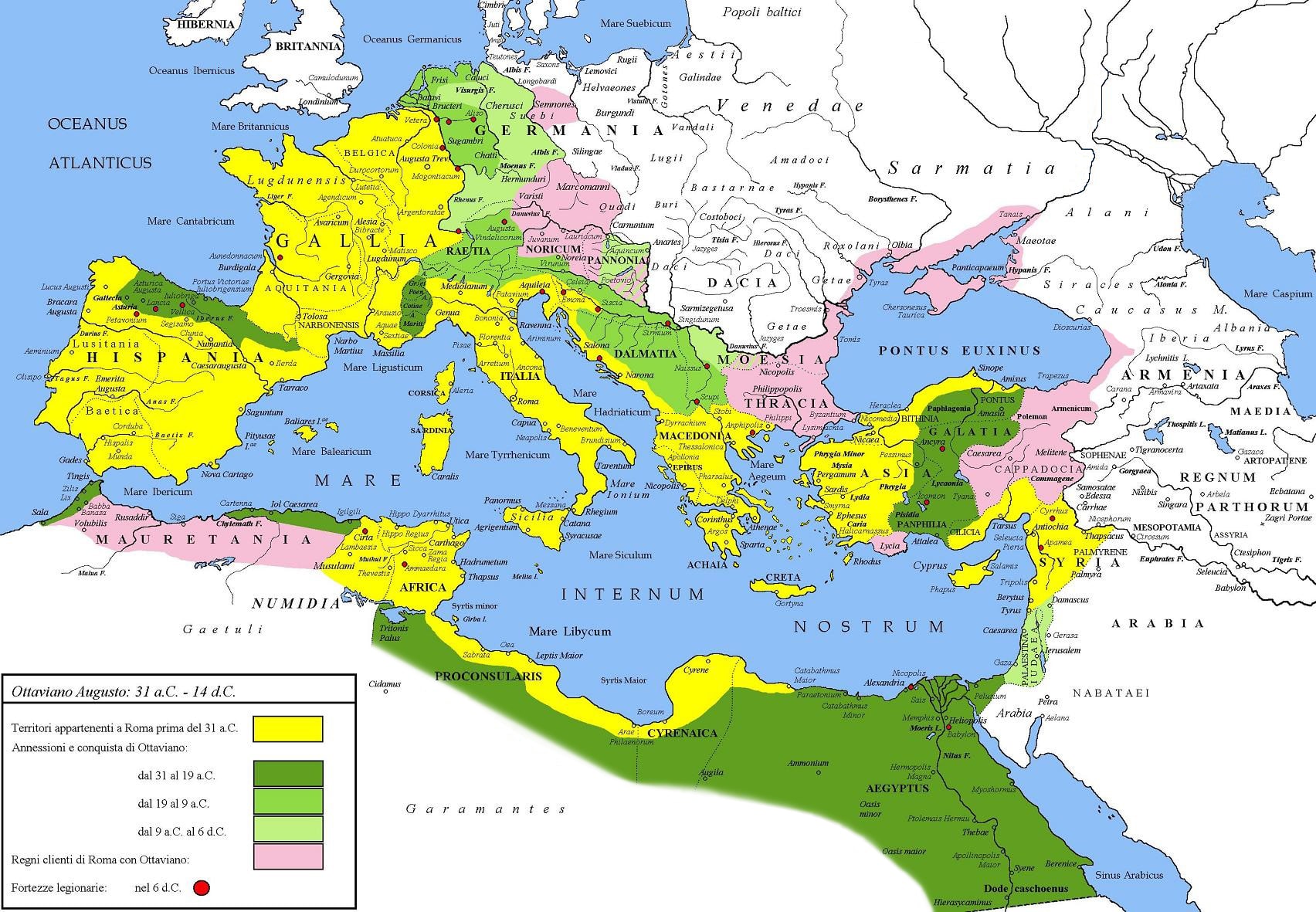
One eye on the vicissitudes of fortune… the other on the calamities of others… we thumb the pages of history for possible clues regarding the future…
Though Roman citizens of the Pax Romana era enjoyed a period of relative peace inside the imperial gates, with some very notable exceptions, bloody wars raged on almost constantly outside them, as the empire fought for control of lands and trade routes near and far. Naturally, such campaigns ranged greatly in terms of ambition, reward and, ultimately, cost...
Frontier skirmishes with nomadic tribes along the Arabian Desert, for example, were relatively minor in terms of capital expenditure and “sandals on the ground,” though they were a persistent nuisance for the Great Power of the day. Mostly this entailed maintaining forts and patrols and protecting trade routes along the way, with forces of up to about ~20,000 men required at any given time for the task. Not enough to bring a mighty empire to its knees, but certainly enough to bite at its ankles.
From Gold to Lead
The Dacian Wars, meanwhile – two separate wars waged by Trajan between 101–102 and 105–106 AD – saw 100,000 soldiers take to the field in what we know as modern day Romania. A massive undertaking at the time, in which both sides suffered enormous human casualties, the spoils of the vast Dacian goldmines nonetheless helped fill Rome’s coffers, just as victory helped swell her imperial chest...and fill her head with ideas of greater glory to come.
But while the Dacian Wars were short, and the taste of their lucre sweet, the same could not be said of Rome’s other quagmires, of which there were no shortage.
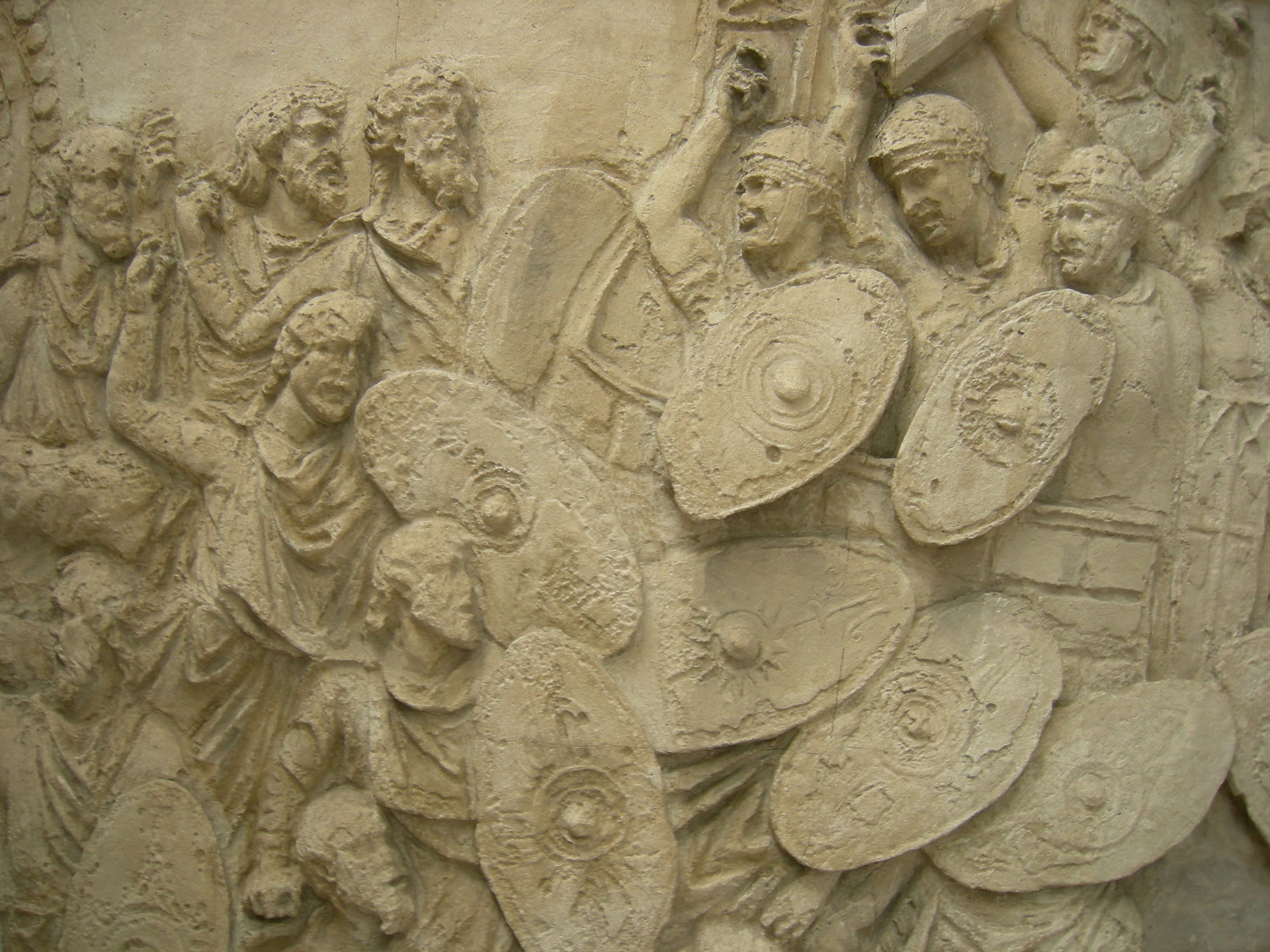
The Germanic Wars, for instance, which lasted on and off for centuries, were a virtually ceaseless drain on the imperial purse, requiring up to 80,000 soldiers on the front at a time, most of whom were housed in permanent garrisons along the Rhine and Danube Rivers. Constant battles kept the soldiers pitted against “the barbarians,” with many such encounters coming at punishing cost for the empire. In the epic Battle of the Teutoburg Forest, to name but one bloody scene, three entire Roman legions (~15,000–20,000 men) were ambushed... and annihilated... in a matter of days.
Then there were the so-named Britain & Northern Campaigns, which saw Roman soldiers marching their shiny standard into what is today Northern England. While the far flung land offered some bounty – mostly in the form of tin, lead, some agricultural land and a few slaves – the fact was Claudius needed a military victory to show his restless citizens just who was boss. And as nobody had attempted to invade the distant land since Caesar (perhaps with good reason), Briton must have seemed as good a spot as any for the wily ruler. As Cassius Dio writes two centuries later:
“Claudius desired to win glory by making a conquest… and so he undertook a campaign against Britain.”
Enjoying Our Notes ~ Support Us Here
Muck and Mire
Alas, as with the barbarians, the Romans were never fully able to bring the Britons under heel. Instead, they found themselves entrenched, bogged down, sank ever deeper into the muck and mire of their own expansionist ambitions...which would persist for some 80 more years, until Hadrian shifted gears from offense to defense... and to drawing a stone line around the empire.
Truly, few things say “high tide of empire” quite like Hadrian’s Wall, a 117kms (73 miles) fortification just south of the Scottish border... constructed more than 2,000kms (by Roman roads) from the Imperial City. That’s the fortification against those further northern tribes, such as the scrappy Picts, feisty Caledonians, and the rest of the bedraggled peasants huddled up on the very edge of those dreary isles, in what is today’s Scotland. To say the empire had overextended itself would be something of an understatement.
And yet, for all the waste and squander, the mud and the blood and the flat, warm beer... for all those protracted northern expeditions... their battling the barbarians at the gates… and tracking the Arabian nomads around and around the deserts... these misadventures amounted to little next to the losses sustained during Rome’s primary Great Power rivalry during the so-called Pax Romana...
We refer, of course, to Rome’s epic wars with the vast Parthian Empire, centered in the ancient land we know today as... Iran.
Stay tuned for more Notes From the End of the World…
Cheers,
Joel Bowman
Anya’s Note: If you’re interested in following along with dear husband’s Notes From the End of the World, including part 2 of ‘Pax’ Romana, in which he casts his wry eye and sardonic humor across a world turned downside-up, all from our perch down here in Argentina, feel free to sign up for his newsletter, right here…

Más info en https://ift.tt/d09PoMQ / Tfno. & WA 607725547 Centro MENADEL (Frasco Martín) Psicología Clínica y Tradicional en Mijas. #Menadel #Psicología #Clínica #Tradicional #MijasPueblo
*No suscribimos necesariamente las opiniones o artículos aquí compartidos. No todo es lo que parece.

No hay comentarios:
Publicar un comentario