
Dear Classical Wisdom Member,
As we mentioned earlier, April 21st is a very important date for Rome. Indeed, it’s the city’s birthday!
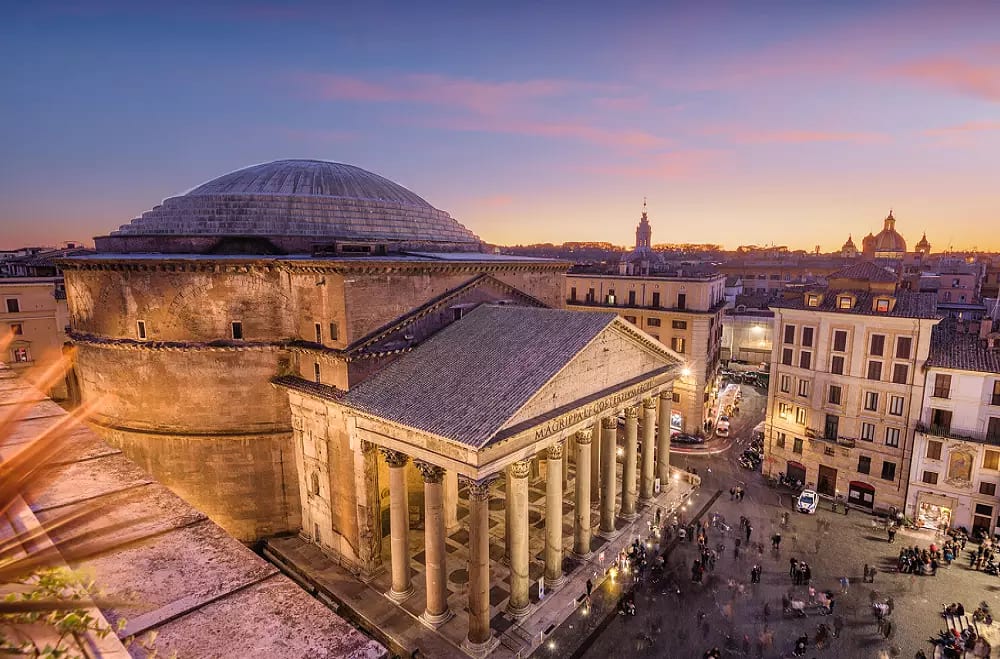
Therefore it’s very fitting that today we will spotlight one of the city’s greatest, most emblematic buildings: the Pantheon.
Like many of the wondrous structures from the ancient world, it is a temple where there is plenty more than meets the eye…
But what secrets does the Pantheon hold? What can we learn about it on today, of all days? Read on to discover its birthday surprise…
All the best,
Anya Leonard
Founder and Director
Classical Wisdom
P.S. The above video WAS NOT taken today… or on the 21st of April. So, you won’t get any hints from it…
The Pantheon: Rome’s Divine Structure of Stone and Light
Rising with timeless grandeur in the heart of Rome, the Pantheon is not merely a building. It is a cosmic instrument carved in stone, a fusion of heaven and earth, mathematics and mythology. For nearly two millennia, its soaring dome and mystical oculus have inspired wonder. But now, a provocative theory has rekindled fascination with this architectural marvel. What if the Pantheon was designed not just as a temple?
The Temple of All Gods
Originally commissioned during the reign of Augustus, the first emperor of Rome, the Pantheon, meaning “of all the gods,” stood as a sacred threshold between mortals and the divine. After a fire consumed the original structure, it was reborn under Emperor Hadrian around 125 AD, transformed into the awe-inspiring rotunda we see today.
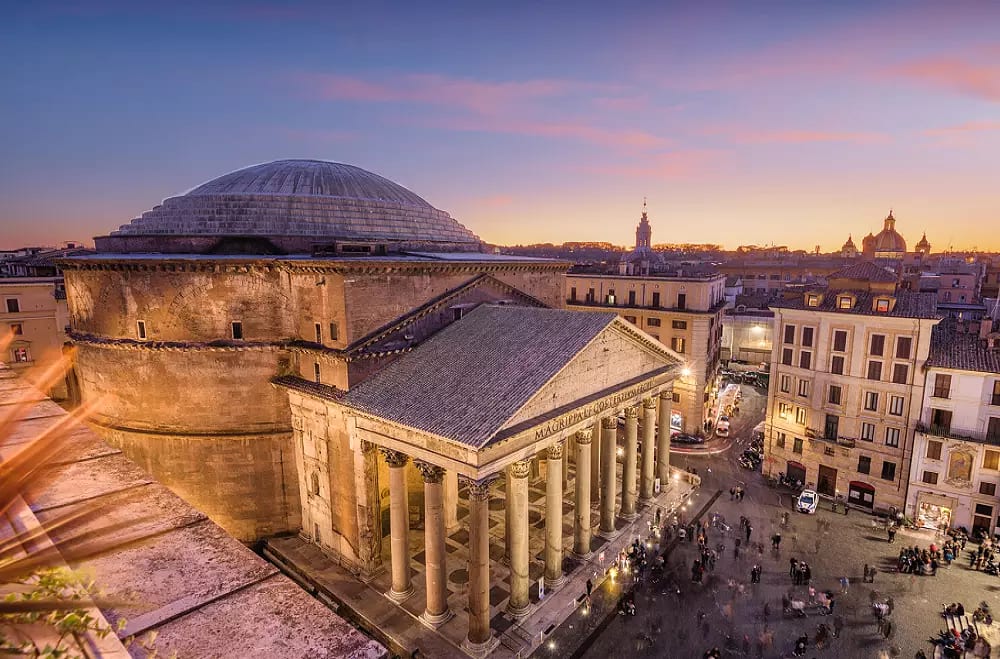
To step into the Pantheon is to enter a world where geometry becomes theology. The dome, an immense hemisphere of unreinforced concrete, remains the largest of its kind ever constructed. It spans 142 feet in diameter, perfectly matching its height, creating a sphere that seems to suspend the heavens within its embrace. Visitors pass through a grand portico supported by monolithic Egyptian granite columns, each standing fifty feet tall, as if walking into the very center of the cosmos.
Though it now serves as a Christian church and a popular tourist destination, the Pantheon once pulsed with the sacred energy of Roman ritual, imperial power, and cosmic symbolism.
The Eye of the Gods
At the apex of the dome lies the oculus, a circular opening 27 feet wide, and the only source of natural light in the Pantheon’s vast interior. Traditionally seen as a cooling device or a dramatic skylight, this eye to the heavens may have had a far more profound function…
Más info en https://ift.tt/wYFpvAV / Tfno. & WA 607725547 Centro MENADEL (Frasco Martín) Psicología Clínica y Tradicional en Mijas. #Menadel #Psicología #Clínica #Tradicional #MijasPueblo
*No suscribimos necesariamente las opiniones o artículos aquí compartidos. No todo es lo que parece.

No hay comentarios:
Publicar un comentario