
Dear Classical Wisdom Reader,
Pick 3 - 5 books that have shaped you.
This was the assignment given to me by a podcast interviewer, one that I must admit became quite an all-consuming exercise.
It seemed initially like a simple enough task. My mind immediately raced to all my favorite reads over the years, the ones I devoured or savored at different moments in my life. It felt like it would just be a matter of whittling them down.
But then it really struck me... Just because I had liked a book, didn’t necessarily mean it shaped me. Sometimes, in fact, the books you don’t enjoy at the time linger the longest...perhaps because of the difficulties they present, whether in the challenge of finishing them or the painful truths they reveal.
And then again, what “me” are we even talking about?
After all, completely different books influenced me in my childhood, as a teenager, or as a university student. And are those versions of me still me?
Like the paradox of the Ship of Theseus, the ancient hero’s boat which was replaced plank by plank until it became an entirely new vessel, I have continuously changed in my decades. Perhaps the parts of me impacted by my youthful literary choices are no longer relevant to the Anya of today?
In high school, for instance, I was obsessed with Kurt Vonnegut, Chuck Palahniuk, Joseph Heller and Douglas Adams. I loved absurdity and dark humor, the almost sarcastic and sardonic lens through which they approached the difficult realities of life and history. That sensibility works well when you’re a teenager… but I can’t really say that those stories, as deeply as I once adored them, still impact me in any meaningful way.
And so, with that parameter acknowledged, I determined to limit my selection to books that have shaped the person I am today. If I choose something from my youth, there needs to be a thread that has persisted, a tangible continuation from that version of the self to the one I recognize in the mirror now.
But then arose another issue, once more tied to the premise of defining ‘me.’
We all contain many versions of ourselves, depending on the situation, location, and relationship. Who I am as the writer of these humble pages is vastly different to who I am as a daughter, a mother, or a wife. My friends see other variations still, shaped by when and where we met and the nature (and profundity) of our friendship.
My daughter has neatly summarized this as, among other personalities, “Podcast Mommy,” “Dinner out Mommy” and “Pajama Mommy”... she likes the last one most.
Thus, still somewhat adrift in the question of who I really am, I returned to my task at hand: selecting the books that helped make me so. As I mentioned, I spent a great deal of time thinking about this (and I’ll certainly share the podcast once it’s out), but I also wanted to expand on both the process and my choices...to commit these reflections to the written word.
Now, you may be wondering what this has to do with the Classics... I always appreciate your inquisitive questions, dear reader! Of course, some of the books below are from the ancient world or influenced by it. I would be remiss in understanding myself to leave out such a critical element. However, there are also others that have nothing to do with the Classics, only to do with my own life.
Some, perhaps, might surprise you...
The fact of the matter is that I enjoyed this exercise immensely, so much so I wanted to share it with you. It was a wonderful opportunity to truly live many ideas that are discussed and proposed by the ancient philosophers: to take part in the examined life.
What better way to reflect upon oneself than through great texts? Not only was it a perfect excuse to revisit the books so dear to me, it was also a welcome pause... a moment to contemplate who I have been, who I am, and who I wish to be.
All and all, quite Socratic!
Perhaps this same question may inspire you to take a similar journey into your literary past - to discover a little more about who you are and what works along the way have made you you.
You don’t need to read my own selections below. This exercise is, by its nature, quite personal. If you prefer to step away and scan your own library, I fully understand and applaud your commitment to the task! My list may serve as an example, or perhaps offer a few suggestions for future reading.
If you do continue, I’d like to note that some of my selections may seem a bit obvious. As I admitted to the interviewer, I was a little worried they might appear cliche. But then again, they are truthfully the books I choose. Great books are great for a reason, exactly because they resonate so deeply for so many readers.
I imagine many of you might have similar titles on your own lists, though no doubt for different reasons. That’s what great literature does.
So I begin below...
Discover the books that have inspired thousands throughout the millennia… The foundational texts from the ancient world: the Essential Greeks.
This May 5th, we will begin this year’s Essential Greeks Course to understand and appreciate these great works, the minds behind them and the context in which they were created.
See how they will shape you…
Our Essential Greeks Course Begins May 5th, make sure to secure your spot before then:
The Five Books That Shaped Me (Plus a Bonus)
By Anya Leonard
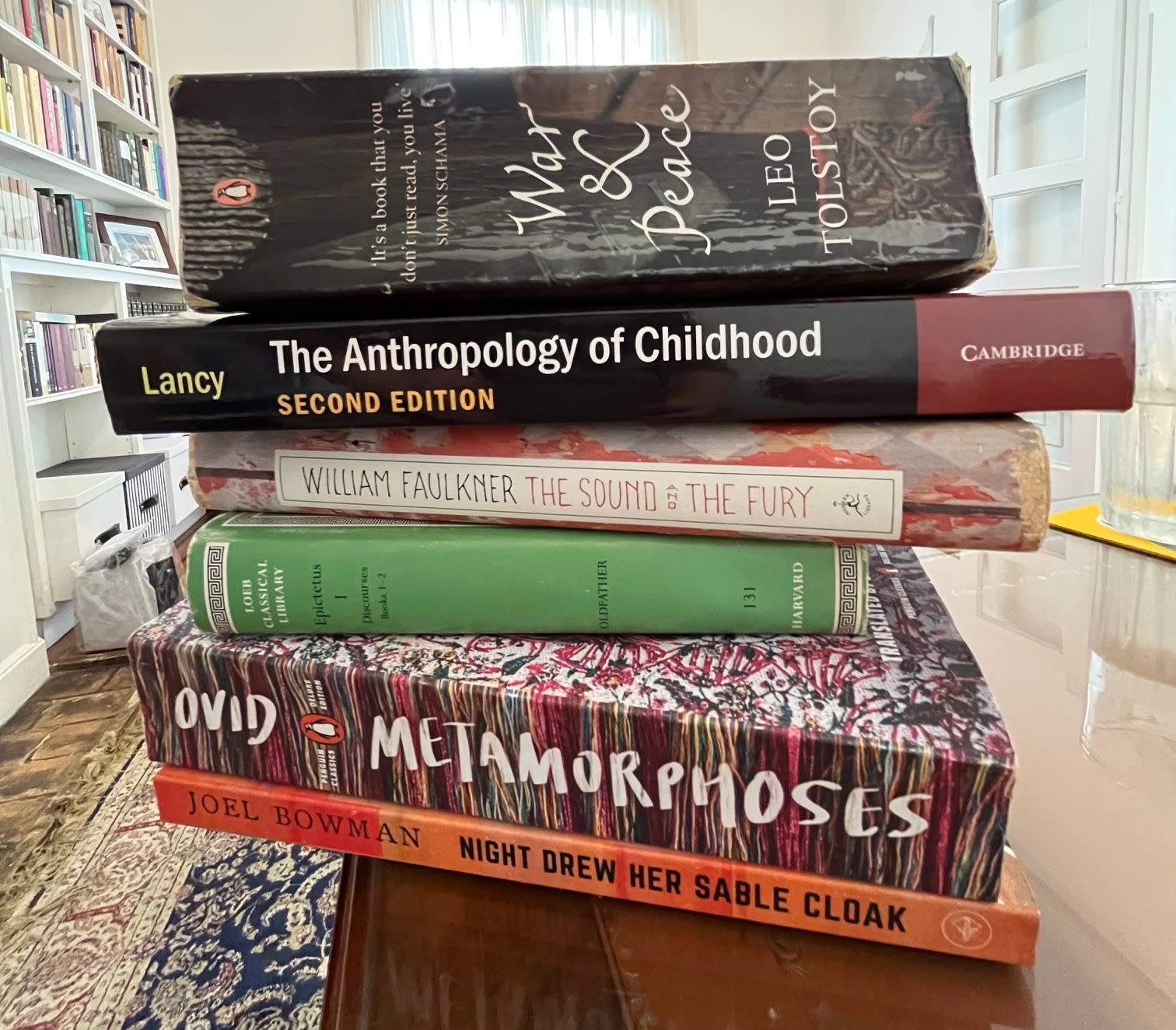
1. War and Peace by Leo Tolstoy
In seventh grade, I wrote a short story in which I imbued a character (who, incidentally, was not a heroine) with all the traits I believed defined a sophisticated woman. She wore a long floral dress, drank Earl Grey tea, and read War and Peace. To my younger self, Leo Tolstoy’s masterpiece, depicting numerous Russian families grappling with the realities of the Napoleonic Wars, was not merely a book, but something transformative.
Simply put, I wanted to be the kind of person who reads War and Peace.
So it is actually surprising that it took me so long to do so. I had even lived in Russia in my early twenties, and was a self described Russophile, studying the language and immersing myself in the many brilliant works found in that deep culture. I remember clearly reading Brother’s Karamazov from my father’s apartment overlooking the Kremlin, obscured only by the furious torrents of snow outside the window. Perhaps at that time, the introspective contemplations of Fyodor Dostoevsky resonated more deeply with my self-centered youth, mirroring my own emotional obstacles and anxieties; Leo Tolstoy’s sweeping perspectives on history felt less immediate, less relatable.
More likely, I was scared and intimidated.
I assumed it would be difficult, and I worried I wouldn’t understand it. But then, in my late twenties, I found myself with a long stretch of time alone...the perfect moment for such an undertaking. I’m so very glad I did.
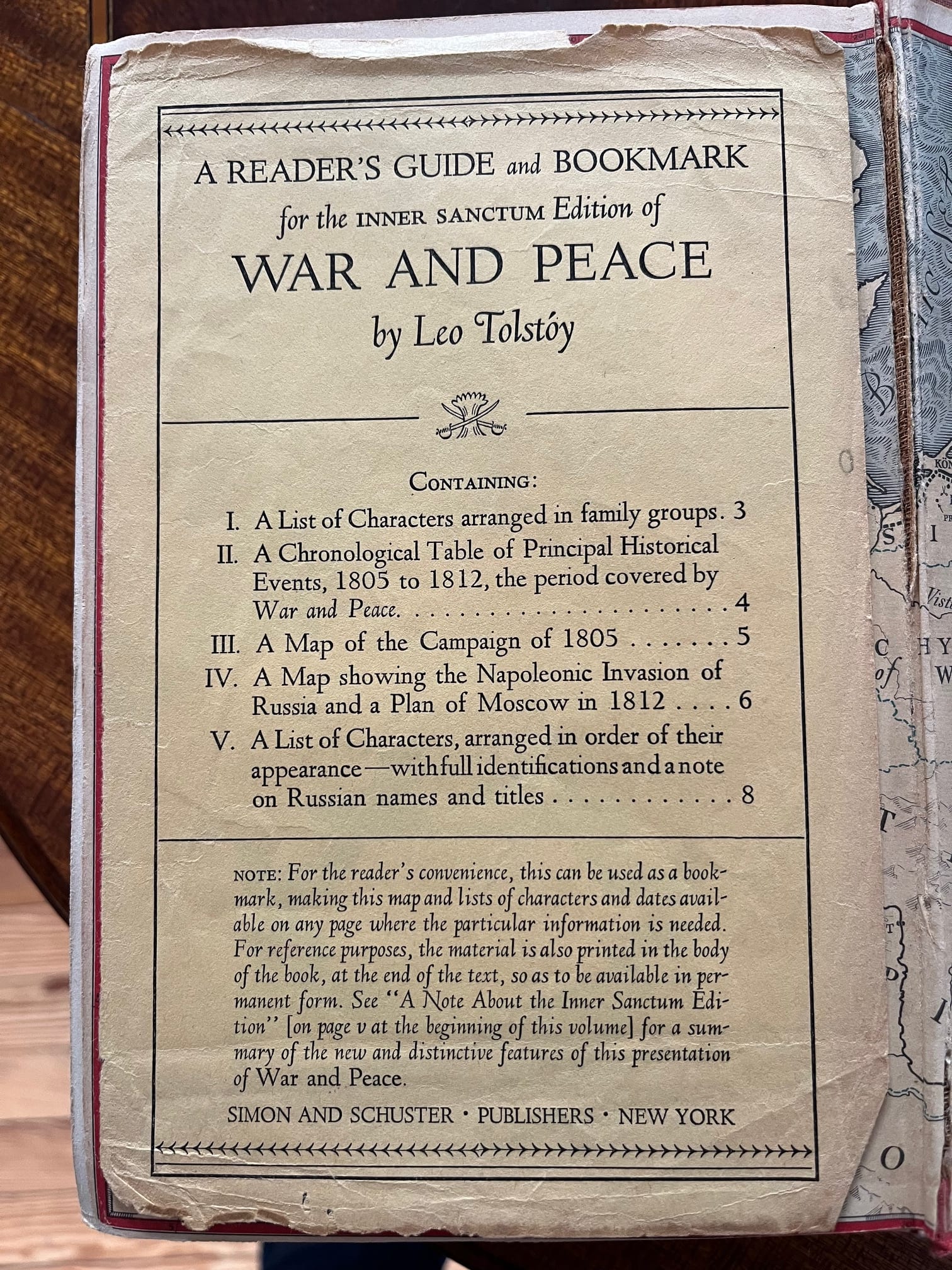
From the very first page I was elated, shocked, by just how good it was. It wasn’t difficult to follow; it was engaging, even a page-turner. Of course, I didn’t want to squander the opportunity, so I committed to reading it daily, using spare moments to review the characters and plot in my mind. I also relied on my grandmother’s “cheat sheet” - a wonderful insert from a 1942 Inner Sanctum edition that I had saved for just this purpose.
In the end, War and Peace shaped me in ways that went far beyond its symbolism as a vehicle for becoming the person I aspired to be. It also offered a profound perspective on how history unfolds. The mighty Napoleon Bonaparte, revered and feared as a man capable of changing the course of history, witnesses the brutal battles unfold below him, committed yet ultimately powerless before the countless individual actions that determine victory or defeat.
Tolstoy frames this question beautifully in the novel’s second epilogue:
Are figures like Napoleon the tugboat guiding the great ship of history, or merely a small boat trailing behind it?
How is the course of civilization truly charted?
Do individuals meaningfully navigate the vast momentum of culture, of war, and of peace?
It is a question I return to often, both when examining the past and when trying to make sense of our present.
2. The Anthropology of Childhood: Cherubs, Chattel Changelings by David F. Lancy
Childbirth was not easy. My daughter came into this world two months early, resulting in a month in the NICU for her and a week in the ICU for me. My first meeting with her included tubes, IVs, beeping monitors, and attentive nurses for us both. And while I am deeply grateful to modern medicine for keeping us alive, it was not what anyone would call a “natural” experience.
The aftermath of such a clinical beginning is complicated, nuanced, and rarely discussed. There is a traditional narrative of childbirth and childrearing and honestly, it can be difficult when your own experience does not align with the story we are so often told. I had no framework to make sense of our own journey, and felt quite lost because of it.
It was at this moment that The Anthropology of Childhood was instrumental for me, demonstrating that there is no real ‘normal’ when it comes to birth or raising children. Reading with an infant in arms, I was struck by the sheer diversity in experiences across the globe and throughout history. It helped me realize that what I had expected was not purely biological or instinctual, but, in many ways, cultural.
As such, I did not need to grieve the loss of experiencing a ‘traditional’ birth...Nor did I need to follow the model of any other tribe, nation, or ethnic group. I was free to write my own story for me and my daughter, to create our own traditions and culture, and to make sense of her entry in the world in our own way. This realization, so early on in motherhood, has shaped me profoundly.
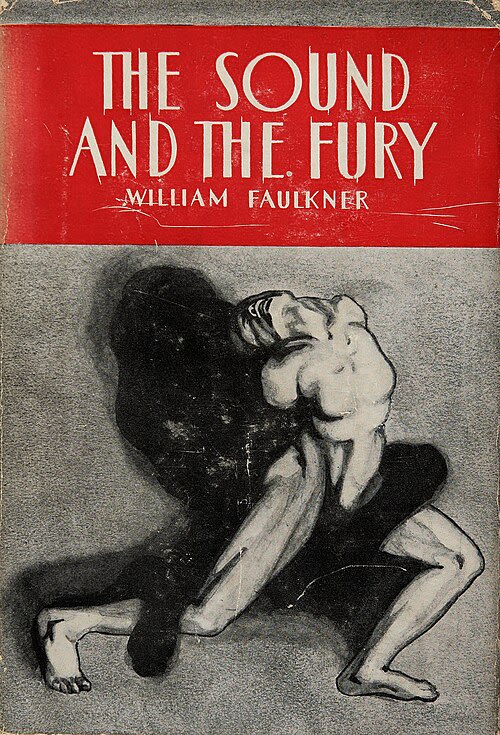
3. The Sound and The Fury by William Faulkner
Those of you who have had the pleasure of raising a small child may recall the effects of sleep deprivation. Your mind dissipates, your attention cracks and your reality fractures. It may last only a short while, if you are lucky, or stretch for many years if you happen to have the dubious honor of raising a poor sleeper. I fell into the latter category, an issue compounded by the fact that it was clearly a genetic trait inherited from... me.
So it was quite some time before I felt ready to read something... difficult. But when I finally did, I was overjoyed. It felt like I had my brain back, that I had returned to a sense of self so often questioned and tested in early parenthood.
This was a critical moment for me and the book was The Sound and the Fury.
William Faulkner’s famed work is unlike any other. Absolutely revolutionary in its time (and to this very day), it is divided into four equal sections, each offering a different perspective on the life and struggles of the Compson family in Mississippi.
The first section presents the reader with a genuine challenge: it is told through the lens of a cognitively disabled young man. The narrative is disorienting, shifting between past and present, blending memory with immediate experience. Written in a stream-of-consciousness style, it can be frankly difficult to follow, especially at the beginning.
This is not a mistake.
While it may seem off-putting at first, it is, in truth, an exercise in intellectual humility. It is confusing, but you must continue, to sit within that disorienting reality and accept, like Socrates, that you do not know what is happening. For some, this is a difficult, even painful practice, but it is also essential. If we can not be comfortable in not knowing, we can not learn. This is true of any new book, journey, course, destination, or challenge: we must begin by acknowledging that we do not know.
What is wonderful about The Sound and The Fury is that your efforts and perseverance are rewarded. While the subsequent sections are similarly structured, each recounting a single day through the mind of a different narrator, every new perspective brings greater clarity. As the novel unfolds, the underlying reality gradually emerges, offering a deeply satisfying sense of recognition and understanding.
It feels fitting that my return to a more engaged intellectual life began with a lesson in not knowing.
4. Discourses by Epictetus
This was my most difficult selection, because I naturally wanted to choose an ancient text—but there are so many that have shaped me. Perhaps it should have been the Odyssey, which my mother read to me and my brothers when we were young... Or Antigone, the work that first drew me, independently, into the world of the Classics... Or even Plato’s Apology, on which I wrote my first paper while studying at St. John’s College...
All of these would have been strong choices (and perhaps they still are) but in the end, I felt that the person I am today has been most deeply shaped by Discourses, particularly by one line.
Those familiar with the Stoics, and with Epictetus, will not be surprised. This is a foundational text of Stoicism, emphasizing ethics, self-discipline, and rational judgment. While it offers a practical guide to resilience and inner freedom, there was one moment of encounter that I still remember vividly.
It happened one night about five years ago. As I’ve already revealed, I am prone to poor sleep and bouts of insomnia, and during one such period I found myself regularly awake at 4am. After abandoning my attempts to return to slumber, I began the habit of getting up to read and found Epictetus’ work to be the calming balm I so desperately needed.
It was in that quiet, still hour that I read:
“For what is the professed object of reasoning? To state the true, to eliminate the false, to suspend judgment in doubtful cases.” Book 1.7 - Epictetus Discourses
Regular readers or listeners may recall that I have quoted this line many times. To me, it beautifully captures an approach to understanding the world. Its simplicity is its strength, offering clarity where all too often obscurity reigns.
Bring the Classics into your life! Become a Classical Wisdom Member today:
What I value most is the reminder to suspend judgement. In our ready-fire-aim culture of opinions, reserving space for thoughtful consideration is as rare as it is essential.
This book set my own thoughts on a course of contemplation and perspective that I continue to follow today.
Side Note: I think it would be a good idea to start a 4am Philosophy Club...
5. Metamorphoses by Ovid
From a broader perspective, it is nice to include another ancient text, one dedicated to mythology and from a Roman author. There is a certain sense of balance in that selection... but that is not actually why I picked it. While I do appreciate symmetry, I took this exercise seriously and aimed to reflect the full scope of ‘me’, rather than simply assemble a top-five reading list.
I choose Metamorphoses because it is a book that is shaping the person I am working on, the one I wish to become. The title is truly felicitous.
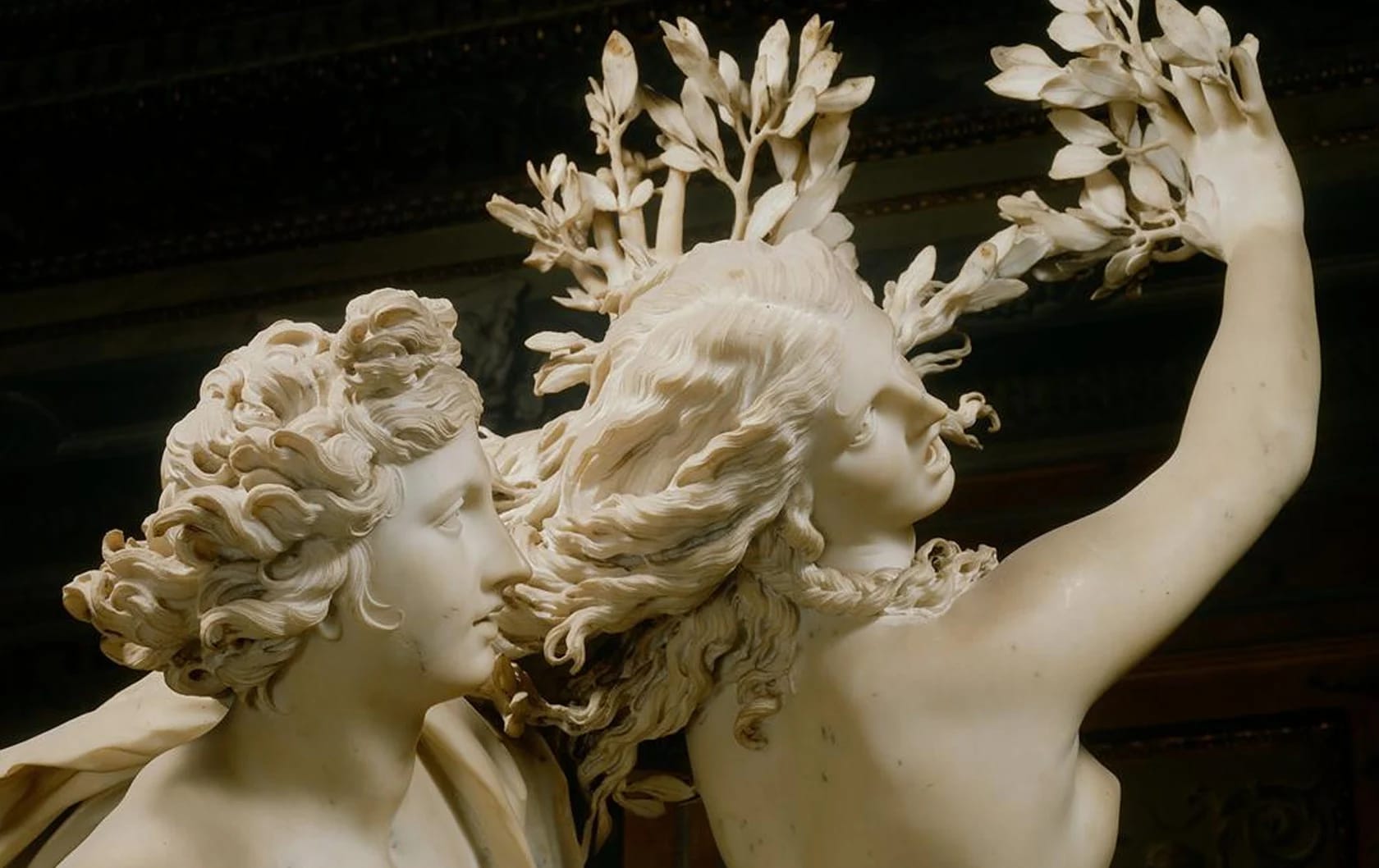
Of course, Ovid’s epic poem collecting over 250 myths centered on transformation is an immensely important text in the ancient world and onwards. It includes many of the most beloved stories, featuring figures such as Daphne, Narcissus, and Pygmalion. For millennia, it has inspired artists and authors, philosophers and psychologists, and not without reason.
It is also a major source of inspiration for me now. I’m embarking on a new project: writing a book of my own. I’m pairing ancient myths, many drawn from Ovid’s opus magnus, with ancient philosophies so that the story can help illuminate and make the ideas stick. Like Ovid, I hope to employ these powerful narratives to convey the great wisdom of some of the ancient world’s greatest philosophers.
I’m grateful and honored that St. Martin’s Essentials will publish Socrates and the Sphinx: Ancient Greek Myths that Make You Think in 2027. In the meantime, there is a lot of work to do, and I am fortunate to have Ovid, among many others, guiding me along the way.
Bonus: Night Drew Her Sable Cloak by Joel Bowman
Now, perhaps you think I’m cheating. After all, the task was to choose three to five books, and here I am trying to slip in a sixth. But please, a little sympathy, dear reader! It was simply too difficult, and I am only human!
And so, as a special bonus, I present Night Drew Her Sable Cloak. It weaves together three distinct narratives, three generations of heroines, from the Midwest to the Far East, spanning the breadth of the twentieth century. Interlaced throughout are the philosophical ideas explored in these pages, particularly those of the brilliantly enigmatic pre-Socratic philosopher Heraclitus.
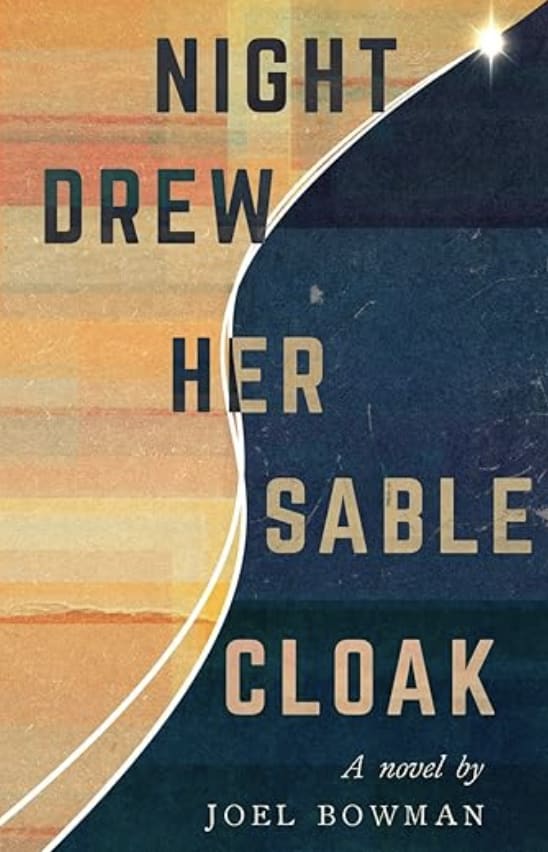
This choice is, in truth, a deeply personal one. In the spirit of full transparency, the author who has crafted this stunningly beautiful work is my husband of twenty years. It is exquisitely written. Today, it might be categorized under the increasingly antiquated label of “literary fiction”... a term once synonymous with simply really good writing.
But it is more than that. This book occupies a category of its own, because in many ways, it is less about shaping me and more about reflecting me. It tenderly traces many of the twists and turns of my own life, including near death experiences, the very ones echoed in the books I’ve chosen above.
For that reason, it felt fitting for it to be both the final selection and the bonus. In a sense, it completes the picture and answers the question of which books have made me who I am.
***
And so, I turn once more to you, dear reader. If you are here, reading these reflections, I suspect that books matter deeply to you as well.
There are no doubt many that have impacted your life, redirected your own course, or offered comfort or perspective when you needed it most. Likewise, your many varied versions, your different sense of selves, have been cultivated by the words you encountered at distinct moments of your life. So I ask you:
What were they?
Which works have affected you most?
And which books, still waiting to be read, might shape who you are yet to become?
Please take part in our beautiful community and share your thoughts in the comments below. You never know who you might inspire...
All the best,
Anya Leonard
Founder and Director
Classical Wisdom
Más info en https://ift.tt/GQHWALi / Tfno. & WA 607725547 Centro MENADEL (Frasco Martín) Psicología Clínica y Tradicional en Mijas. #Menadel #Psicología #Clínica #Tradicional #MijasPueblo
*No suscribimos necesariamente las opiniones o artículos aquí compartidos. No todo es lo que parece.

No hay comentarios:
Publicar un comentario