
Dear Classical Wisdom Reader,
Theater to the ancient Greeks was not mere entertainment.
It wasn’t their equivalent of zoning out in front of Netflix... or taking in the latest flicks at the cinema... it didn’t even correspond to modern rituals of getting dressed up and going to the theater!
Sure, the actual word for theater is derived directly from the Greek word θέατρον (théatron, “a place for viewing”), and yes, we still perform the many wonderful tragedies and comedies written thousands of years ago... their words resonating through the ages and impacting us to this very day.
But theater in the ancient world was much, much more than that. It was part and parcel of the very fabric of their society, interwoven with their religion, threading the community together.
It was entertaining, of course, as well as engrossing, spectacular, shocking and profoundly moving. It was a mirror at times and a window at others. A vehicle for moral lessons as well as cautionary tales. Stories to make the audience cry, scream and laugh...
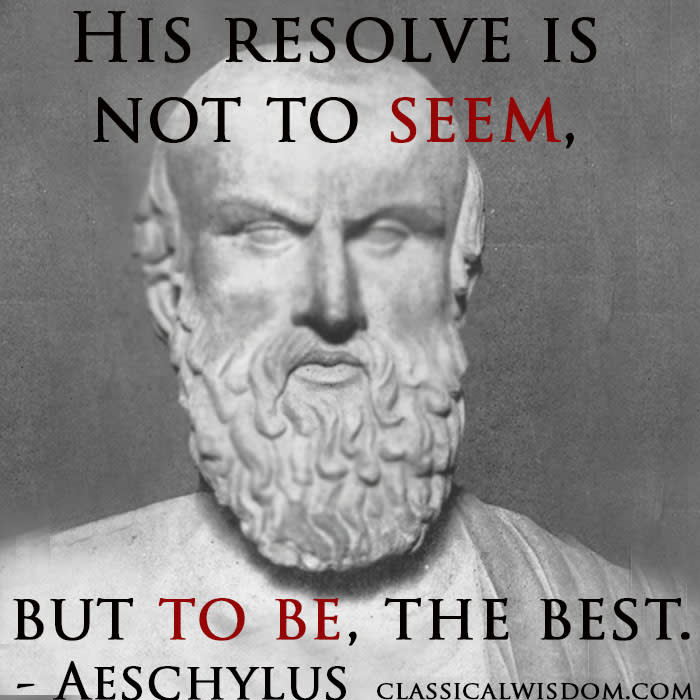
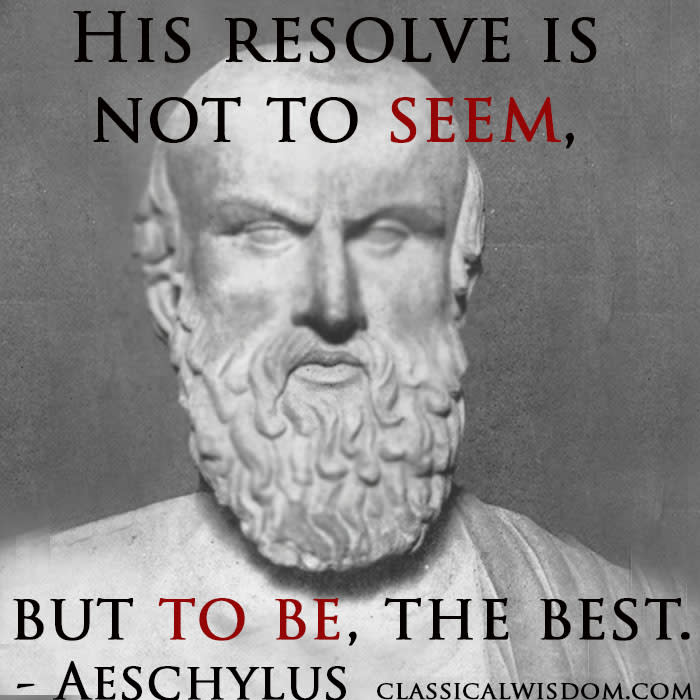
And at the dawn of this incredible contribution to civilization was a warrior named Aeschylus, a man who would be labeled “The Father of Tragedy”. But who was this figure, so prominent in the history of drama? What inventions did he bring to the art? And how did he see his own legacy?
Read on to discover Aeschylus, the Warring Writer, in today’s member’s in-depth article and bring some much needed drama into your life.
Classical Wisdom Members: the column below comes from our Classical Wisdom Litterae Magazine, dedicated to ancient Theatre. As a member, you can enjoy the full issue, which investigates exciting aspects of Ancient Greek theater and tries to look behind the masks, including:
-
The Ancient Greek festivals, and women’s role in them,
-
Why tragedy is good for humanity,
-
Aristophanes’ evolution over time,
-
Ancient theaters, masks and more...
You can find the Classical Wisdom Litterae Magazine at the end of today’s newsletter.
If you aren’t a member, you can subscribe here to enjoy all our resources, including our E-books, Podcasts with Professors, In-depth articles and full access to our Classical Wisdom Litterae Archives. Choose which plans works best for you and bring the ancients into your life:
All the best,
Anya Leonard
Founder and Director
Classical Wisdom
P.S. If you are keen on learning more about Aeschylus, as well as the other tragedians, the epic poet Homer, the philosophies of Socrates, Plato and Aristotle, and the historians Herodotus and Thucydides, then you are in luck!
Our Essential Greeks Course will begin in LESS THAN A WEEK. Register today to start the 2026 course on May 5th.
It’s an opportunity to either lay down a foundational understanding of the ancients or to cement your own knowledge of these incredibly influential thinkers and authors. Complete with course materials, original texts, quizzes, engaging videos and live webinars, it has been a Classical Wisdom favorite since its inception.
Make sure to secure your spot here:
Discover the Essential Greeks!
If you can’t join us live for our Welcome Webinar, do not worry! We will send through a recording afterwards.
The Warring Writer: Aeschylus
By Anya Leonard
Let’s say you are considered the “father of tragedy”. Even in your own lifetime, everyone knows you have revolutionized drama and changed the theatre game. Do you think it would be mentioned on your tomb? Surely a throwaway reference at least?
But no, not for Aeschylus.
The man who wrote between 70 and 90 plays, won 28 competitions and completely altered the face of the stage, says nothing about it in his eulogy. His tomb engraving, which he wrote himself, only talks about his military accomplishments.
Now, why would a man who has gone down in history as a playwright, only describe himself as a soldier? Why would he actively omit something so fundamental to ancient society, culture, and history itself? Was he just really humble?
It actually makes a lot of sense when you consider his life.
Aeschylus was born of a well-to-do family in 525 B.C., reared in the town of Eleusis, about 27 kilometers northwest of Athens. It was a place best known in all the ancient world as a site for one of the most important religious events of ancient Greece.
It was there, that almost mythical place, where Aeschylus first became a writer.
The legend goes like this…
Más info en https://ift.tt/062qd7r / Tfno. & WA 607725547 Centro MENADEL (Frasco Martín) Psicología Clínica y Tradicional en Mijas. #Menadel #Psicología #Clínica #Tradicional #MijasPueblo
*No suscribimos necesariamente las opiniones o artículos aquí compartidos. No todo es lo que parece.

No hay comentarios:
Publicar un comentario