
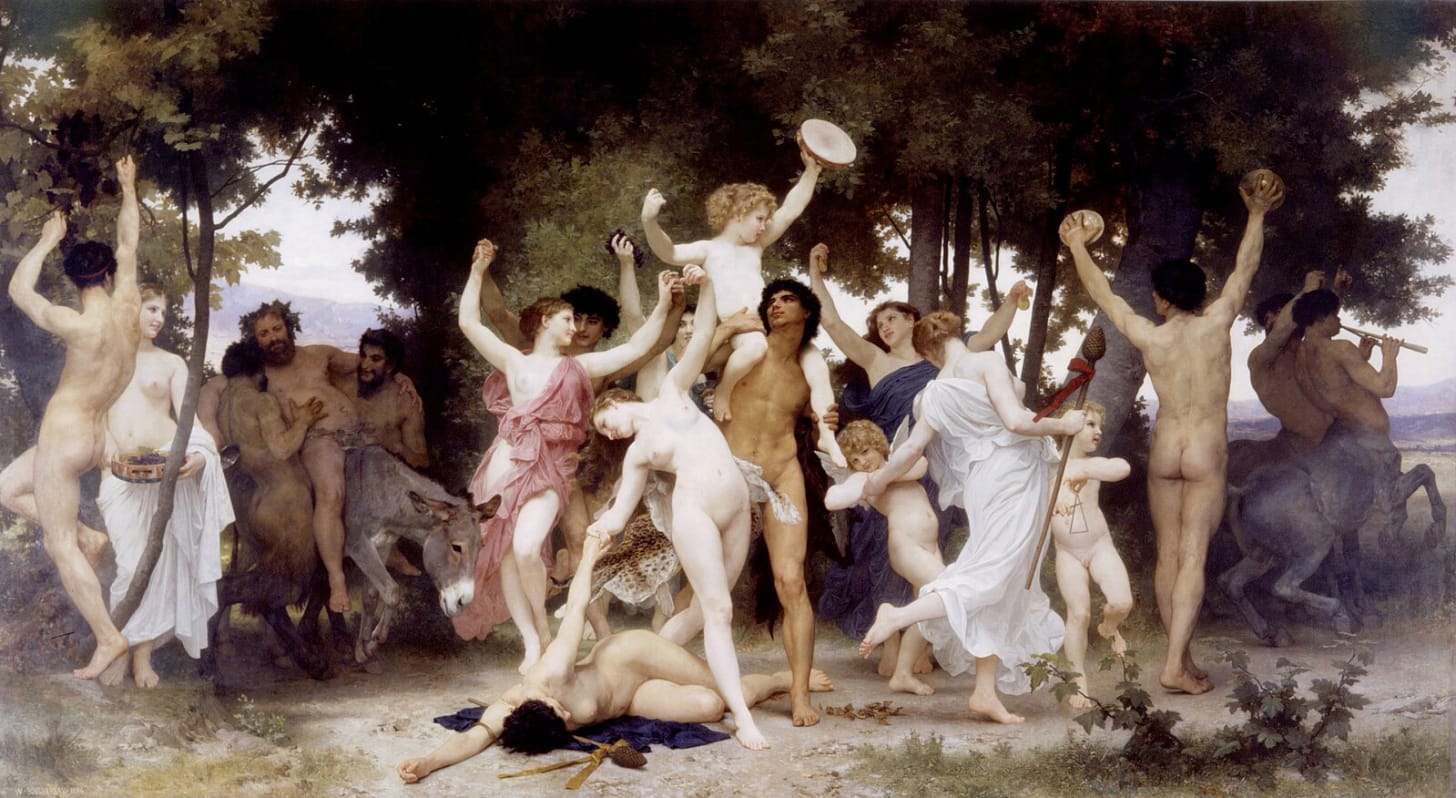
Io Saturnalia!
Dear Classical Wisdom Reader,
For the uninitiated, today marks the official beginning of one of the greatest ancient holidays ever to grace the calendar. Deemed the best of days by the poet Catullus, Saturnalia was a party par excellence: a week-long celebration honoring the Roman god Saturn, the deity of agriculture, abundance, wealth, liberation, and even time itself.
Yet while Saturnalia began as a solemn religious festival, it quickly evolved into something else entirely… something far more exuberant, unrestrained, and, let’s be honest, wild.
The festivities officially commenced with a sacrifice at the Temple of Saturn in the Roman Forum. From there, the city moved seamlessly into a public banquet, where Romans of all ranks ate and drank together, followed by private gatherings filled with laughter and the exchange of humorous, often ridiculous gifts. And then came the grand finale: an all-out carnival, one that was debauched, indulgent, and riotous. This was not a polite dinner party.
This was a celebration that would have made the Rolling Stones feel right at home.
Not everyone approved, of course. Seneca grumbled that “the whole mob has let itself go in pleasures” (Epistles XVIII.3), while Pliny the Younger prudently shut himself away in his study as the rest of his household celebrated (Epistles II.17.24). But they were very much in the minority. Most Romans poured into the streets, rejoicing, visiting friends, singing, lighting candles...and yes, sometimes doing so naked.
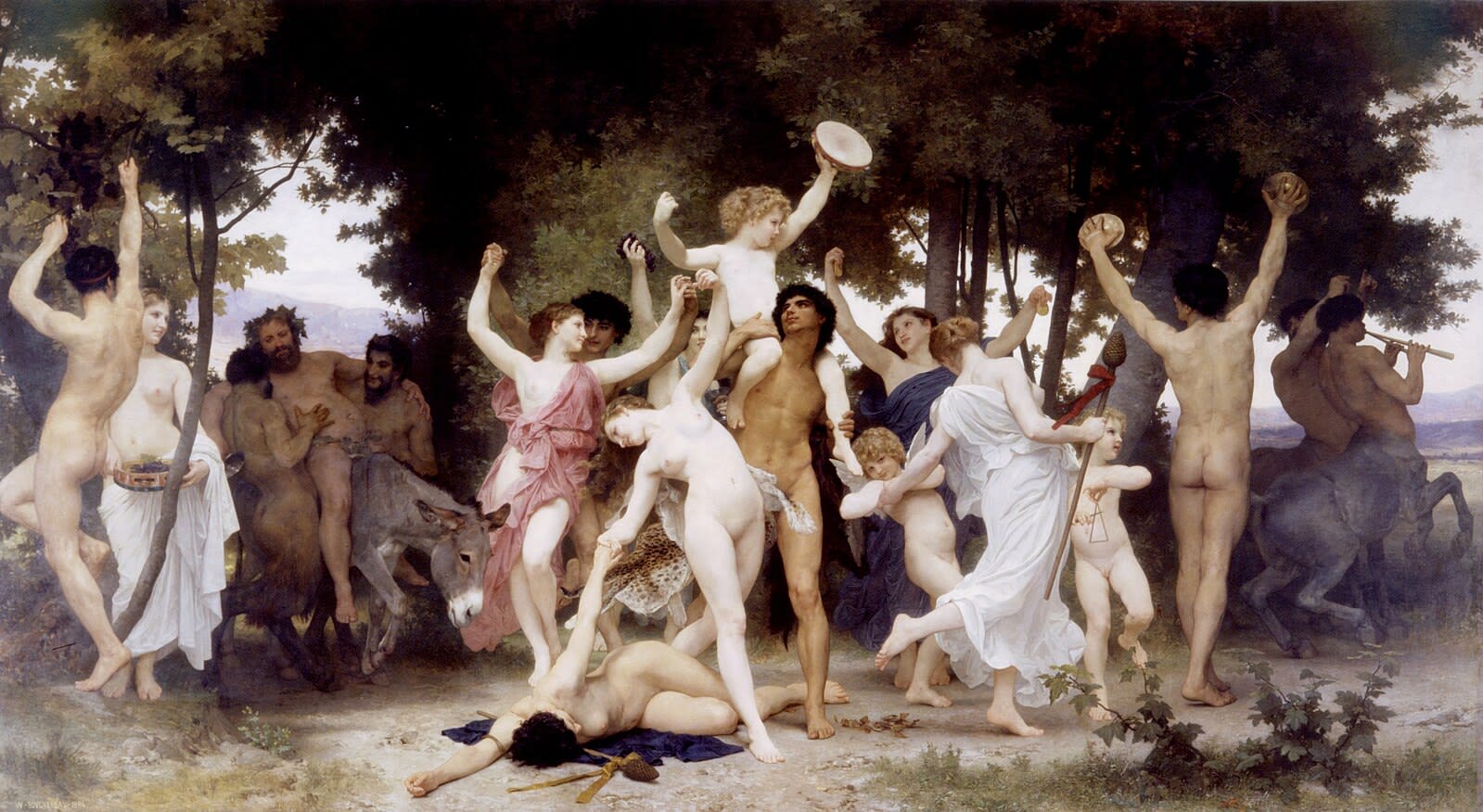
Presiding over the chaos was the Saturnalicius princeps, a kind of “Lord of Misrule,” who ruled the festivities with mock authority. With a flick of his finger, he could command revelers to sing naked, dance foolishly, or leap into icy water.
Indeed, many scholars trace modern Christmas caroling to this very tradition...It is easy to see how Saturnalia, with its gift-giving, public merriment, and licensed silliness, served as a precursor to many of our own winter celebrations.
Perhaps the most fascinating feature of Saturnalia was its deliberate inversion of social norms. For one precious week, slaves were treated as equals...or even as masters. They wore their owners’ clothing and the pileus, the felt cap symbolizing freedom. Masters waited on them at table (though slaves still prepared the meal), gambling was permitted, and social restraints were temporarily lifted.
It was also a festival of free speech. The lower classes could mock, criticize, and insult their social superiors without fear of punishment. The poet Horace aptly called it “December liberty.”
Enjoy the celebrations of the ancients! Including our Member’s only Ebook below, which delves into the fascinating world of how the ancients partied… Subscribe to access ALL our resources:
That said, Saturnalia should be considered controlled chaos, not social revolution, because these changes were ritualized and very much temporary…
Nonetheless, Saturnalia was gloriously bawdy and unapologetically excessive. Wine flowed freely. Jokes grew cruder as the nights wore on. Songs echoed through torch-lit streets. Respectability was suspended, replaced by laughter, lust, and license. It was rowdy, noisy, and deliberately chaotic...a ritualized release valve for the pressures of Roman life.
Such behavior, while perhaps familiar to those who remember the rebellious decades of the late twentieth century, would strike us as almost shocking today. The rock-and-roll years feel long gone, replaced by Fitbits and calorie counting, knitting nights and herbal tea. We track our steps, optimize our sleep, and sip responsibly.
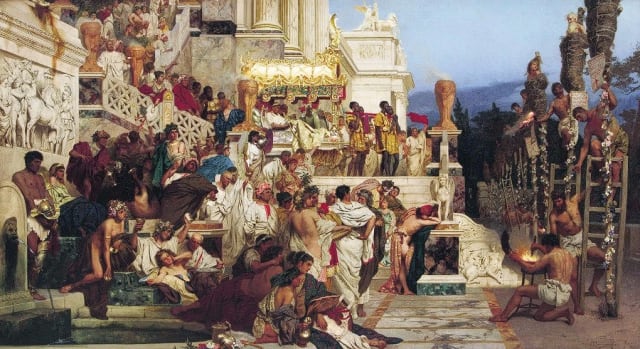
Indeed it appears to me that modern society often prides itself on restraint. Alcohol consumption is down, indulgence is suspect, and excess is something to be managed rather than embraced. We are a culture of moderation, wellness plans, and productivity hacks...practically teetotalers compared to the ancients.
So one has to wonder: what would the Romans, as well as the Greeks, think of us now? In our collective pursuit of longevity and eternal youth, have we forgotten something essential?
Have we forgotten how to have fun?
Celebration, after all, plays a vital role both individually and socially. We need moments to switch off, to let the proverbial hair down, to embrace our inner Dionysian. Apollo, the god of order, reason, and restraint, cannot rule forever. It is often in moments of wild abandon that creativity sparks, new ideas emerge, and inspiration breaks free from convention.
Festivals also serve another crucial purpose: they bind communities together. In the ancient world, celebrations dissolved barriers of class, wealth, and status. Citizens gathered in shared spaces, participated in collective rituals, laughed at the same jokes, drank from the same cups. Collectively they experienced catharsis and reinforced important ideas about democracy and identity. Festivals reminded people that they belonged to something larger than themselves: a city, a culture, a shared story.
This communal spirit is something we may have lost in our increasingly individualistic, health-obsessed mindset. Yet the ancients understood it deeply, and they took their celebrations very seriously indeed.
The Greeks held lavish symposiums where philosophy flowed as freely as wine. They staged grand theatrical festivals like the Dionysia, where entire cities gathered to watch tragedies and comedies that still shape our thinking today. Romans marked their calendar with feast days, triumphs, games, and religious holidays. And of course, none were more exuberant than Saturnalia itself, the ultimate reminder that order needs chaos, and restraint needs release.
Join our growing community to enjoy the Apollonian and the Dionysian! Inspirations, ideas, wisdom and more:
And so, for today, I implore you: relax, enjoy, and lean into the spirit of the season:
Io Saturnalia!
Members, if you’d like more inspiration from the ancient world, be sure to explore our special Classical Wisdom eBook dedicated entirely to ancient celebrations.
From philosophical symposiums to theatrical festivals, the Celebrations anthology from Classical Wisdom Litterae explores the most fascinating—and delightful—ways the ancients knew how to party.
Download your copy below and discover how the ancient world truly celebrated.
If you are a premium member, you can access your eBook here:
Más info en https://ift.tt/AU5NZOD / Tfno. & WA 607725547 Centro MENADEL (Frasco Martín) Psicología Clínica y Tradicional en Mijas. #Menadel #Psicología #Clínica #Tradicional #MijasPueblo
*No suscribimos necesariamente las opiniones o artículos aquí compartidos. No todo es lo que parece.

No hay comentarios:
Publicar un comentario