
Dear Classical Wisdom Reader,
I’ve always been a huge fan of liminality.
For those unfamiliar with the word, it is an anthropological term derived from the Latin līmen, meaning “a threshold.” At its heart, liminality describes that peculiar, often unsettling space in between...the moment when one boundary has been crossed, but the next has not yet fully formed. It is the pause between what was and what will be.
A time of transition, uncertainty, and, dare I say, possibility.
Liminal moments are often marked by ritual. They are rites of passage, simultaneously poignant and ambiguous. A wedding, for instance, places the bride and groom between old identities and new ones. Puberty transforms a child into something not quite adult, but no longer innocent. Even moving to a new city or beginning a new vocation carries that same sensation of standing on a threshold, one foot in the familiar, the other reaching into the unknown.
You won’t be surprised to learn that liminality most definitely permeates the ancient world.
The Greeks and Romans, keen observers of human psychology, understood that transformation required sacred space. Nowhere is this clearer than at the Delphic Oracle, whose very architecture embodied liminality.
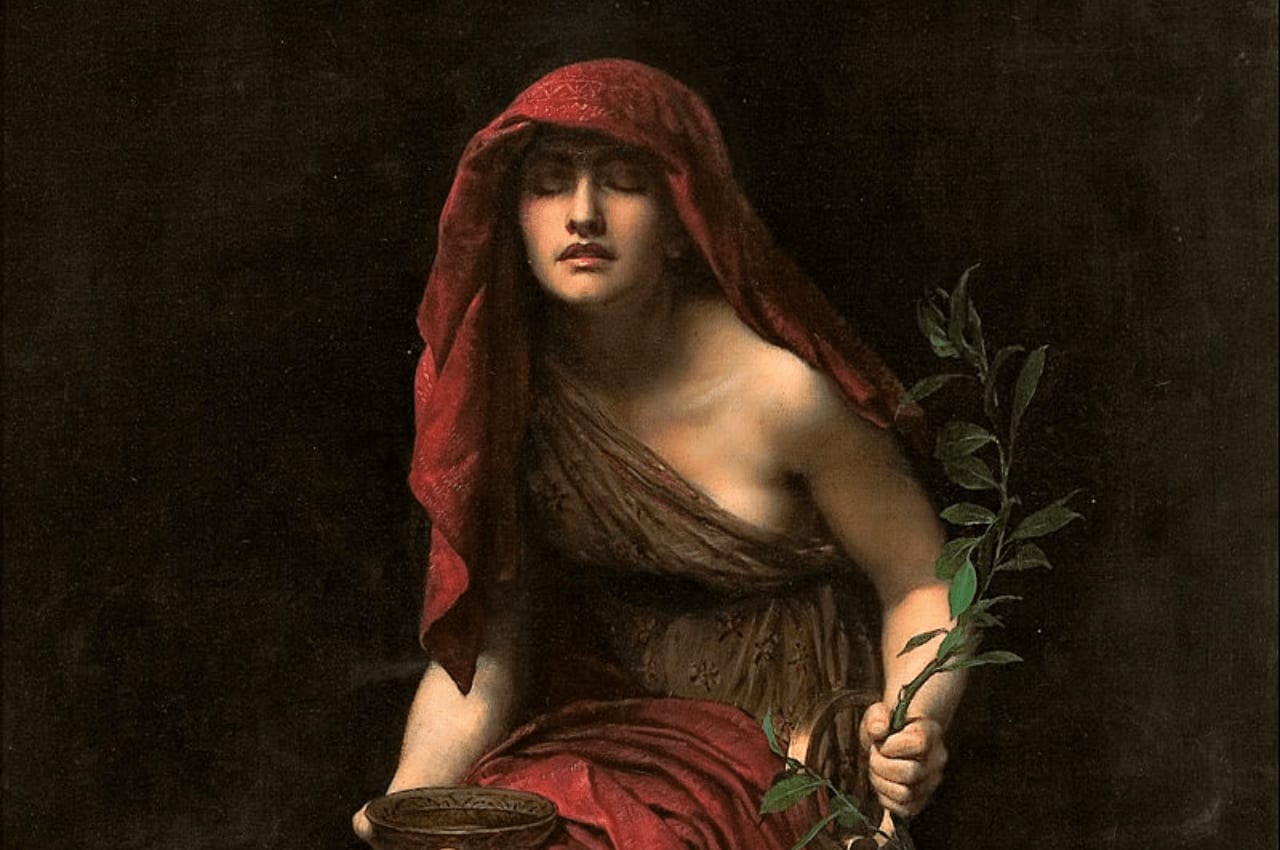
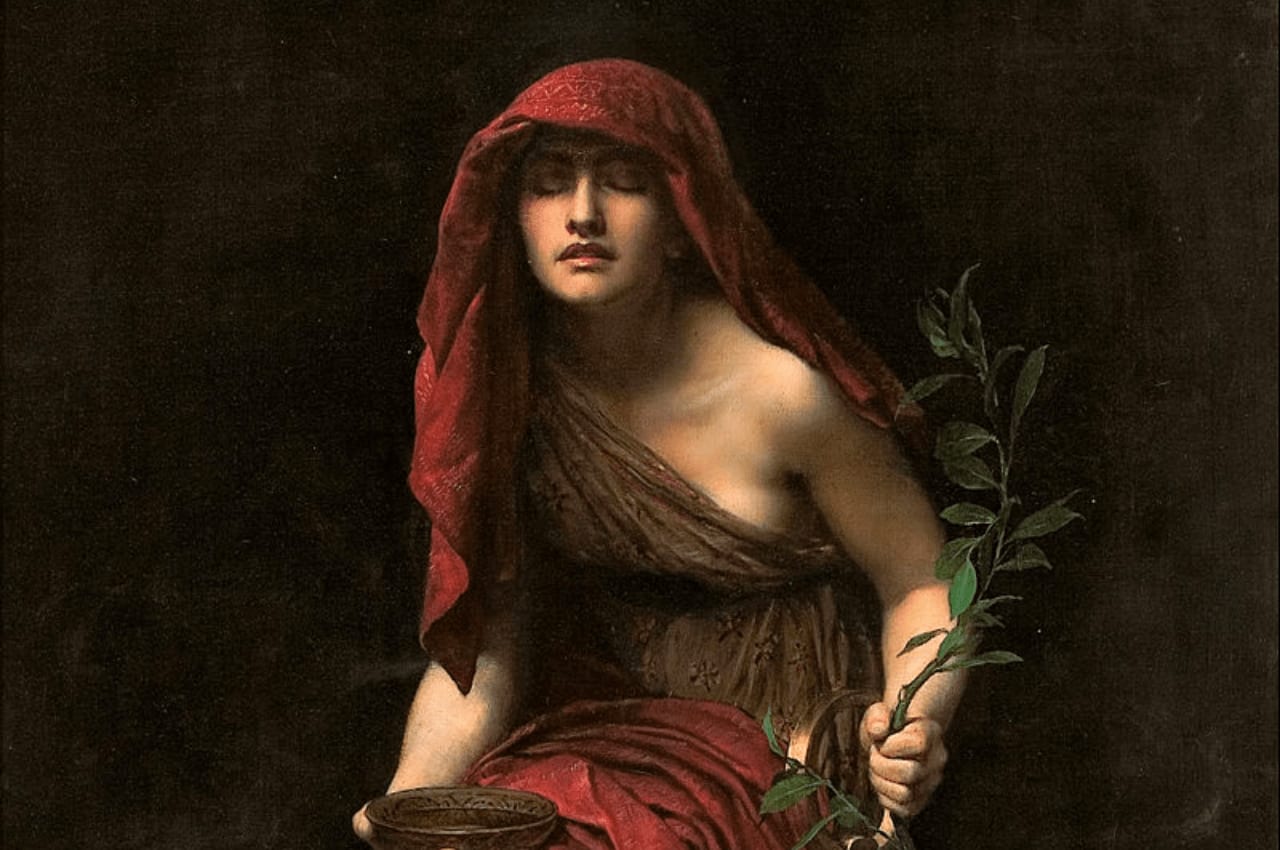
To step over the threshold of Apollo’s sanctuary was to leave the ordinary world behind. Petitioners entered seeking divine insight, suspended between ignorance and revelation, mortality and the voice of a god. The Pythia herself, seated above the chasm, inhaling sacred vapors, was a living conduit between worlds, neither fully human in that moment nor entirely divine.
The same is true of the mystery cults, such as those at Eleusis, dedicated to Demeter and Persephone. Initiates underwent secret rites that symbolically enacted death and rebirth. They were stripped of their former identities, plunged into darkness, and emerged transformed...no longer outsiders, yet not entirely the same people they had been before.
The mysteries thrived on liminality: silence, secrecy, night rituals, sacred fasting, and the promise of knowledge that could not be spoken, only experienced. To be initiated was to stand at the border of life and death, ignorance and enlightenment.
Mythology, too, returns again and again to this fertile middle ground. The story of Cupid and Psyche, told most famously by Apuleius, is a quintessential liminal tale. Psyche, a mortal woman of extraordinary beauty, is so stunning that people begin to worship her instead of Venus. This places her immediately between worlds...too beautiful to remain merely human, yet not divine enough to belong among the gods.
Offended, Venus sends her son Cupid to punish Psyche, but he instead falls in love with her. Psyche is carried away to a mysterious palace and married to an unseen husband who visits only at night. In Apuleius’ telling, Psyche is effectively “married to Death”...no longer a maiden, but not yet a recognized wife. She exists in secrecy, suspended between innocence and experience, trust and doubt.
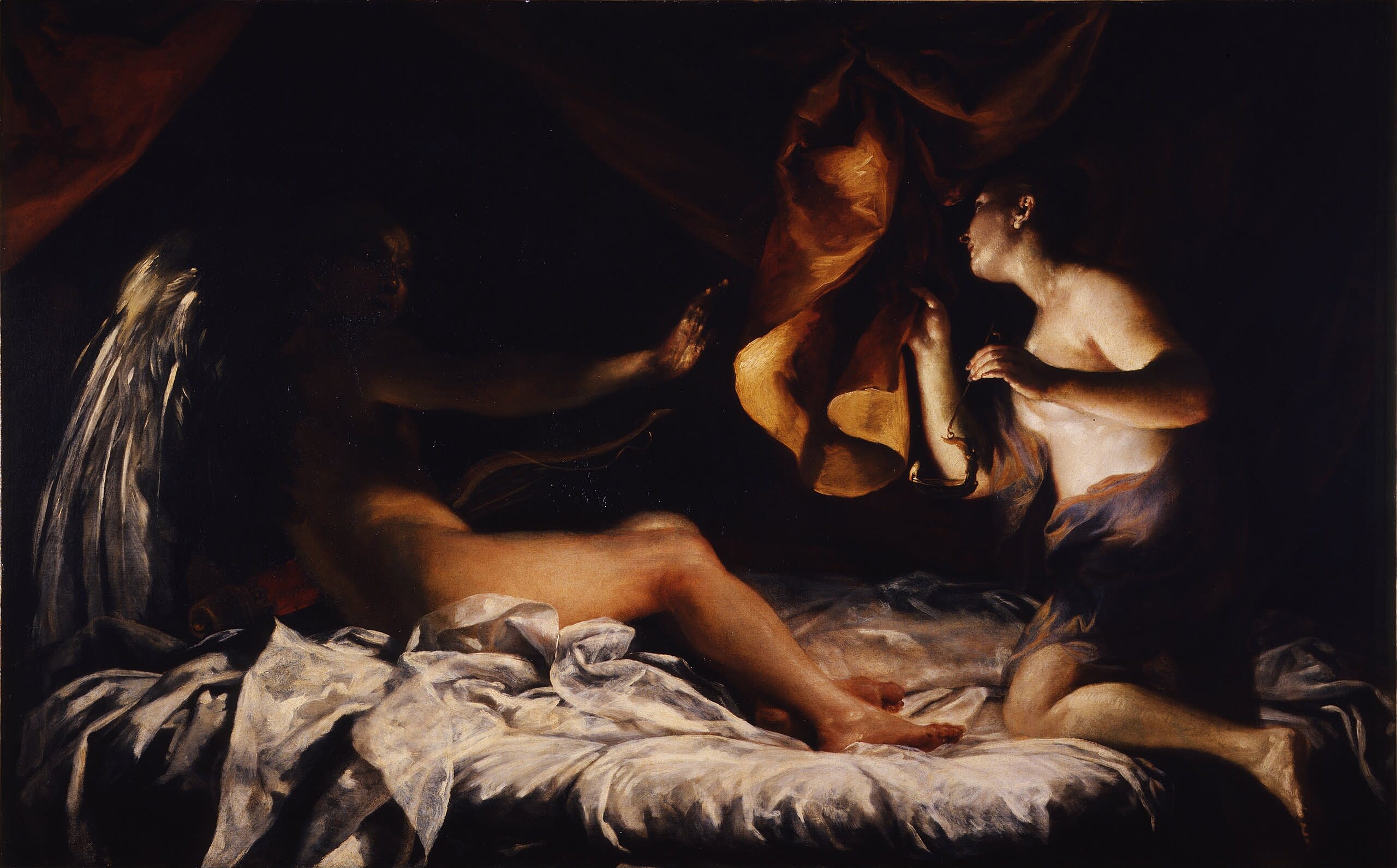
When she finally breaks the taboo and looks upon Cupid, she loses him and is cast into a series of trials imposed by Venus. These labors, which include sorting seeds, descending into the Underworld, retrieving beauty from Persephone, are themselves liminal ordeals. Psyche moves between realms, repeatedly confronting death without fully succumbing to it. Her final transformation comes when Jupiter grants her immortality. Drinking ambrosia, Psyche crosses the ultimate threshold: from mortal to goddess, from human suffering to divine permanence.
Only then is the rite complete. The story ends, unusually for Greek myth, with a joyful wedding and the birth of a daughter named Voluptas: Pleasure. It is a rare “happily ever after,” and one earned only through enduring the uncertainties of the in-between.
Liminality is not just found in myth, mystery cults and the divine oracles, but in the passage of time itself.
Dawn and dusk, those fleeting moments when night dissolves into day, or day exhales into darkness, have long been associated with magic, prayer, and vulnerability. Birthdays quietly remind us that we are no longer who we were, though we may not yet feel like who we are becoming. When Demeter wields her great power and the seasons turn, when spring emerges from winter’s grip and autumn slips into decay, we can see our own cycles of growth and loss.
And then there is New Year’s Eve.
Perhaps no liminal moment is more astonishing precisely because it is shared. Within a single twenty-four-hour period, billions of people collectively witness one year becoming another. Fireworks explode over cities that once marked time by entirely different calendars.
From Rome to Rio, Athens to Tokyo, cultures now join in a vast, global ritual...lighting up the sky, counting down together, crossing the same invisible threshold.

And what do we do with this moment? This grand collective opportunity?
As the ancients knew, liminality invites reflection. It asks us to remember what has been endured, to honor what has been lost, and to imagine what might yet be possible. The Romans dedicated January to Janus, the two-faced god who looked simultaneously backward and forward...perfectly suited to this threshold between past and future.
And so, at this very moment, I wonder:
What have we learned in 2025?
What must we carry forward, and what should we finally leave behind?
Which habits no longer serve us?
What virtues, such as courage, moderation, wisdom, might the ancients urge us to reclaim?
How do we prepare our selves, our real selves, not just our schedules, for what comes next?
And, perhaps most importantly, who do we wish to become on the other side of the threshold?
Liminal spaces are uncomfortable, but they are also sacred. They remind us that transformation is possible, and that change, as the wise Ephesian Heraclitus observed, is inevitable. Meaning, the very thing for which we search, is often forged in that uncertain middle.
Standing here, between years, we are exactly where the ancients would expect us to be: at the threshold, waiting to step forward.
Happy New Year’s Eve!
All the best,
Anya Leonard
Founder and Director
Classical Wisdom
Más info en https://ift.tt/07LTS5X / Tfno. & WA 607725547 Centro MENADEL (Frasco Martín) Psicología Clínica y Tradicional en Mijas. #Menadel #Psicología #Clínica #Tradicional #MijasPueblo
*No suscribimos necesariamente las opiniones o artículos aquí compartidos. No todo es lo que parece.

No hay comentarios:
Publicar un comentario