
Dear Classical Wisdom Reader,
It’s a crazy time of year.
The streets are packed with shoppers, everyone’s in a bit of a frenzy, and I’m sure plenty of us are getting more than a little bit stressed about the upcoming holidays.
So, it’s all the more important to take some time out for wisdom!
And more important still to see if it sticks. So find out what you’ve really learned with the Weekly Wisdom Quiz.
As always, all questions are based on articles and resources published this week here at Classical Wisdom.
A full roundup is available after the quiz, along with the answers, just in case you want to revisit anything!
Now, let’s get in to it…
1. Delos was said to be the birthplace of which of the Olympian gods?
A. Zeus and Hera
B. Poseidon and Hermes
C. Hephaestus and Aphrodite
D. Apollo and Artemis
2. The word “Aphro” means what in ancient Greek?
A. Beauty
B. Foam
C. Starlight
D. Love
3. Where were the Amarna tablets discovered in 1887?
A. Near the Valley of the Kings in Luxor
B. Beneath the Great Pyramid at Giza
C. In the ruins of Akhenaten’s capital city
D. Inside the temple complex at Karnak
4. How did the Athenian tyrant Pisistratus “cleanse” Delos in the sixth century?
A. He had all the livestock sacrificed to the gods
B. He ordered all graves on the island to be exhumed and removed
C. He removed all of the island’s gold
D. He destroyed the temples of non-Greek gods
5. The treasury of the Delian League was initially kept in Delos for what reason?
A. It held sacred status and was considered neutral ground
B. It was secure as the island was difficult to access
C. It was completely unpopulated
D. Delos had sacred caves which could only be accessed by priests
6. How is Aphrodite portrayed by the time of Homer and Hesiod?
A. A goddess who spends most of her time amongst humans
B. A scorned outsider among the gods
C. A full member of the Olympian pantheon
D. She does not appear at all in the works of Homer or Hesiod
7. In what language were the majority of the Amarna letters written, despite being found in Egypt?
A. Latin
B. Hittite
C. Sumerian
D. Akkadian
8. How did the ancient Greeks refer to Aphrodite?
A. The Cypriot
B. The Egyptian
C. The Athenian
D. The Spartan
Connect with Ancient Wisdom Become a Member and gain access to our archives of exclusive resources, including podcasts, in-depth articles, magazines & more!


Answer Key
-
D. Apollo and Artemis (Small Island, Big Impact)
-
B. Foam (The Re-Birth of Venus)
-
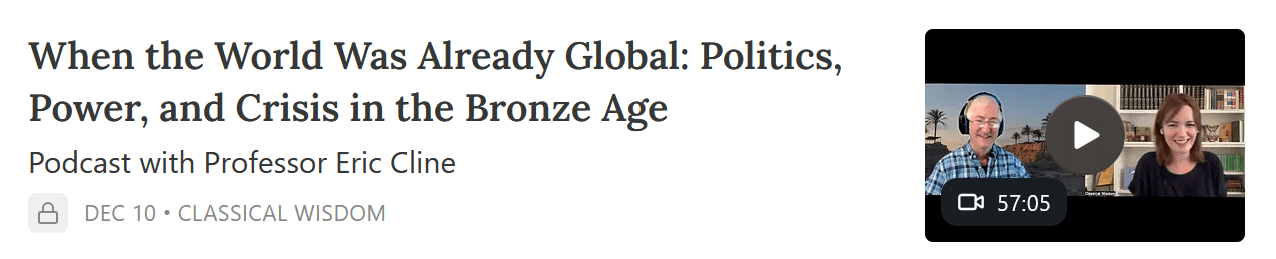
C. In the ruins of Akhenaten’s capital city (Podcast: Politics, Power, and Crisis in the Bronze Age)
-
B. He ordered all graves on the island to be exhumed and removed (Small Island, Big Impact)
-
A. It held sacred status and was considered neutral ground (Small Island, Big Impact)
-
C. A full member of the Olympian pantheon (The Re-Birth of Venus)
-
D. Akkadian (Podcast: Politics, Power, and Crisis in the Bronze Age)
-
A. The Cypriot (The Re-Birth of Venus)
🏛️ The Wisdom Scale
0 - 2 correct - Initiate of the Mysteries 🔥
You’ve stepped into the ancient world, but the rites are still secret. Stay curious; every philosopher begins in ignorance.
3 - 4 correct - Scroll-Bearer of the Library 📜
You’ve unrolled a few papyri and absorbed some knowledge, but there’s still much to learn.
5 - 6 correct - Philosopher-in-Residence 🏺
Your grasp of antiquity is sharp and reflective. You separate myth from history with confidence.
7 - 8 correct - Oracle of the Ancient World 🏛️
Your insight borders on the prophetic. Were these answers learned… or remembered from a former life?
So, how did it go? Let us know in the comments below!
All the best,
Sean Kelly
Managing Editor
Classical Wisdom
Más info en https://ift.tt/CZMjgpV / Tfno. & WA 607725547 Centro MENADEL (Frasco Martín) Psicología Clínica y Tradicional en Mijas. #Menadel #Psicología #Clínica #Tradicional #MijasPueblo
*No suscribimos necesariamente las opiniones o artículos aquí compartidos. No todo es lo que parece.

No hay comentarios:
Publicar un comentario