
Dear Classical Wisdom Reader,
There’s only a handful of them.
Whether it’s the ambiguous smile of Mona Lisa, or the brush stroked skyline of Van Gogh’s Starry Night, some paintings transcend their origins and become part of our common cultural shorthand.
In the truest sense of the word, they are iconic.
And more than a few of them are inspired by the world of the Classics!
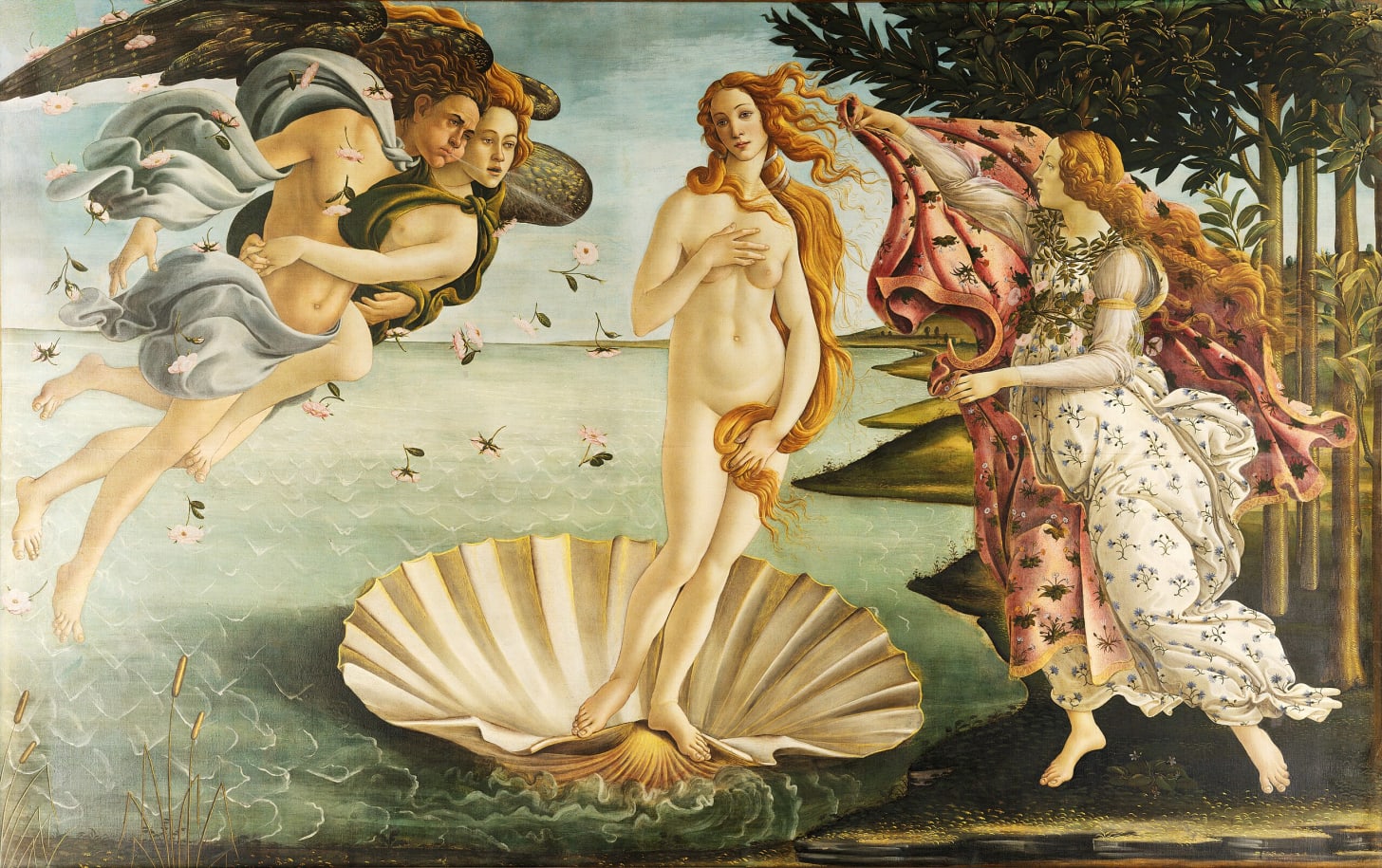
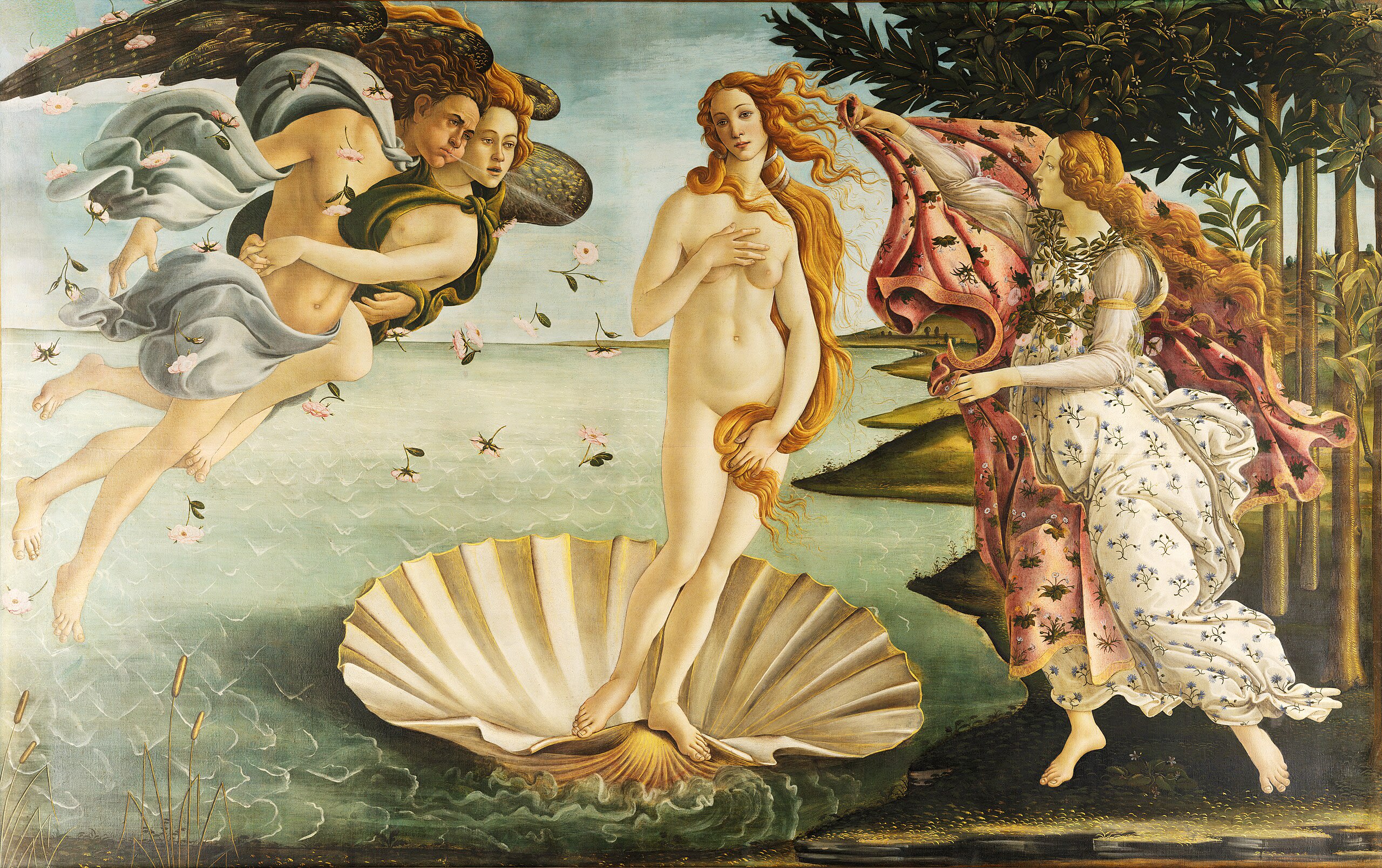
The image of a red-haired Aphrodite emerging on the shores of Cyprus in Botticelli's Birth of Venus is one such example.
So, as a bit of a follow up to our discussion of beauty earlier in the week, I thought it would be a good time to take a closer look at the origins of Aphrodite (or Venus to the Romans).
As the ancient Greeks’ embodiment of beauty, Aphrodite's has beginnings that are both mythic and historical.
It turns out, there’s more than meets the eye to this Greek goddess…
For one, strictly speaking, she's not Greek!
So read on below to discover the real birth of Venus, and how the ancient ideal of beauty is forever changing, and forever reborn…
All the best,
Sean Kelly
Managing Editor
Classical Wisdom
Unlock the Archives Gain access to our vast archives of exclusive podcasts, e-books, in-depth articles and more by becoming a Member!
The Rebirth of Venus
by Sean Kelly, Managing Editor, Classical Wisdom
What do we mean when we talk about the “origins” of Aphrodite?
There is, of course, the tales from mythology. A different type of ‘origin’, however, also exists – how various different cultures and similar, earler figures from other mythologies coalesced over time to create a distinctive and enduring member of the Greek pantheon.
What is surprising, however, is how the mythic and ‘real world’ origins are interlinked.
Aphrodite in Mythology
In the oft repeated tale from Greek mythology, Athena is said to have sprang fully formed from the head of Zeus. Such an immediate and complete actualization was not to be the case for her fellow Olympian, Aphrodite.
In mythology, Aphrodite was said to have been born when the Titan Kronos castrated his father Uranus and cast his genitals into the sea. Aphrodite then emerged from the foam at the place in the sea where it happened. Although common, this myth has come to be understood as a way of explaining Aphrodite’s unusual name – “Aphro” being Greek for “foam”. The similarity to the word foam is probably accidental, as “foam” has no relevance to Aphrodite’s worship.
What this suggests is that the similarity to the Greek word “Aphro” may have been accidental, and the story an attempt to explain it away. What this points to, then, is that unlike Athena (with a clear connection to the city of Athens), Aphrodite is not a goddess of Greek origin.
In fact, it appears that there is little Greek about Aphrodite.
Aphrodite is most commonly identified in myth as originating from the east, and having her home at Paphos in Cyprus. Although there is a suggestion of her being foreign, it is clear within the context of Homer that Aphrodite is nevertheless understood to be a fully-fledged Greek god and member of Mount Olympus’ pantheon. This certainty can also be assured by references to the goddess in Hesiod, particularly the Theogony.
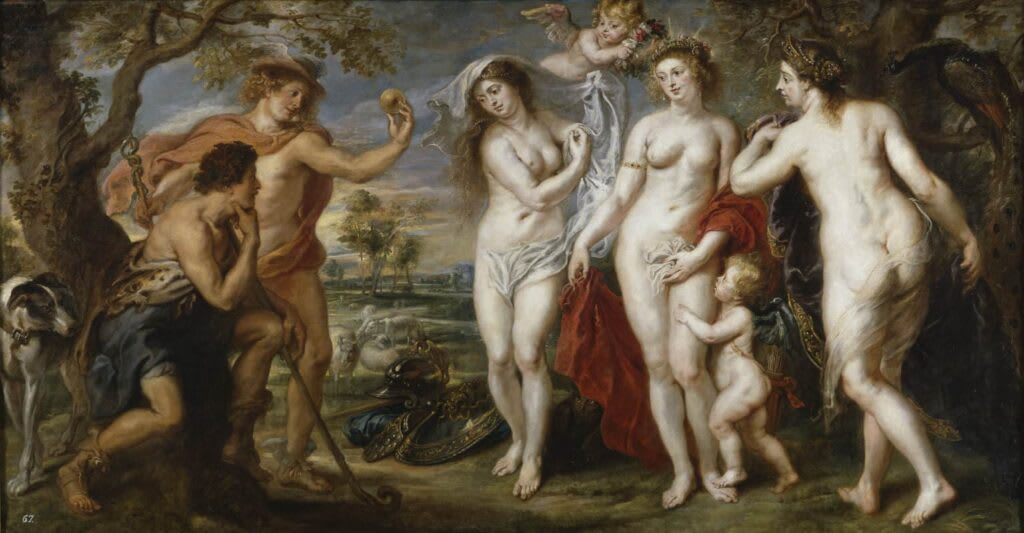
So, as one of the Olympian gods, it is clear that she had “arrived” in Greece by the time of the composition of Homer’s poems; she is referenced across the Epic cycle, not just in Homer but in tales such as that of the Judgement of Paris. Things start to become more complex, however, in Herodotus’ Histories.
Herodotus claims that the Paphian sanctuary of Aphrodite was not the original site of the goddess’ worship. He says that this sanctuary was preceded by a cult of Aphrodite in Ashkadon in the Southern Levant, and furthermore, that the Phoenicians brought the cult to Cyrprus. Pausanias takes us back a step further. He claims the cult originated among the Assyrians, who brought it to the Phoenicians, who, in turn, brought it to Cyprus.
The further we move forward with historical sources, the further back Aphrodite’s origin seems to stretch.
These various disparate cultures that make up Aphrodite – both indigenous and foreign – reflect the “melting pot” nature of Cyprus, as a barrier between East and West. There are various theories on how these cultures came together, so that the goddess as we know her came to be.
Aphrodite’s Influences
The three most prominent theories are that Aphrodite was of eastern origin, and as such was an essentially Hellenized version of the goddess Ishtar. The second is that the real model and antecedent for Aphrodite was the famous Great Mother Goddess of Cyprus. The third, and most unconventional argument, is that Aphrodite was indeed initially an indigenous Greek god, that was subsequently “buried” under layers of foreign influence.
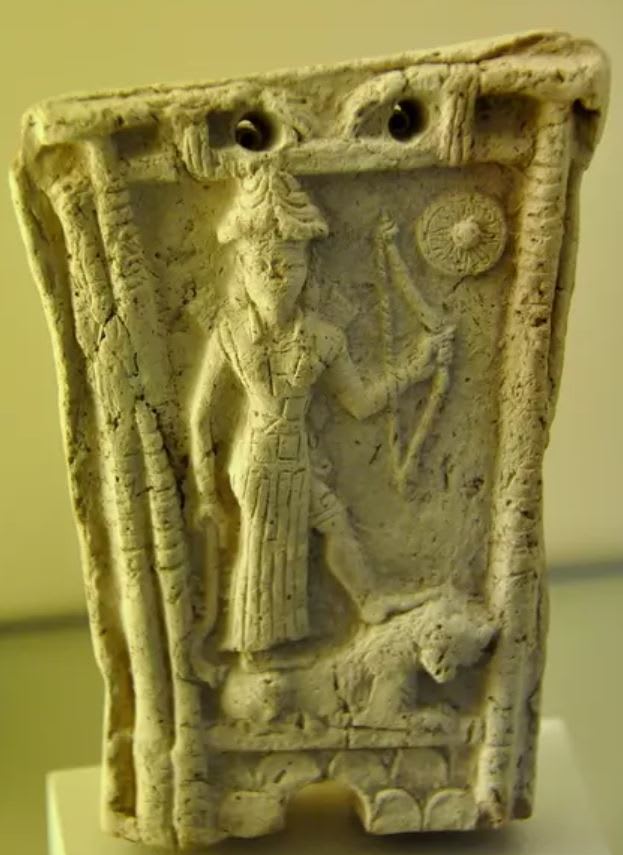
The first of these arguments is the most compelling. The eastern aspects of Aphrodite have always been emphasised. That the cult of Aphrodite would have it’s routes in the east would serve as a fascinating parallel to the Homeric assertion that the literal goddess herself originated in the east. Beyond the eastern origins, however, Aprhodite has undoubtedly a great connection with Cyprus. Indeed, she is so synonymous with Cyrpus that she is at times simply referred to as “the Cypriot.”
When examining the origin of a female deity connected to Cyprus, one cannot leave the Mother Goddess unacknowledged. This however, brings us to a particular set of problems and debates regarding Aphrodite. Much of the Mother Goddess’ iconography centers upon fertility. The understanding of fertility in relation to the Mother Goddess in particular is not based particularly on human fertility, but rather extends to include crops and animals. It represents productivity and a good harvest. Aphrodite, on the other hand, is marked by emphasis on sexuality. The two elements, of course, have a connection, but the question of emphasis remains an important one.
The final argument remains controversial. It does however bring to bear one of the many complexities when looking into these origins. There is undoubtedly an element of mixture that occurs, and within that it may be difficult to identify the constituent elements.
Regardless of the specifics, centuries after this process could have been seen to have ended – and approximately two millennia after Homer and Hesiod showed us her “complete” form – the image of Aphrodite may still be influenced and altered in different ways. The goddess is reinvented time and again across various novels, TV shows, and films, and our cultural understanding of her shifts with them.
Much like how she is shown in perhaps her most famous interpretation, Botticelli’s painting, the Birth of Venus, the goddess perpetually exists in the moment of being born, and is forever new.
Más info en https://ift.tt/n05ZlVp / Tfno. & WA 607725547 Centro MENADEL (Frasco Martín) Psicología Clínica y Tradicional en Mijas. #Menadel #Psicología #Clínica #Tradicional #MijasPueblo
*No suscribimos necesariamente las opiniones o artículos aquí compartidos. No todo es lo que parece.

No hay comentarios:
Publicar un comentario