
Dear Classical Wisdom Reader,
Nowadays it seems as if anger is all the rage, but is it all that it’s cracked up to be?
While we are often spurred to fury by the powers that be, it’s worth asking: what is the cost, whether it’s righteous or not, on those who hold on to animosity?
What happens to us when we can’t bury the hatchet, let bygones be bygone, and just...move on?
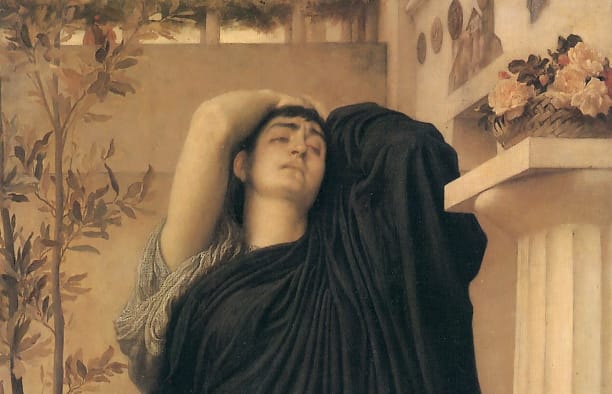
Going back (as we are prone to do) to the ancient world, we can find a plethora of examples of exactly what happens to those who lean into their furor, but perhaps none encapsulate this dilemma better than Electra.
Electra is a woman who cannot let go. And to many, it appears justifiable. Her father has been murdered, her mother is the murderer, and so revenge becomes her full-time job.
She doesn’t just want justice…she wants it loudly, publicly, and at any cost.
And while she breaks every rule about how a woman “should” behave in the ancient world, the silent, obedient, hidden ideal, she also risks losing the very thing she’s fighting for: her humanity.
Electra forces us to ask a dangerous little question, one we usually avoid:
At what point do we need to just... let it go?
Classical Wisdom Members, please enjoy this week’s Member’s only in-depth article on Electra. As one of the rare mythological characters to have been depicted by all three of the great Greek tragedians, who even has her own ‘complex’, Electra is clearly a myth that has resounded deeply over the millennia for a reason.
If you aren’t a member yet, but would like to enjoy our resources, including today’s deep dive on Electra, make sure to subscribe today. Also included is our exclusive Podcasts with Professors, extensive Ebook library, as well as our Classical Wisdom Litterae Magazines.
Now, who was Electra?
All the best,
Anya Leonard
Founder and Director
Classical Wisdom
P.S. If you aren’t registered yet, make sure to sign up for Friday’s LIVE conversation with Emily Wilson. It will be a rare opportunity to discuss the man behind the myth, the meaning behind the epics with the renowned translated herself.
The Elegies of Electra
By Mary Naples, Author of “Unsung Heroes: Women in the Ancient World” and “Cult of the Captured Bride: How Women Took Back Power”
Not every Greek character has a complex named in their honor, and few are more deserving of such recognition than Electra. Coined by Swiss psychoanalyst Carl Jung to name a female counterpart to Freud’s famous “Oedipus Complex”, the “Electra Complex” describes a daughter’s longing for her father, coupled with deep resentment towards her mother.
This term effectively encapsulates the myth of Electra, the princess of Mycenae and the second daughter of King Agamemnon and Clytemnestra. Imbued with themes of vengeance, loyalty, and the complex dynamics of familial relationships, her story resonates profoundly in Western literature and psychology.
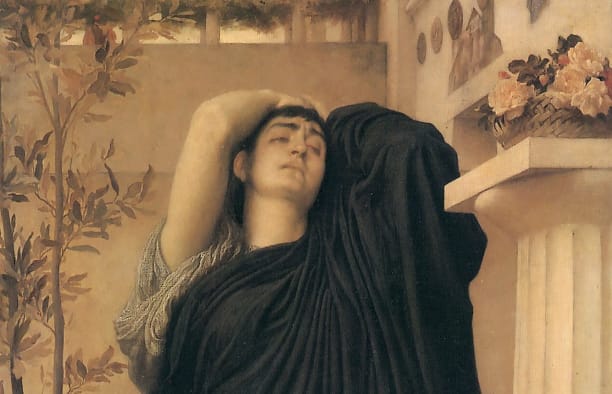
After King Agamemnon was killed by his wife Clytemnestra upon his victorious return from the ten-year long Trojan War, Electra helps spur her brother Orestes into seeking vengeance for their father’s death by killing their mother. Her profound animosity
Más info en https://ift.tt/Iia2k1r / Tfno. & WA 607725547 Centro MENADEL (Frasco Martín) Psicología Clínica y Tradicional en Mijas. #Menadel #Psicología #Clínica #Tradicional #MijasPueblo
*No suscribimos necesariamente las opiniones o artículos aquí compartidos. No todo es lo que parece.

No hay comentarios:
Publicar un comentario