
Dear Classical Wisdom Reader,
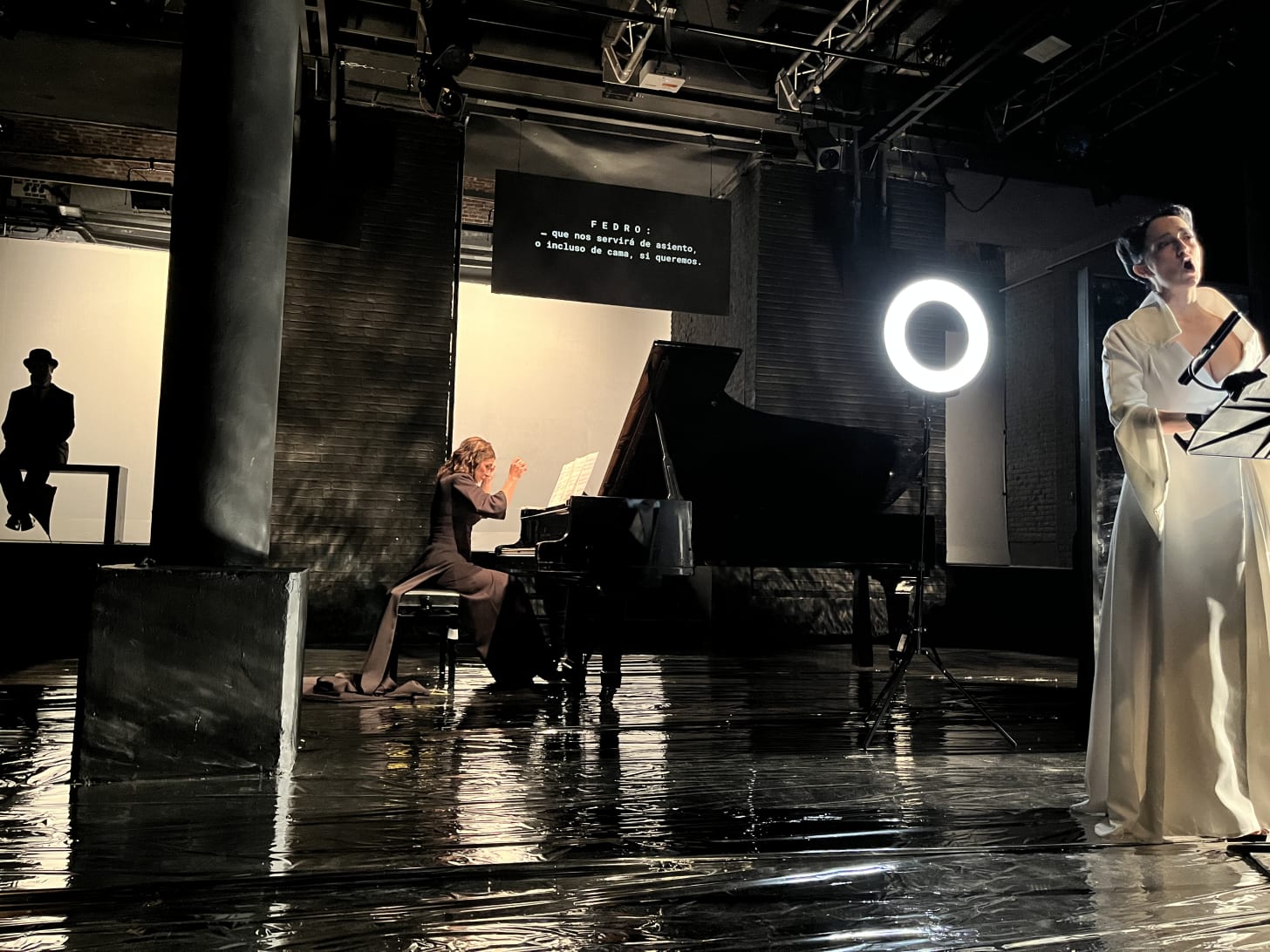
The performance was even greater than I had anticipated, and I had gone in with a great deal of expectation. It was, after all, the eccentrically brilliant Erik Satie’s Socrate...
Not only is the subject clearly dear to my heart, the backstory to its composition is simply too fabulous!
Like many great stories, it began with an American heiress. Born in Yonkers, Winnaretta Singer inherited the vast Singer fortune, which flowed from that ubiquitous sewing machine once found in all living rooms, but now residing in grandmother’s attics and closets throughout the country.
As was fashionable for wealthy Americans at the time, Winneratta married into European aristocracy, thereby becoming Princess Edmond de Polignac. Their lavender marriage was never consummated, but rather a convenience on both their behalves to very thinly disguise their true desires. Nevertheless, the Prince and now Princess enjoyed a relationship based on profound platonic love, mutual respect, understanding, and artistic friendship. More than anything, they shared a love of music.
And so with both prosperity and prestige, Winneratta became a great patroness, funding a wide range of causes and creating a salon which nurtured her many protégés, such as Debussy, Ravel and Satie. Proust fans will delight in knowing many of his evocations of salon culture were born from his attendance at concerts in the Polignac drawing room...
Join our Virtual Salon to be inspired and guided by the wisdom of the ancients:
It was also at this time Winneratta began studying ancient Greek and the classics. As we all know, dear reader, this is an infectious ambition, one that quickly grows, feeding on enthusiasm and the sublime... So naturally, Winneratta wanted to commission music in which she and her girlfriends could read ancient Greek philosophy... specifically Plato’s dialogues.
Can I please just take a moment to point out how epic that is?
Not only does the merging of music and the mind track beautifully with the ancient traditions of the symposium and theatre, but what a seriously fantastic way to celebrate a love of the Classics! I am so here for this idea.
As such, in October 1916 Winneratta approached the composer Erik Satie, always found with pince-nez securely on his nose and bowler hat perched on his head. At first he was hesitant to the idea, after all, it sounded too melodramatic, too feminine... but together they found a compromise.
Plato’s dialogues would be sung, demanded Satie… but by women, required Singer.
Unfortunately, it was not simply smooth sailing from then on. In 1917, Satie was facing prison time for... an insulting postcard. You see, the offending text being on a postcard rather than a letter, meant anyone could read it, thus resulting in defamation. Those who are in the creative industry will be sympathetic, for the following words were not written to a friend, a lover or family member... but to a music critic:
“Sir and dear friend, you are an arse, an arse without music! Signed, Erik Satie”.
Fortunately the Princess interceded by throwing her American money at the problem and Satie was finally able to work without fear. The result, as my family and I were able to witness last night in a small room hidden under the glamorous Teatro Colón, was nothing less than stunning... as I hope the clip above captures.
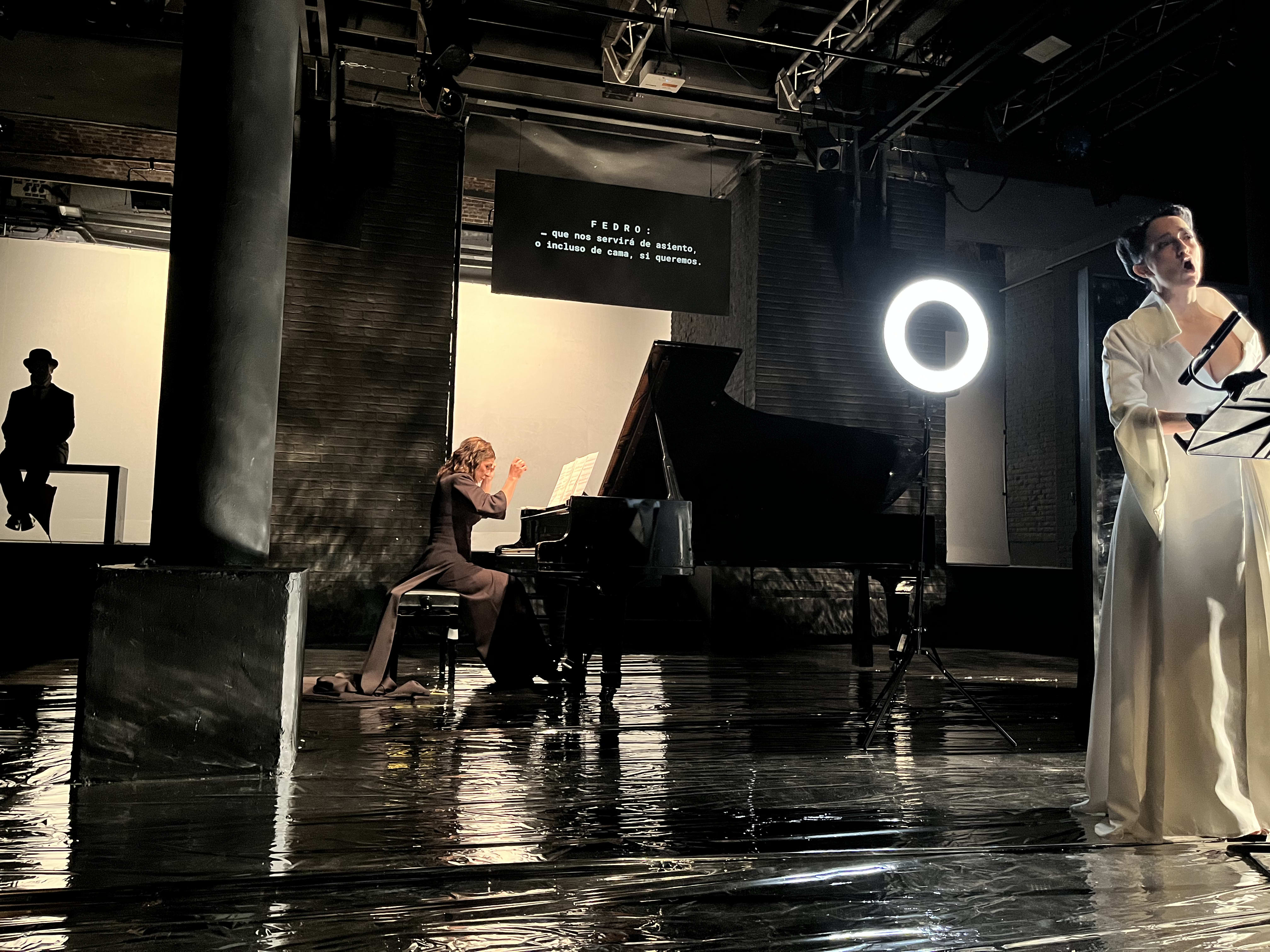
Socrate is a short composition, only 30 minutes in total, focusing on three sections from Plato’s works that aim to present a portrait of Socrates as seen in the Symposium, the Phaedrus and finally his death in Phaedo. It lacks any musical sections that might be considered arias, and the text is delivered as recitative. It is a curious mixture of the ancient world reinterpreted in Satie’s modern culture.
Satie’s Socrate is, honestly, strange. While it is also evocative and powerful, perhaps it’s not surprising that it didn’t always ‘land’, especially in the early 1900s. In private performances, literati like James Joyce and Gertrude Stein praised its “audacious aesthetic approach,” however, the majority saw it as “musical impoverishment.”
In fact, in 1920 when its orchestral version premiered, the audience believed it to be a joke... and so laughed accordingly. You can imagine the disappointment Satie felt. Tragically he died misunderstood; the appreciation for his Socrate came after his death.
Make sure to appreciate the Classics while you can… Subscribe for beautiful ideas, texts and inspirations:
It is a sad ending for a beautiful work of art, but it is hardly an unusual one. Indeed, recognition after the fact is so common it’s a trope, a cliché! One that has happened again and again, presumably to this very day. Can we imagine what great works are being dismissed right now? And how are we to know? More than ever we have an abundance of noise, such that finding the signal is incredibly tricky...
Indeed, I believe we are in a moment of redefining what culture and art is in the first place. As someone who wholeheartedly believes in questioning just about everything, I think this process is necessary from time to time... as long as we are open and honest, as well as well informed about our past.
To this end, I am very eager for this week’s event, The Golden Thread, with Harvard history professor James Hankins and Cornell classics professor Michael Fontaine.
I’ve been reading Hankins’ 1300+ page tome on Western civilization and you might not be surprised to hear I have a lot of thoughts... and even more questions.
Such as, what is defined as culture? Are we to listen to the artists, the critics, or the audience? Who decides what constitutes our traditions? What is kept? What is discarded?
And, perhaps pertaining more to the topics to which these humble pages are dedicated, how critical are the Classics in the classification of culture?
Like a Phoenix being redrawn in every era according to the latest trends, are the Classics necessary, coincidental or simply convention?
I could go on... but I genuinely want to hear your musings on the topic. We are so fortunate to have a fantastically interesting and interested community… I never cease to be amazed at the fruitful conversations and keen insights you all provide. So please comment below and join us on Thursday!
All the best,
Anya Leonard
Founder and Director
Classical Wisdom
Más info en https://ift.tt/FGd9Tzc / Tfno. & WA 607725547 Centro MENADEL (Frasco Martín) Psicología Clínica y Tradicional en Mijas. #Menadel #Psicología #Clínica #Tradicional #MijasPueblo
*No suscribimos necesariamente las opiniones o artículos aquí compartidos. No todo es lo que parece.

No hay comentarios:
Publicar un comentario