
Dear Classical Wisdom Reader,
I suppose it depends where you are…
But here in Ireland, today is the first day of meteorological Spring. Although you’d be forgiven for not quite believing it, as there’s been snow falling across the country, and the conditions are positively wintry.
Of course, the division between the seasons is at the core of one ancient Greece’s most famous myths, the tale of Hades and Persephone.
It’s just one of the myths we’re looking at in today’s article, focusing on the role of nature in Greek myth, and how plants and flowers were viewed as conduits to the divine.
Read on below to discover how the natural and supernatural worlds were definitively linked in the ancient Greek imagination…
But first, just a quick reminder that our next webinar, The Philosophy of Anxiety, is on Wednesday March 6th at Noon EST.
Anya will be joined by a panel of experts looking at how the ancients responded to anxiety, and what we can learn from them.
Make sure to register for that HERE and you will be sent a recording of the event afterwards, plus you could win a copy of panel member Samir Chopra's new book, "Anxiety: A Philosophical Guide".
Now for a look at how the ancient world endures around us through nature… Plus a surprising answer to an age-old question: was there really such a thing as golden apples?
All the best,
Sean Kelly
Managing Editor
Classical Wisdom
Into Exile! Become a Member and access our special issue of Classical Wisdom Litterae focusing on ancient exiles, including Ovid, Cicero and Seneca.
Nature in Greek Mythology
by Lydia Serrant
It’s a familiar story…
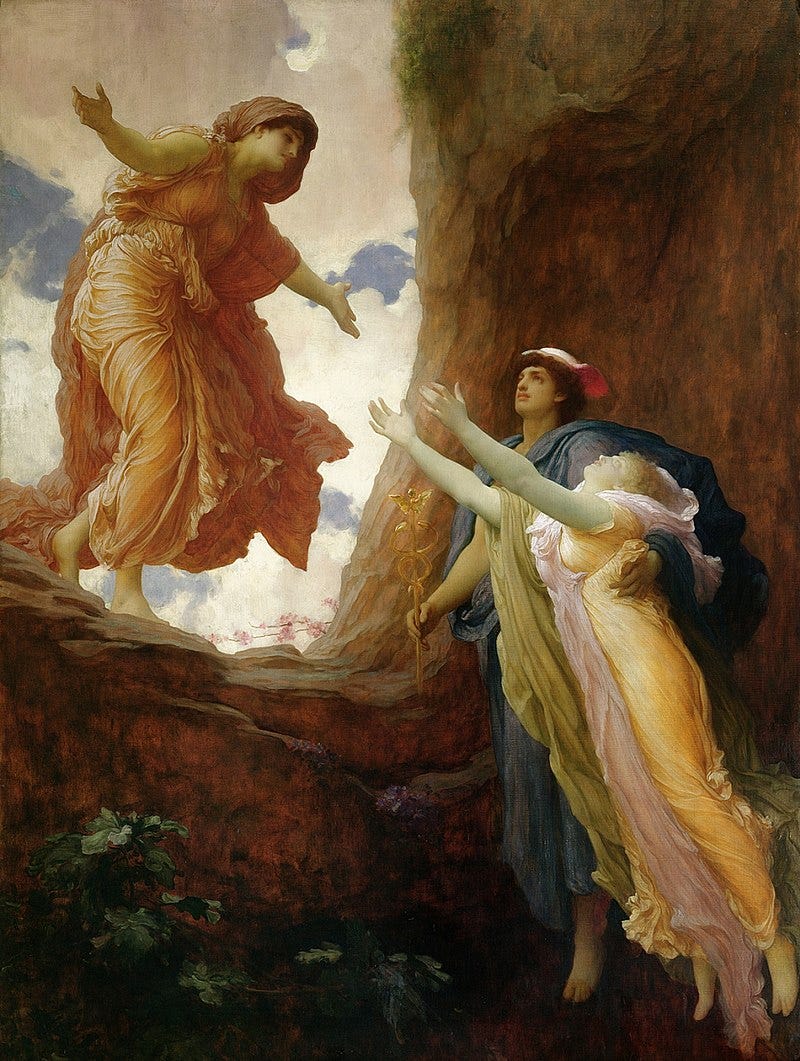
When Persephone was kidnapped by Hades, her mother Demeter, goddess of the harvest, was stricken with grief. She was filled with such sorrow at her daughter’s abduction that she deprived the Earth of all of her energy. Soil became barren, flowers withered, crops failed and mortals starved. Concerned by these events, Zeus, king of the gods, sent his messenger Hermes to Hades to bring Persephone home.
Fearing repercussions from the gods of Olympus, Hades negotiated Persephone’s release. Yet once someone consumes food of the dead, their essence can never truly leave the Underworld. So Hades convinced Persephone to eat six pomegranate seeds on her final day with him, to ensure that she would return to Hades for six months of the year.
Persephone returned to the surface the next day, and in such joy at the sight of her rescued daughter, Demeter brought forth the beginning of Spring and Summer. For six months of the year, crops and flowers flourished, only to wither again during Autumn and Winter when Persephone returned to the Underworld.
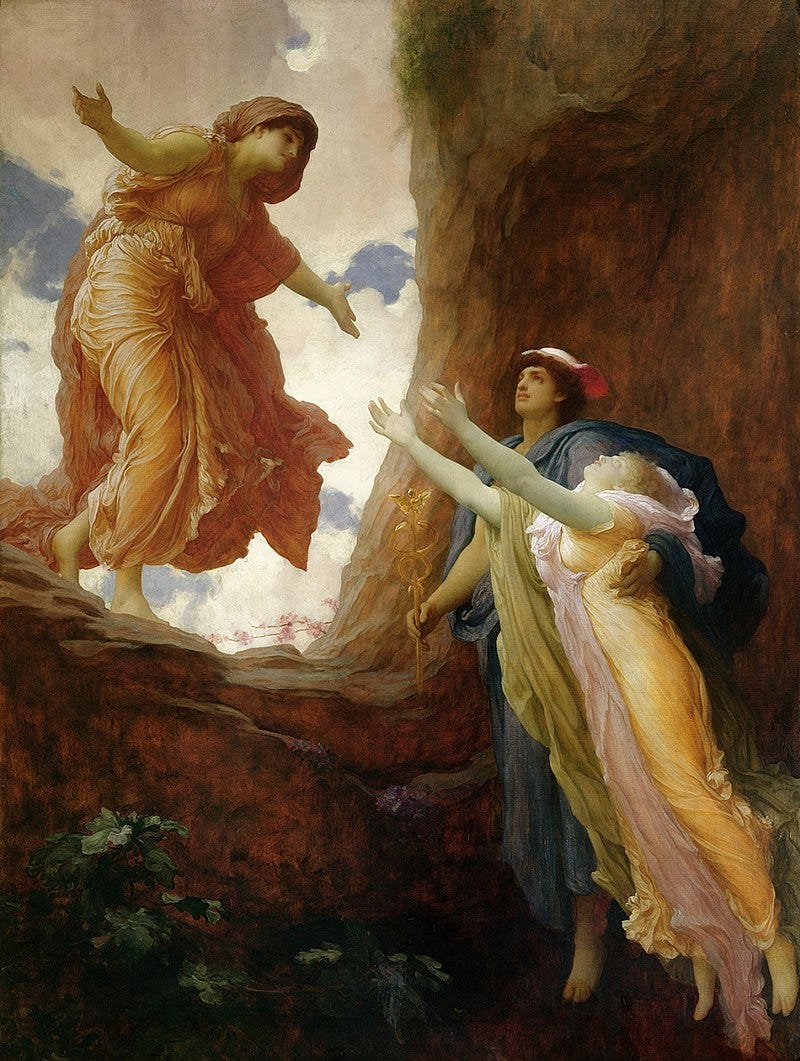
The myth of Persephone was the Greeks’ personification of natural seasonal cycles and vegetation. Persephone was worshipped and honored as both goddess of the Underworld and goddess of Spring and Nature.
Yet this is far from the only myth on the power of nature…
The Greeks have a rich tradition of associating the gods with plants or flowers. Such associations generally derived from some physical feature of the plant, whether it be the form, complexity, healing properties or the blossom.
Hyacinths: The Story of Hyacinthus and Apollo
Hyacinthus was a popular and handsome Prince of Sparta admired by both mortals and the gods, especially by Zephyrus, god of the North wind.
Hyacinthus also caught the attention of the god Apollo, and they became lovers. Zephyrus became jealous of their closeness, and seized an opportunity to take his revenge by hitting Hyacinth on the head with a discus, killing him instantly.

Apollo was so grief-stricken he tried to stop Hades from taking Hyacinthus to the Underworld. However, once he realized his protests were in vain, Apollo created the Hyacinth flower from the blood of his dead lover, vowing that by so doing he would remember him always.
According to some legends the flowers then hardened into stone, and the Hyacinth stone is known in spiritual circles for its protective properties, and the power to drive away melancholy.
Hera’s Golden Apples
To celebrate Hera’s betrothal to the god Zeus, Gaia, the Goddess of the Earth, gifted Hera a single apple tree, from which sprung golden apples.
Delighted with the gift, Hera requested that the tree be planted in her orchard in the Garden of Hesperides near the Atlas Mountains.
The Hesperides (nymphs of the evening and golden sunsets) were given the task of tending the garden, but they stole some of the golden apples for themselves. Hera then placed an immortal hundred-headed dragon called Ladon to guard the orchard.
The famed hero and demigod Hercules was tasked with stealing three of these golden apples as the eleventh of his Labours. In one version of the story, Ladon is killed by Hercules, and in another the demigod tricks the Titan Atlas in order to acquire the golden apples.
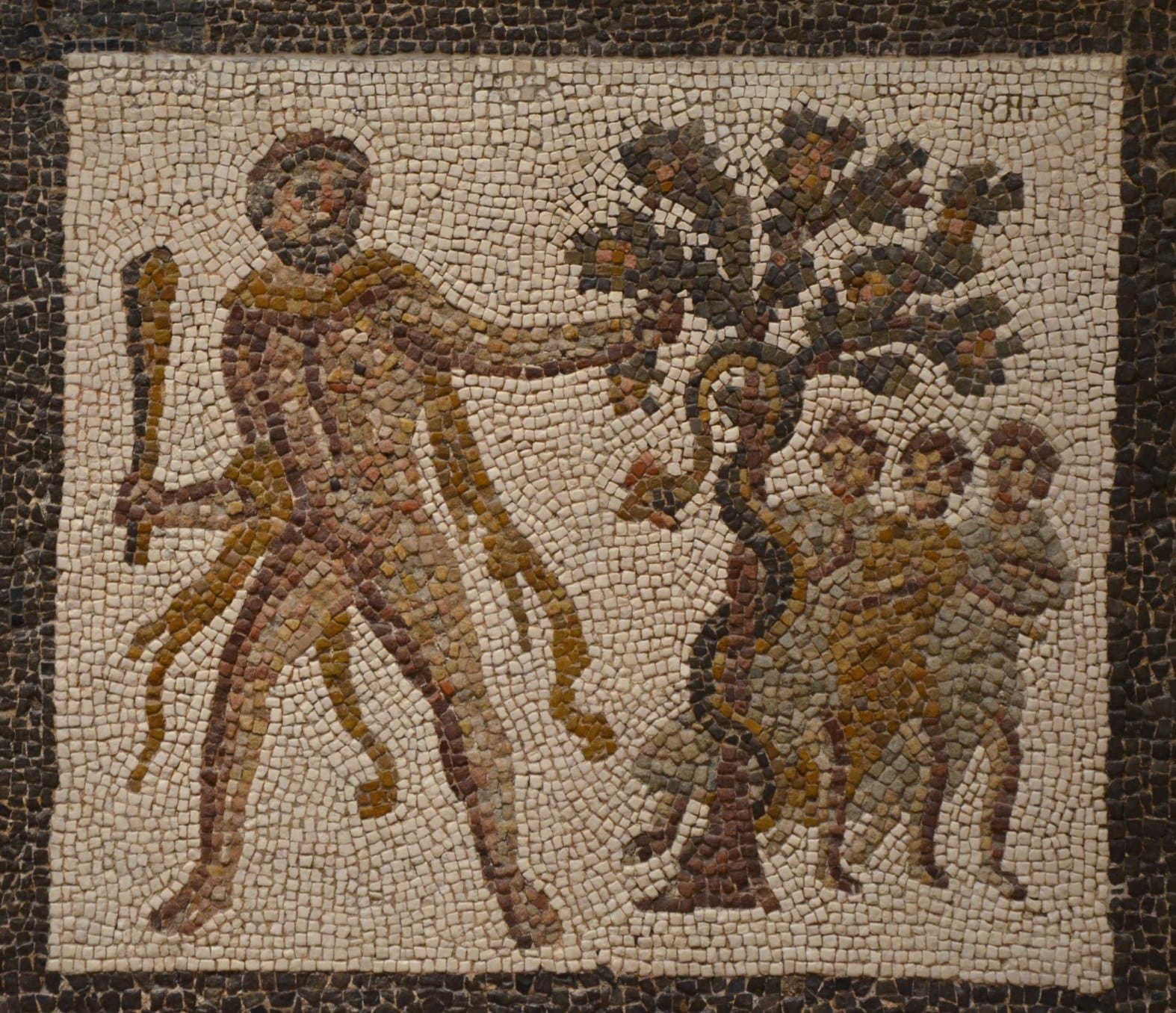
It is now believed the terms ‘golden apples’ refers to oranges, which were unknown to Europeans until the Middle Ages. Even today “Hesperidoids” is the Greek botanical name for citrus fruits.
Mandrake: The Herb of Circe
Circe was an ancient Greek sorceress of myth with vast knowledge of potions and poisons. The daughter of Helios and the ocean nymph Perse, she resided on the island of Aeaea.
Circe is often associated with the mandrake, a plant she commonly used to turn men into animals. She is best known in for her appearance in Homers Odyssey, where, on the way back from the Trojan War, Odysseus and his men took rest on Aeaea. Displeased with receiving uninvited visitors, Circe turned Odysseus’ men into pigs using the power of the mandrake.
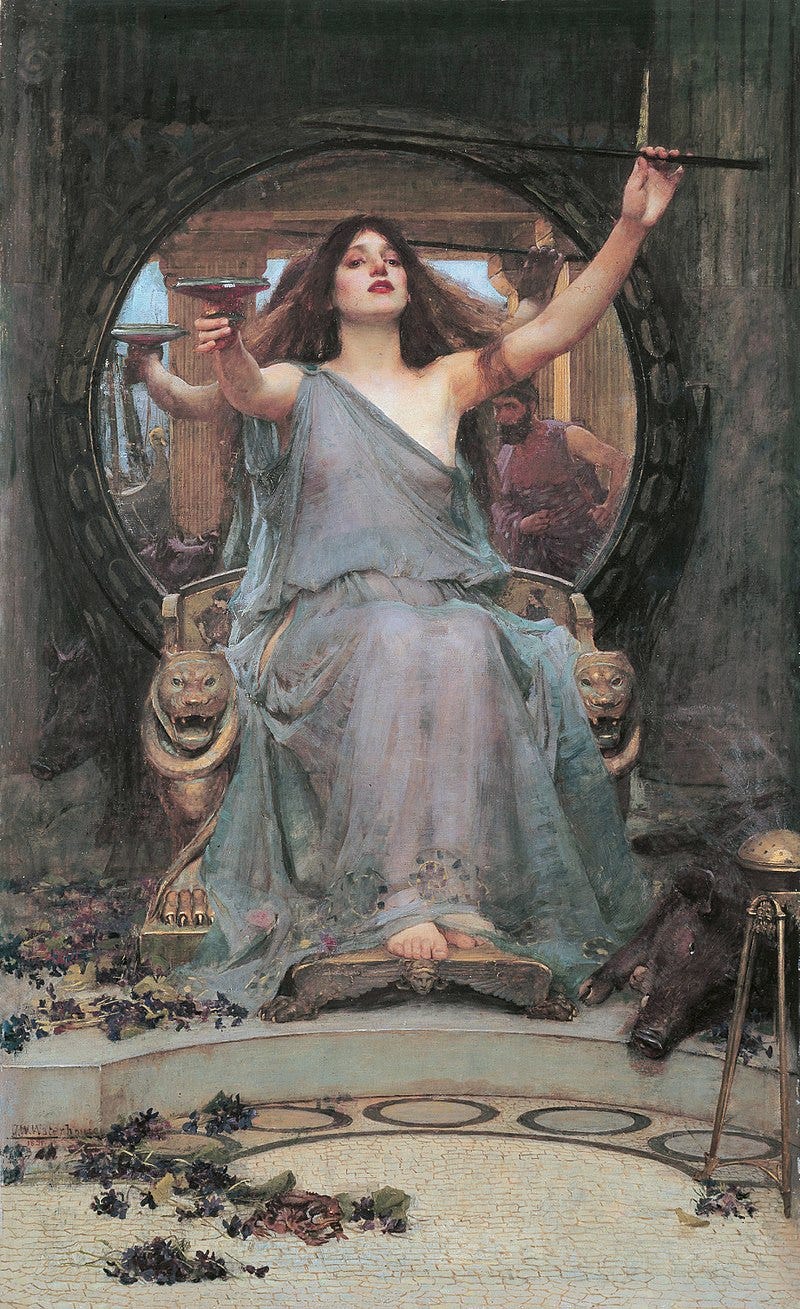
Protected by the herb moly, Odysseus rescued the men and became her lover. He and his men stayed with her on the island for one year before the men convinced Odysseus to resume the journey.
Mandrake was also considered a powerful aphrodisiac if delivered in the right doses, and was used in rituals in the cult of Aphrodite. In ancient daily life, mandrake was often prescribed to combat insomnia, and used as an anesthetic for surgery.
Conclusion
The Greeks personified nature in the form of gods, and their stories reflected their reliance on the natural world for survival and longevity. Natural medicine was consulted for all matters of body and spirit — even the effects that some plants have on human consciousness were well-known and often used. By associating plants with gods and using plants as medicine, the ancients may have felt that they were accessing something of divine power.
Various myths and even the names of the gods have survived through the representation of plant life and their strong associations with healing (or harmful) properties. These stories also demonstrate a deep understanding of natural cycles, and a desire to preserve this knowledge for future generations.
Más info en frasco@menadelpsicologia.com / Tfno. & WA 607725547 Centro MENADEL (Frasco Martín) Psicología Clínica y Tradicional en Mijas Pueblo #Psicologia #MenadelPsicologia #Clinica #Tradicional #MijasPueblo
*No suscribimos necesariamente las opiniones o artículos aquí compartidos. No todo es lo que parece.

No hay comentarios:
Publicar un comentario