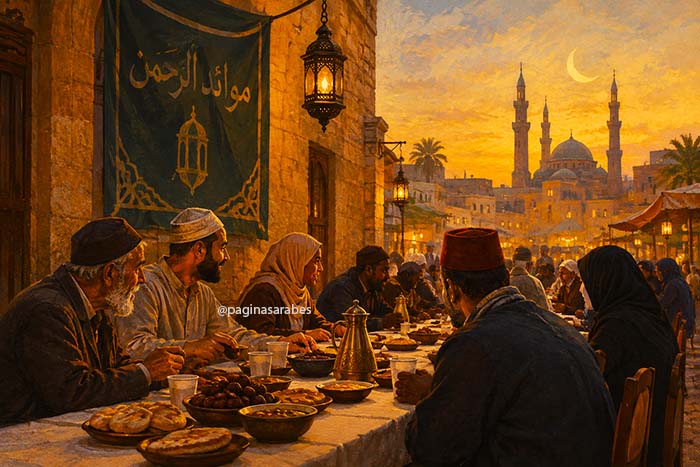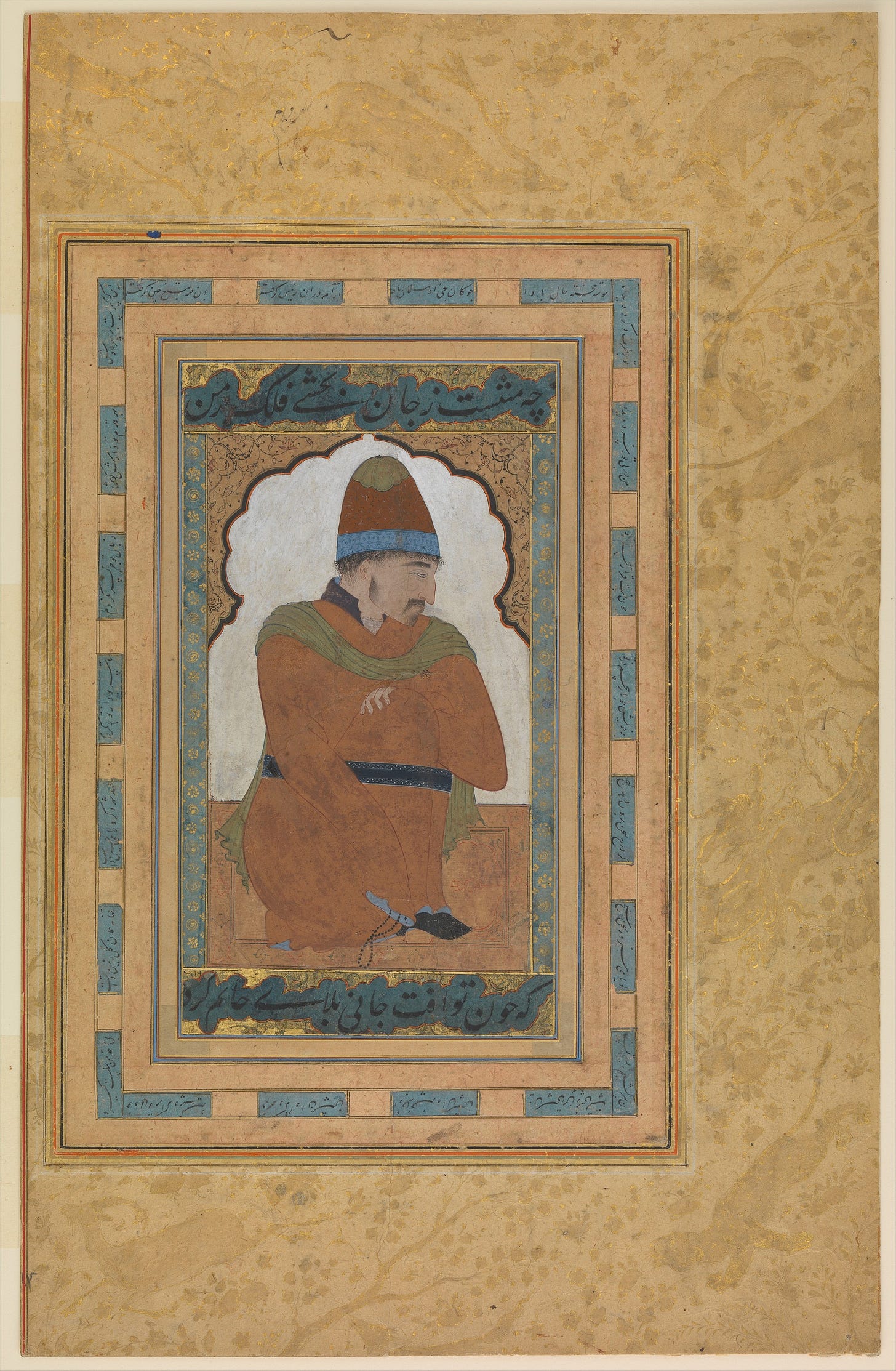
<p><em>Secret saints. The anatomy of the human face. A Persian book of yoga. And the strange things Sufis discovered about the person trying to become spiritual.</em></p><p><strong>SPIRITUAL RELIEF JOURNAL · NO. 5 · OCTOBER 2026</strong></p><div><figure><a href="https://substackcdn.com/image/fetch/%24s_!4vP_!,f_auto,q_auto:good,fl_progressive:steep/https%3A%2F%2Fsubstack-post-media.s3.amazonaws.com%2Fpublic%2Fimages%2Ff6bb8222-79cb-488b-a4dd-cf0d225772a9_2533x3875.jpeg"></a><div><a href="https://substackcdn.com/image/fetch/%24s_!4vP_!,f_auto,q_auto:good,fl_progressive:steep/https%3A%2F%2Fsubstack-post-media.s3.amazonaws.com%2Fpublic%2Fimages%2Ff6bb8222-79cb-488b-a4dd-cf0d225772a9_2533x3875.jpeg"></a><source type="image/webp"><a href="https://substackcdn.com/image/fetch/%24s_!4vP_!,f_auto,q_auto:good,fl_progressive:steep/https%3A%2F%2Fsubstack-post-media.s3.amazonaws.com%2Fpublic%2Fimages%2Ff6bb8222-79cb-488b-a4dd-cf0d225772a9_2533x3875.jpeg"><img src="https://substackcdn.com/image/fetch/$s_!4vP_!,w_1456,c_limit,f_auto,q_auto:good,fl_progressive:steep/https%3A%2F%2Fsubstack-post-media.s3.amazonaws.com%2Fpublic%2Fimages%2Ff6bb8222-79cb-488b-a4dd-cf0d225772a9_2533x3875.jpeg" width="1456" height="2227" alt=""></a></source><a href="https://substackcdn.com/image/fetch/%24s_!4vP_!,f_auto,q_auto:good,fl_progressive:steep/https%3A%2F%2Fsubstack-post-media.s3.amazonaws.com%2Fpublic%2Fimages%2Ff6bb8222-79cb-488b-a4dd-cf0d225772a9_2533x3875.jpeg"></a><div><a href="https://substackcdn.com/image/fetch/%24s_!4vP_!,f_auto,q_auto:good,fl_progressive:steep/https%3A%2F%2Fsubstack-post-media.s3.amazonaws.com%2Fpublic%2Fimages%2Ff6bb8222-79cb-488b-a4dd-cf0d225772a9_2533x3875.jpeg"></a><div><a href="https://substackcdn.com/image/fetch/%24s_!4vP_!,f_auto,q_auto:good,fl_progressive:steep/https%3A%2F%2Fsubstack-post-media.s3.amazonaws.com%2Fpublic%2Fimages%2Ff6bb8222-79cb-488b-a4dd-cf0d225772a9_2533x3875.jpeg"></a></div><a href="https://substackcdn.com/image/fetch/%24s_!4vP_!,f_auto,q_auto:good,fl_progressive:steep/https%3A%2F%2Fsubstack-post-media.s3.amazonaws.com%2Fpublic%2Fimages%2Ff6bb8222-79cb-488b-a4dd-cf0d225772a9_2533x3875.jpeg"></a></div><a href="https://substackcdn.com/image/fetch/%24s_!4vP_!,f_auto,q_auto:good,fl_progressive:steep/https%3A%2F%2Fsubstack-post-media.s3.amazonaws.com%2Fpublic%2Fimages%2Ff6bb8222-79cb-488b-a4dd-cf0d225772a9_2533x3875.jpeg"></a></div><a href="https://substackcdn.com/image/fetch/%24s_!4vP_!,f_auto,q_auto:good,fl_progressive:steep/https%3A%2F%2Fsubstack-post-media.s3.amazonaws.com%2Fpublic%2Fimages%2Ff6bb8222-79cb-488b-a4dd-cf0d225772a9_2533x3875.jpeg"></a></figure></div><p><em>Portrait of a Dervish. Bukhara, sixteenth century. The Metropolitan Museum of Art</em></p><div><hr></div><p>There is a tendency to speak about Sufism as though its many schools were variations on a single method: different lineages, different saints, different forms of dhikr, but essentially the same road.</p><p>The historical picture is much less tidy.</p><p>In ninth-century Nishapur, the Malamatiyya became suspicious of the spiritual identity itself. They worried that asceticism, humility and even the attempt to overcome the ego could provide the ego with new material. Several centuries later, ‘Umar al-Suhrawardi approached a different problem: how could the inner life be given enough structure to survive the passing of a spiritual state, or the death of a teacher?</p><p>In India, the Shattari tradition carried the question in another direction. The <em>Bahr al-Hayat</em>, associated with Muhammad Ghawth of Gwalior, brought yogic postures, breath and contemplative techniques into a Persian Sufi setting. In the Bektashi world, Hurufi ideas introduced an even stranger language of interpretation, in which letters, numbers and features of the human face could disclose correspondences hidden beneath ordinary appearances.</p><p>Then there were questions of authority and transmission. Ahmad al-Tijani claimed to have received his path directly from the Prophet while awake. In West Africa, the Tijaniyya developed into an enormous spiritual tradition, while another Sufi path, the Muridiyya of Ahmadou Bamba, placed discipline, writing and <em>khidma</em>, service, at the center of a community that would eventually transform Touba into a major religious city.</p><p>Taken together, these traditions make Sufism difficult to reduce to a single idea.</p><p>Each one found the problem in a different part of the traveler, and some held radically different ideas about what a spiritual path was supposed to accomplish.</p><p>That is the thread running through our latest film, <em><a href="https://www.youtube.com/watch?v=KE4_0pn0ZY4">Even More Schools of Sufism Explained</a></em>.</p><p>But there are things that work better on a page than in a film. Especially when the evidence is a manuscript, a painting, an old photograph, or a diagram that deserves more than a few seconds on screen.</p><p>So this issue is a small collection of things worth looking at more closely.</p><p>Some are beautiful.</p><p>Some are quite strange.</p><p>And one or two are rather uncomfortable.</p><p>We begin in Nishapur, with perhaps the most uncomfortable problem of all. What if the desire to become spiritual gives the ego one more thing to become?</p><div><hr></div><h2>The Higher Roof</h2><h3>Hujwiri</h3><p>In Nishapur the people of blame took their rule from Hamdun al-Qassar, the fuller. Hujwiri gives his definition in three Arabic words: <em>al-malama tark al-salama</em>. Blame is the giving up of safety.</p><p>Hujwiri wrote the <em>Kashf al-Mahjub</em>, the oldest treatise on Sufism in Persian, in the eleventh century. He is buried in Lahore. His chapter on blame collects scenes.</p><p>Bayazid comes home from the Hijaz. A cry goes through the town: Bayazid has come. The people pour out to bring him in with honor, and he feels their attention drawing him outward. It is Ramadan. In the bazaar he takes a loaf of bread out of his sleeve and starts to eat. He is a traveler, and the law excuses a traveler from the fast. The crowd sees a man eating in Ramadan, and it melts away. He turns to the disciple walking with him.</p><blockquote><p>Did you see? I acted on one ruling of the Law, and all the people rejected me.</p></blockquote><p><em>Bayazid Bistami, in Hujwiri’s Kashf al-Mahjub, rendered from the Persian</em></p><div><figure><a href="https://substackcdn.com/image/fetch/%24s_!CBnB!,f_auto,q_auto:good,fl_progressive:steep/https%3A%2F%2Fsubstack-post-media.s3.amazonaws.com%2Fpublic%2Fimages%2F25b0944b-a896-4255-bff1-4926dd625974_700x1285.jpeg"></a><div><a href="https://substackcdn.com/image/fetch/%24s_!CBnB!,f_auto,q_auto:good,fl_progressive:steep/https%3A%2F%2Fsubstack-post-media.s3.amazonaws.com%2Fpublic%2Fimages%2F25b0944b-a896-4255-bff1-4926dd625974_700x1285.jpeg"></a><source type="image/webp"><a href="https://substackcdn.com/image/fetch/%24s_!CBnB!,f_auto,q_auto:good,fl_progressive:steep/https%3A%2F%2Fsubstack-post-media.s3.amazonaws.com%2Fpublic%2Fimages%2F25b0944b-a896-4255-bff1-4926dd625974_700x1285.jpeg"><img src="https://substackcdn.com/image/fetch/$s_!CBnB!,w_1456,c_limit,f_auto,q_auto:good,fl_progressive:steep/https%3A%2F%2Fsubstack-post-media.s3.amazonaws.com%2Fpublic%2Fimages%2F25b0944b-a896-4255-bff1-4926dd625974_700x1285.jpeg" width="1456" height="2673" alt=""></a></source><a href="https://substackcdn.com/image/fetch/%24s_!CBnB!,f_auto,q_auto:good,fl_progressive:steep/https%3A%2F%2Fsubstack-post-media.s3.amazonaws.com%2Fpublic%2Fimages%2F25b0944b-a896-4255-bff1-4926dd625974_700x1285.jpeg"></a><div><a href="https://substackcdn.com/image/fetch/%24s_!CBnB!,f_auto,q_auto:good,fl_progressive:steep/https%3A%2F%2Fsubstack-post-media.s3.amazonaws.com%2Fpublic%2Fimages%2F25b0944b-a896-4255-bff1-4926dd625974_700x1285.jpeg"></a><div><a href="https://substackcdn.com/image/fetch/%24s_!CBnB!,f_auto,q_auto:good,fl_progressive:steep/https%3A%2F%2Fsubstack-post-media.s3.amazonaws.com%2Fpublic%2Fimages%2F25b0944b-a896-4255-bff1-4926dd625974_700x1285.jpeg"></a></div><a href="https://substackcdn.com/image/fetch/%24s_!CBnB!,f_auto,q_auto:good,fl_progressive:steep/https%3A%2F%2Fsubstack-post-media.s3.amazonaws.com%2Fpublic%2Fimages%2F25b0944b-a896-4255-bff1-4926dd625974_700x1285.jpeg"></a></div><a href="https://substackcdn.com/image/fetch/%24s_!CBnB!,f_auto,q_auto:good,fl_progressive:steep/https%3A%2F%2Fsubstack-post-media.s3.amazonaws.com%2Fpublic%2Fimages%2F25b0944b-a896-4255-bff1-4926dd625974_700x1285.jpeg"></a></div><a href="https://substackcdn.com/image/fetch/%24s_!CBnB!,f_auto,q_auto:good,fl_progressive:steep/https%3A%2F%2Fsubstack-post-media.s3.amazonaws.com%2Fpublic%2Fimages%2F25b0944b-a896-4255-bff1-4926dd625974_700x1285.jpeg"></a></figure></div><p><em>The tomb of Bayazid at Bastam</em></p><p>Abu Tahir Harami rides a donkey through a bazaar, a disciple holding the reins. Someone shouts that the heretic old man is coming. The disciple goes for him and the market erupts. Back at the lodge, the shaykh brings out a box of letters written to him. Each addresses him by a different title. He asks the disciple why anyone should fight over names that other people hand out from their own beliefs.</p><p>Ibrahim ibn Adham is asked whether he ever reached his desire. Twice, he says. Once on a ship, where nobody knew him and he became the passengers’ joke. Once on a winter night, when one mosque after another turned him out into the snow and he ended up by the furnace of a bathhouse, his clothes black with smoke.</p><blockquote><p>That night I had reached my desire.</p></blockquote><p><em>Ibrahim ibn Adham, in Hujwiri’s Kashf al-Mahjub, rendered from the Persian</em></p><p>Hujwiri ends with himself. A difficulty had hold of him. He sat at Bayazid’s tomb hoping it would loosen, and it did not. It loosened in a Sufi lodge in Kumish, where the company had nothing but contempt for him.</p><blockquote><p>That night they seated me on one roof, and went up onto a higher roof themselves.</p></blockquote><p><em>Hujwiri, Kashf al-Mahjub, rendered from the Persian</em></p><p>They gave him dry bread. They laughed at him and threw melon rinds down on him. He sat and took it, and the knot came undone.</p><p>A century and a half later, Ibn Arabi ranked the people of blame among the highest of the gnostics: the ones who know and are not known. Sufis liked to quote a saying they attributed to God. <em>My friends are beneath My domes. No one knows them but Me.</em></p><p>In 1623, placards went up on the walls of Paris in the name of the deputies of the Brothers of the Rosy Cross. The brothers, they announced, were staying in the city, visibly and invisibly.</p><div><figure><a href="https://substackcdn.com/image/fetch/%24s_!gnVe!,f_auto,q_auto:good,fl_progressive:steep/https%3A%2F%2Fsubstack-post-media.s3.amazonaws.com%2Fpublic%2Fimages%2F74af85c1-f315-4637-b9d3-a1ad22968848_1920x1440.jpeg"></a><div><a href="https://substackcdn.com/image/fetch/%24s_!gnVe!,f_auto,q_auto:good,fl_progressive:steep/https%3A%2F%2Fsubstack-post-media.s3.amazonaws.com%2Fpublic%2Fimages%2F74af85c1-f315-4637-b9d3-a1ad22968848_1920x1440.jpeg"></a><source type="image/webp"><a href="https://substackcdn.com/image/fetch/%24s_!gnVe!,f_auto,q_auto:good,fl_progressive:steep/https%3A%2F%2Fsubstack-post-media.s3.amazonaws.com%2Fpublic%2Fimages%2F74af85c1-f315-4637-b9d3-a1ad22968848_1920x1440.jpeg"><img src="https://substackcdn.com/image/fetch/$s_!gnVe!,w_1456,c_limit,f_auto,q_auto:good,fl_progressive:steep/https%3A%2F%2Fsubstack-post-media.s3.amazonaws.com%2Fpublic%2Fimages%2F74af85c1-f315-4637-b9d3-a1ad22968848_1920x1440.jpeg" width="1456" height="1092" alt=""></a></source><a href="https://substackcdn.com/image/fetch/%24s_!gnVe!,f_auto,q_auto:good,fl_progressive:steep/https%3A%2F%2Fsubstack-post-media.s3.amazonaws.com%2Fpublic%2Fimages%2F74af85c1-f315-4637-b9d3-a1ad22968848_1920x1440.jpeg"></a><div><a href="https://substackcdn.com/image/fetch/%24s_!gnVe!,f_auto,q_auto:good,fl_progressive:steep/https%3A%2F%2Fsubstack-post-media.s3.amazonaws.com%2Fpublic%2Fimages%2F74af85c1-f315-4637-b9d3-a1ad22968848_1920x1440.jpeg"></a><div><a href="https://substackcdn.com/image/fetch/%24s_!gnVe!,f_auto,q_auto:good,fl_progressive:steep/https%3A%2F%2Fsubstack-post-media.s3.amazonaws.com%2Fpublic%2Fimages%2F74af85c1-f315-4637-b9d3-a1ad22968848_1920x1440.jpeg"></a></div><a href="https://substackcdn.com/image/fetch/%24s_!gnVe!,f_auto,q_auto:good,fl_progressive:steep/https%3A%2F%2Fsubstack-post-media.s3.amazonaws.com%2Fpublic%2Fimages%2F74af85c1-f315-4637-b9d3-a1ad22968848_1920x1440.jpeg"></a></div><a href="https://substackcdn.com/image/fetch/%24s_!gnVe!,f_auto,q_auto:good,fl_progressive:steep/https%3A%2F%2Fsubstack-post-media.s3.amazonaws.com%2Fpublic%2Fimages%2F74af85c1-f315-4637-b9d3-a1ad22968848_1920x1440.jpeg"></a></div><a href="https://substackcdn.com/image/fetch/%24s_!gnVe!,f_auto,q_auto:good,fl_progressive:steep/https%3A%2F%2Fsubstack-post-media.s3.amazonaws.com%2Fpublic%2Fimages%2F74af85c1-f315-4637-b9d3-a1ad22968848_1920x1440.jpeg"></a></figure></div><p><em>The shrine of Hujwiri, Data Darbar, Lahore</em></p><div><figure><a href="https://substackcdn.com/image/fetch/%24s_!sIYo!,f_auto,q_auto:good,fl_progressive:steep/https%3A%2F%2Fsubstack-post-media.s3.amazonaws.com%2Fpublic%2Fimages%2F9616543f-1023-4edb-8cfe-f7b970403e30_1200x960.jpeg"></a><div><a href="https://substackcdn.com/image/fetch/%24s_!sIYo!,f_auto,q_auto:good,fl_progressive:steep/https%3A%2F%2Fsubstack-post-media.s3.amazonaws.com%2Fpublic%2Fimages%2F9616543f-1023-4edb-8cfe-f7b970403e30_1200x960.jpeg"></a><source type="image/webp"><a href="https://substackcdn.com/image/fetch/%24s_!sIYo!,f_auto,q_auto:good,fl_progressive:steep/https%3A%2F%2Fsubstack-post-media.s3.amazonaws.com%2Fpublic%2Fimages%2F9616543f-1023-4edb-8cfe-f7b970403e30_1200x960.jpeg"><img src="https://substackcdn.com/image/fetch/$s_!sIYo!,w_1456,c_limit,f_auto,q_auto:good,fl_progressive:steep/https%3A%2F%2Fsubstack-post-media.s3.amazonaws.com%2Fpublic%2Fimages%2F9616543f-1023-4edb-8cfe-f7b970403e30_1200x960.jpeg" width="1456" height="1165" alt=""></a></source><a href="https://substackcdn.com/image/fetch/%24s_!sIYo!,f_auto,q_auto:good,fl_progressive:steep/https%3A%2F%2Fsubstack-post-media.s3.amazonaws.com%2Fpublic%2Fimages%2F9616543f-1023-4edb-8cfe-f7b970403e30_1200x960.jpeg"></a><div><a href="https://substackcdn.com/image/fetch/%24s_!sIYo!,f_auto,q_auto:good,fl_progressive:steep/https%3A%2F%2Fsubstack-post-media.s3.amazonaws.com%2Fpublic%2Fimages%2F9616543f-1023-4edb-8cfe-f7b970403e30_1200x960.jpeg"></a><div><a href="https://substackcdn.com/image/fetch/%24s_!sIYo!,f_auto,q_auto:good,fl_progressive:steep/https%3A%2F%2Fsubstack-post-media.s3.amazonaws.com%2Fpublic%2Fimages%2F9616543f-1023-4edb-8cfe-f7b970403e30_1200x960.jpeg"></a></div><a href="https://substackcdn.com/image/fetch/%24s_!sIYo!,f_auto,q_auto:good,fl_progressive:steep/https%3A%2F%2Fsubstack-post-media.s3.amazonaws.com%2Fpublic%2Fimages%2F9616543f-1023-4edb-8cfe-f7b970403e30_1200x960.jpeg"></a></div><a href="https://substackcdn.com/image/fetch/%24s_!sIYo!,f_auto,q_auto:good,fl_progressive:steep/https%3A%2F%2Fsubstack-post-media.s3.amazonaws.com%2Fpublic%2Fimages%2F9616543f-1023-4edb-8cfe-f7b970403e30_1200x960.jpeg"></a></div><a href="https://substackcdn.com/image/fetch/%24s_!sIYo!,f_auto,q_auto:good,fl_progressive:steep/https%3A%2F%2Fsubstack-post-media.s3.amazonaws.com%2Fpublic%2Fimages%2F9616543f-1023-4edb-8cfe-f7b970403e30_1200x960.jpeg"></a></figure></div><p><em>Nishapur, ninth to tenth century. The Metropolitan Museum of Art</em></p><p><em>On the channel: <a href="https://www.youtube.com/watch?v=gdvOompk32I">The Path of Blame in Sufism: The Malamatiyya</a></em></p><div><hr></div><h2>The Tenth Day</h2><h3>Fakhr al-Din ‘Iraqi</h3><p>‘Iraqi was born in Hamadan in 1213. By six he had the whole of scripture by heart. As a young man he was teaching in a school in Hamadan when a band of wandering qalandars came through. He left with them. The road took them all the way to Multan.</p><p>Multan belonged to Baha al-Din Zakariya, the Suhrawardi master of the city and a disciple of ‘Umar al-Suhrawardi in Baghdad. His lodge was strict. He did not allow <em>sama</em>, the listening to music, inside it.</p><div><figure><a href="https://substackcdn.com/image/fetch/%24s_!OyON!,f_auto,q_auto:good,fl_progressive:steep/https%3A%2F%2Fsubstack-post-media.s3.amazonaws.com%2Fpublic%2Fimages%2Fabb11443-f75a-4c4e-be5f-49832b34615c_1920x1785.jpeg"></a><div><a href="https://substackcdn.com/image/fetch/%24s_!OyON!,f_auto,q_auto:good,fl_progressive:steep/https%3A%2F%2Fsubstack-post-media.s3.amazonaws.com%2Fpublic%2Fimages%2Fabb11443-f75a-4c4e-be5f-49832b34615c_1920x1785.jpeg"></a><source type="image/webp"><a href="https://substackcdn.com/image/fetch/%24s_!OyON!,f_auto,q_auto:good,fl_progressive:steep/https%3A%2F%2Fsubstack-post-media.s3.amazonaws.com%2Fpublic%2Fimages%2Fabb11443-f75a-4c4e-be5f-49832b34615c_1920x1785.jpeg"><img src="https://substackcdn.com/image/fetch/$s_!OyON!,w_1456,c_limit,f_auto,q_auto:good,fl_progressive:steep/https%3A%2F%2Fsubstack-post-media.s3.amazonaws.com%2Fpublic%2Fimages%2Fabb11443-f75a-4c4e-be5f-49832b34615c_1920x1785.jpeg" width="1456" height="1354" alt=""></a></source><a href="https://substackcdn.com/image/fetch/%24s_!OyON!,f_auto,q_auto:good,fl_progressive:steep/https%3A%2F%2Fsubstack-post-media.s3.amazonaws.com%2Fpublic%2Fimages%2Fabb11443-f75a-4c4e-be5f-49832b34615c_1920x1785.jpeg"></a><div><a href="https://substackcdn.com/image/fetch/%24s_!OyON!,f_auto,q_auto:good,fl_progressive:steep/https%3A%2F%2Fsubstack-post-media.s3.amazonaws.com%2Fpublic%2Fimages%2Fabb11443-f75a-4c4e-be5f-49832b34615c_1920x1785.jpeg"></a><div><a href="https://substackcdn.com/image/fetch/%24s_!OyON!,f_auto,q_auto:good,fl_progressive:steep/https%3A%2F%2Fsubstack-post-media.s3.amazonaws.com%2Fpublic%2Fimages%2Fabb11443-f75a-4c4e-be5f-49832b34615c_1920x1785.jpeg"></a></div><a href="https://substackcdn.com/image/fetch/%24s_!OyON!,f_auto,q_auto:good,fl_progressive:steep/https%3A%2F%2Fsubstack-post-media.s3.amazonaws.com%2Fpublic%2Fimages%2Fabb11443-f75a-4c4e-be5f-49832b34615c_1920x1785.jpeg"></a></div><a href="https://substackcdn.com/image/fetch/%24s_!OyON!,f_auto,q_auto:good,fl_progressive:steep/https%3A%2F%2Fsubstack-post-media.s3.amazonaws.com%2Fpublic%2Fimages%2Fabb11443-f75a-4c4e-be5f-49832b34615c_1920x1785.jpeg"></a></div><a href="https://substackcdn.com/image/fetch/%24s_!OyON!,f_auto,q_auto:good,fl_progressive:steep/https%3A%2F%2Fsubstack-post-media.s3.amazonaws.com%2Fpublic%2Fimages%2Fabb11443-f75a-4c4e-be5f-49832b34615c_1920x1785.jpeg"></a></figure></div><p><em>The shrine of Baha al-Din Zakariya, Multan</em></p><p>‘Iraqi stayed to become his disciple. The shaykh put him into a <em>chilla</em>, the forty-day retreat in a cell. Jami tells what happened next. On the tenth day a rapture came over him. He composed a ghazal and sang it at the top of his voice, weeping. The men of the lodge, who knew the rule, went to the shaykh to report him.</p><p>The shaykh answered:</p><blockquote><p>You are forbidden these things. He is not forbidden.</p></blockquote><p><em>Baha al-Din Zakariya, as told in Jami’s Nafahat al-Uns, rendered from the Persian</em></p><p>In another telling he asked to hear the whole poem first, and at its last line he said the young man’s training was complete. Either way, ‘Iraqi received the shaykh’s <em>khirqa</em>, the patched robe that passes from master to disciple as the sign of transmission. He married the shaykh’s daughter, had a son named Kabir al-Din, and stayed in Multan twenty-five years.</p><p>This is the ghazal.</p><blockquote><p>The first wine they poured into the cup they borrowed from the cupbearer’s drunken eye.</p><p>When they found the revellers still themselves, they poured the wine of selflessness into the cup.</p><p>The beloved’s wine-red lip passed the cup around, and they named it the lovers’ wine.</p><p>To hunt the hearts of all the world they made a snare of the curls of the beautiful.</p><p>Wherever in the world there was an ache of the heart, they gathered it together and called it love.</p><p>The tips of those curls never came to rest, for all the hearts they had robbed of rest.</p><p>When they threw the ball of beauty onto the field, with one gallop they broke both worlds to the bridle.</p><p>For the drinkers, to go with the wine, from lip and eye they laid out pistachios and almonds.</p><p>From that lip, worthy of a hundred blessings, they made curses the portion of those who had lost their hearts.</p><p>At the gathering they gave a seat to the good and the bad, and with one cup settled the business of the elect and the crowd.</p><p>With a glance they said a hundred things to the soul; with an eyebrow they sent the heart two hundred messages.</p><p>They let their own beauty be seen, and with one showing broke both worlds to the bridle.</p><p>To win a single heart, at every breath they made a snare of the ends of their curls.</p><p>In secret they told a secret to one confidant, and from it they told the whole world.</p><p>Since they themselves let their own secret out, why have they given ‘Iraqi a bad name?</p></blockquote><p><em>Fakhr al-Din ‘Iraqi, Divan, ghazal 98, rendered from the Persian</em></p><p>The same story gets told of someone else. Some modern writers put a young Shams of Tabriz in the lodge of Rukn al-Din Sajasi in Zanjan, singing this ghazal day and night and weeping, until his shaykh rose and kissed his forehead. An older tradition, recorded in Hidayat’s <em>Riyaz al-’Arifin</em>, has ‘Iraqi and Shams keeping a forty-day retreat together in Sajasi’s cell.</p><p>The poem outlived the rule. Qawwals now sing a couplet from it at the gate of the shrine in Multan.</p><p>Baha al-Din’s death came by letter. Amir Hasan, who wrote down the conversations of Nizam al-Din Awliya in Delhi, recorded it without comment. A man handed one of the disciples a letter addressed to Shaykh Baha al-Din Zakariya. The disciple gave it to the shaykh’s son, Sadr al-Din. Sadr al-Din read the name on the outside and went pale. He carried it to his father. That night Baha al-Din died.</p><p>The son’s resentment drove ‘Iraqi out of Multan soon after. He went to Mecca, then to Konya, where he heard Sadr al-Din Qunawi teach Ibn Arabi’s <em>Fusus al-Hikam</em> and wrote his <em>Lama’at</em>, the Flashes, and knew Rumi. He ended in Damascus. He is buried on the slope of Mount Qasiyun, beside Ibn Arabi.</p><p>The <em>Lama’at</em> is a book about love playing every part at once: the lover, the beloved, and the bond between them. In its second flash ‘Iraqi gives the image the whole book turns on.</p><blockquote><p>From the clearness of the wine and the fineness of the glass the color of glass and wine ran together. All is glass, and you would say there is no wine; or all is wine, and you would say there is no glass.</p></blockquote><p><em>Fakhr al-Din ‘Iraqi, Lama’at, the second flash, rendered from the Persian</em></p><p>Jami later wrote a commentary on it, the <em>Ashi’‘at al-Lama’at</em>, the Rays of the Flashes.</p><div><figure><a href="https://substackcdn.com/image/fetch/%24s_!cDX3!,f_auto,q_auto:good,fl_progressive:steep/https%3A%2F%2Fsubstack-post-media.s3.amazonaws.com%2Fpublic%2Fimages%2F7bf2fc35-2591-4781-816c-a7f2412b8b31_498x549.jpeg"></a><div><a href="https://substackcdn.com/image/fetch/%24s_!cDX3!,f_auto,q_auto:good,fl_progressive:steep/https%3A%2F%2Fsubstack-post-media.s3.amazonaws.com%2Fpublic%2Fimages%2F7bf2fc35-2591-4781-816c-a7f2412b8b31_498x549.jpeg"></a><source type="image/webp"><a href="https://substackcdn.com/image/fetch/%24s_!cDX3!,f_auto,q_auto:good,fl_progressive:steep/https%3A%2F%2Fsubstack-post-media.s3.amazonaws.com%2Fpublic%2Fimages%2F7bf2fc35-2591-4781-816c-a7f2412b8b31_498x549.jpeg"><img src="https://substackcdn.com/image/fetch/$s_!cDX3!,w_1456,c_limit,f_auto,q_auto:good,fl_progressive:steep/https%3A%2F%2Fsubstack-post-media.s3.amazonaws.com%2Fpublic%2Fimages%2F7bf2fc35-2591-4781-816c-a7f2412b8b31_498x549.jpeg" width="1456" height="1605" alt=""></a></source><a href="https://substackcdn.com/image/fetch/%24s_!cDX3!,f_auto,q_auto:good,fl_progressive:steep/https%3A%2F%2Fsubstack-post-media.s3.amazonaws.com%2Fpublic%2Fimages%2F7bf2fc35-2591-4781-816c-a7f2412b8b31_498x549.jpeg"></a><div><a href="https://substackcdn.com/image/fetch/%24s_!cDX3!,f_auto,q_auto:good,fl_progressive:steep/https%3A%2F%2Fsubstack-post-media.s3.amazonaws.com%2Fpublic%2Fimages%2F7bf2fc35-2591-4781-816c-a7f2412b8b31_498x549.jpeg"></a><div><a href="https://substackcdn.com/image/fetch/%24s_!cDX3!,f_auto,q_auto:good,fl_progressive:steep/https%3A%2F%2Fsubstack-post-media.s3.amazonaws.com%2Fpublic%2Fimages%2F7bf2fc35-2591-4781-816c-a7f2412b8b31_498x549.jpeg"></a></div><a href="https://substackcdn.com/image/fetch/%24s_!cDX3!,f_auto,q_auto:good,fl_progressive:steep/https%3A%2F%2Fsubstack-post-media.s3.amazonaws.com%2Fpublic%2Fimages%2F7bf2fc35-2591-4781-816c-a7f2412b8b31_498x549.jpeg"></a></div><a href="https://substackcdn.com/image/fetch/%24s_!cDX3!,f_auto,q_auto:good,fl_progressive:steep/https%3A%2F%2Fsubstack-post-media.s3.amazonaws.com%2Fpublic%2Fimages%2F7bf2fc35-2591-4781-816c-a7f2412b8b31_498x549.jpeg"></a></div><a href="https://substackcdn.com/image/fetch/%24s_!cDX3!,f_auto,q_auto:good,fl_progressive:steep/https%3A%2F%2Fsubstack-post-media.s3.amazonaws.com%2Fpublic%2Fimages%2F7bf2fc35-2591-4781-816c-a7f2412b8b31_498x549.jpeg"></a></figure></div><p><em>Fakhr al-Din ‘Iraqi, as imagined by the Iranian painter Abbas Rassam Arjangi</em></p><p><em>On the channel: <a href="https://www.youtube.com/watch?v=Htm_VKyRVKs">What is Khalwa? Uncovering Ibn Arabi’s Secrets of the Sufi 40-Day Retreat</a> and <a href="https://www.youtube.com/watch?v=1rrMEsUq9r0">The Sufi Majdhub: When Divine Attraction Overwhelms Spiritual Effort</a></em></p><div><hr></div><h2>A Pool, Then an Ocean</h2><h3>Muhammad Ghawth of Gwalior</h3><p>Around 1600, Prince Salim, the future emperor Jahangir, was holding his own court at Allahabad, in rebellion against his father Akbar. Between 1600 and 1604 he commissioned three manuscripts on yoga there.</p><p>One of them is now in the Chester Beatty Library in Dublin. It has thirty-three leaves and twenty-one paintings of yogic postures, and it breaks off in the middle of its fourth chapter. On the front of the first leaf, someone wrote the title of an older book: <em>Hawd al-Hayat</em>, the Pool of Life.</p><div><figure><a href="https://substackcdn.com/image/fetch/%24s_!iXVe!,f_auto,q_auto:good,fl_progressive:steep/https%3A%2F%2Fsubstack-post-media.s3.amazonaws.com%2Fpublic%2Fimages%2F4a4012e8-19e2-4814-86d1-ff50257b3419_1643x2550.jpeg"></a><div><a href="https://substackcdn.com/image/fetch/%24s_!iXVe!,f_auto,q_auto:good,fl_progressive:steep/https%3A%2F%2Fsubstack-post-media.s3.amazonaws.com%2Fpublic%2Fimages%2F4a4012e8-19e2-4814-86d1-ff50257b3419_1643x2550.jpeg"></a><source type="image/webp"><a href="https://substackcdn.com/image/fetch/%24s_!iXVe!,f_auto,q_auto:good,fl_progressive:steep/https%3A%2F%2Fsubstack-post-media.s3.amazonaws.com%2Fpublic%2Fimages%2F4a4012e8-19e2-4814-86d1-ff50257b3419_1643x2550.jpeg"><img src="https://substackcdn.com/image/fetch/$s_!iXVe!,w_1456,c_limit,f_auto,q_auto:good,fl_progressive:steep/https%3A%2F%2Fsubstack-post-media.s3.amazonaws.com%2Fpublic%2Fimages%2F4a4012e8-19e2-4814-86d1-ff50257b3419_1643x2550.jpeg" width="1456" height="2260" alt=""></a></source><a href="https://substackcdn.com/image/fetch/%24s_!iXVe!,f_auto,q_auto:good,fl_progressive:steep/https%3A%2F%2Fsubstack-post-media.s3.amazonaws.com%2Fpublic%2Fimages%2F4a4012e8-19e2-4814-86d1-ff50257b3419_1643x2550.jpeg"></a><div><a href="https://substackcdn.com/image/fetch/%24s_!iXVe!,f_auto,q_auto:good,fl_progressive:steep/https%3A%2F%2Fsubstack-post-media.s3.amazonaws.com%2Fpublic%2Fimages%2F4a4012e8-19e2-4814-86d1-ff50257b3419_1643x2550.jpeg"></a><div><a href="https://substackcdn.com/image/fetch/%24s_!iXVe!,f_auto,q_auto:good,fl_progressive:steep/https%3A%2F%2Fsubstack-post-media.s3.amazonaws.com%2Fpublic%2Fimages%2F4a4012e8-19e2-4814-86d1-ff50257b3419_1643x2550.jpeg"></a></div><a href="https://substackcdn.com/image/fetch/%24s_!iXVe!,f_auto,q_auto:good,fl_progressive:steep/https%3A%2F%2Fsubstack-post-media.s3.amazonaws.com%2Fpublic%2Fimages%2F4a4012e8-19e2-4814-86d1-ff50257b3419_1643x2550.jpeg"></a></div><a href="https://substackcdn.com/image/fetch/%24s_!iXVe!,f_auto,q_auto:good,fl_progressive:steep/https%3A%2F%2Fsubstack-post-media.s3.amazonaws.com%2Fpublic%2Fimages%2F4a4012e8-19e2-4814-86d1-ff50257b3419_1643x2550.jpeg"></a></div><a href="https://substackcdn.com/image/fetch/%24s_!iXVe!,f_auto,q_auto:good,fl_progressive:steep/https%3A%2F%2Fsubstack-post-media.s3.amazonaws.com%2Fpublic%2Fimages%2F4a4012e8-19e2-4814-86d1-ff50257b3419_1643x2550.jpeg"></a></figure></div><p><em>A Nath Yogi with Two White Dogs. Folio from the Salim Album, made for Prince Salim, about 1600. Its companion page, a yogi with one dog, is in the Chester Beatty Library. Harvard Art Museums, 2002.50.29</em></p><p>The book in Dublin is the <em>Bahr al-Hayat</em>, the Ocean of Life. Muhammad Ghawth, a master of the Shattari order, composed it in Persian at Broach in Gujarat, around 1550. He worked from an Arabic text he most likely taught from in his own circle, and he went over it at length with the yogis of his day. The Arabic described five postures. He described twenty-one. The pool became an ocean.</p><p>The Arabic book tells its own origin story. In the reign of ‘Ali Mardan, who ruled Bengal from 1207 to 1212, a brahmin and yogi named Bhojar came down from Kamarupa, in Assam. He debated the qadi Rukn al-Din al-Samarqandi, lost, became a Muslim, and handed the qadi a book called the <em>Amrtakunda</em>, the Pool of Nectar. The qadi practiced what was in it, put it into Persian, and then into Arabic. The Sanskrit original has never been found.</p><p>Carl Ernst, who established the Arabic text from twenty-five of its manuscripts, reads that story as a fiction. His candidate for the real translator is a Persian scholar trained in Suhrawardi’s school of Illumination, probably in the fifteenth century, who went to India and learned from the Nath yogis.</p><p>The translator left a signature. Into the introduction he set two narratives. One descends from the Hymn of the Pearl, the Syriac poem of a king’s son sent down into Egypt to bring back a pearl guarded by a serpent in the depths of the sea. Readers of the last issue met four lines of it, about a letter that flies as an eagle. The other is a partial translation of <em>On the Reality of Love</em>, a Persian treatise by Shihab al-Din Yahya al-Suhrawardi, the philosopher executed at Aleppo in 1191. The Arabic also borrows from the Brethren of Purity.</p><p>The first scholar to notice the Gnostic and Illuminationist pieces inside the yoga book was Henry Corbin, in an Eranos lecture given in 1960.</p><p>Copyists had their own idea about the author. The book was so unlike anything else that it was often assigned to Ibn Arabi. A copy in the Berlin State Library, Ms. or. quart. 1340, names him on its first leaf.</p><div><figure><a href="https://substackcdn.com/image/fetch/%24s_!yu1T!,f_auto,q_auto:good,fl_progressive:steep/https%3A%2F%2Fsubstack-post-media.s3.amazonaws.com%2Fpublic%2Fimages%2Fc4c69a20-bafd-42af-a36f-15e706a0911f_534x1024.jpeg"></a><div><a href="https://substackcdn.com/image/fetch/%24s_!yu1T!,f_auto,q_auto:good,fl_progressive:steep/https%3A%2F%2Fsubstack-post-media.s3.amazonaws.com%2Fpublic%2Fimages%2Fc4c69a20-bafd-42af-a36f-15e706a0911f_534x1024.jpeg"></a><source type="image/webp"><a href="https://substackcdn.com/image/fetch/%24s_!yu1T!,f_auto,q_auto:good,fl_progressive:steep/https%3A%2F%2Fsubstack-post-media.s3.amazonaws.com%2Fpublic%2Fimages%2Fc4c69a20-bafd-42af-a36f-15e706a0911f_534x1024.jpeg"><img src="https://substackcdn.com/image/fetch/$s_!yu1T!,w_1456,c_limit,f_auto,q_auto:good,fl_progressive:steep/https%3A%2F%2Fsubstack-post-media.s3.amazonaws.com%2Fpublic%2Fimages%2Fc4c69a20-bafd-42af-a36f-15e706a0911f_534x1024.jpeg" width="1456" height="2792" alt=""></a></source><a href="https://substackcdn.com/image/fetch/%24s_!yu1T!,f_auto,q_auto:good,fl_progressive:steep/https%3A%2F%2Fsubstack-post-media.s3.amazonaws.com%2Fpublic%2Fimages%2Fc4c69a20-bafd-42af-a36f-15e706a0911f_534x1024.jpeg"></a><div><a href="https://substackcdn.com/image/fetch/%24s_!yu1T!,f_auto,q_auto:good,fl_progressive:steep/https%3A%2F%2Fsubstack-post-media.s3.amazonaws.com%2Fpublic%2Fimages%2Fc4c69a20-bafd-42af-a36f-15e706a0911f_534x1024.jpeg"></a><div><a href="https://substackcdn.com/image/fetch/%24s_!yu1T!,f_auto,q_auto:good,fl_progressive:steep/https%3A%2F%2Fsubstack-post-media.s3.amazonaws.com%2Fpublic%2Fimages%2Fc4c69a20-bafd-42af-a36f-15e706a0911f_534x1024.jpeg"></a></div><a href="https://substackcdn.com/image/fetch/%24s_!yu1T!,f_auto,q_auto:good,fl_progressive:steep/https%3A%2F%2Fsubstack-post-media.s3.amazonaws.com%2Fpublic%2Fimages%2Fc4c69a20-bafd-42af-a36f-15e706a0911f_534x1024.jpeg"></a></div><a href="https://substackcdn.com/image/fetch/%24s_!yu1T!,f_auto,q_auto:good,fl_progressive:steep/https%3A%2F%2Fsubstack-post-media.s3.amazonaws.com%2Fpublic%2Fimages%2Fc4c69a20-bafd-42af-a36f-15e706a0911f_534x1024.jpeg"></a></div><a href="https://substackcdn.com/image/fetch/%24s_!yu1T!,f_auto,q_auto:good,fl_progressive:steep/https%3A%2F%2Fsubstack-post-media.s3.amazonaws.com%2Fpublic%2Fimages%2Fc4c69a20-bafd-42af-a36f-15e706a0911f_534x1024.jpeg"></a></figure></div><p><em>A yogi in posture. Bahr al-Hayat, Allahabad, about 1600 to 1604. Chester Beatty Library, Dublin</em></p><p>What the Arabic teaches is stranger than its pedigree. The right nostril is the sun and the left is the moon. Postures are held while a word is recited. One posture, the text promises, brings a man to the state between men and angels.</p><p>In its fifth chapter it takes up the breath, and sets three prophets beside three things that live without drawing air:</p><ul><li><p>Khidr, who waits where the two seas meet, and the child in the womb.</p></li><li><p>Jonah, three days in the belly of the fish, and the fish in the water.</p></li><li><p>Elijah, and the tree, which draws water up from the ground to its crown.</p></li></ul><p>These, the text says, are the ones who have reached the water of life.</p><p>The seventh chapter maps seven planets onto seven centers of the body. Each center has a colored diagram to hold in the mind and a syllable to recite, and the translator declares that each syllable is a divine name. He writes that among the yogis these syllables are like the greatest name among us.</p><ul><li><p>Saturn, at the seat: <em>O Lord</em>. A vision of joy.</p></li><li><p>Mars, at the genitals: <em>O Everlasting</em>. No one he does not overcome.</p></li><li><p>Jupiter, at the navel: <em>O Creator</em>. Long distances crossed in an hour.</p></li><li><p>The Sun, at the heart: <em>O Generous, O Merciful</em>. He hears the speech of angels.</p></li><li><p>Venus, at the throat: <em>O You who make things serve</em>. Jinn, men and women love him.</p></li><li><p>Mercury, between the eyebrows: <em>O Knowing</em>. Fullness of knowledge.</p></li><li><p>The Moon, in the brain: <em>O Giver of Life</em>. Poison has no effect on him.</p></li></ul><p>The ninth chapter summons seven yoginis, one for each center. The first is Kalka: black, large, four-handed, all-knowing. The practitioner cleans a room, perfumes it with incense and rosewater, and recites her formula three thousand times a day. On the seventh day she appears, and the fear is great. The instruction is to call her sister, or mother, and then ask for what you want.</p><p>The last chapter says the human being is a tree turned upside down, with its roots above. An appendix gives the shape of the heart: a pine cone, point downward.</p><p>Plato has the same tree in the <em>Timaeus</em>. The human being, he says, is a plant of heaven, held up by the head as by a root.</p><p>Muhammad Ghawth took all of this and went further. Where the Arabic gave one divine name for each syllable, he gave two. He put the great yogis into the chapter on breath and named them as the prophets in so many words. Gorakh is Khizr. Chaurangi is Elijah. Matsyendranath, who in the Nath legend overheard the secret teaching from inside a fish, is Jonah. Ghawth files him under the breath of the fish.</p><blockquote><p>Each one of them has attained the water of life.</p></blockquote><p><em>Muhammad Ghawth, Bahr al-Hayat, chapter five, in Carl Ernst’s translation</em></p><p>He called the yogis’ oral teachings by the word used for hadith, <em>riwayat</em>, transmissions, and their teachers <em>rawi</em>, transmitters. On one fine point of practice his transmitter is the goddess Kamakhya Devi, the wife of Mahadeva, whom he calls a reporter from Brahma and Vishnu. Of the visions of yogis and Sufis he wrote that the language differs and the explanation is the same. His ninth chapter holds a great prayer that opens in Arabic scripture and turns, partway down the page, into a dozen lines of Sanskrit mantras.</p><p>The book kept moving. Ernst counted forty-five copies of the Arabic in 1996, most of them in Istanbul. The count has since passed eighty. It went twice into Ottoman Turkish, and Ghawth’s Persian went into Dakhani Urdu. In 1622 the Italian traveler Pietro della Valle bought a Persian translation in Fars. A Judeo-Arabic version has turned up in Yemen.</p><div><figure><a href="https://substackcdn.com/image/fetch/%24s_!roz1!,f_auto,q_auto:good,fl_progressive:steep/https%3A%2F%2Fsubstack-post-media.s3.amazonaws.com%2Fpublic%2Fimages%2Fa3a13ab0-e226-460c-bce6-e45fd5b0bab1_3474x4455.jpeg"></a><div><a href="https://substackcdn.com/image/fetch/%24s_!roz1!,f_auto,q_auto:good,fl_progressive:steep/https%3A%2F%2Fsubstack-post-media.s3.amazonaws.com%2Fpublic%2Fimages%2Fa3a13ab0-e226-460c-bce6-e45fd5b0bab1_3474x4455.jpeg"></a><source type="image/webp"><a href="https://substackcdn.com/image/fetch/%24s_!roz1!,f_auto,q_auto:good,fl_progressive:steep/https%3A%2F%2Fsubstack-post-media.s3.amazonaws.com%2Fpublic%2Fimages%2Fa3a13ab0-e226-460c-bce6-e45fd5b0bab1_3474x4455.jpeg"><img src="https://substackcdn.com/image/fetch/$s_!roz1!,w_1456,c_limit,f_auto,q_auto:good,fl_progressive:steep/https%3A%2F%2Fsubstack-post-media.s3.amazonaws.com%2Fpublic%2Fimages%2Fa3a13ab0-e226-460c-bce6-e45fd5b0bab1_3474x4455.jpeg" width="1456" height="1867" alt=""></a></source><a href="https://substackcdn.com/image/fetch/%24s_!roz1!,f_auto,q_auto:good,fl_progressive:steep/https%3A%2F%2Fsubstack-post-media.s3.amazonaws.com%2Fpublic%2Fimages%2Fa3a13ab0-e226-460c-bce6-e45fd5b0bab1_3474x4455.jpeg"></a><div><a href="https://substackcdn.com/image/fetch/%24s_!roz1!,f_auto,q_auto:good,fl_progressive:steep/https%3A%2F%2Fsubstack-post-media.s3.amazonaws.com%2Fpublic%2Fimages%2Fa3a13ab0-e226-460c-bce6-e45fd5b0bab1_3474x4455.jpeg"></a><div><a href="https://substackcdn.com/image/fetch/%24s_!roz1!,f_auto,q_auto:good,fl_progressive:steep/https%3A%2F%2Fsubstack-post-media.s3.amazonaws.com%2Fpublic%2Fimages%2Fa3a13ab0-e226-460c-bce6-e45fd5b0bab1_3474x4455.jpeg"></a></div><a href="https://substackcdn.com/image/fetch/%24s_!roz1!,f_auto,q_auto:good,fl_progressive:steep/https%3A%2F%2Fsubstack-post-media.s3.amazonaws.com%2Fpublic%2Fimages%2Fa3a13ab0-e226-460c-bce6-e45fd5b0bab1_3474x4455.jpeg"></a></div><a href="https://substackcdn.com/image/fetch/%24s_!roz1!,f_auto,q_auto:good,fl_progressive:steep/https%3A%2F%2Fsubstack-post-media.s3.amazonaws.com%2Fpublic%2Fimages%2Fa3a13ab0-e226-460c-bce6-e45fd5b0bab1_3474x4455.jpeg"></a></div><a href="https://substackcdn.com/image/fetch/%24s_!roz1!,f_auto,q_auto:good,fl_progressive:steep/https%3A%2F%2Fsubstack-post-media.s3.amazonaws.com%2Fpublic%2Fimages%2Fa3a13ab0-e226-460c-bce6-e45fd5b0bab1_3474x4455.jpeg"></a></figure></div><p><em>A posture from a copy of the Bahr al-Hayat written and illuminated in 1718. Rare Book Collection, University of North Carolina at Chapel Hill</em></p><p><em>On the channel: <a href="https://www.youtube.com/watch?v=ogNIJK9AU1c">The Seven Prophets Within: Kubra’s Guide to the Subtle Organs of Color in Sufism</a> and <a href="https://www.youtube.com/watch?v=jTKNatIO80M">The Three Darknesses: What the Sufis Saw Inside the Whale</a></em></p><div><hr></div><h2>The Tamarind</h2><h3>Gwalior</h3><p>Muhammad Ghawth was born in Gwalior in 1500 and carries its name. At twenty-five he wrote <em>The Five Jewels</em>, his treatise on meditation. A Shattari teacher in Mecca, Sibghat Allah, put it into Arabic and taught its practices to disciples who had come from as far as North Africa and Indonesia.</p><p>He also wrote an account of his own ascent through the heavens, modelled on the Prophet’s night journey. The scholar Scott Kugle reads that ascent as the source of the authority Ghawth then used to help the early Mughals establish their rule in northern India.</p><div><figure><a href="https://substackcdn.com/image/fetch/%24s_!gDiP!,f_auto,q_auto:good,fl_progressive:steep/https%3A%2F%2Fsubstack-post-media.s3.amazonaws.com%2Fpublic%2Fimages%2Fac7fc831-f991-4e85-ae5a-bc68b4186c76_1920x1440.jpeg"></a><div><a href="https://substackcdn.com/image/fetch/%24s_!gDiP!,f_auto,q_auto:good,fl_progressive:steep/https%3A%2F%2Fsubstack-post-media.s3.amazonaws.com%2Fpublic%2Fimages%2Fac7fc831-f991-4e85-ae5a-bc68b4186c76_1920x1440.jpeg"></a><source type="image/webp"><a href="https://substackcdn.com/image/fetch/%24s_!gDiP!,f_auto,q_auto:good,fl_progressive:steep/https%3A%2F%2Fsubstack-post-media.s3.amazonaws.com%2Fpublic%2Fimages%2Fac7fc831-f991-4e85-ae5a-bc68b4186c76_1920x1440.jpeg"><img src="https://substackcdn.com/image/fetch/$s_!gDiP!,w_1456,c_limit,f_auto,q_auto:good,fl_progressive:steep/https%3A%2F%2Fsubstack-post-media.s3.amazonaws.com%2Fpublic%2Fimages%2Fac7fc831-f991-4e85-ae5a-bc68b4186c76_1920x1440.jpeg" width="1456" height="1092" alt=""></a></source><a href="https://substackcdn.com/image/fetch/%24s_!gDiP!,f_auto,q_auto:good,fl_progressive:steep/https%3A%2F%2Fsubstack-post-media.s3.amazonaws.com%2Fpublic%2Fimages%2Fac7fc831-f991-4e85-ae5a-bc68b4186c76_1920x1440.jpeg"></a><div><a href="https://substackcdn.com/image/fetch/%24s_!gDiP!,f_auto,q_auto:good,fl_progressive:steep/https%3A%2F%2Fsubstack-post-media.s3.amazonaws.com%2Fpublic%2Fimages%2Fac7fc831-f991-4e85-ae5a-bc68b4186c76_1920x1440.jpeg"></a><div><a href="https://substackcdn.com/image/fetch/%24s_!gDiP!,f_auto,q_auto:good,fl_progressive:steep/https%3A%2F%2Fsubstack-post-media.s3.amazonaws.com%2Fpublic%2Fimages%2Fac7fc831-f991-4e85-ae5a-bc68b4186c76_1920x1440.jpeg"></a></div><a href="https://substackcdn.com/image/fetch/%24s_!gDiP!,f_auto,q_auto:good,fl_progressive:steep/https%3A%2F%2Fsubstack-post-media.s3.amazonaws.com%2Fpublic%2Fimages%2Fac7fc831-f991-4e85-ae5a-bc68b4186c76_1920x1440.jpeg"></a></div><a href="https://substackcdn.com/image/fetch/%24s_!gDiP!,f_auto,q_auto:good,fl_progressive:steep/https%3A%2F%2Fsubstack-post-media.s3.amazonaws.com%2Fpublic%2Fimages%2Fac7fc831-f991-4e85-ae5a-bc68b4186c76_1920x1440.jpeg"></a></div><a href="https://substackcdn.com/image/fetch/%24s_!gDiP!,f_auto,q_auto:good,fl_progressive:steep/https%3A%2F%2Fsubstack-post-media.s3.amazonaws.com%2Fpublic%2Fimages%2Fac7fc831-f991-4e85-ae5a-bc68b4186c76_1920x1440.jpeg"></a></figure></div><p><em>The tomb of Muhammad Ghawth, Gwalior, built in the reign of Akbar</em></p><p>His tomb was built in Akbar’s reign: a single domed chamber, small domed pavilions at its corners, screens of carved stone lattice.</p><p>In the same garden lies Tansen, the singer of Akbar’s court, one of the emperor’s Nine Jewels, remembered as a founder of Hindustani classical music. He learned music from the Hindu master Swami Haridas and took Muhammad Ghawth as his spiritual guide.</p><p>A tamarind grows by Tansen’s grave. Singers chew its leaves for the voice. Visitors find the lower branches stripped bare. Gwalior says the first tree died of it, and the one standing now grew from its seed.</p><p>Every year the great musicians of Hindustani music come to play at the tomb. The festival is called the Tansen Samaroh.</p><div><figure><a href="https://substackcdn.com/image/fetch/%24s_!v8Ix!,f_auto,q_auto:good,fl_progressive:steep/https%3A%2F%2Fsubstack-post-media.s3.amazonaws.com%2Fpublic%2Fimages%2F4950dda4-74b6-4ff7-839f-a15a4d59d963_320x270.jpeg"></a><div><a href="https://substackcdn.com/image/fetch/%24s_!v8Ix!,f_auto,q_auto:good,fl_progressive:steep/https%3A%2F%2Fsubstack-post-media.s3.amazonaws.com%2Fpublic%2Fimages%2F4950dda4-74b6-4ff7-839f-a15a4d59d963_320x270.jpeg"></a><source type="image/webp"><a href="https://substackcdn.com/image/fetch/%24s_!v8Ix!,f_auto,q_auto:good,fl_progressive:steep/https%3A%2F%2Fsubstack-post-media.s3.amazonaws.com%2Fpublic%2Fimages%2F4950dda4-74b6-4ff7-839f-a15a4d59d963_320x270.jpeg"><img src="https://substackcdn.com/image/fetch/$s_!v8Ix!,w_1456,c_limit,f_auto,q_auto:good,fl_progressive:steep/https%3A%2F%2Fsubstack-post-media.s3.amazonaws.com%2Fpublic%2Fimages%2F4950dda4-74b6-4ff7-839f-a15a4d59d963_320x270.jpeg" width="1456" height="1229" alt=""></a></source><a href="https://substackcdn.com/image/fetch/%24s_!v8Ix!,f_auto,q_auto:good,fl_progressive:steep/https%3A%2F%2Fsubstack-post-media.s3.amazonaws.com%2Fpublic%2Fimages%2F4950dda4-74b6-4ff7-839f-a15a4d59d963_320x270.jpeg"></a><div><a href="https://substackcdn.com/image/fetch/%24s_!v8Ix!,f_auto,q_auto:good,fl_progressive:steep/https%3A%2F%2Fsubstack-post-media.s3.amazonaws.com%2Fpublic%2Fimages%2F4950dda4-74b6-4ff7-839f-a15a4d59d963_320x270.jpeg"></a><div><a href="https://substackcdn.com/image/fetch/%24s_!v8Ix!,f_auto,q_auto:good,fl_progressive:steep/https%3A%2F%2Fsubstack-post-media.s3.amazonaws.com%2Fpublic%2Fimages%2F4950dda4-74b6-4ff7-839f-a15a4d59d963_320x270.jpeg"></a></div><a href="https://substackcdn.com/image/fetch/%24s_!v8Ix!,f_auto,q_auto:good,fl_progressive:steep/https%3A%2F%2Fsubstack-post-media.s3.amazonaws.com%2Fpublic%2Fimages%2F4950dda4-74b6-4ff7-839f-a15a4d59d963_320x270.jpeg"></a></div><a href="https://substackcdn.com/image/fetch/%24s_!v8Ix!,f_auto,q_auto:good,fl_progressive:steep/https%3A%2F%2Fsubstack-post-media.s3.amazonaws.com%2Fpublic%2Fimages%2F4950dda4-74b6-4ff7-839f-a15a4d59d963_320x270.jpeg"></a></div><a href="https://substackcdn.com/image/fetch/%24s_!v8Ix!,f_auto,q_auto:good,fl_progressive:steep/https%3A%2F%2Fsubstack-post-media.s3.amazonaws.com%2Fpublic%2Fimages%2F4950dda4-74b6-4ff7-839f-a15a4d59d963_320x270.jpeg"></a></figure></div><p><em>The tomb of Tansen, Gwalior</em></p><p><em>On the channel: <a href="https://www.youtube.com/watch?v=Vefhrxb2_fQ">Why Music Moves the Soul: Al-Ghazali’s Alchemy of Ecstasy</a></em></p><div><hr></div><h2>The Mother of the Book</h2><h3>Fazlallah Astarabadi</h3><p>Fazlallah was born around 1340 in Astarabad, today’s Gorgan, into a family of judges. His father died when he was a boy, and the judge’s seat passed to him. At eighteen he heard a wandering dervish recite a verse of Rumi and fell into a trance. He left the seat, his family and everything he owned, and took to the road.</p><p>In Urgench he dreamed of a star beneath an orange tree. A light entered his right eye. From then on, his followers said, he could read dreams and understood the language of birds. He interpreted dreams for anyone who came and took no payment. In another dream there, Jesus named for him the four most sincere seekers in the history of Islam.</p><p>His book, the <em>Javidan-nama</em>, the Book of Eternity, founded the Hurufis, the people of letters. He wrote its long version in the Persian dialect of his own town. In his teaching God is embodied in words and in the twenty-eight letters of the Arabic alphabet, and the thirty-two letters of Persian are the ground of love and beauty in the world. Seven is the key. The seven noble parts of the face answer to the seven verses of the Fatiha, the opening chapter of the Book, and the seven words of the creed.</p><p>Among the children recorded for him are two named Umm al-Kitab, the Mother of the Book, and Fatihat al-Kitab, the Opening of the Book.</p><div><figure><a href="https://substackcdn.com/image/fetch/%24s_!DkbO!,f_auto,q_auto:good,fl_progressive:steep/https%3A%2F%2Fsubstack-post-media.s3.amazonaws.com%2Fpublic%2Fimages%2F68644816-4e7d-4e1d-93db-97cef348ac9a_297x261.png"></a><div><a href="https://substackcdn.com/image/fetch/%24s_!DkbO!,f_auto,q_auto:good,fl_progressive:steep/https%3A%2F%2Fsubstack-post-media.s3.amazonaws.com%2Fpublic%2Fimages%2F68644816-4e7d-4e1d-93db-97cef348ac9a_297x261.png"></a><source type="image/webp"><a href="https://substackcdn.com/image/fetch/%24s_!DkbO!,f_auto,q_auto:good,fl_progressive:steep/https%3A%2F%2Fsubstack-post-media.s3.amazonaws.com%2Fpublic%2Fimages%2F68644816-4e7d-4e1d-93db-97cef348ac9a_297x261.png"><img src="https://substackcdn.com/image/fetch/$s_!DkbO!,w_1456,c_limit,f_auto,q_auto:good,fl_progressive:steep/https%3A%2F%2Fsubstack-post-media.s3.amazonaws.com%2Fpublic%2Fimages%2F68644816-4e7d-4e1d-93db-97cef348ac9a_297x261.png" width="1456" height="1280" alt=""></a></source><a href="https://substackcdn.com/image/fetch/%24s_!DkbO!,f_auto,q_auto:good,fl_progressive:steep/https%3A%2F%2Fsubstack-post-media.s3.amazonaws.com%2Fpublic%2Fimages%2F68644816-4e7d-4e1d-93db-97cef348ac9a_297x261.png"></a><div><a href="https://substackcdn.com/image/fetch/%24s_!DkbO!,f_auto,q_auto:good,fl_progressive:steep/https%3A%2F%2Fsubstack-post-media.s3.amazonaws.com%2Fpublic%2Fimages%2F68644816-4e7d-4e1d-93db-97cef348ac9a_297x261.png"></a><div><a href="https://substackcdn.com/image/fetch/%24s_!DkbO!,f_auto,q_auto:good,fl_progressive:steep/https%3A%2F%2Fsubstack-post-media.s3.amazonaws.com%2Fpublic%2Fimages%2F68644816-4e7d-4e1d-93db-97cef348ac9a_297x261.png"></a></div><a href="https://substackcdn.com/image/fetch/%24s_!DkbO!,f_auto,q_auto:good,fl_progressive:steep/https%3A%2F%2Fsubstack-post-media.s3.amazonaws.com%2Fpublic%2Fimages%2F68644816-4e7d-4e1d-93db-97cef348ac9a_297x261.png"></a></div><a href="https://substackcdn.com/image/fetch/%24s_!DkbO!,f_auto,q_auto:good,fl_progressive:steep/https%3A%2F%2Fsubstack-post-media.s3.amazonaws.com%2Fpublic%2Fimages%2F68644816-4e7d-4e1d-93db-97cef348ac9a_297x261.png"></a></div><a href="https://substackcdn.com/image/fetch/%24s_!DkbO!,f_auto,q_auto:good,fl_progressive:steep/https%3A%2F%2Fsubstack-post-media.s3.amazonaws.com%2Fpublic%2Fimages%2F68644816-4e7d-4e1d-93db-97cef348ac9a_297x261.png"></a></figure></div><p><em>A circular drawing from the Javidan-nama. Fatih Usluer has counted eight such drawings across its manuscripts</em></p><p>Around 1394 he was arrested for spreading his teaching and held at Alinja, near Nakhchivan. Religious scholars condemned him for heresy, and Timur’s son Miran Shah had him put to death. His shrine is at Alinja.</p><div><figure><a href="https://substackcdn.com/image/fetch/%24s_!BViP!,f_auto,q_auto:good,fl_progressive:steep/https%3A%2F%2Fsubstack-post-media.s3.amazonaws.com%2Fpublic%2Fimages%2F9cc4dbe5-227c-4d9a-a585-b82a06d88e70_1280x1616.jpeg"></a><div><a href="https://substackcdn.com/image/fetch/%24s_!BViP!,f_auto,q_auto:good,fl_progressive:steep/https%3A%2F%2Fsubstack-post-media.s3.amazonaws.com%2Fpublic%2Fimages%2F9cc4dbe5-227c-4d9a-a585-b82a06d88e70_1280x1616.jpeg"></a><source type="image/webp"><a href="https://substackcdn.com/image/fetch/%24s_!BViP!,f_auto,q_auto:good,fl_progressive:steep/https%3A%2F%2Fsubstack-post-media.s3.amazonaws.com%2Fpublic%2Fimages%2F9cc4dbe5-227c-4d9a-a585-b82a06d88e70_1280x1616.jpeg"><img src="https://substackcdn.com/image/fetch/$s_!BViP!,w_1456,c_limit,f_auto,q_auto:good,fl_progressive:steep/https%3A%2F%2Fsubstack-post-media.s3.amazonaws.com%2Fpublic%2Fimages%2F9cc4dbe5-227c-4d9a-a585-b82a06d88e70_1280x1616.jpeg" width="1456" height="1838" alt=""></a></source><a href="https://substackcdn.com/image/fetch/%24s_!BViP!,f_auto,q_auto:good,fl_progressive:steep/https%3A%2F%2Fsubstack-post-media.s3.amazonaws.com%2Fpublic%2Fimages%2F9cc4dbe5-227c-4d9a-a585-b82a06d88e70_1280x1616.jpeg"></a><div><a href="https://substackcdn.com/image/fetch/%24s_!BViP!,f_auto,q_auto:good,fl_progressive:steep/https%3A%2F%2Fsubstack-post-media.s3.amazonaws.com%2Fpublic%2Fimages%2F9cc4dbe5-227c-4d9a-a585-b82a06d88e70_1280x1616.jpeg"></a><div><a href="https://substackcdn.com/image/fetch/%24s_!BViP!,f_auto,q_auto:good,fl_progressive:steep/https%3A%2F%2Fsubstack-post-media.s3.amazonaws.com%2Fpublic%2Fimages%2F9cc4dbe5-227c-4d9a-a585-b82a06d88e70_1280x1616.jpeg"></a></div><a href="https://substackcdn.com/image/fetch/%24s_!BViP!,f_auto,q_auto:good,fl_progressive:steep/https%3A%2F%2Fsubstack-post-media.s3.amazonaws.com%2Fpublic%2Fimages%2F9cc4dbe5-227c-4d9a-a585-b82a06d88e70_1280x1616.jpeg"></a></div><a href="https://substackcdn.com/image/fetch/%24s_!BViP!,f_auto,q_auto:good,fl_progressive:steep/https%3A%2F%2Fsubstack-post-media.s3.amazonaws.com%2Fpublic%2Fimages%2F9cc4dbe5-227c-4d9a-a585-b82a06d88e70_1280x1616.jpeg"></a></div><a href="https://substackcdn.com/image/fetch/%24s_!BViP!,f_auto,q_auto:good,fl_progressive:steep/https%3A%2F%2Fsubstack-post-media.s3.amazonaws.com%2Fpublic%2Fimages%2F9cc4dbe5-227c-4d9a-a585-b82a06d88e70_1280x1616.jpeg"></a></figure></div><p><em>Alinja, Nakhchivan</em></p><p>His most faithful disciple met him in Tabriz and took a pen name, Nasimi, that may echo his master’s, Na’imi. Nasimi wrote in Azerbaijani Turkish, Persian and Arabic, and in his poems the human face is where God appears. Around 1418 the Mamluk sultan al-Mu’ayyad Shaykh ordered his death in Aleppo. Some sources say he was flayed alive. The contemporary record is less clear; some texts speak of a flaying after death, for display. The sultan is said to have sent pieces of the body to the Turkic rulers of the Dulkadir and the Aq Qoyunlu. Nasimi is buried in Aleppo, in a lodge that bears his name.</p><div><figure><a href="https://substackcdn.com/image/fetch/%24s_!74bb!,f_auto,q_auto:good,fl_progressive:steep/https%3A%2F%2Fsubstack-post-media.s3.amazonaws.com%2Fpublic%2Fimages%2F553809da-1925-4734-923b-fb0b52ed33de_539x684.jpeg"></a><div><a href="https://substackcdn.com/image/fetch/%24s_!74bb!,f_auto,q_auto:good,fl_progressive:steep/https%3A%2F%2Fsubstack-post-media.s3.amazonaws.com%2Fpublic%2Fimages%2F553809da-1925-4734-923b-fb0b52ed33de_539x684.jpeg"></a><source type="image/webp"><a href="https://substackcdn.com/image/fetch/%24s_!74bb!,f_auto,q_auto:good,fl_progressive:steep/https%3A%2F%2Fsubstack-post-media.s3.amazonaws.com%2Fpublic%2Fimages%2F553809da-1925-4734-923b-fb0b52ed33de_539x684.jpeg"><img src="https://substackcdn.com/image/fetch/$s_!74bb!,w_1456,c_limit,f_auto,q_auto:good,fl_progressive:steep/https%3A%2F%2Fsubstack-post-media.s3.amazonaws.com%2Fpublic%2Fimages%2F553809da-1925-4734-923b-fb0b52ed33de_539x684.jpeg" width="1456" height="1848" alt=""></a></source><a href="https://substackcdn.com/image/fetch/%24s_!74bb!,f_auto,q_auto:good,fl_progressive:steep/https%3A%2F%2Fsubstack-post-media.s3.amazonaws.com%2Fpublic%2Fimages%2F553809da-1925-4734-923b-fb0b52ed33de_539x684.jpeg"></a><div><a href="https://substackcdn.com/image/fetch/%24s_!74bb!,f_auto,q_auto:good,fl_progressive:steep/https%3A%2F%2Fsubstack-post-media.s3.amazonaws.com%2Fpublic%2Fimages%2F553809da-1925-4734-923b-fb0b52ed33de_539x684.jpeg"></a><div><a href="https://substackcdn.com/image/fetch/%24s_!74bb!,f_auto,q_auto:good,fl_progressive:steep/https%3A%2F%2Fsubstack-post-media.s3.amazonaws.com%2Fpublic%2Fimages%2F553809da-1925-4734-923b-fb0b52ed33de_539x684.jpeg"></a></div><a href="https://substackcdn.com/image/fetch/%24s_!74bb!,f_auto,q_auto:good,fl_progressive:steep/https%3A%2F%2Fsubstack-post-media.s3.amazonaws.com%2Fpublic%2Fimages%2F553809da-1925-4734-923b-fb0b52ed33de_539x684.jpeg"></a></div><a href="https://substackcdn.com/image/fetch/%24s_!74bb!,f_auto,q_auto:good,fl_progressive:steep/https%3A%2F%2Fsubstack-post-media.s3.amazonaws.com%2Fpublic%2Fimages%2F553809da-1925-4734-923b-fb0b52ed33de_539x684.jpeg"></a></div><a href="https://substackcdn.com/image/fetch/%24s_!74bb!,f_auto,q_auto:good,fl_progressive:steep/https%3A%2F%2Fsubstack-post-media.s3.amazonaws.com%2Fpublic%2Fimages%2F553809da-1925-4734-923b-fb0b52ed33de_539x684.jpeg"></a></figure></div><p><em>Nasimi, as painted by Mikayil Abdullayev, 1973</em></p><p>The books survived in the Bektashi lodges. Their libraries kept the Hurufi manuscripts, and in the Balkans the copying went on for five hundred years, peaking in the 1700s. Some were written out in Greek script.</p><p>The Bektashis still give Hajji Bektash a line that could stand over the whole doctrine: the greatest book to read is the human being.</p><p>A century before Fazlallah, in Castile, the Zohar carried a treatise called <em>Raza de-Razin</em>, the Secret of Secrets, on reading a person from the lines of the forehead. Another passage reads the lines of the hand through Hebrew letters.</p><div><figure><div><div><source type="image/webp"><img src="https://substackcdn.com/image/fetch/$s_!wuwN!,w_1456,c_limit,f_auto,q_auto:good,fl_progressive:steep/https%3A%2F%2Fsubstack-post-media.s3.amazonaws.com%2Fpublic%2Fimages%2F6fa361c2-2545-4c75-b3fa-6bc56718e617_171x182.png" width="1456" height="1550" alt=""></source><div></div></div></div></figure></div><p><em>A Bektashi calligraphic panel</em></p><p><em>On the channel: <a href="https://www.youtube.com/watch?v=QZxwJ0y0kIQ">The Hidden Alphabet: Dhul-Nun and the Lost Manuscripts of Egypt</a> and <a href="https://www.youtube.com/watch?v=QLOxD1AwstQ">Why the Angels Refused to Bow: The Sufi Reading of Adam</a></em></p><div><hr></div><h2>A Cloth for the Unseen</h2><h3>The Tijaniyya</h3><p>Once a day, often after the sunset prayer, a Tijani circle sits down together for the <em>wazifa</em>, the daily office of the order. Before they begin, they spread a white cloth on the floor in the middle of the circle.</p><p>The custom began, the order says, when the circle still met in a corridor of Ahmad al-Tijani’s house in Fez, before his lodge was built, and it was kept after. The cloth honors the angels who attend remembrance. For a Tijani it also honors other guests. During the wazifa the circle recites a prayer called the <em>Jawharat al-Kamal</em>, the Jewel of Perfection, and at the seventh recitation, they hold, the spirits of the Prophet and the four caliphs are present in the room.</p><p>Jewish custom keeps a seat of the same kind. At a circumcision a chair is set for Elijah, and at the Passover table a cup is poured for him.</p><p>One of the order’s conditions concerns the same prayer. The Jewel may not be recited after the dry ablution with earth that the law allows when water cannot be had. It needs water.</p><p>This is the prayer, whole.</p><blockquote><p>O God, bless and give peace to the eye of lordly mercy, the realized ruby that encircles the center of understandings and meanings; the light of all the worlds that come to be, the Adamic one, possessor of the lordly Truth; the most brilliant lightning in the rain-clouds of profit that fill every sea and every vessel held out to them; and Your gleaming light, with which You filled Your creation, which encircles the places of place.</p><p>O God, bless and give peace to the eye of the Truth, from which the thrones of the realities shine out; the eye of the most upright knowledges; Your complete and most straight path.</p><p>O God, bless and give peace to the rising of the Truth by the Truth; the greatest treasure; Your outpouring from Yourself to Yourself; the encircling of the talismanic light.</p><p>God bless him and his family with a blessing by which You make him known to us.</p></blockquote><p><em>Jawharat al-Kamal, recited in the wazifa of the Tijaniyya, rendered from the Arabic</em></p><p>Ahmad al-Tijani gave himself two titles. One was the Pole of Poles, the axis of the hidden hierarchy of saints. The other was the Seal of Muhammadan Sainthood, a title </p><div><figure><a href="https://substackcdn.com/image/fetch/%24s_!0P_Z!,f_auto,q_auto:good,fl_progressive:steep/https%3A%2F%2Fsubstack-post-media.s3.amazonaws.com%2Fpublic%2Fimages%2F807b53a6-b819-488b-84a2-1e5408a8e304_700x525.jpeg"></a><div><a href="https://substackcdn.com/image/fetch/%24s_!0P_Z!,f_auto,q_auto:good,fl_progressive:steep/https%3A%2F%2Fsubstack-post-media.s3.amazonaws.com%2Fpublic%2Fimages%2F807b53a6-b819-488b-84a2-1e5408a8e304_700x525.jpeg"></a><source type="image/webp"><a href="https://substackcdn.com/image/fetch/%24s_!0P_Z!,f_auto,q_auto:good,fl_progressive:steep/https%3A%2F%2Fsubstack-post-media.s3.amazonaws.com%2Fpublic%2Fimages%2F807b53a6-b819-488b-84a2-1e5408a8e304_700x525.jpeg"><img src="https://substackcdn.com/image/fetch/$s_!0P_Z!,w_1456,c_limit,f_auto,q_auto:good,fl_progressive:steep/https%3A%2F%2Fsubstack-post-media.s3.amazonaws.com%2Fpublic%2Fimages%2F807b53a6-b819-488b-84a2-1e5408a8e304_700x525.jpeg" width="1456" height="1092" alt=""></a></source><a href="https://substackcdn.com/image/fetch/%24s_!0P_Z!,f_auto,q_auto:good,fl_progressive:steep/https%3A%2F%2Fsubstack-post-media.s3.amazonaws.com%2Fpublic%2Fimages%2F807b53a6-b819-488b-84a2-1e5408a8e304_700x525.jpeg"></a><div><a href="https://substackcdn.com/image/fetch/%24s_!0P_Z!,f_auto,q_auto:good,fl_progressive:steep/https%3A%2F%2Fsubstack-post-media.s3.amazonaws.com%2Fpublic%2Fimages%2F807b53a6-b819-488b-84a2-1e5408a8e304_700x525.jpeg"></a><div><a href="https://substackcdn.com/image/fetch/%24s_!0P_Z!,f_auto,q_auto:good,fl_progressive:steep/https%3A%2F%2Fsubstack-post-media.s3.amazonaws.com%2Fpublic%2Fimages%2F807b53a6-b819-488b-84a2-1e5408a8e304_700x525.jpeg"></a></div><a href="https://substackcdn.com/image/fetch/%24s_!0P_Z!,f_auto,q_auto:good,fl_progressive:steep/https%3A%2F%2Fsubstack-post-media.s3.amazonaws.com%2Fpublic%2Fimages%2F807b53a6-b819-488b-84a2-1e5408a8e304_700x525.jpeg"></a></div><a href="https://substackcdn.com/image/fetch/%24s_!0P_Z!,f_auto,q_auto:good,fl_progressive:steep/https%3A%2F%2Fsubstack-post-media.s3.amazonaws.com%2Fpublic%2Fimages%2F807b53a6-b819-488b-84a2-1e5408a8e304_700x525.jpeg"></a></div><a href="https://substackcdn.com/image/fetch/%24s_!0P_Z!,f_auto,q_auto:good,fl_progressive:steep/https%3A%2F%2Fsubstack-post-media.s3.amazonaws.com%2Fpublic%2Fimages%2F807b53a6-b819-488b-84a2-1e5408a8e304_700x525.jpeg"></a></figure></div><p><em>Ain Madhi, in the Algerian steppe, where Ahmad al-Tijani was born in 1737</em></p><p><em>On the channel: <a href="https://www.youtube.com/watch?v=3B4uSSx3UnU">Who Are The Sufi Committee Of 300?</a></em></p><div><hr></div><h2>The Milliner of Kourdane</h2><h3>Aurélie Picard</h3><p>Marie Aurélie Picard was born on 12 June 1849 at Montigny-le-Roi, in the Haute-Marne, to a family of modest means. She worked as a milliner. The lady of the château of Arc-en-Barrois noticed her, and she became companion to the wife of the Minister of Posts.</p><p>In the war of 1870 the government left Paris for Bordeaux, and she went with her employer. In Bordeaux she met a grandson of Ahmad al-Tijani, a leader of the order whom the French were keeping in the city for reasons of their own. Custom at the time ruled out a marriage between a Frenchwoman and an Algerian Muslim. They married anyway.</p><p>She took the name Lalla Yamina and went south with him into the order’s country around Ain Madhi. On a bare plain at the foot of the Saharan Atlas, facing the desert, stands the palace of Kourdane, and it became her home.</p><p>She died at Laghouat on 28 August 1933, at eighty-four.</p><p>Sixteen years later the mountaineer and novelist Roger Frison-Roche crossed the Djebel Amour by jeep with the illustrator Charles Brouty and came on the palace one morning. He described it as an odd building at the foot of the Atlas, facing the Sahara. He later set part of his novel <em>Djebel Amour</em> there.</p><p>Two books carry her story. Élise Crosnier, publishing in Algiers, called her the first Frenchwoman in the Sahara. Ursula Kingsmill Hart set her life beside Isabelle Eberhardt’s in <em>Two Ladies of Colonial Algeria</em> (1987).</p><div><figure><a href="https://substackcdn.com/image/fetch/%24s_!fsAJ!,f_auto,q_auto:good,fl_progressive:steep/https%3A%2F%2Fsubstack-post-media.s3.amazonaws.com%2Fpublic%2Fimages%2F262551dc-9aac-4a21-bcfb-417149332f5a_224x288.jpeg"></a><div><a href="https://substackcdn.com/image/fetch/%24s_!fsAJ!,f_auto,q_auto:good,fl_progressive:steep/https%3A%2F%2Fsubstack-post-media.s3.amazonaws.com%2Fpublic%2Fimages%2F262551dc-9aac-4a21-bcfb-417149332f5a_224x288.jpeg"></a><source type="image/webp"><a href="https://substackcdn.com/image/fetch/%24s_!fsAJ!,f_auto,q_auto:good,fl_progressive:steep/https%3A%2F%2Fsubstack-post-media.s3.amazonaws.com%2Fpublic%2Fimages%2F262551dc-9aac-4a21-bcfb-417149332f5a_224x288.jpeg"><img src="https://substackcdn.com/image/fetch/$s_!fsAJ!,w_1456,c_limit,f_auto,q_auto:good,fl_progressive:steep/https%3A%2F%2Fsubstack-post-media.s3.amazonaws.com%2Fpublic%2Fimages%2F262551dc-9aac-4a21-bcfb-417149332f5a_224x288.jpeg" width="1456" height="1872" alt=""></a></source><a href="https://substackcdn.com/image/fetch/%24s_!fsAJ!,f_auto,q_auto:good,fl_progressive:steep/https%3A%2F%2Fsubstack-post-media.s3.amazonaws.com%2Fpublic%2Fimages%2F262551dc-9aac-4a21-bcfb-417149332f5a_224x288.jpeg"></a><div><a href="https://substackcdn.com/image/fetch/%24s_!fsAJ!,f_auto,q_auto:good,fl_progressive:steep/https%3A%2F%2Fsubstack-post-media.s3.amazonaws.com%2Fpublic%2Fimages%2F262551dc-9aac-4a21-bcfb-417149332f5a_224x288.jpeg"></a><div><a href="https://substackcdn.com/image/fetch/%24s_!fsAJ!,f_auto,q_auto:good,fl_progressive:steep/https%3A%2F%2Fsubstack-post-media.s3.amazonaws.com%2Fpublic%2Fimages%2F262551dc-9aac-4a21-bcfb-417149332f5a_224x288.jpeg"></a></div><a href="https://substackcdn.com/image/fetch/%24s_!fsAJ!,f_auto,q_auto:good,fl_progressive:steep/https%3A%2F%2Fsubstack-post-media.s3.amazonaws.com%2Fpublic%2Fimages%2F262551dc-9aac-4a21-bcfb-417149332f5a_224x288.jpeg"></a></div><a href="https://substackcdn.com/image/fetch/%24s_!fsAJ!,f_auto,q_auto:good,fl_progressive:steep/https%3A%2F%2Fsubstack-post-media.s3.amazonaws.com%2Fpublic%2Fimages%2F262551dc-9aac-4a21-bcfb-417149332f5a_224x288.jpeg"></a></div><a href="https://substackcdn.com/image/fetch/%24s_!fsAJ!,f_auto,q_auto:good,fl_progressive:steep/https%3A%2F%2Fsubstack-post-media.s3.amazonaws.com%2Fpublic%2Fimages%2F262551dc-9aac-4a21-bcfb-417149332f5a_224x288.jpeg"></a></figure></div><p><em>Aurélie Picard, Lalla Yamina Tidjani</em></p><div><figure><a href="https://substackcdn.com/image/fetch/%24s_!bjTk!,f_auto,q_auto:good,fl_progressive:steep/https%3A%2F%2Fsubstack-post-media.s3.amazonaws.com%2Fpublic%2Fimages%2Fdb14c579-6c81-4e33-8aca-331e5ec5d688_1920x1440.jpeg"></a><div><a href="https://substackcdn.com/image/fetch/%24s_!bjTk!,f_auto,q_auto:good,fl_progressive:steep/https%3A%2F%2Fsubstack-post-media.s3.amazonaws.com%2Fpublic%2Fimages%2Fdb14c579-6c81-4e33-8aca-331e5ec5d688_1920x1440.jpeg"></a><source type="image/webp"><a href="https://substackcdn.com/image/fetch/%24s_!bjTk!,f_auto,q_auto:good,fl_progressive:steep/https%3A%2F%2Fsubstack-post-media.s3.amazonaws.com%2Fpublic%2Fimages%2Fdb14c579-6c81-4e33-8aca-331e5ec5d688_1920x1440.jpeg"><img src="https://substackcdn.com/image/fetch/$s_!bjTk!,w_1456,c_limit,f_auto,q_auto:good,fl_progressive:steep/https%3A%2F%2Fsubstack-post-media.s3.amazonaws.com%2Fpublic%2Fimages%2Fdb14c579-6c81-4e33-8aca-331e5ec5d688_1920x1440.jpeg" width="1456" height="1092" alt=""></a></source><a href="https://substackcdn.com/image/fetch/%24s_!bjTk!,f_auto,q_auto:good,fl_progressive:steep/https%3A%2F%2Fsubstack-post-media.s3.amazonaws.com%2Fpublic%2Fimages%2Fdb14c579-6c81-4e33-8aca-331e5ec5d688_1920x1440.jpeg"></a><div><a href="https://substackcdn.com/image/fetch/%24s_!bjTk!,f_auto,q_auto:good,fl_progressive:steep/https%3A%2F%2Fsubstack-post-media.s3.amazonaws.com%2Fpublic%2Fimages%2Fdb14c579-6c81-4e33-8aca-331e5ec5d688_1920x1440.jpeg"></a><div><a href="https://substackcdn.com/image/fetch/%24s_!bjTk!,f_auto,q_auto:good,fl_progressive:steep/https%3A%2F%2Fsubstack-post-media.s3.amazonaws.com%2Fpublic%2Fimages%2Fdb14c579-6c81-4e33-8aca-331e5ec5d688_1920x1440.jpeg"></a></div><a href="https://substackcdn.com/image/fetch/%24s_!bjTk!,f_auto,q_auto:good,fl_progressive:steep/https%3A%2F%2Fsubstack-post-media.s3.amazonaws.com%2Fpublic%2Fimages%2Fdb14c579-6c81-4e33-8aca-331e5ec5d688_1920x1440.jpeg"></a></div><a href="https://substackcdn.com/image/fetch/%24s_!bjTk!,f_auto,q_auto:good,fl_progressive:steep/https%3A%2F%2Fsubstack-post-media.s3.amazonaws.com%2Fpublic%2Fimages%2Fdb14c579-6c81-4e33-8aca-331e5ec5d688_1920x1440.jpeg"></a></div><a href="https://substackcdn.com/image/fetch/%24s_!bjTk!,f_auto,q_auto:good,fl_progressive:steep/https%3A%2F%2Fsubstack-post-media.s3.amazonaws.com%2Fpublic%2Fimages%2Fdb14c579-6c81-4e33-8aca-331e5ec5d688_1920x1440.jpeg"></a></figure></div><p><em>The palace of Kourdane, at the foot of the Saharan Atlas</em></p><div><hr></div><h2>Painted on the Back of Glass</h2><h3>Ahmadou Bamba in Dakar</h3><p>In 1895 the French put Ahmadou Bamba on a ship for Gabon. The Mourides tell that he was forbidden to pray on board, so he laid his mat on the water and prayed there.</p><p>In Dakar that scene is painted on glass. The technique is called <em>sous-verre</em>, under glass. The painter works on the back of the pane, so everything goes on in reverse: first the outlines in ink, then the details and the foreground, and the background last. From the front, the first strokes lie on top and the sky lies behind them.</p><div><figure><a href="https://substackcdn.com/image/fetch/%24s_!baNW!,f_auto,q_auto:good,fl_progressive:steep/https%3A%2F%2Fsubstack-post-media.s3.amazonaws.com%2Fpublic%2Fimages%2F38c8db85-a115-4e88-ac1e-438255b8596c_1064x711.jpeg"></a><div><a href="https://substackcdn.com/image/fetch/%24s_!baNW!,f_auto,q_auto:good,fl_progressive:steep/https%3A%2F%2Fsubstack-post-media.s3.amazonaws.com%2Fpublic%2Fimages%2F38c8db85-a115-4e88-ac1e-438255b8596c_1064x711.jpeg"></a><source type="image/webp"><a href="https://substackcdn.com/image/fetch/%24s_!baNW!,f_auto,q_auto:good,fl_progressive:steep/https%3A%2F%2Fsubstack-post-media.s3.amazonaws.com%2Fpublic%2Fimages%2F38c8db85-a115-4e88-ac1e-438255b8596c_1064x711.jpeg"><img src="https://substackcdn.com/image/fetch/$s_!baNW!,w_1456,c_limit,f_auto,q_auto:good,fl_progressive:steep/https%3A%2F%2Fsubstack-post-media.s3.amazonaws.com%2Fpublic%2Fimages%2F38c8db85-a115-4e88-ac1e-438255b8596c_1064x711.jpeg" width="1456" height="973" alt=""></a></source><a href="https://substackcdn.com/image/fetch/%24s_!baNW!,f_auto,q_auto:good,fl_progressive:steep/https%3A%2F%2Fsubstack-post-media.s3.amazonaws.com%2Fpublic%2Fimages%2F38c8db85-a115-4e88-ac1e-438255b8596c_1064x711.jpeg"></a><div><a href="https://substackcdn.com/image/fetch/%24s_!baNW!,f_auto,q_auto:good,fl_progressive:steep/https%3A%2F%2Fsubstack-post-media.s3.amazonaws.com%2Fpublic%2Fimages%2F38c8db85-a115-4e88-ac1e-438255b8596c_1064x711.jpeg"></a><div><a href="https://substackcdn.com/image/fetch/%24s_!baNW!,f_auto,q_auto:good,fl_progressive:steep/https%3A%2F%2Fsubstack-post-media.s3.amazonaws.com%2Fpublic%2Fimages%2F38c8db85-a115-4e88-ac1e-438255b8596c_1064x711.jpeg"></a></div><a href="https://substackcdn.com/image/fetch/%24s_!baNW!,f_auto,q_auto:good,fl_progressive:steep/https%3A%2F%2Fsubstack-post-media.s3.amazonaws.com%2Fpublic%2Fimages%2F38c8db85-a115-4e88-ac1e-438255b8596c_1064x711.jpeg"></a></div><a href="https://substackcdn.com/image/fetch/%24s_!baNW!,f_auto,q_auto:good,fl_progressive:steep/https%3A%2F%2Fsubstack-post-media.s3.amazonaws.com%2Fpublic%2Fimages%2F38c8db85-a115-4e88-ac1e-438255b8596c_1064x711.jpeg"></a></div><a href="https://substackcdn.com/image/fetch/%24s_!baNW!,f_auto,q_auto:good,fl_progressive:steep/https%3A%2F%2Fsubstack-post-media.s3.amazonaws.com%2Fpublic%2Fimages%2F38c8db85-a115-4e88-ac1e-438255b8596c_1064x711.jpeg"></a></figure></div><p><em>Mamadou Sall, Sheikh Amadou Bamba Praying on the Water, 2015. Reverse painting on glass. Rautenstrauch-Joest-Museum, Cologne</em></p><p>Mor Gueye, born around 1925, spent most of his long life painting Bamba’s life on glass in his Dakar studio. He was Baye Fall, of the branch that follows Ibrahima Fall. He said that Bamba appeared to him in his dreams, and that this is what first made him paint. When the Fowler Museum in Los Angeles devoted an exhibition to the Mouride arts of Dakar in 2003, its catalogue called his paintings visual hagiography.</p><div><figure><a href="https://substackcdn.com/image/fetch/%24s_!HsHi!,f_auto,q_auto:good,fl_progressive:steep/https%3A%2F%2Fsubstack-post-media.s3.amazonaws.com%2Fpublic%2Fimages%2F85d451e4-64c1-4528-a48d-6092c9fd42f0_512x357.jpeg"></a><div><a href="https://substackcdn.com/image/fetch/%24s_!HsHi!,f_auto,q_auto:good,fl_progressive:steep/https%3A%2F%2Fsubstack-post-media.s3.amazonaws.com%2Fpublic%2Fimages%2F85d451e4-64c1-4528-a48d-6092c9fd42f0_512x357.jpeg"></a><source type="image/webp"><a href="https://substackcdn.com/image/fetch/%24s_!HsHi!,f_auto,q_auto:good,fl_progressive:steep/https%3A%2F%2Fsubstack-post-media.s3.amazonaws.com%2Fpublic%2Fimages%2F85d451e4-64c1-4528-a48d-6092c9fd42f0_512x357.jpeg"><img src="https://substackcdn.com/image/fetch/$s_!HsHi!,w_1456,c_limit,f_auto,q_auto:good,fl_progressive:steep/https%3A%2F%2Fsubstack-post-media.s3.amazonaws.com%2Fpublic%2Fimages%2F85d451e4-64c1-4528-a48d-6092c9fd42f0_512x357.jpeg" width="1456" height="1015" alt=""></a></source><a href="https://substackcdn.com/image/fetch/%24s_!HsHi!,f_auto,q_auto:good,fl_progressive:steep/https%3A%2F%2Fsubstack-post-media.s3.amazonaws.com%2Fpublic%2Fimages%2F85d451e4-64c1-4528-a48d-6092c9fd42f0_512x357.jpeg"></a><div><a href="https://substackcdn.com/image/fetch/%24s_!HsHi!,f_auto,q_auto:good,fl_progressive:steep/https%3A%2F%2Fsubstack-post-media.s3.amazonaws.com%2Fpublic%2Fimages%2F85d451e4-64c1-4528-a48d-6092c9fd42f0_512x357.jpeg"></a><div><a href="https://substackcdn.com/image/fetch/%24s_!HsHi!,f_auto,q_auto:good,fl_progressive:steep/https%3A%2F%2Fsubstack-post-media.s3.amazonaws.com%2Fpublic%2Fimages%2F85d451e4-64c1-4528-a48d-6092c9fd42f0_512x357.jpeg"></a></div><a href="https://substackcdn.com/image/fetch/%24s_!HsHi!,f_auto,q_auto:good,fl_progressive:steep/https%3A%2F%2Fsubstack-post-media.s3.amazonaws.com%2Fpublic%2Fimages%2F85d451e4-64c1-4528-a48d-6092c9fd42f0_512x357.jpeg"></a></div><a href="https://substackcdn.com/image/fetch/%24s_!HsHi!,f_auto,q_auto:good,fl_progressive:steep/https%3A%2F%2Fsubstack-post-media.s3.amazonaws.com%2Fpublic%2Fimages%2F85d451e4-64c1-4528-a48d-6092c9fd42f0_512x357.jpeg"></a></div><a href="https://substackcdn.com/image/fetch/%24s_!HsHi!,f_auto,q_auto:good,fl_progressive:steep/https%3A%2F%2Fsubstack-post-media.s3.amazonaws.com%2Fpublic%2Fimages%2F85d451e4-64c1-4528-a48d-6092c9fd42f0_512x357.jpeg"></a></figure></div><p><em>Mor Gueye, Amadou Bamba Calming the Lion in the Desert, 1999. Reverse painting on glass. Spencer Museum of Art, University of Kansas</em></p><p>Gora Mbengue, who lived from 1931 to 1988, painted Bamba against a yellow sky. A winged figure in white flies overhead. A man in blue kneels. Bamba stands in a white robe and turban with his prayer beads. Beside him a woman in a blue dress and a green veil holds a tea kettle, and a bird flies down to hand her an envelope.</p><p>The Smithsonian, which owns the painting, lists the stories that grew while Bamba was away: the prayer mat on the ocean, fights with monsters, guidance from the archangel Gabriel.</p><div><figure><a href="https://substackcdn.com/image/fetch/%24s_!QSd8!,f_auto,q_auto:good,fl_progressive:steep/https%3A%2F%2Fsubstack-post-media.s3.amazonaws.com%2Fpublic%2Fimages%2Fbe59e180-8b3a-4007-96de-015f2cc2b903_800x542.jpeg"></a><div><a href="https://substackcdn.com/image/fetch/%24s_!QSd8!,f_auto,q_auto:good,fl_progressive:steep/https%3A%2F%2Fsubstack-post-media.s3.amazonaws.com%2Fpublic%2Fimages%2Fbe59e180-8b3a-4007-96de-015f2cc2b903_800x542.jpeg"></a><source type="image/webp"><a href="https://substackcdn.com/image/fetch/%24s_!QSd8!,f_auto,q_auto:good,fl_progressive:steep/https%3A%2F%2Fsubstack-post-media.s3.amazonaws.com%2Fpublic%2Fimages%2Fbe59e180-8b3a-4007-96de-015f2cc2b903_800x542.jpeg"><img src="https://substackcdn.com/image/fetch/$s_!QSd8!,w_1456,c_limit,f_auto,q_auto:good,fl_progressive:steep/https%3A%2F%2Fsubstack-post-media.s3.amazonaws.com%2Fpublic%2Fimages%2Fbe59e180-8b3a-4007-96de-015f2cc2b903_800x542.jpeg" width="1456" height="986" alt=""></a></source><a href="https://substackcdn.com/image/fetch/%24s_!QSd8!,f_auto,q_auto:good,fl_progressive:steep/https%3A%2F%2Fsubstack-post-media.s3.amazonaws.com%2Fpublic%2Fimages%2Fbe59e180-8b3a-4007-96de-015f2cc2b903_800x542.jpeg"></a><div><a href="https://substackcdn.com/image/fetch/%24s_!QSd8!,f_auto,q_auto:good,fl_progressive:steep/https%3A%2F%2Fsubstack-post-media.s3.amazonaws.com%2Fpublic%2Fimages%2Fbe59e180-8b3a-4007-96de-015f2cc2b903_800x542.jpeg"></a><div><a href="https://substackcdn.com/image/fetch/%24s_!QSd8!,f_auto,q_auto:good,fl_progressive:steep/https%3A%2F%2Fsubstack-post-media.s3.amazonaws.com%2Fpublic%2Fimages%2Fbe59e180-8b3a-4007-96de-015f2cc2b903_800x542.jpeg"></a></div><a href="https://substackcdn.com/image/fetch/%24s_!QSd8!,f_auto,q_auto:good,fl_progressive:steep/https%3A%2F%2Fsubstack-post-media.s3.amazonaws.com%2Fpublic%2Fimages%2Fbe59e180-8b3a-4007-96de-015f2cc2b903_800x542.jpeg"></a></div><a href="https://substackcdn.com/image/fetch/%24s_!QSd8!,f_auto,q_auto:good,fl_progressive:steep/https%3A%2F%2Fsubstack-post-media.s3.amazonaws.com%2Fpublic%2Fimages%2Fbe59e180-8b3a-4007-96de-015f2cc2b903_800x542.jpeg"></a></div><a href="https://substackcdn.com/image/fetch/%24s_!QSd8!,f_auto,q_auto:good,fl_progressive:steep/https%3A%2F%2Fsubstack-post-media.s3.amazonaws.com%2Fpublic%2Fimages%2Fbe59e180-8b3a-4007-96de-015f2cc2b903_800x542.jpeg"></a></figure></div><p><em>Gora Mbengue, Sheikh Amadou Bamba. Paint on glass. National Museum of African Art, Smithsonian Institution</em></p><p>Mamadou Sall, born in Rufisque in 1980, painted a sequence in 2015. In one panel Bamba stands before the court at Saint-Louis. The colonial authorities have called every religious leader in Senegal together to sign. Everyone signs except Bamba, who says the only authority he recognizes is God. In another he faces a lion. In another he prays on the water.</p><p>On the wall of a factory in the Bel-Air district, the muralist Papisto Boy painted the sea scene with Ibrahima Fall standing by. He explained what Fall is saying to his shaykh as he prays:</p><blockquote><p>The work you do, we know that tomorrow it will be something.</p></blockquote><p><em>Papisto Boy, on his Bel-Air mural, Dakar</em></p><div><figure><div><div><source type="image/webp"><img src="https://substackcdn.com/image/fetch/$s_!5gL6!,w_1456,c_limit,f_auto,q_auto:good,fl_progressive:steep/https%3A%2F%2Fsubstack-post-media.s3.amazonaws.com%2Fpublic%2Fimages%2F33366b8b-5bbe-418d-9c2c-22ceae1748fe_324x217.jpeg" width="1456" height="975" alt=""></source><div></div></div></div></figure></div><p><em>Papisto Boy, mural at the Bel-Air factory, Dakar. The ship of exile and the prayer on the sea are both in it</em></p><p>Only one photograph of Bamba is known. In Senegal it is painted on taxis, on walls, on the doors of restaurants, and on the backs of a great many panes of glass.</p><p>The curators of the Fowler exhibition wrote about the talismanic power of the image, and gave a chapter to what they called an architecture of the Word. In one painting from Mor Gueye’s studio, a Baye Fall disciple wears a talismanic portrait of Bamba.</p><p>Byzantium told a story of the same shape about the Mandylion, a cloth said to carry the one true image of a holy face, from which icons were copied.</p><p><em>On the channel: <a href="https://www.youtube.com/watch?v=KE4_0pn0ZY4">Even More Schools of Sufism Explained: What Each One Actually Believes</a></em></p><div><hr></div><h2>Marginalia</h2><p><strong>A family line.</strong> Muhammad Ghawth’s family traced its descent to Farid al-Din Attar of Nishapur, the city where the Malamatiyya began.</p><p><strong>The title on the first leaf.</strong> The Dublin Ocean of Life carries the name of the book it grew out of. It is also a fragment. The prince’s copy stops in the middle of the postures.</p><p><strong>Two Suhrawardis.</strong> The film kept them apart: Shihab al-Din Yahya, executed at Aleppo, and ‘Umar of Baghdad. Both turn up here. The philosopher’s treatise on love sits inside the yoga book. The Baghdad master’s disciple kept the lodge in Multan where ‘Iraqi sang.</p><p><strong>Two ascents.</strong> Muhammad Ghawth wrote down his own ascent through the heavens. Two and a half centuries later, Ahmad al-Tijani said the Prophet taught him while he was awake.</p><div><hr></div><p>Translations from the Persian and Arabic are new. Hujwiri’s chapter on blame is from the text on ganjoor.net. ‘Iraqi’s ghazal is from the text on ganjoor.net (ghazal 98). The account of the tenth day is Jami’s, in the <em>Nafahat al-Uns</em>, as quoted by Ahmad Khoshnevis (Emad) in his introduction to the <em>Maqalat</em> of Shams. The <em>Jawharat al-Kamal</em> follows the standard Tijani text. Details of the <em>Hawd al-Hayat</em> and the <em>Bahr al-Hayat</em> are from Carl W. Ernst, “Sufism and Yoga according to Muhammad Ghawth” (<em>Sufi</em>, 1996), and John Dupuche’s study of the Arabic text after Caterina Greppi’s translation of Yusuf Husain’s 1928 edition. Baha al-Din’s death is from Amir Hasan Sijzi’s <em>Fawa’id al-Fu’ad</em>. The tradition of ‘Iraqi and Shams in Sajasi’s cell is in Hidayat’s <em>Riyaz al-’Arifin</em>. On Muhammad Ghawth’s ascent, see Scott Kugle, “Heaven’s Witness” (<em>Journal of Islamic Studies</em>, 2003). The Tijani customs are as the order itself explains them; the condition on ablution is from the <em>Rimah</em>, as given by Louis Brenner. The Rosicrucian placard is given in A. E. Waite’s <em>The Real History of the Rosicrucians</em>. On the Zohar’s <em>Raza de-Razin</em>, see the <em>Encyclopaedia Judaica</em>. Fatih Usluer’s study of the Javidan-nama drawings appeared in <em>İslam Tetkikleri Dergisi</em> (2024). On Nasimi’s death, see Michael Hess. Museum details are from the Metropolitan Museum of Art, the Chester Beatty Library, Harvard Art Museums, the Smithsonian, the Spencer Museum of Art, the Rautenstrauch-Joest-Museum, the University of Michigan and the Fowler Museum at UCLA.</p><div><hr></div><h2>After Dark</h2><p><em>After Dark is the paid side of SpiritualRelief. Support from readers funds the research, writing, editing and production behind the films and the Journal. Members receive one additional piece at the end of each month.</em></p><p><a href="https://spiritualrelief.substack.com/p/after-dark"><span>ENTER AFTER DARK</span></a></p><div><hr></div><p><strong>SPIRITUAL RELIEF JOURNAL · NO. 5 · OCTOBER 2026</strong></p><p><em>A companion to the SpiritualRelief film.</em></p><div><hr></div><p><em>SpiritualRelief. A sanctuary for mystic hearts. Explore the hidden side of reality.</em></p><p><strong>James Fleming</strong></p><p><em>Founder & Editor, SpiritualRelief</em></p>
<p><a href="https://spiritualrelief.substack.com/p/six-ways-of-getting-stuck" target="_blank">- Enlace a artículo -</a></p>
<p>Más info en https://ift.tt/5b2pmBX / Tfno. & WA 607725547 Centro MENADEL (Frasco Martín) Psicología Clínica y Tradicional en Mijas.
#Menadel #Psicología #Clínica #Tradicional #MijasPueblo</p>
<p>*No suscribimos necesariamente las opiniones o artículos aquí compartidos. No todo es lo que parece.</p>