
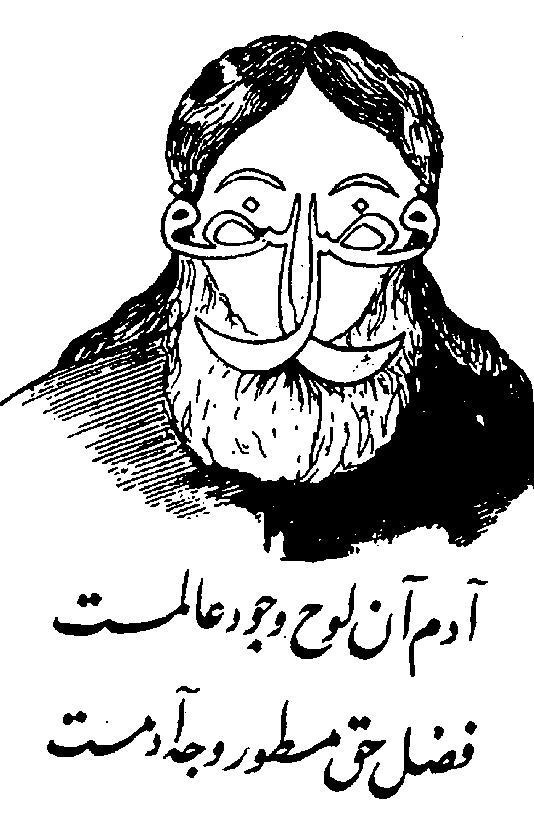
<div><figure><a href="https://substackcdn.com/image/fetch/%24s_!lGwM!,f_auto,q_auto:good,fl_progressive:steep/https%3A%2F%2Fsubstack-post-media.s3.amazonaws.com%2Fpublic%2Fimages%2F3e2793f1-8c59-4d1c-acbc-b664566df1a5_534x828.jpeg"></a><div><a href="https://substackcdn.com/image/fetch/%24s_!lGwM!,f_auto,q_auto:good,fl_progressive:steep/https%3A%2F%2Fsubstack-post-media.s3.amazonaws.com%2Fpublic%2Fimages%2F3e2793f1-8c59-4d1c-acbc-b664566df1a5_534x828.jpeg"></a><source type="image/webp"><a href="https://substackcdn.com/image/fetch/%24s_!lGwM!,f_auto,q_auto:good,fl_progressive:steep/https%3A%2F%2Fsubstack-post-media.s3.amazonaws.com%2Fpublic%2Fimages%2F3e2793f1-8c59-4d1c-acbc-b664566df1a5_534x828.jpeg"><img src="https://substackcdn.com/image/fetch/$s_!lGwM!,w_1456,c_limit,f_auto,q_auto:good,fl_progressive:steep/https%3A%2F%2Fsubstack-post-media.s3.amazonaws.com%2Fpublic%2Fimages%2F3e2793f1-8c59-4d1c-acbc-b664566df1a5_534x828.jpeg" width="1456" height="2258" alt=""></a></source><a href="https://substackcdn.com/image/fetch/%24s_!lGwM!,f_auto,q_auto:good,fl_progressive:steep/https%3A%2F%2Fsubstack-post-media.s3.amazonaws.com%2Fpublic%2Fimages%2F3e2793f1-8c59-4d1c-acbc-b664566df1a5_534x828.jpeg"></a><div><a href="https://substackcdn.com/image/fetch/%24s_!lGwM!,f_auto,q_auto:good,fl_progressive:steep/https%3A%2F%2Fsubstack-post-media.s3.amazonaws.com%2Fpublic%2Fimages%2F3e2793f1-8c59-4d1c-acbc-b664566df1a5_534x828.jpeg"></a><div><a href="https://substackcdn.com/image/fetch/%24s_!lGwM!,f_auto,q_auto:good,fl_progressive:steep/https%3A%2F%2Fsubstack-post-media.s3.amazonaws.com%2Fpublic%2Fimages%2F3e2793f1-8c59-4d1c-acbc-b664566df1a5_534x828.jpeg"></a></div><a href="https://substackcdn.com/image/fetch/%24s_!lGwM!,f_auto,q_auto:good,fl_progressive:steep/https%3A%2F%2Fsubstack-post-media.s3.amazonaws.com%2Fpublic%2Fimages%2F3e2793f1-8c59-4d1c-acbc-b664566df1a5_534x828.jpeg"></a></div><a href="https://substackcdn.com/image/fetch/%24s_!lGwM!,f_auto,q_auto:good,fl_progressive:steep/https%3A%2F%2Fsubstack-post-media.s3.amazonaws.com%2Fpublic%2Fimages%2F3e2793f1-8c59-4d1c-acbc-b664566df1a5_534x828.jpeg"></a></div><a href="https://substackcdn.com/image/fetch/%24s_!lGwM!,f_auto,q_auto:good,fl_progressive:steep/https%3A%2F%2Fsubstack-post-media.s3.amazonaws.com%2Fpublic%2Fimages%2F3e2793f1-8c59-4d1c-acbc-b664566df1a5_534x828.jpeg"></a></figure></div><p><em>A secret written on every human face, and the four things its keepers did with it</em></p><blockquote><p>Both worlds fit inside me; I do not fit inside this world.<br>I am the jewel that has no place; I do not fit in being or place.</p></blockquote><p><em>Imadeddin Nesimi, Turkish Dīwān (new translation from the Azerbaijani)</em></p><p>The Hurufis, the “letter people,” believed the alphabet is written in the hair of your face. Four rows of lashes, two eyebrows and the line where the hair begins make seven lines, and you are born with them. Seven more arrive with the beard.</p><p>When their founder was executed, his followers walked around the execution ground twenty-eight times, once for each letter of the Arabic alphabet.</p><p>One of them, a hat maker, put a knife into the Timurid emperor Shahrukh as he left Friday prayer in Herat. It was the year a Hurufi leader had calculated their founder would return.</p><p>The astronomer prince Ulugh Beg questioned the founder’s son about the alphabet, then would not let him be killed, even on his father’s order. His father came to think he had converted.</p><p>A twelve-year-old Ottoman sultan, the future conqueror of Constantinople, let them into his palace.</p><p>A shah of Persia handed his throne to a member of their breakaway sect for three days, then had him executed.</p><p>And their books spent five centuries hidden inside another order of dervishes, until they turned up for sale in London and Cambridge.</p><div><hr></div><h2>The Question</h2><p><em>Astarabad · the southeast shore of the Caspian · fourteenth century</em></p><p>The founder was Fazlallah of Astarabad. His followers called him <em>Fażl-e Yazdān</em>, “the generosity of God.” He taught that the world is speech, that speech is made of letters, and that the letters are written on the human face. Timur’s son had him killed.</p><p>What he left behind was a teaching only he had fully understood. His followers split almost at once. One party said his death had finished his work and that they were already living in paradise. In Hurufi terms, paradise is this world, seen by someone who can read the letters. The other said he would come back, and some of them began counting the years.</p><p>From there the movement broke along one question: what do you do with a secret you are certain is true? One answer was to say it aloud, in verse. One was to carry it to the throne. One was to hide it inside another order. And one man the movement had expelled decided the letters themselves were in the way, a veil over something simpler underneath.</p><p>In the old myths this is the last stage of the hero’s road. The hero comes home with the prize and has to decide what to do with it in a world that never asked for it. You have stood at that door yourself, any time you found something you could not unknow and had to decide who to tell. Each Hurufi branch walked through it a different way, and each paid differently. All four started from what the founder taught about the face.</p><div><hr></div><h2>The Founder: The Lettered Face</h2><h3>Fazlallah Astarabadi</h3><p><em>Tabriz · 1374</em></p><p>By his followers’ account, Fazlallah’s teaching arrived all at once, in Tabriz, during Ramadan: the <em>bāṭin</em>, the hidden side behind every scripture and every rite, and the numbers carried by the letters. He called the event <em>ẓuhūr-e kibriyā</em>, the manifestation of glory. He was bewildered for three days and nights, and then a voice named him Lord of the Age, the title for the one who opens a new era.</p><p>He kept a dream journal, and after one of the dreams it records he said he could read dreams and understand the language of the birds. In the old legends that is Solomon’s gift, and it is the same phrase the French alchemist Fulcanelli and the Traditionalist René Guénon would later use for the secret speech of initiates.</p><p>The teaching starts from speech. Everything that can be said is built from sounds, and each sound belongs to a letter. Arabic has twenty-eight letters. Persian adds four that Arabic lacks, <em>p</em>, <em>ch</em>, <em>zh</em> and <em>g</em>, for thirty-two. In the Qur’an’s telling of Eden, God teaches Adam “the names, all of them.” Fazlallah read the names as those thirty-two letters, which makes the alphabet both the inventory of the world and the instrument for knowing it. Jewish Kabbalists had built a cosmos out of the twenty-two letters of Hebrew; the Hurufis arrived at the same structure with no known contact between them.</p><p>Then he turned to a puzzle the commentators had argued over for centuries. Twenty-nine of the Qur’an’s chapters open with letters that spell no word: <em>Alif-Lām-Mīm</em>, <em>Ṭā-Hā</em>, <em>Yā-Sīn</em>. The commentators call them the <em>muqaṭṭaʿāt</em>, the “separated letters,” and many concluded their meaning was known only to God. Across all twenty-nine chapters, the separated letters use fourteen distinct letters of the alphabet.</p><p>Fazlallah counted fourteen lines of hair on a grown man’s face. Fourteen mystery letters at the head of the Qur’an’s chapters, fourteen lines on the face: for him, the face was where the mystery letters were written. The Hurufis called the seven you are born with the lines of Eve, the mother’s lines, and the seven that come with the moustache and beard the lines of Adam. Multiply the first seven by the four elements, earth, water, air and fire, and you get twenty-eight, the Arabic alphabet. The Qur’an’s opening chapter, the <em>Fātiḥa</em>, has seven verses, one for each line you are born with, and the profession of faith has seven words.</p><p>Persian uses one Arabic word, <em>ṣūrat</em>, for both “form” and “face.” A saying attributed to Muhammad states that God created Adam in His <em>ṣūrat</em>, the same sentence Genesis gives as “in His own image.” Most readers heard a sentence about form. Fazlallah heard a sentence about a face, and said what follows from it.</p><blockquote><p>Though the thirty-two words of God are God’s attributes, they are not His essence. For the absolute God is the one who writes the lot of all things and traces it on the face of man and of things. He shapes the outward form of Adam; Adam does not. That is why you must turn your face toward the Kaaba of Adam, for Adam has become the place where that Person is made manifest, exalted be His word and illustrious His majesty.</p></blockquote><p><em>Fazlallah Astarabadi, Jāvidān-nāma, quoted in Sayyid Ishaq’s Mahram-nāma (c. 1425); new translation from Clément Huart’s French edition (1909)</em></p><p>“That Person” is God. The Kaaba is the stone cube at Mecca, the fixed point every prayer in Islam turns toward. Fazlallah moves the centre. The direction of prayer becomes the human face, because the face is where the writing is. Persian has an everyday word for fate, <em>sar-nevesht</em>, “what is written on the head.” Here the writer is named, and the page is your face.</p><p>He carried the idea into love. In the <em>Jāvidān-nāma</em>, his “Book of Eternity,” he retells the story of Joseph and Zuleikha, the biblical Joseph and the wife of his Egyptian master, who fell for the young slave in her house, and explains that each saw the lines of the divine letters in the other’s face. That is why they fell in love. Desire for a body and desire for the divine stand on the same ground.</p><p>The ideal person in this teaching is a reader of faces. Ismail Hakki Bursevi, an Ottoman Sufi writing three centuries later, put the standard objection: the Hurufis had seized the hint and thrown away the plain meaning. The Hurufi reply would be that they had done the reverse: they read the saying about Adam’s face at its plainest, and the plainest reading turned out to be the strangest.</p><p><em>Alinjaq · 1394</em></p><p>Soldiers arrested him on the order of Miranshah, Timur’s son, and held him in the fortress of Alinjaq near Nakhchivan. The historian Ibn Hajar says Miranshah beheaded him with his own hand. Several sources say Fazlallah had already foretold the time, the place and the manner.</p><p>His followers turned the execution ground into a second Mecca. Pilgrims at Mecca walk around the Kaaba; in the month before the pilgrimage, the Hurufis walked around the place he died, twenty-eight times. Pilgrims at Mina throw stones at pillars that stand for the devil; the Hurufis spent three consecutive days stoning the tower at Alinjaq. They renamed the prince <em>Mārānshāh</em>. <em>Mār</em> is Persian for snake.</p><p>He had taught that the book is written on every human face. The first of his followers to act on that was a poet: if everyone carries the book, everyone should hear it read.</p><div><hr></div><h2>The Poet: Say It</h2><h3>Imadeddin Nesimi</h3><p>Nesimi was a <em>sayyid</em>, a descendant of the Prophet’s family. He had studied with other Sufi teachers before he found Fazlallah and became his <em>khalīfa</em>, a deputy authorized to teach. After the execution he went west into Anatolia and became the first poet to put the doctrine into Turkish verse. Persian was the language of the learned. Turkish was the language of soldiers, traders and villagers. He wrote the secret in the language of the street.</p><p>This is his best-known poem, the one these pages opened on.</p><blockquote><p>Both worlds fit inside me; I do not fit inside this world.<br>I am the jewel that has no place; I do not fit in being or place.</p><p>Since the Throne and the earth, the <em>Kāf</em> and the <em>Nūn</em>, were all found in me,<br>cut your talk short and be silent: I do not fit in commentary and explanation.</p><p>Being and place are my sign; the Essence is my beginning.<br>Know me by this mark, and know that I do not fit in a mark.</p><p>No one ever came to know the Real by guess and supposition.<br>Whoever knows the Real knows that I do not fit in guess and supposition.</p><p>Look at the form, and recognize the meaning inside the form:<br>I am body and soul, yet I do not fit in body and soul.</p><p>I am the shell and I am the pearl, the Gathering and the Bridge of the Last Day;<br>with this much cloth and merchandise, I do not fit in this shop.</p><p>Look, I am the Hidden Treasure. Look, I am the essence in plain sight.<br>Look, I am the jewel of the mine. I do not fit in sea or mine.</p><p>Though I am the encircling Ocean, my name is Adam; I am Adam.<br>I am the gallows and “Be, and it is.” I do not fit in this place.</p><p>I am soul and world together; I am the age and time together.<br>See this subtlety: I do not fit in age or time.</p><p>I am the stars and the turning sky; I am revelation and the angel too.<br>Hold your tongue and be silent: I do not fit in this tongue.</p><p>I am the mote, I am the sun; I am four and five and six.<br>See the form through what is said, since I do not fit in what is said.</p><p>I am with the Essence and the Attributes, with the Night of Power and the Night of Release.<br>I am rose-sugar with rock candy; I do not fit in a closed mouth.</p><p>I am the fire, I am the tree, I am the stone that rose to the Throne.<br>See the tongue of this fire: I do not fit in this tongue.</p><p>I am the sun, I am the moon, I am honey, I am sugar.<br>I give the flowing spirit, and I do not fit in the flowing spirit.</p><p>Though today I am Nesimi, of the house of Hashim, of Quraysh,<br>my sign is greater than this: I do not fit in sign or rank.</p></blockquote><p><em>Imadeddin Nesimi, Turkish Dīwān, “Məndə sığar iki cahan” (new translation from the Azerbaijani)</em></p><p>Every couplet ends on one Turkish word, <em>sığmazam</em>, “I do not fit.” Couplet by couplet he lists everything there is, heaven and earth, time, the stars, the elements, the signs of the prophets, and says all of it fits inside him while he fits inside none of it. That is the Hurufi teaching in one line: the whole cosmos is written into the human being. The images carry the doctrine in compressed form. <em>Kāf</em> and <em>Nūn</em> are the two letters that spell <em>kun</em>, “Be!”, the word of command that calls things into being in the Qur’an’s creation story; to say both letters were “found in me” is to put the creative word inside a human being. “Look at the form, and recognize the meaning inside the form” uses <em>ṣūrat</em>, so the line also reads: look at the face, and find the meaning written in it. The “Hidden Treasure” is a saying the Sufis attribute to God: <em>I was a hidden treasure and I loved to be known, so I created the world in order to be known.</em> The gallows belongs to al-Hallaj, the Baghdad mystic executed after saying “I am the Real,” the Real being the Sufi name for God. Nesimi stands on Hallaj’s gallows and inside the creative command in one line. “Four and five and six” are the four elements, the five senses and the six directions of space, the whole furniture of the physical world. The fire and the tree are the burning bush, where Moses heard a voice. In the last couplet he names his own noble lineage and sets it aside.</p><p><em>Aleppo</em></p><p>He settled in Aleppo, then the main Hurufi centre in Syria, and taught there with a growing following. The scholars of the city issued a fatwa, a legal ruling, for his death, on the grounds that he claimed to be divine, and the Mamluk deputy carried it out with the approval of the sultan in Cairo. Later sources say he was flayed alive. The contemporary sources give no clear evidence of it.</p><p>Later Ottoman tradition kept a scene from that day regardless. One of the scholars declared that the condemned man’s blood was so unclean that any limb it touched would have to be cut off. A drop landed on that scholar’s finger. The crowd called for the finger, and the scholar said he had been speaking figuratively. Nesimi answered him with a couplet.</p><blockquote><p>Cut one finger from the ascetic, and he turns and runs from the Real.<br>Look at this lover of the Real: they strip him head to foot, and he feels no pain.</p></blockquote><p><em>Couplet attributed to Nesimi at his execution (new translation from the Turkish)</em></p><p>The <em>zāhid</em>, the ascetic, is the stock rival of the lover in Sufi poetry: the man who counts his prayers and keeps his distance from love.</p><p>Nesimi said it in the open, and the city killed him for it. Other Hurufis drew a different conclusion from the same facts. If saying it gets you killed, change who sits on the throne.</p><div><hr></div><h2>The Throne: Make the King Bow or Fall</h2><p>The party that expected Fazlallah back believed his return would end in conquest, so they looked at thrones. The Hurufis counted history in great ages, the way older myths count ages of gold and iron. The <em>Mahram-nāma</em>, a Hurufi “Book of Confidences” written by Fazlallah’s deputy Sayyid Ishaq around 1425, sets it out. The universe never ends; it turns, and every cycle opens with an Adam and closes with a judgment. Within the present cycle there are three ages. In the first, the hidden knowledge is carried by prophets; in the second, by saints; with Fazlallah the third begins, and the divine moves into the human body itself. The last of Fazlallah’s successors, the book says, will close this cycle, and another will begin.</p><p>They read even the last day as a matter of letters. This is from a Hurufi primer, the <em>Hidāyat-nāma</em> or “Book of Guidance.”</p><blockquote><p>The news God gives in the Qur’an, that one of the signs of the Day of Resurrection will be a smoke rising from the sky, according to the verse “The day when the sky brings forth a visible smoke,” means that this smoke will be the appearance of the letters and of the science of letters. The letters are compared to smoke because the letters and the science of letters come from writing, which is black: either the writing of God and the pen of creation, what it wrote on the face of Adam and his descendants, or the writing of creatures on pages and in ledgers. What proves that God Most High meant “letters” when He said “smoke” is the saying of the Commander of the Faithful, Ali: “When this smoke comes from the sky before the Day of Resurrection and enters the ears of the unbelievers, their heads will become like the head of a <em>hinaidhin</em>.” A <em>hinaidhin</em> head is the roasted head of a calf. In the true believers, this smoke will cause an ailment like a head cold.</p></blockquote><p><em>Hidāyat-nāma, Fourteenth Direction; new translation from Clément Huart’s French edition (1909)</em></p><p>Ali here is Muhammad’s cousin, the first imam of the Shia. The book goes on to explain the head cold: a cold clears the head, and the letters will clear the believers’ heads of everything they were taught about the resurrection by their mothers and fathers. In the Hurufi reading, the end of the world arrives as people learning to read the letters, and the black smoke is ink.</p><p>Ali al-A’la, Fazlallah’s principal successor, put a date on the return. He calculated that Fazlallah would return in the Islamic year 830, which began in late 1426, and that the return would come in three stages: he would descend in Khorasan, gather the righteous at Mecca, and conquer Constantinople.</p><h3>Ahmad-i Lur</h3><p><em>Herat · the Friday Mosque · 1427</em></p><p>Herat was the capital of Khorasan and the seat of Shahrukh, Timur’s son and the brother of the man who had beheaded Fazlallah. On a Friday in the year 830, his wife Gawharshad tried to keep him from going to the mosque. It had rained, and the roads were slippery. Shahrukh told her there was no escaping what God had willed.</p><p>After the prayer, as he was leaving, a man in a felt coat came toward him holding a sheet of paper, like a petitioner seeking justice from the king. Shahrukh told his guards to let him through. The man drew a knife and drove it into Shahrukh’s belly. The wound was light. The guards killed the attacker on the spot, and the court historian Hafiz-i Abru, who was probably there, wrote that the fear of the apocalypse filled the air.</p><p>Nobody knew who the dead man was. In his pocket they found a key, and the key opened a room at an inn. The people at the inn said he had many visitors, among them a well-known calligrapher of the city. Under torture the calligrapher named him: Ahmad-i Lur, a follower of Fazlallah, who made hats for a living, the same trade Fazlallah’s first dervishes had used to support themselves. A man named ‘Azud, described as Fazlallah’s grandson, was arrested and executed, and his body was burned. The interrogations spread to scholars across the empire who practised the science of letters, the old art of reading meaning in the alphabet and its numbers, and the poet Qasim-i Anvar was sent out of Herat.</p><p>The historian İlker Evrim Binbaş, who has worked through every surviving account, finds it tempting to read the knife as an attempt to set Ali al-A’la’s prophecy in motion, and says the case still needs proving. What is on record is this: it happened in the year 830, in Khorasan, to the brother of the man who killed Fazlallah.</p><h3>Ulugh Beg</h3><p><em>Samarqand</em></p><p>The knife had failed with the father. With the son, the teaching came closer to the throne. Fazlallah’s son, Amir Nurallah, was arrested with a companion, Ghiyath al-Din, and the two were questioned for years. One round of questioning took place in Samarqand, before Shahrukh’s son Ulugh Beg, the prince who built the great observatory there. According to the letter Ghiyath al-Din wrote afterward, Ulugh Beg asked the questions of an astronomer. He asked whether the alphabet really had thirty-two letters, or thirty-three, since the Chinese used a <em>vāv</em> with three dots above it. His astronomer Qadizade Rumi asked what the Mahdi was. Ulugh Beg asked what Fazlallah taught about the planets and the stars.</p><p>Then he refused his father’s order to execute the prisoners. By Ghiyath al-Din’s account, Shahrukh grew so angry that he began to suspect his son had become a Hurufi himself. The two prisoners later escaped.</p><h3>Mehmed II</h3><p><em>Edirne · 1444</em></p><p>Far to the west, in the Ottoman lands, the teaching reached a sultan. Around 1444, in Edirne, the Ottoman capital, the crown passed to Mehmed II, then twelve years old. Hurufi teachers won his ear and, by the account of the Ottoman biographer Taşköprüzade, grew close enough to initiate him. Taşköprüzade calls them “certain accursed ones of no significance.”</p><p>Mahmud Pasha, a statesman at court who would later serve as grand vizier, took his alarm to the scholar Fahreddin-i Acemi. Fahreddin hid in the palace and listened to the Hurufis teach. Then he stepped out and cursed them so violently that the boy sultan could not protect them. He condemned them in front of the Üç Şerefeli Mosque and issued a fatwa that they be burned. The chroniclers say he fanned the fire so hard that his own beard caught.</p><p>Nine years later the boy took Constantinople, the third city in Ali al-A’la’s prophecy. No source says the Hurufis at Edirne had the prophecy in mind.</p><p>A poem, a knife and a whisper at court had each ended in an execution. Two answers were left, and they point in opposite directions.</p><div><hr></div><h2>The Lodge: Hide It Inside Something Else</h2><h3>Ali al-A’la</h3><p>Ali al-A’la, the successor who set the date for the return, had already taken a quieter road. By the order’s own tradition, he went into Anatolia, was received in a lodge of the Bektashi dervishes, and began teaching Fazlallah’s doctrine as the secret teaching of Haji Bektash, the order’s own founder. Haji Bektash had left no books, so no one could prove otherwise.</p><p>The Bektashis became one of the great Ottoman orders, with their dervishes serving in the ranks of the Janissaries, the sultan’s elite infantry. Through the Ottoman centuries the Hurufi books were copied and kept in Bektashi lodge libraries across Anatolia and the Balkans, with the copying at its height in the 1700s.</p><p>Europe learned where the books had gone by accident. Soon after 1901, a large number of Hurufi manuscripts were offered for sale to the British Museum and to Cambridge University Library. When the buyers asked where they came from, the trail led to Bektashi dervishes.</p><h3>Virani Baba</h3><p>Virani Baba, counted among the seven great poets of the Bektashi tradition, wrote the doctrine mostly in the plain style of folk poetry. One scholar of his work argues that he shaped later Bektashi poets as much as Nesimi did.</p><blockquote><p>In your face, beloved, I read the Qur’an;<br>its seven verses I read every moment.</p><p>Your locks, your brows, your lashes are the <em>Fātiḥa</em>, the Mother of the Book;<br>I read them breath after breath. Come here, my Seven Oft-Repeated.</p><p>See what the pen of power wrote on the pattern of your face:<br>first of all it set down that line, <em>in the name of God</em>.</p><p>You read the secret of the <em>abjad</em> in the lines of the human face.<br>Come and give your proof: what is this <em>jīm</em>, and this <em>dāl</em>?</p><p>O Virani, whoever longs to see the Real:<br>its sign is in the form of the human being.</p><p>Your face is where the faithful bow,<br>said the King of Sainthood, O my faith.<br>Those who do not bow the true bow to your face<br>will find regret tomorrow, O my faith.</p><p>Since the human head and face turned out to be the Kaaba of what is real,<br>those who would not bow in thanks became, to us, devils.</p><p>If you know the human face, you know the secret of <em>whoever knows himself</em>;<br>you see the Real for certain, and your hard knots come undone.</p></blockquote><p><em>Virani Baba, couplets gathered from his Dīwān (new translations from the Turkish)</em></p><p>The Mother of the Book and the Seven Oft-Repeated are old names for the <em>Fātiḥa</em>, the Qur’an’s seven-verse opening chapter, and Virani calls his beloved by them. The <em>abjad</em> is the system that gives each letter a number. <em>Jīm</em> is three and <em>dāl</em> is four; together they make seven, the count of the face lines. The King of Sainthood is Ali. <em>Whoever knows himself knows his Lord</em> is the Sufi form of the Delphic “know thyself.” The devils come from the old myth of Iblis, the angel who refused to bow when Adam was made. For a Bektashi Hurufi, refusing to bow to the human face is the original refusal, repeated.</p><p>The Lodge kept every letter. What it gave up was its name.</p><div><hr></div><h2>The Point: Let the Letters Go</h2><h3>Mahmud Pasikhani</h3><p><em>Gilan · the Caspian shore</em></p><p>The opposite answer came from a man the Hurufis had thrown out while Fazlallah was still alive. Mahmud of Pasikhan, a village in Gilan on the Caspian, had followed Fazlallah until he was expelled for arrogance, and the Hurufis called him <em>Maḥmūd-i mardūd</em>, “Mahmud the rejected.” Three years after Fazlallah’s death, at the turn of the Islamic ninth century, he proclaimed himself the Mahdi, the figure Islamic myth expects at the end of an age. He claimed to be the Prophet returned on a higher plane, and pointed to his own name in a verse addressed to the Prophet: “your Lord will raise you to a praised station,” <em>maqām maḥmūd</em>.</p><p>His followers were called the Nuqtavis, the People of the Point. The <em>nuqṭa</em> is the point or dot, and the name is said to come from his doctrine that earth is the point from which everything begins, the other three elements being drawn out of it. Where Fazlallah built a cosmos of thirty-two letters, Mahmud went beneath the letters to the dot and the dust.</p><p>His version of the afterlife is the strangest in this story. The body does not decay at death. Its particles pass as a single mass into the soil, come back up as plants or minerals, are eaten by animals or people, and rise or fall to a new level of existence according to the virtue and knowledge of their former owner. The traces of the old life stay visible to anyone with the insight to read them. Dogs, the Nuqtavis said, had been Qizilbash in their last life, the red-capped Turkish soldiers of the Safavid shahs; the tail is what remains of the sword, and the Persian sound for shooing a dog away, <em>chikh</em>, is the Turkish for “get out.” Waterfowl had been clerics, still obsessed with their ablutions. And the caliph Yazid, they said, kept Imam Husayn from the water of the Euphrates at Karbala because he remembered drowning in the Red Sea when he had been Pharaoh and Husayn had been Moses.</p><p>Time, for Mahmud, ran 64,000 years, in alternating epochs of 8,000: an Arab epoch guided by an Arab messenger, then a Persian epoch guided by a Persian expounder. His own arrival opened a Persian epoch, and the Caspian provinces of Gilan and Mazandaran took the place of Mecca and Medina. Where the Islamic creed says there is no god but God, the Nuqtavi creed said <em>lā ilāha illā’l-murakkab al-mubīn</em>, “there is no god but the manifest compound.” The manifest compound is the human being. It is the old Hermetic idea of the human as the cosmos in small, carried to its end.</p><p><em>Qazvin · 1590s</em></p><p>Two centuries later the Nuqtavis had a following in the Safavid capital, Qazvin, around a well-digger’s son called Darvish Khusraw, and the young Shah Abbas had himself initiated. Then Khusraw warned the shah that unless he came home from campaign by a certain date, the stars might compel a Nuqtavi to seize the throne. Abbas sent soldiers to the lodge before dawn. Their commander asked to present Khusraw with a robe of honour, and as he draped it over the dervish’s shoulders, he struck him down. Khusraw was tortured to death over three days. One of his lieutenants swallowed a large dose of opium and promised to return soon in a new body.</p><p>Not long after, a comet appeared. The court astrologer said it meant mortal danger to the king during a few days in the coming summer, and proposed that someone worthy of death sit on the throne in his place until the danger passed. Abbas asked one of the Nuqtavi prisoners, Yusufi the quiver-maker, what the comet meant. Yusufi said it was a sign that one of the Nuqtavis would soon rule. Abbas agreed that Yusufi was the best candidate, took off the regalia and sat him on the throne.</p><p>For three days the quiver-maker was king. Then he went from the throne to the scaffold, and Abbas took his crown back. Yusufi’s reading of the comet had come true.</p><p>The arrests and executions spread to other cities. Abbas personally beheaded one Nuqtavi poet while the man was in the middle of describing a previous life, and cut the body in two before it hit the ground. The survivors fled to India, where the emperor Akbar welcomed them, and a Nuqtavi sat on the committee of nineteen that drafted Akbar’s new imperial religion. Through all of it the Nuqtavis went on counting Shah Abbas as one of their own. They put his cruelty down to immaturity.</p><p>The Point kept its name. What it gave up was the letters.</p><div><hr></div><h2>The Ants of Solomon</h2><h3>Sayyid Ishaq</h3><p>Every branch was, in the end, arguing about where the letters should be kept. Fazlallah’s teaching had already answered that, and his deputy Sayyid Ishaq put the answer into a story about Solomon, whose gift of the language of the birds Fazlallah had claimed for himself. In the Qur’an’s version of the legend, Solomon marches his armies through a valley of ants, hears one of them warn the rest, and smiles. This is how the <em>Mahram-nāma</em> reads it.</p><blockquote><p>Thus God said: “O ants, go into your dwellings, lest Solomon and his armies crush you underfoot.” That is to say: it is not God’s will that the ants, meaning the divine writings that are on Solomon’s face, there by way of the form of Adam, which is itself in the image of God, and which are traced on every created being, should be seized and grasped by Solomon and his troops, which are his perceptions; for it has been said in a saying of the Prophet, “Spirits are armies.” And when Adam’s understanding reaches and embraces this form, and he himself sees the thirty-two divine words, outward and hidden, this form is his own essential form. This knowledge then passes by right of inheritance to his virtuous sons, either before or after their appearance. So it reached Joseph before his appearance, and he became the one the stars of heaven bowed to.</p></blockquote><p><em>Sayyid Ishaq, Mahram-nāma, Third Discourse; new translation from Clément Huart’s French edition (1909)</em></p><p>The ants are the small dark strokes on the face, the hair, the writing. Solomon’s armies are his own powers of perception, and even a king’s mind cannot march in and take the writing by force. The knowledge passes to Joseph before he is born, and in the Qur’an, as in Genesis, the young Joseph dreams that the sun, the moon and eleven stars bow down to him. In the Hurufi reading, the stars bowed because the writing was already on his face.</p><p>Every party that came at the letters with an army got the same result: the emperor’s purge after Herat, the mufti at Edirne, the shah with his comet. Like the ants, the writing went into its dwellings: into Bektashi libraries in the Balkans, into exile in India, into a Turkish poem still read today. The book could not be burned, because a copy was written on every face in every crowd that watched the burnings.</p><div><hr></div><h2>Four Ways to Carry It</h2><p>Every one of these roads is still open to anyone who comes home with something they found.</p><p>There is a season when what you found has to be said out loud, in plain words, to people who may not thank you. That is Nesimi’s season. He paid in full, and the poem outlived the fatwa.</p><p>There is a season when you want the world rearranged around what you know, and you take it to whoever holds power: a boss, a family, a crowd, a partner you hope to convert. That is the Throne, and the Hurufi record there is a list of fires.</p><p>There is a season for the Lodge, when you place what you know inside something larger and more durable than yourself, a craft, a tradition, a practice, a child, and let your name come off it. It survives. It stops being yours.</p><p>There is a season for the Point, when the system you built your life on comes apart, the letters go, and you are left with the plainest material there is, the ground you stand on and the body you stand in.</p><p>And under all four is the founder’s teaching, which none of the branches could take away from the others, because it was never kept in any of their houses. It is what the first party meant, right after his death, when they said they were already living in paradise. Four rows of lashes, two brows, the line where the hair begins. By Fazlallah’s count you were carrying the opening of the book before you could read a word of it.</p><div><hr></div><h2>Sources and Further Reading</h2><ul><li><p>Clément Huart, <em><a href="https://archive.org/details/textespersansrel09huaruoft">Textes persans relatifs à la secte des Houroûfîs</a></em><a href="https://archive.org/details/textespersansrel09huaruoft"> (1909), with the </a><em><a href="https://archive.org/details/textespersansrel09huaruoft">Hidāyat-nāma</a></em><a href="https://archive.org/details/textespersansrel09huaruoft"> and </a><em><a href="https://archive.org/details/textespersansrel09huaruoft">Mahram-nāma</a></em></p></li><li><p>Hamid Algar, <a href="https://iranicaonline.org/articles/horufism">“Horufism,” </a><em><a href="https://iranicaonline.org/articles/horufism">Encyclopaedia Iranica</a></em></p></li><li><p>Hamid Algar, <a href="https://iranicaonline.org/articles/ali-al-ala-d">“ʿAlī al-Aʿlā,” </a><em><a href="https://iranicaonline.org/articles/ali-al-ala-d">Encyclopaedia Iranica</a></em></p></li><li><p>Hamid Algar, <a href="https://bahai-library.org/pdf/e/encyclopedia_islam_nuktawiyya.pdf">“Nuktawiyya,” </a><em><a href="https://bahai-library.org/pdf/e/encyclopedia_islam_nuktawiyya.pdf">Encyclopaedia of Islam</a></em></p></li><li><p>İlker Evrim Binbaş, <a href="https://core.ac.uk/download/147824304.pdf">“The Anatomy of a Regicide Attempt: Shāhrukh, the Ḥurūfīs, and the Timurid Intellectuals in 830/1426-27”</a></p></li><li><p>Mehmet Temizkan, <a href="https://abked.de/en/article/view/57">“An Analysis of the Theme of Face in Virani Baba’s Works”</a></p></li><li><p><a href="https://en.wikipedia.org/wiki/Certain_accursed_ones_of_no_significance">“Certain accursed ones of no significance” (the Edirne affair)</a></p></li><li><p><a href="https://en.wikipedia.org/wiki/Fahreddin-i_Acemi">“Fahreddin-i Acemi”</a></p></li><li><p><a href="https://en.wikipedia.org/wiki/Hurufism">“Hurufism”</a></p></li></ul>
<p><a href="https://spiritualrelief.substack.com/p/hurufism-explained-what-they-actually" target="_blank">- Enlace a artículo -</a></p>
<p>Más info en https://ift.tt/1DBYEXt / Tfno. & WA 607725547 Centro MENADEL (Frasco Martín) Psicología Clínica y Tradicional en Mijas.
#Menadel #Psicología #Clínica #Tradicional #MijasPueblo</p>
<p>*No suscribimos necesariamente las opiniones o artículos aquí compartidos. No todo es lo que parece.</p>

No hay comentarios:
Publicar un comentario