Psicología

Centro MENADEL PSICOLOGÍA Clínica y Tradicional

Psicoterapia Clínica cognitivo-conductual (una revisión vital, herramientas para el cambio y ayuda en la toma de consciencia de los mecanismos de nuestro ego) y Tradicional (una aproximación a la Espiritualidad desde una concepción de la psicología que contempla al ser humano en su visión ternaria Tradicional: cuerpo, alma y Espíritu).

“La psicología tradicional y sagrada da por establecido que la vida es un medio hacia un fin más allá de sí misma, no que haya de ser vivida a toda costa. La psicología tradicional no se basa en la observación; es una ciencia de la experiencia subjetiva. Su verdad no es del tipo susceptible de demostración estadística; es una verdad que solo puede ser verificada por el contemplativo experto. En otras palabras, su verdad solo puede ser verificada por aquellos que adoptan el procedimiento prescrito por sus proponedores, y que se llama una ‘Vía’.” (Ananda K Coomaraswamy)

La Psicoterapia es un proceso de superación que, a través de la observación, análisis, control y transformación del pensamiento y modificación de hábitos de conducta te ayudará a vencer:

Depresión / Melancolía
Neurosis - Estrés
Ansiedad / Angustia
Miedos / Fobias
Adicciones / Dependencias (Drogas, Juego, Sexo...)
Obsesiones Problemas Familiares y de Pareja e Hijos
Trastornos de Personalidad...

La Psicología no trata únicamente patologías. ¿Qué sentido tiene mi vida?: el Autoconocimiento, el desarrollo interior es una necesidad de interés creciente en una sociedad de prisas, consumo compulsivo, incertidumbre, soledad y vacío. Conocerte a Ti mismo como clave para encontrar la verdadera felicidad.

Estudio de las estructuras subyacentes de Personalidad
Técnicas de Relajación
Visualización Creativa
Concentración
Cambio de Hábitos
Desbloqueo Emocional
Exploración de la Consciencia

Desde la Psicología Cognitivo-Conductual hasta la Psicología Tradicional, adaptándonos a la naturaleza, necesidades y condiciones de nuestros pacientes desde 1992.

domingo, 22 de febrero de 2026

activité Politica Hermetica


Nous avons le plaisir de vous annoncer la poursuite de nos activités avec la conférence de

Damien Karbovnik

autour de son livre

Le développement personnel : nouvel opium du peuple ?,

Paris, Équateurs, 2025.

Le samedi 21 mars 2026 à 19h

Au couvent de l’Annonciation, 222 rue du Faubourg Saint-Honoré, 75008, Paris, métro Place des Ternes ou Charles de Gaulle-Étoile.

Participation aux frais : 17 € pour le buffet qui vous sera servi après la conférence ; 7 € pour ceux qui ne pourraient pas prendre part au buffet. Soyez assez aimables pour donner réponse afin de prévoir l’organisation.

Pour tout renseignement : politicahermetica@gmail.com

- Enlace a artículo -

Más info en https://ift.tt/HVok7D2 / Tfno. & WA 607725547 Centro MENADEL (Frasco Martín) Psicología Clínica y Tradicional en Mijas. #Menadel #Psicología #Clínica #Tradicional #MijasPueblo

*No suscribimos necesariamente las opiniones o artículos aquí compartidos. No todo es lo que parece.

CONVERSACIONES EN LA NIEBLA: Pedagogía Venenosa


En esta nueva entrega de "Conversaciones en la Niebla", Jesús Gabriel y Joseluis de Plural 21 profundizan en un tema tan inquietante como necesario: la Pedagogía Venenosa. Basándonos en las tesis de Alice Miller y su obra "Por tu propio bien", analizamos cómo las estructuras educativas y sociales han sido diseñadas para fracturar la voluntad del individuo desde la infancia.

¿Qué aprenderás en este video? Exploramos la relación entre la burocracia estatal y la creación de un "ciudadano claudicante". Analizamos casos actuales, desde la gestión de noticias en televisión para justificar medidas políticas, hasta la violencia obstétrica y el exceso de protocolos médicos que priorizan la norma sobre el bienestar del paciente.

Puntos clave tratados:
- La Burocracia como fin en sí misma: Cómo las instituciones han dejado de servir al ciudadano para que sea este quien sirva al sistema.
- Adoctrinamiento de cuarta generación: La escolarización sistemática y su impacto en la pérdida de la autoconfianza y el pensamiento crítico.
- El negocio del "trastorno": Cómo el sistema ofrece soluciones rápidas y farmacológicas a problemas que son, en esencia, de falta de identidad y atención.
- Redefinición del lenguaje: El control social a través de la alteración de los significados de las palabras.

Este video es una invitación a recuperar nuestra VIDA, VERDAD, LIBERTAD e IDENTIDAD. Si sientes que el mundo actual te empuja a ser una pieza intercambiable de una maquinaria invisible, esta charla te dará las claves para entender el origen de esa presión y cómo empezar a desaprender lo impuesto.

📌 Sobre Plural 21: Somos una asociación sin ánimo de lucro dedicada a transmitir contenidos que fomenten la conciencia y el pensamiento libre. Visítanos en: www.plural-21.org

Grabado el 1 de diciembre del 2025

00:00:00 Introducción: Noticias y manipulación mediática
00:04:02 La burocracia como fin en sí misma
00:06:05 Violencia obstétrica y protocolos médicos
00:08:15 El médico frente al protocolo: ¿Salud o normativa?
00:12:30 La seguridad vs. la libertad en la sociedad actual
00:17:30 ¿Qué es la Pedagogía Venenosa? Alice Miller
00:29:00 Adoctrinamiento de cuarta generación
00:44:00 El papel de los "más media" y las élites globales
1:01:05 La redefinición del lenguaje y conceptos sociales
1:10:30 Análisis del aumento de casos de disforia en jóvenes
1:24:50 La dependencia emocional del sistema y fármacos
1:32:50 La sociedad del rendimiento y el control de las palabras
1:40:30 Hacia el transhumanismo: ¿Rechazo al ser humano?
1:42:30 35 años de Plural 21: Desmontando el SIDA y otras ficciones

#PedagogiaVenenosa #Plural21 #PensamientoCritico #Libertad #AliceMiller #Burocracia #SaludNatural #Adoctrinamiento

Recuerda que te puedes hacer socio de Plural 21 en https://plural-21.org/alta-nuevos-socios
Si quieres hacer alguna aportación a Plural 21 ahora puedes hacerlo a través de diferentes sistemas:
- BIZUM. En la opción "Donación a una ONG" utiliza el código: 07672
- A través de Youtube podéis: utilizar la herramienta "Gracias/Thanks" de Youtube
- a la vieja usanza: podéis hacer una transferencia a Plural-21 Caixa d’Enginyers cuenta nº ES55 3025 0004 3514 3326 6836

- Enlace a artículo -

Más info en https://ift.tt/HVok7D2 / Tfno. & WA 607725547 Centro MENADEL (Frasco Martín) Psicología Clínica y Tradicional en Mijas. #Menadel #Psicología #Clínica #Tradicional #MijasPueblo

*No suscribimos necesariamente las opiniones o artículos aquí compartidos. No todo es lo que parece.

Cuidados paliativos II


Con las preguntas que me habéis hecho llegar a través de los comentarios en este canal así como en el correo rebenitos2@hotmail.com he elaborado un guion para una nueva clase en los seis apartados clásicos de 10 minutos. Es a través de las preguntas de la gente que sigue el curso como descubres que no tienes las ideas tan claras como creías porque la realidad es mucho más enriquecedora y ofrece más casuística de la que uno se pueda imaginar. En esta clase hablaremos de lo clásico, de lo mejor e incluso de lo que viene. Espero vuestros comentarios. Muchas gracias.

- Enlace a artículo -

Más info en https://ift.tt/HVok7D2 / Tfno. & WA 607725547 Centro MENADEL (Frasco Martín) Psicología Clínica y Tradicional en Mijas. #Menadel #Psicología #Clínica #Tradicional #MijasPueblo

*No suscribimos necesariamente las opiniones o artículos aquí compartidos. No todo es lo que parece.

Weekly Wisdom Quiz


Dear Classical Wisdom Reader,

It’s a striking image, I’ll give them that.

So, I was watching a documentary about Rome last night, and the guide talked about what he called the ‘lasagna of history’.

Yeah, I know it definitely sounds strange, but it did make sense once it was explained…

He talked about how the city of Rome’s physical history is layered underneath the very feet of its modern inhabitants. When we look closely at both the archaeology and the history itself, we discover how our present world is built over one layer of history on top of another.

A bit like a lasagna.

And, I thought, it’s actually a fitting image for this week at Classical Wisdom!

You see, this week we saw how Roman history has echoes across the world: we looked at how the humility of Cincinnatus inspired George Washington, and Members discovered how a Roman architect inspired Leonardo da Vinci, and one of his most famous illustrations.

On top of all that, we also had something of a philosophical face-off, looking at the similarities and differences between Aristotle and the Stoics.

Members can take it further and go in-depth by accessing our exclusive e-book featuring the ESSENTIAL Writings of the Stoics, including Marcus Aurelius.

Not A Member? Join today to unlock ALL our resources, including podcasts, in-depth articles, magazines, our library of e-books and more!

Become A Member

So, if you’re not too hungry from all the talk about lasagna, it’s time for the Weekly Wisdom Quiz.

As always, all questions are based on articles published this week here at Classical Wisdom. A full roundup is available just after the quiz, along with the answers!

Are you ready? Let’s go…


1. In Book X of the Nicomachean Ethics, what central question does Aristotle ask about pleasure?
A. Whether pleasure is sinful
B. What kind of thing pleasure is
C. Whether pleasure belongs only to the gods
D. Why pleasure corrupts virtue

2. During what period did the celebrated figure Cincinnatus live?
A. Early Roman Republic
B. Late Roman Republic
C. Early Roman Empire
D. Late Roman Empire

3. The Roman architect Vitruvius built artillery pieces for which Roman leader?
A. Augustus
B. Mark Antony
C. Julius Caesar
D. Pompey

4. According to Aristotle, pleasure is best understood as:
A. A process of becoming
B. A permanent emotional state
C. An activity
D. A bodily sensation alone

5. Which Roman historian wrote about the life of Cincinnatus?
A. Tacitus
B. Suetonius
C. Cassius Dio
D. Livy

6. Vitruvius is mentioned in an ancient commentary on which Roman literary work?
A. Ovid’s Metamorphoses
B. Virgil’s Aeneid
C. Lucan’s Pharsalia
D. Petronius’ Satyricon

7. Cincinnatus is said to have suspended his retirement to lead Rome how many times?
A. Once
B. Twice
C. Three times
D. Four times

8. Which virtue does Aristotle describe as self-sufficient and requiring nothing external?
A. Justice
B. Courage
C. Generosity
D. Wisdom


Find the deeper layers! Dive further into the world of the ancients by becoming a Member. Membership unlocks access to exclusive podcasts, in-depth articles, our library of e-books and much more. So join today!


Answers

  1. B. What kind of thing pleasure is (Aristotle Vs Stoicism: What is Happiness?)

  2. A. Early Roman Republic (Why George Washington Refused to be King)

  3. C. Julius Caesar (The History Behind the Vitruvian Man)

  4. C. An activity (Aristotle Vs Stoicism: What is Happiness?)

  5. D. Livy (Why George Washington Refused to be King)

  6. B. Virgil’s Aeneid (The History Behind the Vitruvian Man)

  7. B. Twice (Why George Washington Refused to be King)

  8. D. Wisdom (Aristotle Vs Stoicism: What is Happiness?)

🏛️ The Wisdom Scale:

🧠 0-2 correct: Novice Philosopher – The journey of wisdom begins with a single step. Keep reading!
📜 3-4 correct: Aspiring Sophos – You’re on your way! More scrolls and symposiums await you.
🏛 5-7 correct: Agora Adept – Your grasp of ancient wisdom is growing. The ancients would nod in approval.
8 correct: Master of the Classics – You are a true sage! The spirits of Plato and Aristotle smile upon you.

So, how did it go? As always, let us know in the comments below!

All the best,

Sean Kelly

Managing Editor

Classical Wisdom

- Enlace a artículo -

Más info en https://ift.tt/HVok7D2 / Tfno. & WA 607725547 Centro MENADEL (Frasco Martín) Psicología Clínica y Tradicional en Mijas. #Menadel #Psicología #Clínica #Tradicional #MijasPueblo

*No suscribimos necesariamente las opiniones o artículos aquí compartidos. No todo es lo que parece.

Díaz Ayuso y Bad Bunny – Por Juan Manuel de Prada


Por Juan Manuel de Prada Me parece lastimoso que Isabel Díaz Ayuso conceda la Medalla Internacional de la Comunidad de Madrid a Estados Unidos; y no desde luego, por la…

- Enlace a artículo -

Más info en https://ift.tt/tie75LR / Tfno. & WA 607725547 Centro MENADEL (Frasco Martín) Psicología Clínica y Tradicional en Mijas. #Menadel #Psicología #Clínica #Tradicional #MijasPueblo

*No suscribimos necesariamente las opiniones o artículos aquí compartidos. No todo es lo que parece.

Semana 22 de febrero: Para caer en la cuenta…


…y ver más allá. Porque la realidad no es lo que parece.

- Enlace a artículo -

Más info en https://ift.tt/tie75LR / Tfno. & WA 607725547 Centro MENADEL (Frasco Martín) Psicología Clínica y Tradicional en Mijas. #Menadel #Psicología #Clínica #Tradicional #MijasPueblo

*No suscribimos necesariamente las opiniones o artículos aquí compartidos. No todo es lo que parece.

El MISTERIO DE LOS CUSTODIOS DEL MUNDO –Ibn Al- Arabi, Introducción.


La noción de Morada espiritual y la jerarquía de los santos. El argumento ilustrado en el tratado es la Morada espiritual (manzil) característica de cada una de las tres categorías iniciáticas, es decir: el Polo, en árabe qutb, y los dos Imâm, o sea los Guías. La palabra árabe “manzil” significa literalmente, “lugar donde se desmonta” y tiene más de una acepción en el uso que de ella hace Ibn Al Arabi en sus obras. Principalmente tiene el sentido de “estación de tránsito”, lo que lo hace sinónimo de “maqâm”, estación espiritual, etapa del Camino iniciático; pero encierra también el significado de “rango jerárquico” y “cargo”. Es precisamente en este último sentido que conviene interpretar la presencia del sustantivo manzil en el título, y en el resto, de la obra que traducimos aquí porque, de un lado, las figuras espirituales presentadas son, en primer lugar, identificaciones de funciones universales de las que son encargados algunos seres por “añadidura”, puede decirse, de parte de la divinidad una vez que han completado sus propios desarrollos espirituales. Y, respecto a tales funciones, los santos que las asumen están organizados en grados jerárquicos específicos, definidos y susceptibles de sucesión. Esto concuerda con cuanto está precisado por Ibn Al Arabi a propósito de la palabra manzil: “Las moradas espirituales (manzil) no tienen este nombre más que a partir del momento en que allí se desciende (nuzûl) si tener intención de establecerse”, están relacionadas a un descenso, entiéndase,  desde el Origen y por iniciativa exclusivamente divina. Además, la raíz NZL, de la que deriva el sustantivo en cuestión, significa “desmontar, descender, hacer un alto”, lo que en los casos específicos del Polo y los Imâm, constituye una clara alusión al itinerario de realización espiritual descendente relacionado directamente con los encargos que les vienen asignados a estas figuras esotéricas, como se verá inmediatamente.

El Polo y los dos Imâm constituyen el vértice de la jerarquía de los santos, llamada en árabe “Dîwân al-Awliyâ”. La palabra Dîwân, literalmente significa “registro” y también “concilio, asamblea”, pero desde el momento en que la de los santos es una comunidad organizada según las leyes y misterios del Espíritu, en la que cada miembro tiene una posición definida y una función precisa, es, sin lugar a dudas, más pertinente en este ámbito traducir la palabra como “jerarquía” a cuenta de su valor técnico.        El Dîwân al-Awliyâ, que permanece invisible, oculto a los hombres, tiene como principal encargo la protección y custodia del mundo en su integridad. Los santos constituyen el soporte manifiesto y receptáculo perfecto para recibir y difundir en la Tierra la influencia espiritual (baraka) proveniente del Cielo.       

Más precisamente: la jerarquía esotérica se compone de numerosas categorías de seres humanos, cada categoría (tabaqa) está encargada de un cometido específico de tutela con respecto al cosmos y a la realidad manifestada. Normalmente consta de un número fijo de representantes [aunque hay también numerosas categorías compuestas por un número variable de santos] y viene identificada por un nombre característico. Por ejemplo: la categoría de los awtâd, los Pilares, se conforma de cuatro personas, cada una de las cuales salvaguarda una de las cuatro direcciones espaciales.

Cada santo que pertenece a una determinada categoría, posee además un título esotérico (laqab) que define exactamente su peculiar función con relación a los otros miembros del mismo grado jerárquico. Este nombre iniciático es constante y único, prescindiendo del nombre propio del individuo que ocupe esa posición jerárquica en un momento dado [Se vean a propósito las palabras de R. Guènon: “Si una organización iniciática es realmente lo que debe ser, la indicación de cualquiera de sus miembros con un nombre profano, aunque sea “materialmente” exacta, estará siempre corroída  por la falsedad, más o menos como sería la confusión entre un actor y el personaje que está representando y al cual se obstinase en atribuirle todas las circunstancias de su existencia”.

Ibn Al Arabi afirma claramente también en el “Kitâb manzil al-qutb”: “Los nombres [iniciáticos] (asmâ) de los otros siervos son a según de sus estaciones espirituales (maqâmât. Generalmente este nombre esotérico es compuesto, como es costumbre en el Islam, del sustantivo ’Abd, “siervo”, seguido de un Nombre de Dios. Retomando el ejemplo de los awtâd, Ibn Al Arabi nos hace saber que llevan los nombres de: ’Abd al-Hayy, “Siervo del Viviente”, ’Abd al-’Alim, “Siervo del Sabio”, ’Abd al-Qadir, “Siervo del Omnipotente” y ’Abd al-Murîd, “Siervo de Aquél que hace Su voluntad”.


kjaksnlanlknfoigorignodfn

- Enlace a artículo -

Más info en https://ift.tt/tie75LR / Tfno. & WA 607725547 Centro MENADEL (Frasco Martín) Psicología Clínica y Tradicional en Mijas. #Menadel #Psicología #Clínica #Tradicional #MijasPueblo

*No suscribimos necesariamente las opiniones o artículos aquí compartidos. No todo es lo que parece.

sábado, 21 de febrero de 2026

Stefan Sperl: "Different Aesthetics" – A New Approach to Sufi Texts?


"Different Aesthetics" – A New Approach to Sufi Texts? The topic of the MIAS-Warburg Symposium was inspired by an interdisciplinary research project on Premodern Aesthetics spearheaded by the University of Tuebingen. It approaches aesthetic acts and artifacts not as objects sufficient unto themselves and hence to be viewed with 'disinterested pleasure' (Kant), but as agents endowed with an aesthetic energy in which their true purpose resides, and which explains the dynamic impact they can have on socio-cultural and psychological processes. The aesthetic acts and artifacts studied by the project also include Christian mystical texts whose aesthetic energy aims to engender in the recipient a state of consciousness akin to the beatific vision. A collection of papers produced by contributors to the Tuebingen project has just appeared in English translation (Different Aesthetics: Principles, Questions, Perspectives, edited by A. Gerock-Reiter et al., De Gruyter, 2025). The presentation will introduce the scope of the project, discuss recent examples of its application to Christian and Muslim texts, and conclude with remarks on its relevance for the study of the Akbarian tradition. Stefan Sperl graduated from Oxford (Arabic) and SOAS (PhD 1977), and spent ten years working for UNHCR in Egypt, Sudan and Geneva. He joined SOAS in 1988 and retired in 2018 as Emeritus Professor of Arabic and Middle Eastern Studies. His publications include articles on Arabic, Islamic and Refugee Studies, as well as Mannerism in Arabic Poetry: A Structural Analysis of Selected Texts (1989), Qasida Poetry in Islamic Africa and Asia (with C. Shackle, 1996) and The Cosmic Script: Sacred Geometry and the Science of Arabic Penmanship (with A. Moustafa, 2014) which won the Iran Book of the Year Award (2016). His recent publications are 'The Qur’an and Arabic Poetry' (The Oxford Handbook of Qur’anic Studies, 2020), the volume Faces of the Infinite, Neoplatonism and Poetry at the Confluence of Africa, Asia and Europe with the accompanying website lyrics-of-ascent.net (with Y. Dedes, 2022), and 'Islamic Spirituality and the Visual Arts' (The Wiley Blackwell Companion to Islamic Spirituality, 2023). He continues to be actively engaged in research and since 2023 has been teaching Arabic literature courses at the University of Cambridge. Recorded by Warburg Institute

- Enlace a artículo -

Más info en https://ift.tt/tie75LR / Tfno. & WA 607725547 Centro MENADEL (Frasco Martín) Psicología Clínica y Tradicional en Mijas. #Menadel #Psicología #Clínica #Tradicional #MijasPueblo

*No suscribimos necesariamente las opiniones o artículos aquí compartidos. No todo es lo que parece.

René Guénon y la Cábala


2. La Cábala y sus orígenes


Guénon explica en el capítulo “Qabbalah” de la obra póstuma Formas Tradicionales y Ciclos Cósmicos:

El término de qabbalah, en hebreo, no significa otra cosa que “tradición”, en el sentido más general (…).
La raíz QBL, en hebreo y en árabe, significa esencialmente la relación de dos cosas que están colocadas una frente a otra; de ahí provienen todos los diversos sentidos de las palabras que se derivan de ella, como, por ejemplo, los de encuentro y aún de oposición. De esta relación resulta también la idea de un paso de uno a otro de los dos términos en presencia, de donde ideas como las de recibir, acoger y aceptar, expresadas en ambas lenguas por el verbo qabal; y de ahí deriva directamente qabbalah, es decir, propiamente “lo que es recibido” o transmitido (en latín traditium) de uno a otro (1).

Siendo una palabra de origen hebreo, la Cábala designa especialmente al esoterismo de la tradición judía. Ésta, como toda tradición verdadera, “se vincula a los orígenes y procede de la Tradición primordial”, habiendo sido transmitida de manera regular e ininterrumpida desde su revelación según el propio nombre de “tradición” indica. Esta transmisión

constituye la “cadena” (shelsheleth en hebreo, sisilah en árabe) que une el presente al pasado y que ha de continuarse del presente al futuro: es la “cadena de la tradición” (shelsheleth haqabbalah), o la “cadena iniciática” de que hemos tenido ocasión de hablar recientemente, y es también la determinación de una “dirección” (volvemos a encontrar aquí el doble sentido del árabe qiblah) lo que, a través de la sucesión de los tiempos, orienta al ciclo hacia su fin y une éste con su origen, y que, extendiéndose incluso más allá de estos dos puntos extremos a causa de que su fuente principial es intemporal y “no humana”, lo vincula armónicamente con los demás ciclos, concurriendo a formar con éstos una “cadena” más vasta, la que ciertas tradiciones orientales llaman “cadena de los mundos”, en la que se integra progresivamente todo el orden de la manifestación universal (2).

Guénon destaca la importancia que tiene la ciencia de los números tanto en la Cábala como en el Pitagorismo, pero niega de plano que de este hecho —que nada tiene de extraño entre formas tradicionales derivadas en última instancia de un mismo tronco— se pueda inferir que la Cábala derive de aquél o bien del neoplatonismo, hipótesis muy en boga en medios académicos de la época del autor (3). Por otra parte, éste afirma categóricamente que suponer una filiación común del Pitagorismo y la Cábala respecto a la antigua tradición egipcia es “una teoría de la que mucho se ha abusado”, y que

en lo que concierne al Judaísmo, nos es imposible, pese a ciertas aserciones fantasiosas, descubrir en él la menor relación con todo lo que de la tradición egipcia puede conocerse (4) (nos referimos a la forma, que es lo único que hay que considerar en esto, puesto que, por lo demás, el fondo es idéntico necesariamente en todas las tradiciones); sin duda habría lazos más reales con la tradición caldea, ya sea por derivación o por simple afinidad, y en la medida en que es posible captar algo de estas tradiciones extinguidas desde hace tantos siglos (5).

Si Abram/Abraham, hombre justo de la ciudad de Ur, es el símbolo del vínculo entre la incipiente tradición hebrea y la caldea (6), su encuentro con Melquisedec significa el entroncamiento de aquélla con la gran Tradición Unánime:

He aquí primeramente el texto del pasaje bíblico del que estamos hablando: “Y Melki-Tsedeq, rey de Salem, hizo traer pan y vino; pues era sacerdote del Dios Altísimo (El Élion). Y bendijo a Abram diciendo: Bendito Abram del Dios Altísimo, dueño de cielos y tierra; y bendito sea el Dios Altísimo, que ha puesto a tus enemigos en tus manos. Y Abram le dio el diezmo de todo cuanto había tomado” (…). Melki-Tsedeq es presentado como alguien superior a Abraham, puesto que lo bendice, y “no cabe duda de que el menor es bendecido por el mayor”; además, por su parte, Abraham reconoce esta superioridad, ya que le concede el diezmo, lo cual es señal de su dependencia. Se produce aquí una verdadera “investidura”, casi en el sentido feudal de la expresión, pero con la diferencia de que se trata de una investidura espiritual; y podemos añadir que aquí se encuentra el punto de contacto de la tradición hebraica con la magna tradición primordial. Esa “bendición” a la que se refiere consiste de manera propiamente dicha en la comunicación de cierta “influencia espiritual”, de la cual Abraham participará de ahí en adelante (…) (7)

y que éste transmitirá a sus sucesores junto con el conocimiento de los misterios del Ser y del No Ser, o mejor dicho, de lo que de ellos puede ser conocido. Una transmisión que siempre va a estar en jaque por quien, según la tradición cabalística, penetra en el Pardés para “cortar las raíces de las plantas” y hacer imposible “toda comunicación efectiva con el Principio”… (8).

(Continuará)

Notas:
1. René Guénon. Formas Tradicionales y Ciclos Cósmicos. Ed. Obelisco, Barcelona, 1984. Este texto también ha sido publicado en la compilación de artículos del autor francés Sobre la Cábala y el esoterismo judío. Ed. Sanz y Torres, Madrid, 2023.
2. René Guénon. Formas Tradicionales y Ciclos Cósmicos. Ed. Obelisco, Barcelona, 1984.
3. Lo cual no excluye que algunos autores cabalistas igualmente penetrados del Pitagorismo y del neoplatonismo hayan empleado ciertos elementos de estas tradiciones en la difusión de la Cábala en su medio, algo que, por cierto, facilitó su propagación en el Occidente renacentista y propició la gestación de la Cábala cristiana. Ver Federico González y Mireia Valls. Presencia Viva de la Cábala. Libros del Innombrable, Zaragoza, 2006. Y de los mismos autores: Presencia Viva de la Cábala II. La Cábala Cristiana. Libros del Innombrable, Zaragoza, 2013.
4. Pese a lo rotundo de la aseveración del autor —que matiza en lo que sigue—, es innegable el papel que Moisés, hijo adoptivo de la hermana del faraón e iniciado en los misterios de Isis y Osiris, jugó como puente entre ambas tradiciones en un fin de ciclo de la tradición egipcia que vino a coincidir con la eclosión de la tradición de Abraham, Isaac y Jacob.
5. Ibid.
6. Tradición que, como la hebrea, estaría relacionada con la “corriente tradicional venida de la ‘isla perdida de Occidente’”, una procedencia que los propios nombres de “hebreos” y “árabes” sugiere. Guénon explica en otro lugar que a la raíz de “formas tan diversas como Hiber, iber o eber, y también ereb por transposición de las letras, se la encuentra designando a la vez la región del invierno, es decir, el Norte y la región de la tarde, o del sol poniente, es decir, Occidente, y a los pueblos que habitan una y otra región”. René Guénon. Formas Tradicionales y Ciclos Cósmicos, op. cit.
7. René Guénon. El Rey del Mundo, ibid.
8. René Guénon. Símbolos Fundamentales de la Ciencia Sagrada. Ed. Eudeba, Buenos Aires, 1988. La Haguigá explica que fue el rabino Aher quien penetró en el Pardés para destruir las plantas del Paraíso. Aher significa literalmente “el Otro”, y es un nombre que pega perfectamente a quien decide instalarse de por vida en la dualidad irreconciliable, renunciando a su auténtica identidad como ser humano y autoexiliándose del centro. Y ojo, porque uno mismo puede ser ese traidor.

Imagen:
1. Peter Paul Rubens. El encuentro de Abraham y Melquisedec. Óleo sobre tabla, ca. 1626. Museum of Fine Arts, Houston.

Colección Aleteo de Mercurio 10.
La Cábala en el Corazón.
Ateneo del Agartha.
Ed. Libros del Innombrable, Zaragoza, 2025.


- Enlace a artículo -

Más info en https://ift.tt/tie75LR / Tfno. & WA 607725547 Centro MENADEL (Frasco Martín) Psicología Clínica y Tradicional en Mijas. #Menadel #Psicología #Clínica #Tradicional #MijasPueblo

*No suscribimos necesariamente las opiniones o artículos aquí compartidos. No todo es lo que parece.

Beethoven: Piano Concerto No. 3 | Margarita Höhenrieder (piano), Leon Fleisher (conductor)


Powerful, serious, and at the same time full of emotional depth. Beethoven's only piano concerto in a minor key is one of the first piano concertos in which the orchestra and soloist are equal partners. Here, Ludwig van Beethoven's Piano Concerto No. 3 in C minor, Op. 37 is performed by the Württembergisches Kammerorchester Heilbronn under the baton of Leon Fleisher with Margarita Höhenrieder on piano. The concert was recorded on October 14, 2015, at Max-Littman-Saal in Bad Kissingen.

(00:00) I. Allegro con brio
(16:28) II. Largo
(27:07) III. Rondo: Allegro

The Piano Concerto No. 3 in C minor, Op. 37 is said to have electrified the audience at its premiere on April 5, 1803. Ludwig van Beethoven (1770 - 1827), a well-known piano virtuoso at the time, sat at the piano himself. He had asked his friend Ignaz Xaver von Seyfried to turn the sheet music during the performance. Unlike the orchestral parts, however, he had not yet written down the solo. Apart from a few marks that were illegible to his friend and some notations on how the piece was to progress, the sheets are said to have been completely blank. Whether Beethoven was in a hurry — as was often the case — and thus improvised the performance, or whether he played from memory and was having a laugh with his friend, is not known for certain.

Of Beethoven's five piano concertos, only the third is in a minor key. To be more precise, it is in C minor, inspired by Mozart's C minor Concerto K. 491. And yet Beethoven liked to experiment with classical forms and musical motifs. This is why this third piano concerto is also described as a symphonic solo concerto. This concerto form developed during the 19th century and is characterized by the close interweaving of the motivic and thematic development of the orchestral parts and the solo piano. In the final movement, the Rondo Allegro, Beethoven switches from the rather somber and sad key of C minor to E-flat major, bringing the concerto to a joyful and virtuosic conclusion.

Margarita Höhenrieder discovered her love for the piano at an early age. She gave her first public performance at the age of seven in Munich’s Herkulessaal. She studied with Anna Stadler and Ludwig Hoffmann in Munich, and later with renowned American pianist and conductor Leon Fleisher in Baltimore.

In 1981, she won First Prize at the prestigious Busoni Competition in Bolzano, joining the ranks of other notable Busoni laureates such as Martha Argerich and Jörg Demus. At the age of 28, she became Germany's youngest piano professor when she was appointed to the University of Music in Würzburg. In 1991, she was appointed to the University of Music and Performing Arts in Munich.

As a soloist, Margarita Höhenrieder has performed with many of the world’s most celebrated conductors and orchestras, including Kirill Petrenko, Claudio Abbado, Lorin Maazel, James Levine, Ivor Bolton, Riccardo Chailly, and Fabio Luisi, as well as with major ensembles such as the Bavarian Radio Symphony Orchestra, the Munich Philharmonic, the New York Philharmonic, the Staatskapelle Dresden, the Gewandhausorchester Leipzig, the Mozarteum Orchestra Salzburg, and the Mahler Chamber Orchestra.

By the way, here you can find Beethoven's Piano Concerto No. 1 with Margarita Höhenrieder https://www.youtube.com/watch?v=279KL-eVnVM and here Beethoven's Piano Concerto No. 2 with the German pianist https://www.youtube.com/watch?v=yq56l01_DsQ.

© 2015 Accentus Music

Watch more concerts in your personal concert hall: https://www.youtube.com/playlist?list=PL_SdnzPd3eBV5A14dyRWy1KSkwcG8LEey

in our Beethoven playlist: https://www.youtube.com/playlist?list=PL_SdnzPd3eBWcX1eOXH-w75x-_-7gRF-w

and in our playlist with piano concertos: https://www.youtube.com/playlist?list=PL_SdnzPd3eBU7k2TJgrgNCc9aygnNkaGZ

Subscribe to DW Classical Music: https://www.youtube.com/dwclassicalmusic

#Beethoven #pianoconcerto #fullconcert

- Enlace a artículo -

Más info en https://ift.tt/tie75LR / Tfno. & WA 607725547 Centro MENADEL (Frasco Martín) Psicología Clínica y Tradicional en Mijas. #Menadel #Psicología #Clínica #Tradicional #MijasPueblo

*No suscribimos necesariamente las opiniones o artículos aquí compartidos. No todo es lo que parece.
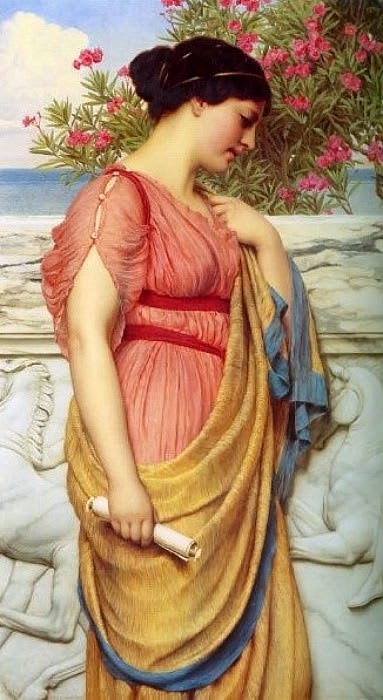
viernes, 20 de febrero de 2026

¿Caos o Cosmos? El papel de la Conciencia Humana


Paco Vinagre nos invita a observar cómo la naturaleza nos sorprende a través de tres elementos fundamentales. Por un lado, existe una tendencia al caos y la destrucción ; por otro, el cosmos, ese orden que crea y mantiene las cosas.

El tercer elemento es el más revelador: la conciencia. Es esa capacidad netamente humana que nos permite darnos cuenta de que ambas fuerzas están en constante funcionamiento.

¿Por qué nos aferramos tanto al orden? Paco explica que el equilibrio nos da la capacidad de predecir, mientras que el desorden nos genera una sensación de resignación ante lo que no podemos controlar. Nuestra tendencia natural es buscar ese "refugio" de calma, creando modelos mentales sobre cómo funcionan las cosas para ordenar nuestro mundo interior.

En Plural 21, creemos que entender estas fuerzas es esencial para recuperar nuestra Identidad y Libertad. Si comprendemos el juego entre el caos y el orden, dejamos de ser víctimas de lo imprevisible para ser dueños de nuestra propia conciencia.

Ponente: Paco Vinagre.
Temas: Filosofía natural, Psicología, Conciencia, Plural 21.
Web: www.plural-21.org

#PacoVinagre #Conciencia #Naturaleza #CaosYOrden #Plural21 #Reflexion #Vida #Verdad #FilosofiaHumana

Recuerda que te puedes hacer socio de Plural 21 en https://plural-21.org/alta-nuevos-socios
Si quieres hacer alguna aportación a Plural 21 ahora puedes hacerlo a través de diferentes sistemas:
- BIZUM. En la opción "Donación a una ONG" utiliza el código: 07672
- A través de Youtube podéis: utilizar la herramienta "Gracias/Thanks" de Youtube
- a la vieja usanza: podéis hacer una transferencia a Plural-21 Caixa d’Enginyers cuenta nº ES55 3025 0004 3514 3326 6836

- Enlace a artículo -

Más info en https://ift.tt/CG12IYu / Tfno. & WA 607725547 Centro MENADEL (Frasco Martín) Psicología Clínica y Tradicional en Mijas. #Menadel #Psicología #Clínica #Tradicional #MijasPueblo

*No suscribimos necesariamente las opiniones o artículos aquí compartidos. No todo es lo que parece.
Disonancia cognitiva y la visión no-dual


vision-no-dual.jpg

El mensaje de la no-dualidad es, en esencia, la invitación más simple y directa que el ser humano puede recibir: ya eres lo que buscas. Sin embargo, para la mayoría, esta verdad no se recibe con alivio, sino con una profunda resistencia. Esta fricción surge de lo que en psicología se conoce como disonancia cognitiva, ese malestar que experimentamos cuando nuestra estructura de creencias se enfrenta a una realidad que la contradice por completo. Como mencioné anteriormente, la mente es una herramienta de supervivencia diseñada para operar en la dualidad. Su función es separar, etiquetar...

- Enlace a artículo -

Más info en https://ift.tt/CG12IYu / Tfno. & WA 607725547 Centro MENADEL (Frasco Martín) Psicología Clínica y Tradicional en Mijas. #Menadel #Psicología #Clínica #Tradicional #MijasPueblo

*No suscribimos necesariamente las opiniones o artículos aquí compartidos. No todo es lo que parece.
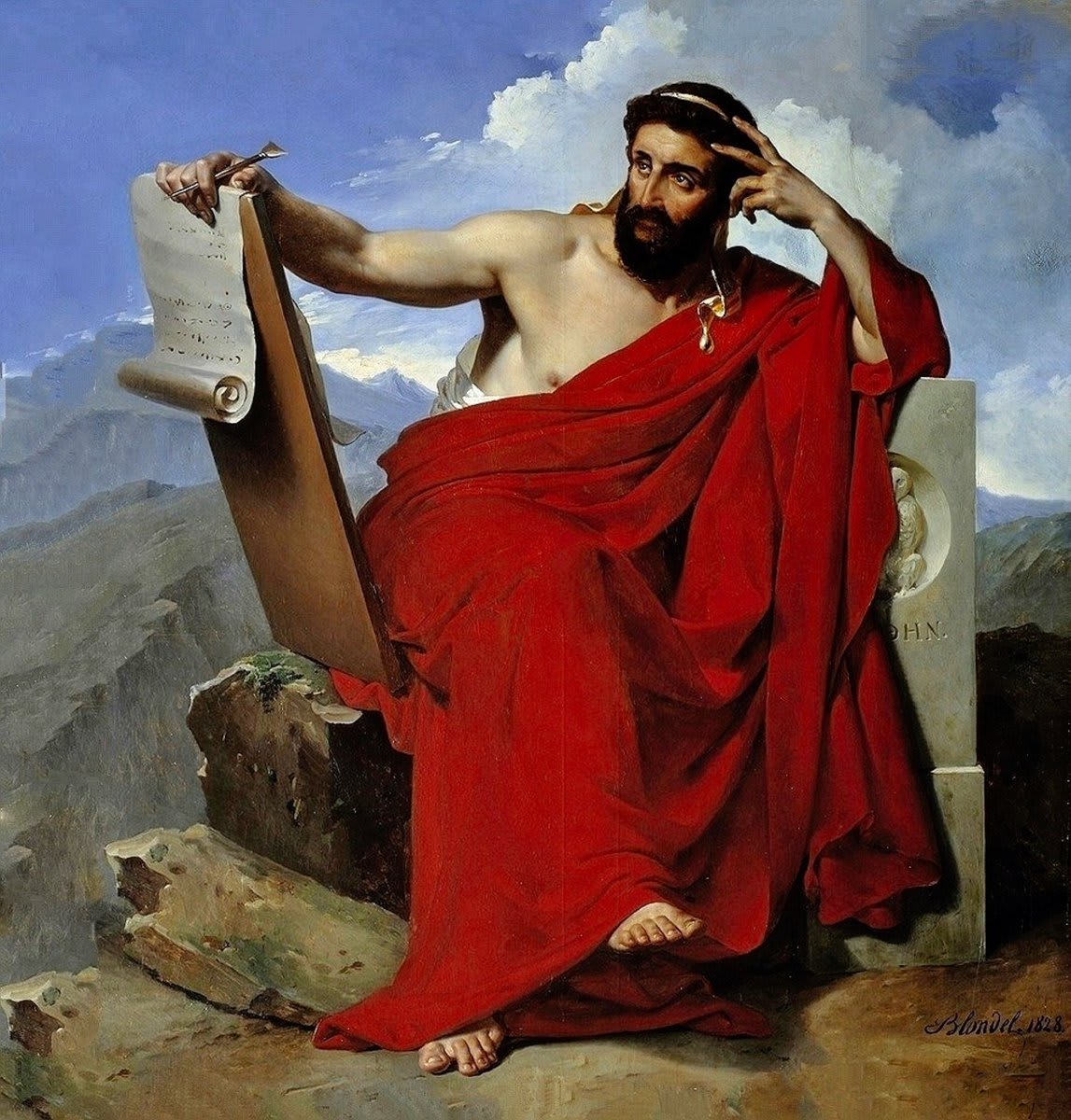
Bektashi Blues


Ali Naki is a true Sufi troubadour, bringing the fragrance of Ashk (divine, spiritual love) to circles of seekers throughout Anatolia. We met him first a few years ago when he appeared at a "meshk" (an evening of ilahis and whirling) we had organized near Fethiye during one of our Turkey trips. This is his [...]

- Enlace a artículo -

Más info en https://ift.tt/CG12IYu / Tfno. & WA 607725547 Centro MENADEL (Frasco Martín) Psicología Clínica y Tradicional en Mijas. #Menadel #Psicología #Clínica #Tradicional #MijasPueblo

*No suscribimos necesariamente las opiniones o artículos aquí compartidos. No todo es lo que parece.

Aristotle vs Stoicism


Dear Classical Wisdom Reader,

Centuries go by…

And answers can remain elusive!

One of the eye-opening things about engaging with the ancient world is discovering that humanity has been asking itself the same questions, over and over.

You would think that with the sheer span of time, certain mysteries would have been solved, the answers widely circulated and celebrated, and all misgivings laid to rest.

Yet in a world where technology seems to answer to our every whim, humanity seems still to return to these unanswered questions, and perhaps one more than any other:

What is happiness?

Part of this searching can be seen in something of a revival of the ancients: the explosion of popularity of Stoicism in the modern world.

It’s a welcome development, but not all the ancients have the same answers.

So today we’re looking at Aristotle’s much-celebrated Nicomachean Ethics. Find out Aristotle’s thoughts on the nature of happiness, where it disagrees with the Stoics, and what all this can tell us about living in the world today.

Of course, such questions don’t always have straightforward, easy answers…

Yet perhaps we can find happiness and joy, here and now, in simply asking the right questions.

Without having to wait centuries.

All the best,

Sean Kelly

Managing Editor

Classical Wisdom

Want To Go Further? Become A Member! Gain access to ALL our resources including exclusive podcasts, e-books, in-depth articles and more, exploring the worlds of ancient philosophy, literature, history and myth!

Aristotle Vs Stoicism: What is Happiness?

Written by Van Bryan

“For contemplation is both the highest form of activity (since the intellect is the highest thing in us, and the objects that it apprehends are the highest things that can be known), and also it is the most continuous because we are more capable of continuous contemplation than we are of any practical activity.” ~ Aristotle, Nicomachean Ethics

At the opening of Book X of the Nicomachean Ethics, Aristotle asks us “…what kind of thing is pleasure?” A notion that we might take for granted, it is essential to Aristotle’s moral philosophy that we adequately answer this question.

Aristotle asserts ideas that are reminiscent of the Stoics, putting emphasis on attainment of virtue within our lives. However, unlike the Stoics, Aristotle does not rely on a divine cosmology to make his case. Instead, he leans heavily on formalized logic (something he is credited with discovering) and what might be considered a rudimentary form of the scientific method.

Aristotle at Freiburg
Bronze statue, University of Freiburg, Germany, 1915

Aristotle concludes that pleasure is not a process or a state of being. Instead, he asserts that pleasure is an activity, something that we do. More precisely, pleasure is the thing that completes an activity. The philosopher makes a point to say that pleasure completes an activity so long as the subject and the object of the activity are in a suitable condition.

If we were to examine a shipbuilder, for example, we would first have to conclude that the shipbuilder is appropriately healthy and suitably prepared to partake in the activity of shipbuilding. Also, we would have to be sure that the object of the activity (the ship) is constructed from appropriate materials that are in good condition. If we can conclude both of these things, then we can safely assume that the shipbuilder will be capable of building his ship; at the completion of this activity, there will be pleasure. A shipbuilder, insofar as he is a shipbuilder, will inevitably find pleasure in building ships.

Share

So we have seen that pleasure is the natural end of an activity. Different people will certainly enjoy different activities more than others. The lover of philosophy will find the activity of philosophizing pleasurable, the lover of music will find music to be pleasurable, and so on.

According to Aristotle, the lover of music can even find pleasure playing the flute on the back of a dolphin!

flute player
Youth playing the flute and riding a dolphin. Red-figure stamnos, 360–340 BC. From Etruria.

Aristotle then tells us that life is an activity and, as is true with all activities, pleasure should be the natural end for life. Finding the appropriate pleasure for our lives means arriving at a happy life, which Aristotle believed was synonymous with a good life.

And so we seem to have concluded that finding the appropriate pleasure within our lives as human beings will lead us to happiness, which will lead us to a good life. But this, rather obviously, leads us to another question: What is the appropriate pleasure?

Recall that the hedonists believed bodily pleasures were our ticket to a happy life. Aristotle considers this but ultimately rejects the notion. Does it seem rational to say that all of our struggles, our fears, our hardships, and our miseries are suffered only so that we may eat and drink as much as we please? Aristotle thought such an idea implausible.

Want to go deeper into the worlds of Stoicism and ancient philosophy?

Become a Member to access ALL our resources: podcasts, in-depth articles, and our VAST library of e-books, including our exclusive e-book featuring the Essential Writings of the Stoics.

It’s a fantastic way to cut out the noise, support the Classics, & go deeper into the world of philosophy and the ancients.

Not a Member? Join today & Unlock the Wisdom!

Become A Member

Aristotle also did not agree with the Ethical Egoists, who declared that a pleasurable life is one where we conquer our fellow man and assert ourselves above society. While some might find pleasure in this, Aristotle believed that certain pleasures were better than others. We should make a point to find these most perfect pleasures.

Aristotle
Bust of Aristotle. Marble, Roman copy after a Greek bronze original by Lysippos from 330 BC; the alabaster mantle is a modern addition.

To do this, Aristotle asks us to imagine a hypothetical man who is perfect in every way imaginable. This ideal human would find pleasure in that which is most perfect. What is this pleasure that is most noble and honorable? Aristotle tells us that it is the active expression of virtue.

So…

A happy life and a good life are synonymous. We only find a happy life if we find our most appropriate pleasure as rational beings. Our most appropriate pleasure is the active expression of virtue. Finally, we must ask, which virtue is the truest, the most honorable, and the noblest? Believe it or not, not all virtues are created equal.

Aristotle makes a point that some virtues are self-sufficient while other virtues require external things in order for that virtue to be realized. For instance, generosity is only possible if we have an excess of resources and other citizens to receive our generosity. Justice, although important, requires other citizens to receive our just acts. Virtues such as these are not self-sufficient.

Then we arrive at wisdom, which requires nothing external to be realized. We may pursue wisdom for our own pleasure and we require nobody else to have this virtue realized. Additionally, learning is the one activity that we may consistently do throughout our lives. While variables may interfere with our abilities to be generous or just, there is no reason why we should ever stop pursuing wisdom.

plato and aristotle
The School of Athens by Raphael (1509–1510), fresco at the Apostolic Palace, Vatican City.

Aristotle also appeals to the gods to make his case for a life in pursuit of wisdom. He states that the gods are most assuredly all-knowing, and so by pursuing a life of wisdom we come closer to the divine.

Aristotle does note that some may disagree with this, saying that we are mortal and should, therefore, think mortal thoughts; he dismisses these notions. Instead, the philosopher urges us not to settle for mediocrity. We ought to pursue that which is most important, most pleasurable, and most divine.

We must not listen to those who urge us to think human thoughts since we are human, and mortal thoughts since we are mortal; rather, we should as far as possible immortalize ourselves and do all we can to live according to the finest element within us—for if it is small in bulk, it is far greater than anything else in power and worth. ~ Nicomachean Ethics

You may now be realizing that Aristotle and the Stoics arrived at similar conclusions. Both tell us that a life in pursuit of wisdom is the best type of life. However, the Stoics believed that we ought to pursue wisdom for the sake of duty. Aristotle, rather simply, tells us that we ought to pursue wisdom because it will make us happiest. We need no other reason than this. Aristotle’s philosophy is based upon systematic logic and empirical observations that many would agree with; we need not accept the divine cosmology of the Stoics in order to live a good life.

Share

Aristotle and Seneca
Aristotle (above) and Seneca (below).

Therefore, it can be concluded that the Nicomachean Ethics is among the most accessible and the most all-encompassing of the moral philosophies. It remains a cornerstone of ancient ethical philosophy, leading those who might seek happiness toward enlightenment and a life well-lived.

- Enlace a artículo -

Más info en https://ift.tt/CG12IYu / Tfno. & WA 607725547 Centro MENADEL (Frasco Martín) Psicología Clínica y Tradicional en Mijas. #Menadel #Psicología #Clínica #Tradicional #MijasPueblo

*No suscribimos necesariamente las opiniones o artículos aquí compartidos. No todo es lo que parece.
El género biográfico árabe


Una de las características que distinguen y dan personalidad propia a la historiografía árabe es el extraordinario desarrollo del género biográfico, hasta el punto de que ha llegado a afirmarse, con evidente exageración, que en este ámbito cultural la Historia es Biografía Luis MolinaEscuela de Estudios Árabes Sin necesidad de aceptar como válida semejante afirmación,...

- Enlace a artículo -

Más info en https://ift.tt/CG12IYu / Tfno. & WA 607725547 Centro MENADEL (Frasco Martín) Psicología Clínica y Tradicional en Mijas. #Menadel #Psicología #Clínica #Tradicional #MijasPueblo

*No suscribimos necesariamente las opiniones o artículos aquí compartidos. No todo es lo que parece.
Sounds like Chopin's Marche funèbre - Turning memes into music, part 2


What happens when memes become music? The musicians of the Stegreif Orchestra took their classical instruments to Bonn's pedestrian zone and asked passers-by for memes, which they then set to music. Part 2 of our series is about a postcard featuring an old man who says, “Guess I'll die.” How well do you think the musicians did? Write your opinion in the comments!

And don't forget to subscribe to DW Classical Music: https://www.youtube.com/dwclassicalmusic

#memes #memeshorts #memesounds #memesound #shortsvideo #shortsyoutube #shortsyoutubevideo #shorts #shortvideo #shortvideos #shortfeed #classicalmusic #shortsyoutube #challenge #mememusic #Marchefunèbre #Chopin #pianosonata

- Enlace a artículo -

Más info en https://ift.tt/CG12IYu / Tfno. & WA 607725547 Centro MENADEL (Frasco Martín) Psicología Clínica y Tradicional en Mijas. #Menadel #Psicología #Clínica #Tradicional #MijasPueblo

*No suscribimos necesariamente las opiniones o artículos aquí compartidos. No todo es lo que parece.

Book Review: A Private Man: Stephanie Sy-Quia


“Let me lessen my request. Let me breathe between the heavens and the earth, a private man. To live a quiet life: this too can be a radical political act.”
— (David Fletcher: A Private Man)

The title of this novel is adapted from a passage (III.xii.12-18) in Shakespeare’s Antony and Cleopatra, where Antony petitions Caesar for permission to live as “a private man” in Athens if he cannot be permitted to live with Cleopatra in Egypt. Caesar denies both requests. The petition to Rome, and its harsh rejection, are mirrored in the request by the novel’s character, David Fletcher, a Catholic priest, to his Church superior, to permit him to be relieved of his vows of celibacy so that he can marry his charge, Margaret Bendalow, whom David loves and who loves him. Like Antony, he seeks a quiet life. Margaret is a theology teacher who bucks the traditional bridle by questioning certain Church-sanctioned practices and dogmas that constrain love and dignity. David’s and Margaret’s own views, playing out at a time when Church reform was being debated in the lead up to Vatican II are an affront to some Church officials. David’s petition and the progressive views that he and Margaret represent are perceived as threatening by the Church establishment. The issues they raise remain matters of debate even today, and so the book will be of interest to readers of this journal for more than its literary merit.

The author of A Private Man (Grove Press, 2026), is Stephanie Sy-Quia, an award-winning poet. Her previous publication, Amnion (Granta, 2021), a volume of poetry (“my attempt to wrestle with the metrics for provenance and belonging”[[1]]), explored of some of the same family history that she now revisits in her debut novel. The term ‘amnion’ refers to the protective casing around the womb, which has to be broken for a child to be born. The new publication is also, at a deeper level, an exploration of amniotic relationships, of caring, and of being born into a fuller meaning of selfhood beyond those defined by social definitions and traditional expectations, and the novel is therefore a natural development of the ideas that Sy-Quia was addressing in her poems. Indeed, she regards Amnion as a foundational work and sees her future writing, including the novel, as “being in dialogue” with it.

The new book, a reimagining of the real-life story of her grandparents, is a masterfully structured tale, told from various perspectives and timeframes, and woven into a tapestry of thoughtful narrative threads, poetic prose (reminiscent at times of Michael Ondaatje and Anne Michaels) as well as engaging dialogue, which collectively draws the reader into the circumstances and inner lives of its main characters.

The writing is personal and humanely intelligent, underpinned by a literary sensibility, sensually concrete and richly imagined, leavening ideas and perspicuous observations with descriptive realism. The character portraits of the family over three generations and multiple locations in Europe, Asia and North Africa, with their various circumstances and their human tugs, ripple outward with intimate relevance from a deep hidden centre to keep the reader engaged. The story alternates between, on the one hand, a retrospective reconstruction of the relationship of Margaret and David, at a time when David has died (“turned his face to the wall,” as his daughter puts it) and Margaret is ailing with dementia, and, on the other, flashbacks of memories describing their childhoods, relationships and careers, as they were unfolding. The retrospective view is that of their grandchild, Adrian, now Margaret’s caregiver, who is wanting to ensure that his grandmother can live with dignity in her remaining days.

The positions of David and Margaret within the constraining mores and expectations of Church and society place the two individuals in circumstances that force the confrontation, at first within and among themselves, and then with their ecclesiastical authorities, that propels the tale. The reader associates the author both with the perspective of Adrian, the grandchild reconstructing the family history, and with Margaret, the progressive woman championing the claims of the intelligent heart that eventually build to the confrontation and decision at the centre of the novel. Sy-Quia handles the issues through a combination of observation and reflection, irony and passion, crafting narrative and dialogue that speak for the simplicity of love and dignity transcending the prejudices and complexities of bureaucracy, custom and dogma; it is a viewpoint one imagines must reflect the convictions of the author herself, in sympathy with the protagonists challenging the hidebound views of the Latin Church.

David and Margaret ache for that open space “between the heavens and the earth” where the “private man” is free to breathe, and where they can be “besouled of another” and come to “know” each other more fully in their complementarity and humanity — more fully than the ecclesiastical Caesars (“these higher-up men calcified by lack of life and absence of soul”) will allow. For them she is “a thief in the orchard”, “a Jezebel of ill-renown.” And David’s own impulse is to side with the “Catholics who refuse to be cabbages, paternalistically indoctrinated.” The strictures of the Church function as a garment that impedes them from a deeper knowledge — of their spiritual nakedness, as it were — and of a connecting space free of pharisaic judgments. But, to seek such private freedom can be (though it is not always so) “a radical political act.”

By highlighting the tensions between freedom and authority in the context of David‘s request to be relieved of his vows (“He was their creature, a creature of authority and hierarchy”) and of Margaret’s affront to ecclesiastical patriarchy (“she was just a woman”; “What use was she, with her breasts and education?”), the novel prompts the reader to question certain epistemological foundations, doctrinal formulations and recommended practices of the Church authorities. What are the sacred contours of human freedom and what is the legitimate role of any external or traditional authority to limit its expression? More specifically: Should celibacy be an institutional practice for ordained priests? If so, would limited experience or knowledge of women, marriage and life, limit a priest’s pastoral ability to guide his flock in these matters? Is not marriage an expansion of knowledge, and is not its sexual expression a foretaste of the soul’s participation in the divine mysteries? In a Christian tradition that prizes love, should priests like David be stigmatized for seeking to be relieved of their vows to allow them to expand their knowledge of love and the gifts of humanity beyond traditionally permitted confines, or should traditional views adapt to non-traditional loving relationships? Should women be considered equal and complementary to men both within the Church and in society, or be governed by the Church and by their male counterparts as subordinate creatures? Is the Church‘s rigid and patriarchal authority tantamount to an authoritarian and hypocritical betrayal of its true mandate of stewardship and care (“All of God’s intentions for us and Creation, he will say, can be summed up in two words from Genesis: ‘keep it’.”)? Is there a sacred place where love and dignity have more value than the claims of permitted freedom or assigned identity? These are some of the questions raised by the story.

The issues around celibacy and women’s roles of course have a historical context, and the novel references them occasionally, for example, the various Church councils (Nicaea, Lateran, Trent, and the Vatican). With respect to the role of women, Margaret notes “Women had moved in that century, across from the jurisdiction of chattel law to that of the person. They had suffrage now, polio vaccination programmes, the lubricated condom, the H-bomb. The great mass of the Church was lumbering out of a deep and dark frankincensy fug in order to meet a new century. The word being used was aggiornamento: mise à jour. A bringing up to date.” As the readers of this journal know, the Vatican reforms that emerged from Vatican II, while they had their champions, were not, indeed are not, without controversy. The need for amelioration of legitimate grievances by those such as women who have been poorly treated by the Roman Church, and for adapting practices to changing conditions, has spilled over into a modernist mentality that traditionalists say goes too far: the reforms fail to conserve values grounded in metaphysical principles of the sacred, and therefore become subversive. Sy-Quia tries to remain — as the author should — invisible behind the screen of her characters, but one suspects she takes the part of Margaret who dismisses David’s defence of priestly celibacy (“Clerical celibacy is how we priests practise sublimation”) as a “doctrinal fig leaf”, adding “Clerical celibacy only gets cemented at the Second Lateran, a mere eight hundred years ago. And even then, only as a means of countering corruption. Too many priests inheriting their churches from their fathers.” It is difficult not to side with her arguments. Indeed, priests were not celibate for nearly a millennium before Church doctrine changed, and celibacy is not common outside the Latin Church.

At one point Margaret tells David that “Marriage is a mode of witness, an epistemology. To bar people from marriage is to prevent them from this way of knowing. And a means to maturity, too.” She argues that “God’s house is the world before it is the church.” Instead of ignoring or devaluing God’s creation based on a false eschatology (“If we think there is another life, she said, what is the point of this one, other than to try and earn our place in the next? And conversely … if Judgement Day is a finite event, then there is no need to try and stave off this gradual poisoning of the earth, the decimation of all that creep and crawl upon it.”), would it not be better rather to treat this life as heaven (“Heaven is at hand”)? She asks, “Are our bodies not the matter of miracles? What is it that is being enshrined?” She proposes a different perspective: “Family and marriage not as the drudgery of the factory floor, of production, but of vocation in the truest sense. With its proper ecstasies.” What she is proposing is a vocational and sacramental approach to love that strains against the “antiquated thinking” of the Church.

David wonders if love is a complete revelation (“Like the road to Damascus. Knowledge.”) but Margaret offers him a different vision, more modest and accepting of the human limitations that are necessary for one to accommodate as part of its flowering, leaving room for grace: “It’s like driving in the dark. You do your best to the limit of your sight.” It is the concrete life of real human love that Margaret offers him, the glow that is present, not the awaited eternity: “All his life, he has been taught to yearn for eternity. Yet here is this singular brilliance, consigned to a small span of years. He places the two side by side in the scales.” The quiet life they seek is “To live in the suchness of things, with no shame.” Is this what the Church can be persuaded to offer, the reconciling of the spirit with its forms, recognizing that “Love is at its base the effort of dignity”?

The limitations of Church dogma and the arrogance of its apparatchiks (“Why does the Roman Church have to rule her people, the people of God, by fear and repression? One student of mine told me that her student friends in other non-Roman Catholic colleges said to her, ‘Your Church is just like Soviet Russia, sending people to Siberia.’”) in the end curtail the eucharistic embodiment of life, its deep joys. Margaret understands the harm this does: “All that damage done. All those souls curtailed. She renounced it all. The vast history of Catholicism was folding and unfolding all around her, and folding her into it. It was in the mineral memory of the land. When stripped down to its barest, it was the history of being, of evolving personhood, the notion thereof, and its validity. She stood for this. She stood for herself.”

This is not a Nietzschean proclamation of individualism, but of Christic personhood, the ‘selfhood’ of Gerard Manley Hopkins in As Kingfishers Catch Fire:

Each mortal thing does one thing and the same: Deals out that being indoors each one dwells; 

Selves — goes itself; myself it speaks and spells, 


Crying Whát I dó is me: for that I came.

Though this review has focussed on the main characters and themes, the novel presents several other characters and situations that portray human relationships in ways that indirectly, but no less importantly, add to the moral weight of premiating love and dignity. The issues (such as the demands of elder care, the ethic of service, balancing war with humanity, finding the right life partner, choices to made between career and family, being female in a male world, maintaining bonds with family and strangers, the role of art and beauty and nature in self knowledge, of religion in life) are presented organically through the storyline in ways that highlight their complexity. For example, a discussion among priests at an archbishop’s cocktail party presents different viewpoints on the role of women in the Church (“married people need a married clergy. Experience alone can equip us with the wisdom we need”; “She cannot possibly have the sobriety required to penetrate into the Church’s mysteries. Those belong to us, he said, including them all with a sloshing half-moon of his glass. Us and us alone”), and, though a moral voice emerges, it is not forced or didactic. The author resists the temptation to close off issues by presenting easy conclusions or answers. If the reader senses where the rightness lies it is because the human predicaments point to something the heart recognizes as true.

A precocious and sensitive intelligence is at work here. The novel is a fine debut by a writer whose future work one will be keen to follow as it develops the arc of ideas explored in her first two books — an arc that one hopes will fulfill its promise of deepening into the sacred ground of the dignity of love (symbolized by the amniotic relationship with the primordial and pure ‘womb’ [‘rahma’] of the sacred, and by the receptivity of the soul to the transcendent Spirit) rather than pursing its antinomian expressions.


[[1]]: See interview titled ‘In conversation with Stephanie Sy-Quia‘ posted online on 1 July 2022: https://forwardartsfoundation.org/in-conversatiopn-with-stephanie-sy-quia/

- Enlace a artículo -

Más info en https://ift.tt/5sUH8iY / Tfno. & WA 607725547 Centro MENADEL (Frasco Martín) Psicología Clínica y Tradicional en Mijas. #Menadel #Psicología #Clínica #Tradicional #MijasPueblo

*No suscribimos necesariamente las opiniones o artículos aquí compartidos. No todo es lo que parece.

jueves, 19 de febrero de 2026

The Very Best Thing: A Recent Sohbet


Peace, one and all…

Here is the text and reflection of a recent sohbet at our weekly Mevlevi zikr.

Text

Remember, and resonate with the highest truth.

‘Why do the Bektashi respond to prayers by saying, ‘Allah, Allah’ rather than ‘Amin’?’

‘Because we want to respond with the very best thing we know’

Response to a Question during a Bektashi zikr

Four letters in which my heart is absorbed,
And into which all my thoughts and concerns have disappeared:
Alif, by which creation was assembled (ta’allaf) by design,
Lam, to signal the way of self-reproach (malama),
Another lam to add to the meanings,
Then a ha through which I love (uhim) and comprehend.
attributed to al-Hallaj

One special distinction of the Name is that it is perfect in its letters, complete in its meaning, unique in its mysteries and singular in its quality. Firstly, it is Allah; if the initial alif is removed, it leaves lam-lam-ha, which spells lillah, ‘to God’. If the first lam is then removed, this leaves lam-ha, which spells lahu, ‘to Him’. Finally, if the second lam is removed, this leaves the letter ha, which signifies the third person pronoun hu, ‘He’. Thus, every letter of the Name has a complete meaning and a perfect distinction, and its meaning does not change. When the letters are separated, no benefit is lost, nor any wisdom removed, and each successive word has a wondrous and marvellous meaning of its own…

Ibn Ata’illah, The Pure Intention: On Knowledge of the Unique Name, p. 17

Know that remembrance (dhikr) is to move away from heedlessness and forgetfulness by means of the permanent presence of the heart and by faithful repetition of the tongue. The vision of the Master causes the remembrance to flow on the tongue of the servant. It has also been said that remembrance is to exit the sphere of heedlessness for the space of witnessing through fear, ardent love, overwhelming yearning and submission to God. The reality of remembrance is to be fixed solely on the Remembered without being conscious of one’s own witnessing, but only of His; thus one sees the Real, by the Real, and God is the Invoker and the Invoked…

Ibn Ata’illah, The Pure Intention, p. 68

The invocation of the Name, then, is better than any other form of worship, and is closer to intimate discourse (munajat). A hadith tells us that God Almighty says, ‘I am the Companion of one who remembers Me’.
Ibn Ata’illah,
The Pure Intention, p. 61

Reflection

In preparing for our sohbet this evening, it felt appropriate to start with Kabir Dede’s monthly theme: ‘Remember, and resonate with the highest truth’.

The questions that arose within were direct and personal: what is the highest truth? What is my highest truth? What do I value most? What do I prize above all things?

A kind of twofold answer emerged from within: Allah and love. This was puzzling at first. How can my highest truth be two things? Reflecting more deeply, and in light of our beautiful tradition of giving and receiving love (aşk vermek & aşk almak), it became clear that it is practically impossible for this one to separate the ‘two’. When I look towards Allah, it becomes clear that every moment of love, every act of kindness, every difficulty to overcome, has emerged from Hu. When I look towards love, it is clear that it arises first in the Divine, and that each person is a unique theatre for manifesting Allah’s love in this world, here and now. Thus, Allah’s love has been the one constant in each moment and circumstance of my life. And praise be to God, who maketh it so.

Febraury’s theme also reminded this heart of a beautiful moment at a Bektashi zikr, a few years ago. The zikr itself was wonderful, and after it had been brought to rest, the Dede held a space for questions. One of those present asked something profound:

‘Why do the Bektashi respond to prayers by saying, ‘Allah, Allah’ rather than ‘Amin’?’

‘Because we want to respond with the very best thing we know’

This was such a beautiful answer that it quite took this one’s breath away. What better thing could there be to say, other than ‘Allah’? If Allah (and Hu’s love) is the highest truth, then ‘Allah’ is also the best response. Allah, Allah. Allah, Allah!

In an episode related in Rumi and His Friends, Hz. Mevlana remarked that our most characteristic zikr is also that very best thing, commenting that we are the Allahiyan. As such, over the last few months, this one has been strongly drawn to explore this Most Beautiful of Names more fully. A wonderful aid in that exploration has been Ibn Ata’illah’s book, The Pure Intention: On Knowledge of the Unique Name. It has been such a treasure-trove of insight and wisdom. One of the deepest discussions in this book concerns the meaning of the word Allah itself.

Broadly speaking, it seems that there are two main approaches. The first sees Allah as deriving from Al-ilah, or ‘The (only) God’. Those who follow this understanding offer possible derivations for Ilah. Some have suggested it might derive from aliha, yaʾlahu, ilāhatan, with the same meaning as ‘to worship’. Allah is thus, the ‘One Worshipped’ (see The Divine Names, by Afif al-Din Tilimsani, p.5). Others have suggested the word might derive from the root waliha, which ‘…combines the vast concepts of total love and being passionately beyond all the constraints of mind. Combining these, we get the meaning “to fall madly in love, to utterly dissolve in an insane yearning…’ (Physicians of the Heart, p.24).

The second broad approach, which is the one Ibn Ata’illah holds to, sees the word Allah as being unique in Itself, the Unique Name of God. Both approaches have their merits, both emerge from deep knowledge and reflection, and so, this heart feels, there is no need for this one to take a particular position. Rather, both point to Allah as being the unique loving Source, in much the same way as the answer that came to heart about Allah and love: experience exists to help us taste Truth, not merely to describe it academically.

Another profound insight from Ibn Ata’illah’s book is the way in which spiritual masters have used the letters of the Divine Name as a means of deep spiritual reflection. Al-Hallaj’s poem is a beautiful example. His understanding of each letter’s significance offers us a starting point for our own contemplations. Allah is the One Who designed things this way, and made self-reproach, or the jihad al-nafs, so central to growth. We travel through these seas until we see and become love, until our everyday selves dissolve.

The passage about the Arabic letters of the Name was also deeply profound. Each letter has meaning, and as we remove each letter, more intimate truths emerge, until we reach Hu. I cannot help but relate this to our Mevlevi zikr, where we start with the purification of Astaghfirullah, then move through la ilaha illa Allah, the engine of our transformation, then through Allah, Allah, where we can so beautifully dissolve, before arriving at Bismillah Ya Hu!, where we drown, as the Drink Sent Down has it. In other words, the very letters of Allah’s Name lay open the path to self-purification, self-transcendence and self-effacement. The more I can open to this path, the more deeply this heart will be able to perceive these truths.

The last two passages from The Pure Intention emphasise practice. Is it possible to resonate fully without engaging, without doing something? We have been created for ibadah, for worship, for service, for gnosis, which seems to mean that we cannot attain deeper knowing without participation, without getting involved. Furthermore, we are not left to ourselves, Allah becomes the Companion of the one who remembers Him!

O You Who are Infinite Mercy,
Infinite Loving-kindness,
Infinite Giving,
Infinite Liberation,
Infinite Knowing,
The Infinite Answer to Every Question,
Open our hearts and eyes,
Loosen our tongues and hands in Your Service,
Be our Deepest Friend,
Our Highest Truth

Dem-i Hazret-i Mevlana…

- Enlace a artículo -

Más info en https://ift.tt/5sUH8iY / Tfno. & WA 607725547 Centro MENADEL (Frasco Martín) Psicología Clínica y Tradicional en Mijas. #Menadel #Psicología #Clínica #Tradicional #MijasPueblo

*No suscribimos necesariamente las opiniones o artículos aquí compartidos. No todo es lo que parece.