
Dear Classical Wisdom Reader,
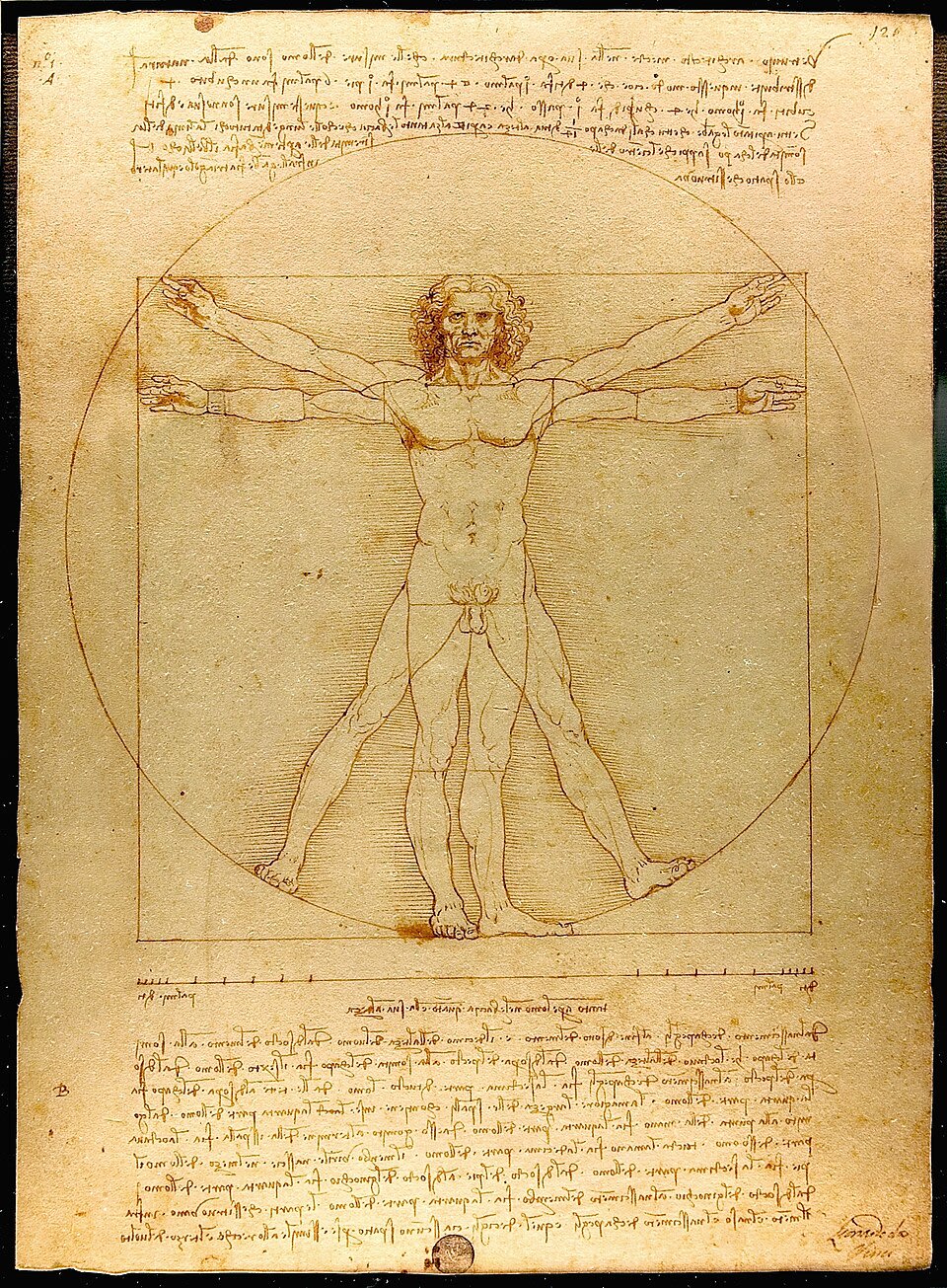
You’ve definitely seen him… gracing textbooks, museums, logos, coffee mugs, even memes.
He stands with arms outstretched and legs doubled, perfectly balanced between a circle and a square. You’d think he would be uncomfortable honestly, so exposed, and yet he seems defiant or perhaps a bit grumpy.
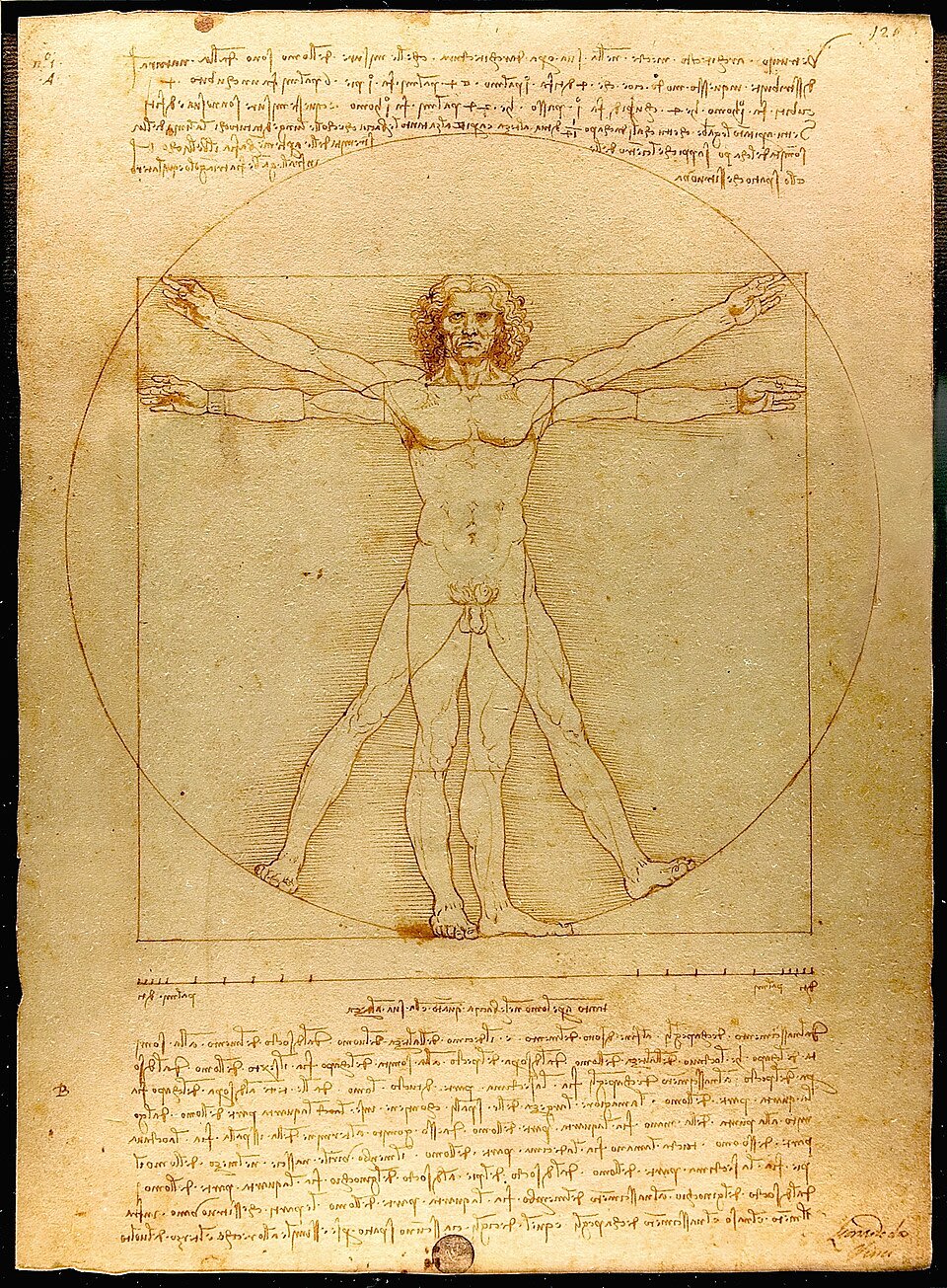
But when was the last time we stopped to ask why this image still speaks to us? Why, in our modern era of medical imagining, of MRIs and x-rays, does a 500-year-old sketch of the human body matter?
Perhaps it could be because the Vitruvian Man isn’t about anatomy at all….
Indeed, it’s about something far more provocative: the idea that the human body is a kind of measuring stick for the universe itself and that beauty, health, and harmony all depend on understanding our place within a larger, ordered whole…
Leonardo da Vinci’s famous drawing is often treated as a symbol of Renaissance genius, a triumph of art fused with science. Yet the image did not emerge from Leonardo’s imagination alone. It is rooted in a much older intellectual tradition, one that believed architecture, philosophy, medicine, and even ethics were inseparable.
Behind that serene (if maybe a bit disgruntled) figure lies a Roman thinker whose ideas quietly survived the fall of an empire and went on to shape how Western culture understands proportion, design, and what it means to live well.
Why did these ideas endure? Why did they matter to Leonardo…and why might they still matter to us, centuries later, as we design our cities, our technologies, and even our own lives?
Read on to discover the deeper story of the Vitruvian Man and uncover a worldview in which nature itself is the master architect and humanity, both its product and its measure.
All the best,
Anya Leonard
Founder and Director
Classical Wisdom
P.S. Curious how an obscure Roman architect became the intellectual bridge between antiquity and Leonardo’s genius? Today’s Member’s in-depth article traces how Vitruvius’s ideas survived the fall of Rome, earned near-mythic authority, and quietly shaped Western thought about design, harmony, and even human health.
As a Classical Wisdom Member, you’ll get the complete story…rich historical context, surprising connections, and insights that reveal why the Vitruvian Man is more than a drawing.
It’s a blueprint for how the ancient world understood what it meant to be human.
And if you haven’t join our Classical Wisdom Community, then there is no time like the present to bring in the lessons of the past. Subscribe today and let the wisdom of the ancients guide you:
The History Behind the Vitruvian Man
By M. Reed Meyers
The story sounds like a Dan Brown thriller: Leonardo Da Vinci’s notebooks contain a skillfully executed, albeit curious image. A man with two sets of arms and legs poses in the center of a circle and square. With one set of arms forming a V and one set of legs out-splayed, the figure’s soles and fingertips define the circumference of the circle. With the other set of arms outstretched and legs straight, the figure defines the perimeter of the square.
Known in Italian as L’Uomo Vitruviano—the Vitruvian man—the c. 1490 image is perhaps the most recognizable of all Leonardo’s sketches. A simple internet search reveals literally hundreds of reproductions, adaptations, and parodies. It may come as a surprise that this sketch, unlike others, did not spring from Leonardo’s fertile imagination, but was designed to illustrate someone else’s ideas:
[I]f a man be placed flat on his back, with his hands and feet extended, and a pair of compasses centred at his navel, the fingers and toes of his two hands and feet will touch the circumference of a circle described therefrom. And just as the human body yields a circular outline, so too a square figure may be found from it.
This passage appears in Book III, chapter 1 of De Architectura, the only comprehensive work on architecture to survive from Classical Antiquity, authored by Marcus Vitruvius Pollio. It’s an interesting concept, to be sure, but what about it would inspire Leonardo to produce one of his most evocative drawings?
There is indeed much more to this story: behind the Vitruvian man stands an enigmatic builder, a learned manuscript, a legendary name, and cultural prestige.
Vitruvius qui de architectonica
So, who was the original Vitruvian man? Who was Marcus Vitruvius Pollio?
Más info en https://ift.tt/HPl0VfX / Tfno. & WA 607725547 Centro MENADEL (Frasco Martín) Psicología Clínica y Tradicional en Mijas. #Menadel #Psicología #Clínica #Tradicional #MijasPueblo
*No suscribimos necesariamente las opiniones o artículos aquí compartidos. No todo es lo que parece.

No hay comentarios:
Publicar un comentario