Psicología

Centro MENADEL PSICOLOGÍA Clínica y Tradicional

Psicoterapia Clínica cognitivo-conductual (una revisión vital, herramientas para el cambio y ayuda en la toma de consciencia de los mecanismos de nuestro ego) y Tradicional (una aproximación a la Espiritualidad desde una concepción de la psicología que contempla al ser humano en su visión ternaria Tradicional: cuerpo, alma y Espíritu).

“La psicología tradicional y sagrada da por establecido que la vida es un medio hacia un fin más allá de sí misma, no que haya de ser vivida a toda costa. La psicología tradicional no se basa en la observación; es una ciencia de la experiencia subjetiva. Su verdad no es del tipo susceptible de demostración estadística; es una verdad que solo puede ser verificada por el contemplativo experto. En otras palabras, su verdad solo puede ser verificada por aquellos que adoptan el procedimiento prescrito por sus proponedores, y que se llama una ‘Vía’.” (Ananda K Coomaraswamy)

La Psicoterapia es un proceso de superación que, a través de la observación, análisis, control y transformación del pensamiento y modificación de hábitos de conducta te ayudará a vencer:

Depresión / Melancolía
Neurosis - Estrés
Ansiedad / Angustia
Miedos / Fobias
Adicciones / Dependencias (Drogas, Juego, Sexo...)
Obsesiones Problemas Familiares y de Pareja e Hijos
Trastornos de Personalidad...

La Psicología no trata únicamente patologías. ¿Qué sentido tiene mi vida?: el Autoconocimiento, el desarrollo interior es una necesidad de interés creciente en una sociedad de prisas, consumo compulsivo, incertidumbre, soledad y vacío. Conocerte a Ti mismo como clave para encontrar la verdadera felicidad.

Estudio de las estructuras subyacentes de Personalidad
Técnicas de Relajación
Visualización Creativa
Concentración
Cambio de Hábitos
Desbloqueo Emocional
Exploración de la Consciencia

Desde la Psicología Cognitivo-Conductual hasta la Psicología Tradicional, adaptándonos a la naturaleza, necesidades y condiciones de nuestros pacientes desde 1992.

domingo, 30 de noviembre de 2025

« Connais-toi toi-même »


- Enlace a artículo -

Más info en https://ift.tt/gYjFHeN / Tfno. & WA 607725547 Centro MENADEL (Frasco Martín) Psicología Clínica y Tradicional en Mijas. #Menadel #Psicología #Clínica #Tradicional #MijasPueblo

*No suscribimos necesariamente las opiniones o artículos aquí compartidos. No todo es lo que parece.


L'abraçada dels arbres


L'abraçada dels arbres

(Font de la Llúdriga, Capafonts, comarca tarragonina del Baix Camp,
a la Catalunya andalusina)

AVvXsEi9WekG-LVNFn8IPdx1pyLO5bxkmBi9JtwN


- Enlace a artículo -

Más info en https://ift.tt/gYjFHeN / Tfno. & WA 607725547 Centro MENADEL (Frasco Martín) Psicología Clínica y Tradicional en Mijas. #Menadel #Psicología #Clínica #Tradicional #MijasPueblo

*No suscribimos necesariamente las opiniones o artículos aquí compartidos. No todo es lo que parece.

The Raging Bull and the Silk Glove


Dear Classical Wisdom Reader,

“The raging bull and the silk glove”

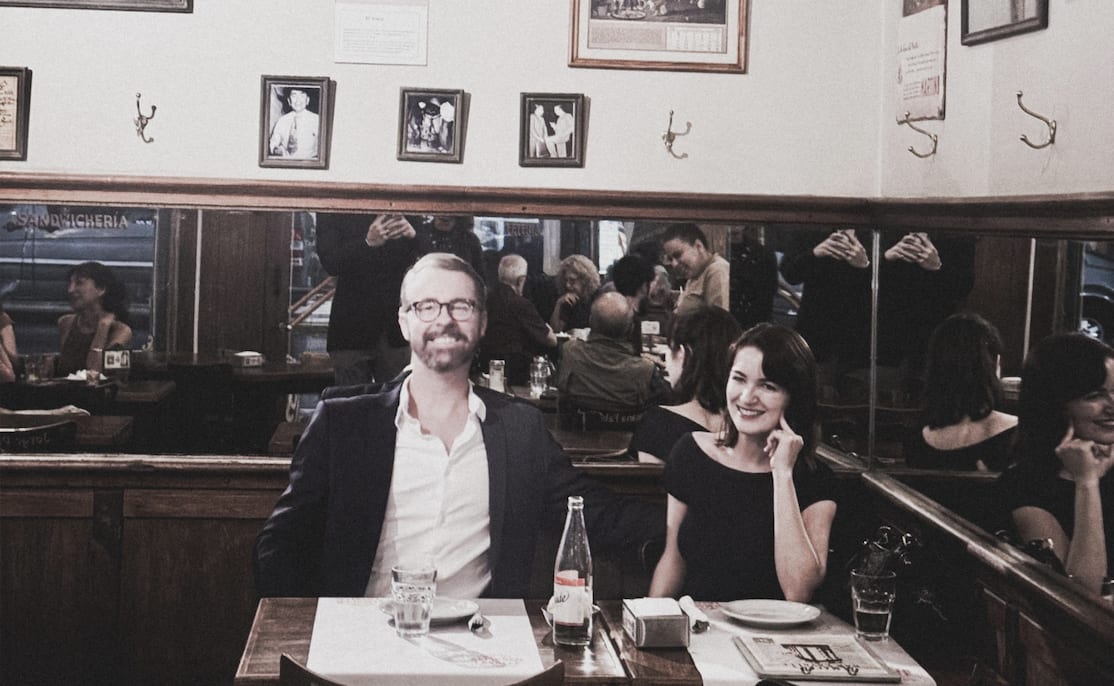
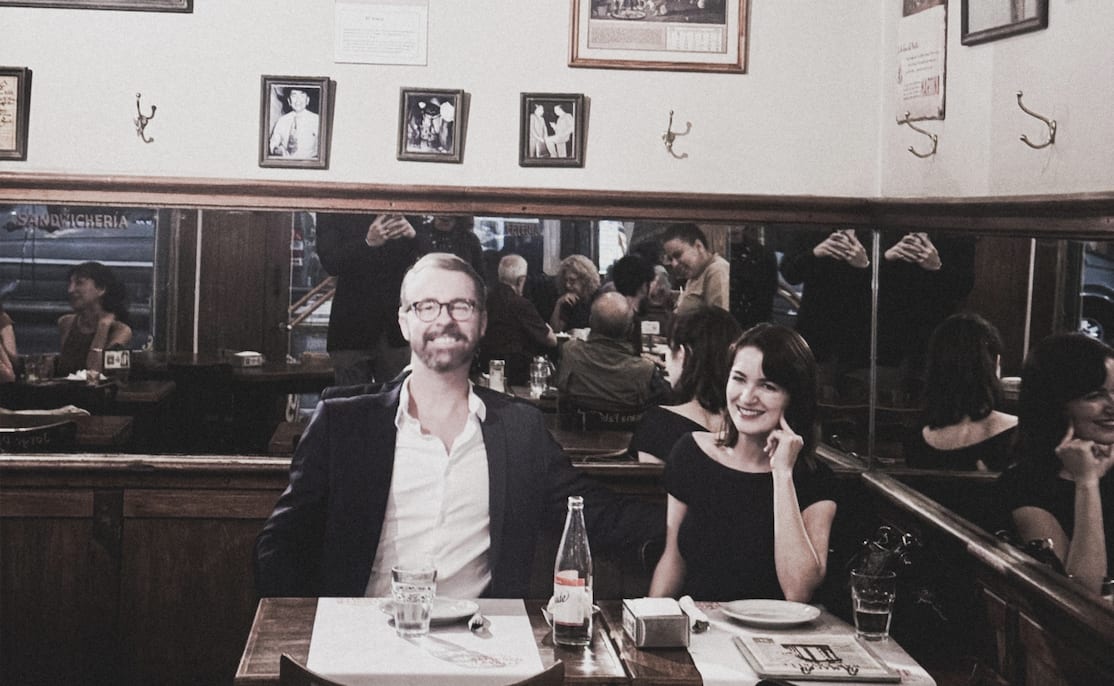
This is the description one of our dear friends has used to describe me and my husband. Don’t worry, I’m not the bull.

You see, those who have had the pleasure of meeting Joel will no doubt attest to the fact that he is...opinionated. From Cato to Voltaire to HL Mencken, the world needs individuals like this, to which history clearly attests!

Fortunately for both myself and his readers, my husband is extremely witty, funny and writes so beautifully, the muses themselves would approve.

Enjoying a bar notable ~ ph: Tim Fitzgerald

Indeed, I have it on good authority that many of Joel’s readers often don’t agree with him...when he writes about politics, economics, philosophy and more...but will tune in religiously for the writing alone.

His work is not for the faint hearted, but the devotee of words.

So if you are interested in following his musings about Argentina and the world, you can subscribe to join his community of liberty enthusiasts, cheerful skeptics, and critical thinkers...

And, if you want to support his project of free markets, free minds and free people, please enjoy his special discount of 30% available until tonight alone:

Sign Up Here

Just remember...you were warned!

All the best,
Anya Leonard
Founder and Director

Classical Wisdom

- Enlace a artículo -

Más info en https://ift.tt/gYjFHeN / Tfno. & WA 607725547 Centro MENADEL (Frasco Martín) Psicología Clínica y Tradicional en Mijas. #Menadel #Psicología #Clínica #Tradicional #MijasPueblo

*No suscribimos necesariamente las opiniones o artículos aquí compartidos. No todo es lo que parece.

Fundamentos para entender el catolicismo en la vida y la obra de Ernst Jünger | Pura Virtud


Más información sobre el libro: http://www.sequitur.es/ernst-junger-y-la-tradicion-sapiencial/

Nadie como Ernst Jünger (1895-1998) puede reclamar para sí el papel de testigo necesario de los acontecimientos más fundamentales de un siglo que vivió en primerísima fila, con la vista siempre dirigida hacia los procesos profundos que sobrevolaban la época. Este libro propone una aproximación a su pensamiento tanto para conocedores de su obra como para neófitos que desean iniciarse en las incomparables páginas del maestro alemán, desde una perspectiva que busca contextualizar sus ideas con las de otros grandes pensadores de su época, que también es la nuestra: René Guénon, Martin Heidegger y Julius Evola.

Enlace: https://latribunadelpaisvasco.com/art/16545/la-libertad-segun-ernst-juenger

"Corrían los últimos años de la década de los 30 cuando Jünger se dio cuenta, después de haber sido condecorado por su participación en la Gran Guerra tras haberse alistado con 18 años en la Legión Extranjera, de que la libertad no era actuar sin rendir cuentas. Se encontraba inmerso en la redacción de una obra maestra en la que encontraba el mismo talento literario presente en toda su obra previa pero con un añadido filosófico: ya no apostaba por el paganismo inconcreto de antaño. Los dos protagonistas de la obra pueden entenderse como las dos personalidades coexistentes en el interior de Jünger o cómo una representación del propio autor y de su hermano; en cualquier caso, ellos habían encontrado el camino que Jünger tardaría décadas en terminar de recorrer y que la propia Modernidad todavía no ha conseguido culminar: la vuelta hacia el tradicionalismo católico a través de un renacer espiritual que religa al hombre moderno con lo trascendente
Sobre los acantilados de mármol de Ernst Jünger es una de las grandes novelas simbólicas del siglo XX. Se la suele encuadrar en el género alegórico de, por ejemplo, Rebelión en la granja de Orwell, pero a diferencia de los cerdos comunistas orwellianos, en la novela de Jünger no todo tiene una correlación tan evidente. Novela escrita en 1939 cuando el desengaño de Jünger con el nazismo era irreconciliable, la obra hace alusiones obvias al nazismo pero trasciende dicha circunstancia histórica para establecer un diagnóstico de la Modernidad escrito en el corazón de la misma por alguien que ha recorrido el camino del nihilismo hasta el final y ha vuelto tras comprobar su esterilidad en carne propia. Jünger presenta un territorio mítico, Marina, a cuya Ermita en ruinas se mudan los dos protagonistas: el narrador en primera persona, trasunto “adaptado” a la ficción del propio Jünger, y su Hermano Othón. Ambos viven entregados de lleno al saber libresco, al estudio de la botánica y a la exploración cazadora de la entomología. Todo ello está —como ocurre en casi toda la narrativa de Jünger—, trufado de una fuerte carga sentimental y autobiográfica por parte del autor. Aunque solo sea porque esos intereses de sus protagonistas eran compartidos por el propio Jünger o por la similitud entre Otto, hermano del narrador-protagonista, y su hermano el poeta Friedrich Georg. En buena medida creo que en esta obra temprana se encuentra ya el embrión del propio viaje filosófico y personal que realizaría Jünger en lo que le restaba de existencia. Ese espacio idílico al que se trasladan los protagonistas, decíamos, se ve interrumpido con la intromisión de una civilización vecina, Mauretania, comandada por mano de hierro por una figura tiránica: el Gran Guardabosques.
Todo el trayecto intelectual de Jünger e incluso el propio itinerario filosófico de la Modernidad se pueden resumir en una frase del autor: “El orden humano se parece al cosmos en lo siguiente: para renacer es preciso que se sumerja de vez en cuando en el fuego”. Si la Modernidad nihilista representa el “fuego”, la Tradición sapiencial representa el “renacer”; Jünger, en definitiva, era un romántico, un reaccionario y, por supuesto, un tradicionalista convencido. Los arquetipos que quiso reconciliar e imitar fueron los del soldado y el monje. Los propios protagonistas de una novela vienen de una guerra y marchan, inevitablemente, hacia otra: igual que ocurría con Europa en 1939. Porque las guerras no se evitan, como piensan ingenuamente los anti-belicistas de todo signo al estilo de Chamberlain; las guerras solo se ganan o se pierden. La filosofía de Jünger es el reflejo de un empeño intelectual por superar el pensamiento moderno nihilista, por evitar el dominio de la técnica sobre lo humano, por salvar el conocimiento inmarcesible de nuestros antepasados, y por revertir la “movilización total” o cambio cultural de nuestro tiempo. La vía que Jünger propone es una religiosidad interior, una resistencia íntima que consiste en “emboscarse”. Eso es lo que hacen los protagonistas de Sobre los acantilados de mármol: vivir emboscados" (Guillermo Mas).

- Enlace a artículo -

Más info en https://ift.tt/gYjFHeN / Tfno. & WA 607725547 Centro MENADEL (Frasco Martín) Psicología Clínica y Tradicional en Mijas. #Menadel #Psicología #Clínica #Tradicional #MijasPueblo

*No suscribimos necesariamente las opiniones o artículos aquí compartidos. No todo es lo que parece.
Weekly Wisdom Quiz


Dear Classical Wisdom Reader,

It’s not just me, right?

Halloween… Thanksgiving… Christmas.

It always feels as though time seems to skip by faster at this time of year.

As soon as you get prepared for one holiday, it’s swiftly forgotten and we’re right on to the next!

And you see it in the world around you too, as the seasons change, and skeletons in shop windows are replaced with Santas.

As a wise philosopher once said, “Change is the only constant”.

(Although, being honest, he definitely wasn’t thinking of shop windows).

Now, if you happen to know which philosopher said that, you might just stand a chance with the Weekly Wisdom Quiz!

As always, all questions are based on articles and resources published this week here at Classical Wisdom.

A full roundup is available below, alongside the answers, just in case you want to revisit anything.

So let’s get to it!


1. What physical impairment distinguishes Hephaestus from the other Olympian gods?
A. Lameness
B. Blindness
C. Deafness
D. Missing an arm

2. Which Greek philosopher famously said “Change is the only constant”?
A. Socrates
B. Parmenides
C. Heraclitus
D. Anaxagoras

3. Which major eastern power complicated Rome’s position in Judea?
A) The Seleucids
B) Parthia
C) Carthage
D) Egypt

4. Who persuaded the Delian League to move the treasury from Delos to Athens?
A. Pericles
B. Themistocles
C. Cimon
D. Alcibiades

5. Which goddess nursed Hephaestus after he was thrown from Olympus?
A. Iris
B. Hera
C. Demeter
D. Thetis

6. According to the podcast, Jewish revolts against the Roman Empire were partly fueled by clashes of:
A) Language
B) Culture and religion
C) Ethnicity
D) Military technology

7. What major divine artifact does Hephaestus forge late in the Iliad?
A. The Bow of Artemis
B. Hermes’ winged sandals
C. The Shield of Achilles
D. Zeus’ lightning bolt

8. Which one of these works of Latin literature was NOT by Virgil?
A) The Metamorphoses
B) The Aeneid
C) The Eclogues
D) The Georgics


Unlock EVERYTHING! Become a Member to access ALL of our resources, including exclusive podcasts, e-books, magazines, in-depth articles and more!


l

Answer Key

  1. A – Lameness (The God Who Has to Go to Work)

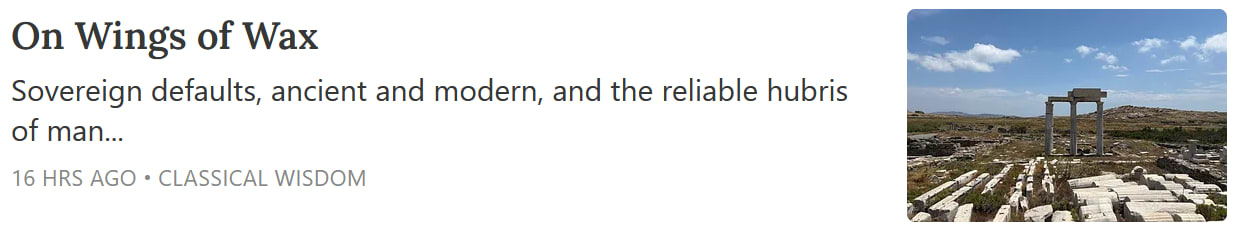
  2. C – Heraclitus (On Wings of Wax)

  3. B – Parthia (Jews vs Rome Podcast)

  4. A – Pericles (On Wings of Wax)

  5. D – Thetis (The God Who Has to Go to Work)

  6. B – Culture and religion (Jews vs Rome Podcast)

  7. C – The Shield of Achilles (The God Who Has to Go to Work)

  8. A – The Metamorphoses (A Very Virgilian Thanksgiving)

The Wisdom Scale🏛️

0 - 2 correct: Apprentice of the Muses 🎶
You’ve stepped into the great hall of learning, where every scroll is a new adventure. Keep wandering—there’s wisdom around every marble column.

3 - 4 correct: Library Dweller of Alexandria 📚
You know your way around the ancient world well enough to avoid the labyrinth’s minotaur. With a bit more study, you’ll be debating with philosophers in no time.

5 - 6 correct: Fellow of the Lyceum 🌿
Your grasp of history and myth is sharp and measured. Plato would nod approvingly, and Socrates would surely stop you for questions. Many, many questions.

7 - 8 correct: Oracle of Delphi 🏺
You dwell among poets, historians, and philosophers. Scrolls pile high around you as inspiration flows freely. You are a beacon of cultured insight.

So, how did it go? As always, let us know in the comments below!

All the best,

Sean Kelly

Managing Editor

Classical Wisdom

- Enlace a artículo -

Más info en https://ift.tt/gYjFHeN / Tfno. & WA 607725547 Centro MENADEL (Frasco Martín) Psicología Clínica y Tradicional en Mijas. #Menadel #Psicología #Clínica #Tradicional #MijasPueblo

*No suscribimos necesariamente las opiniones o artículos aquí compartidos. No todo es lo que parece.
René Guénon El-Faqru 


L’Esotérisme islamique

Par René Guénon

Source : Cahiers du Sud, août-septembre 1935, p 37.

L’être contingent peut être défini comme celui qui n’a pas en lui-même sa raison suffisante ; un tel être, par conséquent, n’est rien par lui-même, et rien de ce qu’il est ne lui appartient en propre. Tel est le cas de l’être humain, en tant qu’individu, ainsi que de tous les êtres manifestés, en quelque état que ce soit, car, quelle que soit la différence entre les degrés de l’Existence universelle, elle est toujours nulle au regard du Principe. Ces êtres, humains ou autres, sont donc, en tout ce qu’ils sont, dans une dépendance complète vis-à-vis du Principe « hors duquel il n’y a rien, absolument rien qui existe »[1] ; c’est dans la conscience de cette dépendance que consiste proprement ce que plusieurs traditions désignent comme la « pauvreté spirituelle ».

En même temps, pour l’être qui est parvenu à cette conscience, celle-ci a pour conséquence immédiate le détachement à l’égard de toutes les choses manifestées, car il sait dès lors que ces choses aussi ne sont rien, que leur importance est rigoureusement nulle par rapport à la Réalité absolue. Ce détachement, dans le cas de l’être humain, implique essentiellement et avant tout l’indifférence à l’égard des fruits de l’action, telle que l’enseigne notamment la Bhagavad-Gîtâ, indifférence par laquelle l’être échappe à l’enchaînement indéfini des conséquences de cette action : c’est l’« action sans désir » (nishkâma Karma), tandis que l’« action avec désir » (sakâma Karma) est l’action accomplie en vue de ses fruits.

 Par là, l’être sort donc de la multiplicité ; il échappe, suivant les expressions  employées  par  la  doctrine  taoïste,  aux  vicissitudes  du  « courant des formes », à l’alternance des états de « vie » et de « mort », de « condensation » et de « dissipation » [2], passant de la circonférence de la « roue cosmique » à son centre, qui est désigné lui-même comme « le vide  (le non-manifesté) qui unit les rayons et en fait une roue » [3]. « Celui qui est arrivé au maximum du vide, dit aussi Lao-tseu, celui-là sera fixé solidement dans le repos… Retourner à sa racine (c’est-à-dire au Principe à la fois origine première et fin dernière de tous les êtres), c’est entrer dans l’état de repos » [4]. « La paix dans le vide, dit Lie-tseu, est un état indéfinissable ; on ne la prend ni ne la donne ; on arrive à s’y établir »[5]. Cette « paix dans le vide », c’est la « grande paix »(Es-Sakînah) de l’ésotérisme musulman[6], qui est en elle-même la « présence divine » au centre de l’être, impliquée par l’union avec le Principe, qui ne peut effectivement s’opérer qu’en ce centre même. « A celui qui demeure dans le non-manifesté, tous les êtres se manifestent… Uni au Principe, il est en harmonie, par lui, avec tous les êtres. Uni au Principe, il connaît tout par les raisons générales supérieures, et n’use plus, par conséquent, de ses divers sens, pour connaître en particulier et en détails. La vraie raison des choses est invisible, insaisissable, indéfinissable, indéterminable. Seul, l’esprit rétabli dans l’état de simplicité parfaite peut l’atteindre dans la contemplation profonde » [7].

 La « simplicité », expression de l’unification de toutes les puissances de l’être, caractérise le retour à l’ « état primordial » ; et l’on voit ici toute la différence qui sépare la connaissance transcendante du sage, du savoir ordinaire et « profane ». Cette « simplicité », c’est aussi ce qui est désigné ailleurs comme l’état d’ « enfance » (en sanscrit bâlya), entendu naturellement au sens spirituel, et qui, dans la doctrine hindoue, est considéré comme une condition préalable pour l’acquisition de la connaissance par excellence. Ceci rappelle les paroles similaires qui se trouvent dans l’Évangile : « Quiconque ne recevra point le Royaume de Dieu comme un enfant, n’y entrera point. » [8] « Tandis que vous avez caché ces choses aux savants et aux prudents, vous les avez révélées aux simples et aux petits » [9]. « Simplicité » et « petitesse » sont ici, au fond, des équivalents de la « pauvreté », dont il est si souvent question aussi dans l’Évangile, et qu’on comprend généralement fort mal : « Bienheureux les pauvres en esprit, car le Royaume des Cieux leur appartient ».[10]

 Cette « pauvreté » (en arabe el-faqru) conduit, suivant l’ésotérisme musulman, à el-fanâ, c’est-à-dire à l’ « extinction » du « moi » [11] ; et, par cette « extinction », on atteint la « station divine » (el-maqâmul-ilahi), qui est le point central où toutes les distinctions inhérentes aux points de vue extérieurs sont dépassées, où toutes les oppositions ont disparu et sont résolues dans un parfait équilibre. « Dans l’état primordial, ces oppositions n’existaient pas. Toutes sont dérivées de la diversification des êtres (inhérente à la manifestation contingente comme elle), et de leurs contacts causés par la giration universelle (c’est-à-dire par la rotation de la « roue cosmique » autour de son axe). Elles cessent d’emblée d’affecter l’être qui a réduit son moi distinct et son mouvement particulier à presque rien.[12]»

 Cette réduction du « moi distinct », qui finalement disparaît en se résorbant en un point unique, est la même chose que el-fanâ, et aussi que le « vide » dont il a été question plus haut ; il est d’ailleurs évident, d’après le symbolisme de la roue, que le « mouvement » d’un être est d’autant plus réduit que cet être est plus rapproché du centre. « Cet être n’entre plus en conflit avec aucun être, parce qu’il est établi dans l’infini, effacé dans l’indéfini[13]. Il est parvenu et se tient au point de départ des transformations, point neutre où il n’y a pas de conflits. Par concentration de sa nature, par alimentation de son esprit vital, par rassemblement de toutes ses puissances, il s’est uni au principe de toutes les genèses. Sa nature étant entière (totalisée synthétiquement dans l’unité principielle), son esprit vital étant intact, aucun être ne saurait l’entamer. » [14]

 La  « simplicité »  dont  il a été question plus haut correspond à l’unité « sans dimension » du point primordial, auquel aboutit le mouvement de retour vers l’origine. « L’homme absolument simple fléchit par sa simplicité tous les êtres…si bien que rien ne s’oppose à lui dans les six régions de l’espace, que rien ne lui est hostile, que le feu et l’eau ne le blesse pas. » [15] En effet, il se tient au centre, dont les six directions sont issues par rayonnement, et où elles viennent, dans le mouvement de retour, se neutraliser deux à deux, de sorte que, en ce point unique, leur triple opposition cesse entièrement, et que rien de ce qui en résulte ou s’y localise ne peut atteindre l’être qui demeure dans l’unité immuable. Celui-ci ne s’opposant à rien, rien non plus ne saurait s’opposer à lui, car l’opposition est nécessairement une relation réciproque, qui exige deux termes en présence, et qui, par conséquent, est incompatible avec l’unité principielle ; et l’hostilité, qui n’est qu’une suite ou une manifestation extérieure de l’opposition, ne peut exister à l’égard d’un être qui est en dehors et au-delà de toute opposition. Le feu et l’eau, qui sont le type des contraires dans le « monde élémentaire », ne peuvent le blesser, car, à vrai dire, ils n’existent même plus pour lui en tant que contraires, étant rentrés, en s’équilibrant et se neutralisant l’un l’autre par la réunion de leurs qualités apparemment opposées, mais réellement complémentaires, dans l’indifférenciation de l’éther primordial.  

 Ce point central, par lequel s’établit, pour l’être humain, la communication avec les états supérieurs ou « célestes », est aussi la « porte étroite » du symbolisme évangélique, et l’on peut dès lors comprendre ce que sont les « riches » qui ne peuvent y passer : ce sont les êtres attachés à la multiplicité, et qui, par suite, sont incapables de s’élever de la connaissance distinctive à la connaissance unifiée. Cet attachement, en effet, est directement contraire au détachement dont il a été question plus haut, comme la richesse est contraire à la pauvreté, et il enchaîne l’être à la série indéfinie des cycles de manifestation[16]. L’attachement à la multiplicité est aussi, en un certain sens, la « tentation » biblique, qui, en faisant goûter à l’être le fruit de l’« Arbre de la Science du bien et du mal », c’est-à-dire de la connaissance duelle et distinctive des choses contingentes, l’éloigne de l’unité centrale originelle et l’empêche d’atteindre le fruit de l’ « Arbre de Vie » ; et c’est bien par là, en effet, que l’être est soumis à l’alternance des mutations cycliques, c’est-à-dire à la naissance et à la mort. Le parcours indéfini de la multiplicité est figuré précisément par les spires du serpent s’enroulant autour de l’arbre qui symbolise l’ « Axe du Monde »: c’est le chemin des « égarés » (ed-dâllîn), de ceux qui sont dans l’« erreur » au sens étymologique de ce mot, par opposition au « chemin droit » (es–sirâtul-mustaqîm), en  ascension verticale suivant l’axe même, dont il est parlé dans la première sûrat du Qorân. [17]

 « Pauvreté », « simplicité », « enfance », ce n’est là qu’une seule et même chose, et le dépouillement que tous ces mots expriment[18] aboutit à une « extinction » qui est, en réalité, la plénitude de l’être, de même que le « non-agir » (wou-wei) est la plénitude de l’activité, puisque  c’est  de là que sont dérivées toutes les activités particulières : «  Le  Principe est toujours non-agissant, et cependant tout est fait par lui » [19].  L’être qui est ainsi arrivé au point central a réalisé par là même l’intégralité de l’état humain : c’est l’ « homme véritable » (tchenn-jen) du Taoïsme, et lorsque, partant de ce point pour s’élever aux états supérieurs, il aura accompli la totalisation parfaite de ses possibilités,  il  sera  devenu  l’ « homme divin »  (cheun-jen),  qui  est l’ « Homme Universel » (el-Insânul-Kâmil) de l’ésotérisme musulman. Ainsi, on peut dire que ce sont les « riches » au point de vue de la manifestation qui sont véritablement les « pauvres » au regard du Principe, et inversement ; c’est ce qu’exprime encore très nettement cette parole de l’Évangile : « Les derniers seront les premiers, et les premiers seront les derniers » ; ([20]) et nous devons constater à cet égard, une fois de plus, le parfait accord de toutes les doctrines traditionnelles, qui ne sont que les expressions diverses de la Vérité une.


Mesr, 11 – 12 rabî awal 1349 H (Mûlid En-Nabi.)                                                                                                               

René Guénon

Article paru initialement dans Le voile d’Isis, octobre 1930, p174-721.

Repris dans le recueil posthume

Aperçus sur l’ésotérisme islamique et le Taoïsme,

Al Faqru, chap. IV.


[1]  Mohyiddin ibn Arabi, Risâlatul-Ahadiyah.

[2]  Aristote, dans un sens semblable, dit « génération » et « corruption ».

[3]Tao-te-King, XI

[4]Tao-te-King, XVI

[5]  Lie-tseu, I.

[6]  Voir le chapitre La Guerre et la Paix dans Le Symbolisme de la Croix.

[7] Lie-tseu, IV.

[8]  Luc, XVIII, 17.

[9] Matthieu, XI, 25 ; Luc, X, 21.

[10] Matthieu, V, 2

[11] Cette « extinction » n’est pas sans analogie, même quant au sens littéral du terme qui la désigne, avec le Nirvâna de la doctrine hindoue ; au-delà de el-fanâ il y a encore Fanâ el-fanâi, l’« extinction de l’extinction » qui correspond de même au Parinirvâna.

[12] Tchouang-tseu, XIX.

[13] La première de ces deux expressions se rapporte à la « personnalité » et la seconde à l’« individualité ».

[14] Ibid. La dernière phrase se rapporte encore aux conditions de l’ « état primordial » : c’est ce que la tradition judéo-chrétienne désigne comme l’immortalité de l’homme avant la « chute », immortalité recouvrée par celui qui, revenu au « Centre du Monde », s’alimente à l’ « Arbre de Vie ».

[15] Lie-tseu, II.  

[16] C’est le samsâra bouddhique, la rotation indéfinie de la « roue de vie » dont l’être doit se libérer pour atteindre le Nirvâna.

[17] Ce « chemin droit » est identique au Te ou « Rectitude » de Lao-tseu, qui est la direction qu’un être doit suivre pour que son existence soit selon la « Voie » (Tao), ou, en d’autres termes, en conformité avec le Principe.


[18] C’est le « dépouillement des métaux » dans le symbolisme maçonnique.

[19] Tao-te-King, XXXVII

[20] Matthieu, XX, 16.


 Vous pouvez retrouver la publication d’origine sur le site RetroNews ici.

The post René Guénon El-Faqru  first appeared on Conscience Soufie.

- Enlace a artículo -

Más info en https://ift.tt/gYjFHeN / Tfno. & WA 607725547 Centro MENADEL (Frasco Martín) Psicología Clínica y Tradicional en Mijas. #Menadel #Psicología #Clínica #Tradicional #MijasPueblo

*No suscribimos necesariamente las opiniones o artículos aquí compartidos. No todo es lo que parece.

sábado, 29 de noviembre de 2025

On Wings of Wax


Dear Classical Wisdom Reader,

Something a little different today…

You see, I am a very happily married woman, despite being married to a writer. In the same vein as Aristophanes or Socrates, dear husband has a tendency stir hornets’ nest, poke meandering bears, and irritate other aggressors, like politicians and hypocrites…. but fortunately he always does it with his characteristic wit and charm (hence, still happily married).

Moreover, as a life long companion, we have traveled and discussed together all the great works that we dedicate our time to in these humbles pages. So while today’s piece—written by said husband, Joel Bowman—is a distinct departure from our usual Classical Wisdom fare, its inspiration from the ancient world is unmistakable. Bridging timeless lessons with the far more modern challenges we face today, Joel reveals just how closely the past still shadows the present.

So please enjoy a fascinating –and at times darkly humorous– meditation on debt, decline, and the eternal lessons history tries (in vain) to teach.

All the best,

Anya Leonard
Founder and Director
Classical Wisdom

On Wings of Wax

Joel Bowman with today’s Note From the End of the World: Syros, Greece...

“Avoid debt; it is a grievous plague upon the house.”

~ Hesiod, from Works and Days (c. 700 BC)

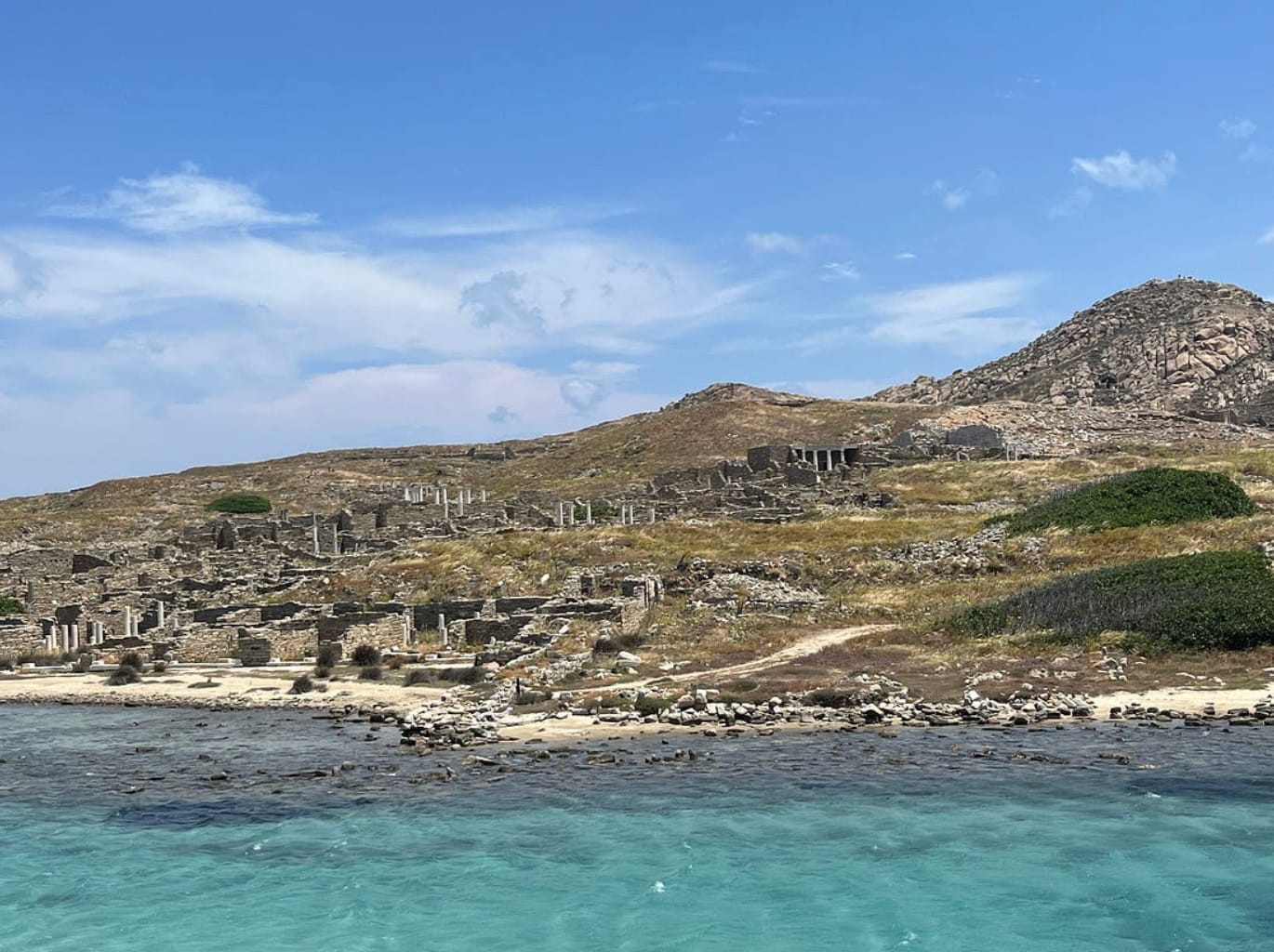
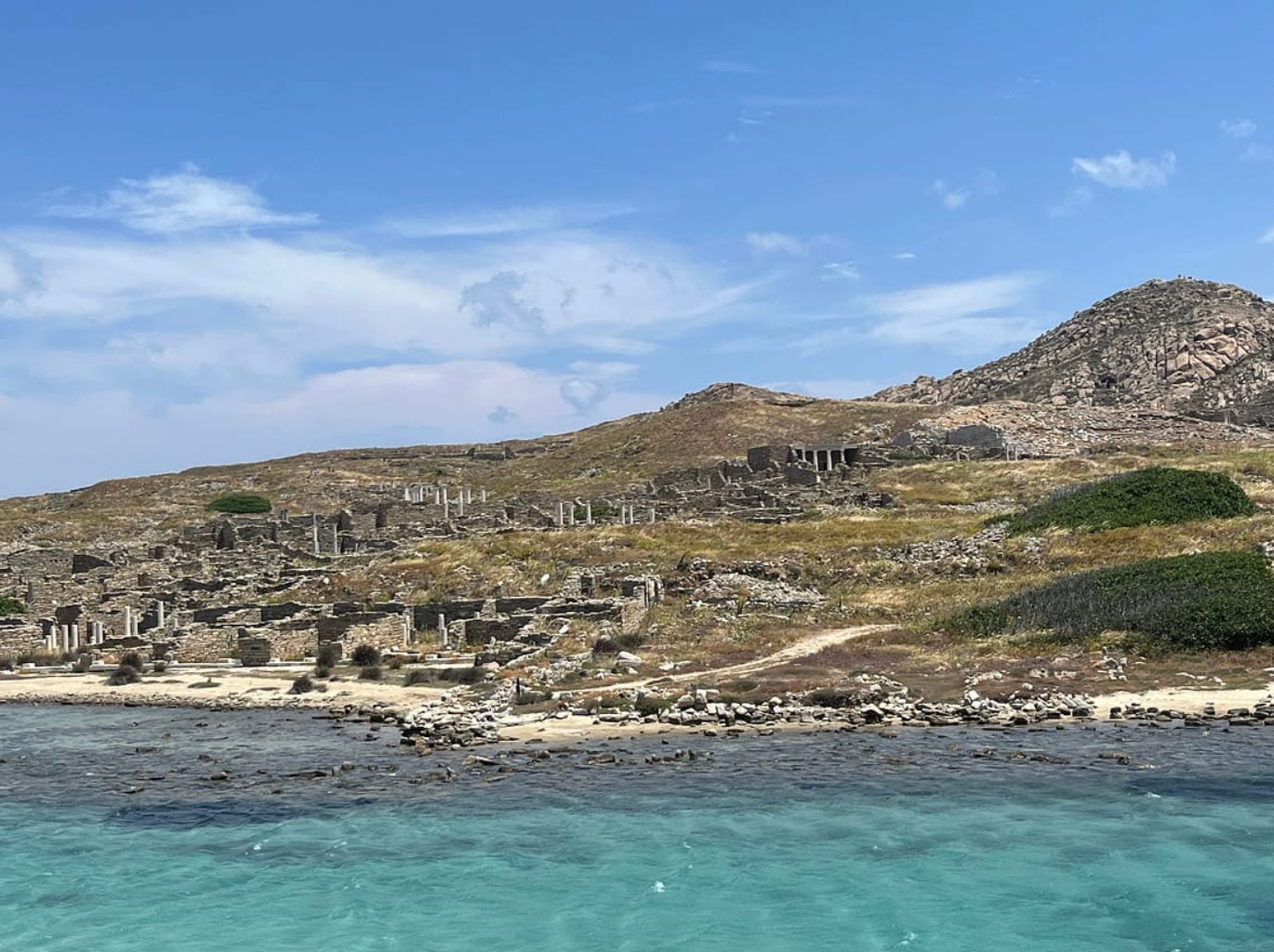
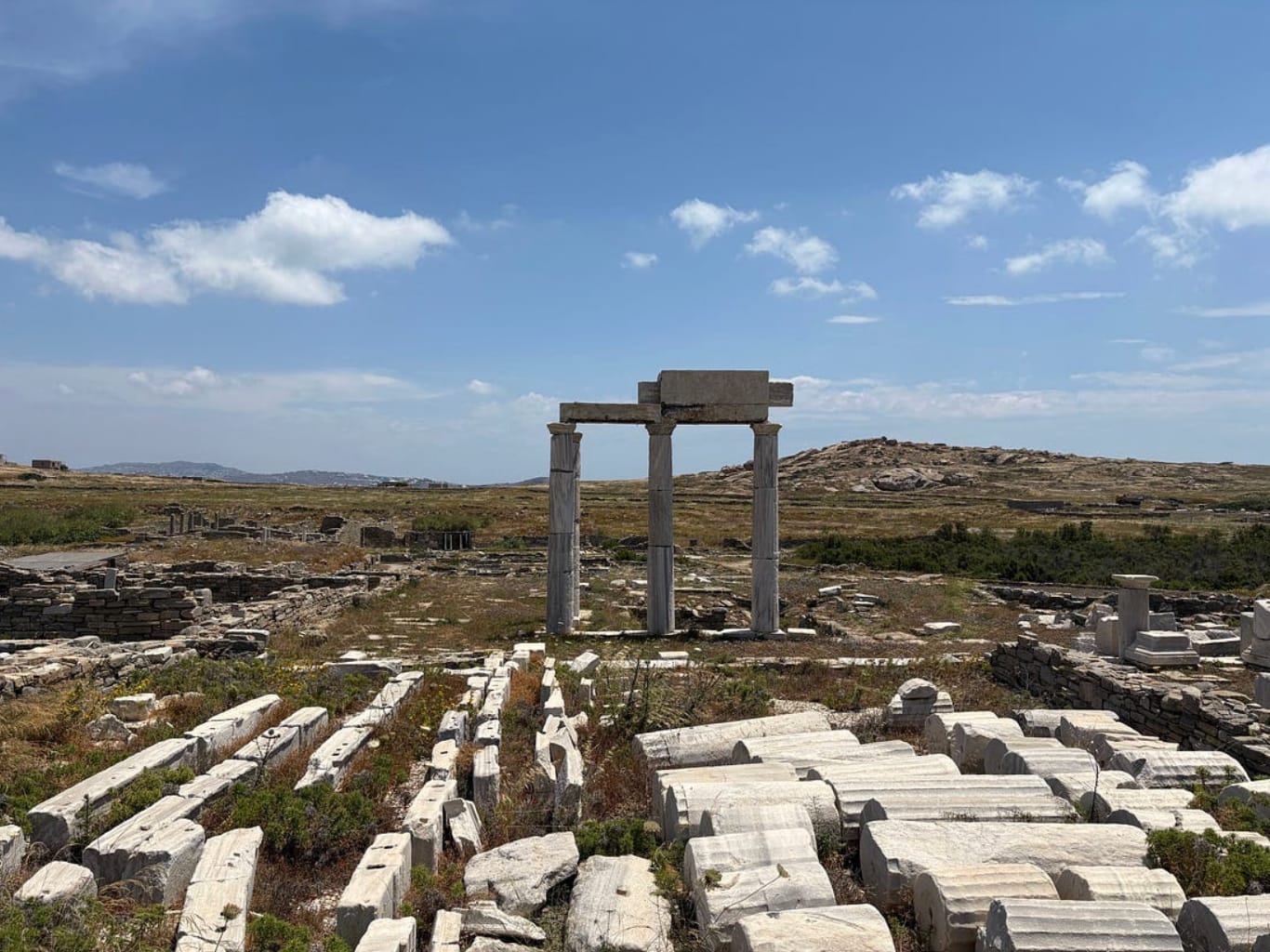
(Approaching the ancient Island of Delos, home of the Delian League, and scene of the world’s first “sovereign debt default.” Photo: Anya Leonard)

“Change is the only constant,” observed the pre-Socratic philosopher, Heraclitus, more than two and a half millennia ago.

Clever fellow, that ol’ Ephesian. But even if “no man ever steps in the same river twice,” history does tend to rhyme. The tale of sovereign debt defaults, that tragi-comic play in which Greece has earned a recurring, sometimes starring role, provides a useful example.

Dear readers will recognize the timely subject as Modern Man, blind to the lessons of history, marches down that all-too familiar road to serfdom. The latest, from USA Today...

The U.S. government’s gross national debt – the total amount of money owed its creditors and other financial obligations – hit a record high of more than $38 trillion in October, the Treasury Department reported.

That translates to about $111,000 of debt per person in the United States, says the Peter G. Peterson Foundation, a think tank on fiscal policy.

The debt, which jumped $1 trillion in just 82 days from its previous record of $37 trillion on Aug. 2, is expected to keep rising, according to the Congressional Budget Office.

The CBO’s long-term outlook predicts the debt, “boosted by sustained deficits, will grow far beyond any previously recorded level over the next 30 years.”

What does this portend for the fate of the American Empire? Let us return to our historical example...

Much editorial ink has been spilled describing the ongoing cycles of economic crisis in Greece, the jewel of the Aegean. (Our guess is that much more will be spilled before it is over… should that day ever actually arrive.) Certainly, shirking one’s debt is nothing new for the Hellens.

Share

Indeed, history’s first recorded “sovereign debt default” occurred on the island of Delos, historical centerpiece of the Cyclades archipelago and mythological birthplace of Apollo. (We made a pilgrimage to the “floating island” earlier this year, as part of a surprise birthday celebration for Dear Wife, Anya Leonard, who runs the wildly popular Classical Wisdom Substack.)

(There’s a lot of ruin in an empire… and plenty of empires in ruins. Photo: Anya)

Historically, as today, the tiny island produced very little of real world value… thus making it the ideal meeting place for the bloviating congresses of the ancient Delian League. Leto, mythological daughter of Titans Coeus and Phoebe, beseeched the island while searching for a birthplace for her twins, Artemis and Apollo:

Delos, if you would be willing to be the abode of my son Phoebus Apollo and make him a rich temple -; for no other will touch you, as you will find: and I think you will never be rich in oxen and sheep, nor bear vintage nor yet produce plants abundantly. But if you have the temple of far-shooting Apollo, all men will bring you hecatombs and gather here, and incessant savour of rich sacrifice will always arise, and you will feed those who dwell in you from the hand of strangers; for truly your own soil is not rich.

~ Homeric Hymn to Delian Apollo 51-60

And so it was that, for a time, the Temple flourished… until the wealth residing therein became too alluring for the many hands grabbing at it.

In the years following the end of the Persian Wars, a dozen or so municipalities drew loans from the Temple of Delos, the Delian League capital where the vast treasures of the confederation of the Greek city-states were kept. But in 454 B.C., a few of the debtors came up short on their repayments. These defaults cost the temple dearly, inspiring Pericles to “relocate” the treasury to Athens.

Needless to say, the Hellens’ propensity for borrowing too much and repaying too little would not be bound by mere geography. Nor, it seems, by the passage of time.

The first default of the Modern Era occurred during the Greek War of Independence.

As America has spent the better part of this century discovering, military misadventures abroad can prove to be costly undertakings… even for the “winning” team.

And so it was that, while raging to throw off the yoke of Ottoman rule in 1824, the Greeks ran up debts of nearly half a million pounds… to which was added another 1.1 million pounds the following year. As the War of Independence descended into civil war, the loans went unpaid… all the while accruing interest. (It wasn’t until more than half a century later, in 1878, that the Greek government made good on the debt, which by then had reached the titanic sum of roughly 10 million pounds.)

Nevertheless, Greece did win her independence in the year 1832, an occasion she celebrated by promptly incurring still more debts, this time totaling around 60,000,000 francs, to the governments of Britain, France and Russia.

Share

That’s about the time a curious historical figure by the name of Otto Friedrich Ludwig became King of Greece. Still a minor when bequeathed the throne, the young Bavarian found himself in the difficult position of having simultaneously to satisfy his restless constituents on one hand, who demanded continuous handouts and lavish social programs, and keeping his creditors appeased on the other. No easy task, not even for a great statesman, which, by many accounts, poor Otto was not.

In the words of historian Thomas Gallant, the ruling philhellene was “neither ruthless enough to be feared, nor compassionate enough to be loved, nor competent enough to be respected.”

Payments on the loans ceased in 1843, the same year popular rebellion found its way to the Palace of Athens. Otto’s own story ended in exile and death in the year 1862, 16 years before the loans were eventually repaid and the international capital markets again reopened to the country over which he had once ruled.

The river of time might have changed course and flow, but the waters were the same. As before, lenders and borrowers took to their queer, mutually destructive arrangement like drunks to an ouzo bottle. By 1893, debts having risen to familiarly unsustainable levels, the government once again suspended payments on external debt. Five years later, under growing foreign pressure, Greece found herself beholden to a kind of Old School “Austerity Bureau,” bearing the unimaginative title of the International Committee for Greek Debt Management.

Against all natural inclination, the government managed to keep its nose clean until the Great Depression when, in 1932, it joined a queue of other countries in the now-familiar default line. This was to be the longest of the five defaults of the Modern Era and would last until 1964, more than three decades.

All in all, the Greeks have found themselves in default more often than not since becoming an independent state. Economists Reinhart and Rogoff highlighted this ignominious fact in their book, This Time Is Different: Eight Centuries of Financial Folly. Between 1800 and the crisis of 2008, according to the authors, Greece spent just over half (50.6%) of her time either in outright default or rescheduling her debt.

Needless to say, it’s been a rough ride for the ol’ Greeks, from the Golden Age of Athens to the proverbial poor house.

But who knows? Maybe this time really is different? Maybe Greece will learn to live within her means? Maybe America will abandon her profligate ways? Maybe the feds – from Athens to DC – will ditch their fiat “money” and return instead to a gold standard?

Or maybe we’ll all fly off into a golden sunset... on wings made of wax.

Stay tuned for more Notes From the End of the World...

Cheers,

Joel Bowman

P.S. But lo! What is this? A modern government bucking the reliable trend of history? One that is actually paying down its debt... running budget surpluses... and living within its means?

Could it be?

From our perch down here in Buenos Aires, Argentina, we’re watching a most peculiar experiment unfolding before our very eyes... one you won’t likely hear told on the mainstream news...

Two years ago, the long-suffering Argentine voters did something that, as far as we know, has rarely been done in history, ancient or modern. That is, they voluntarily voted to downsize their government.

And just last month, having witnessed the breathtaking turnaround in their nation’s economy – in which inflation collapsed from ~300% annually to under ~30%... and economic growth U-turned from deeply negative to the most robust in the western world – the porteños doubled down, handing the “Liberty” party here a mandate to “keep cutting.”

We’re following the story, something of an historical anomaly, in our own Substack, Notes From the End of the World.

Please note, the commentary is not for the faint of heart, as we make a point of being “equal opportunity” when it comes to calling out scoundrel politicians on both sides of the aisle. (If you are easily offended... maybe skip this one.)

But if you’re interested in following along with what we’re calling, with characteristic understatement, “The Greatest Political Experiment of Our Age,” do feel free to join us for the ride.

Right now we’re offering a “rare as an honest congressman” discount... 30% Off for Thanksgiving Weekend Only.

So if you’re into Free Markets, Free Minds and Free People, there’s never been a better time than now to join us. Offer good until Midnight, Sunday 30th...

Sign Up Here

- Enlace a artículo -

Más info en https://ift.tt/Y7pJnxs / Tfno. & WA 607725547 Centro MENADEL (Frasco Martín) Psicología Clínica y Tradicional en Mijas. #Menadel #Psicología #Clínica #Tradicional #MijasPueblo

*No suscribimos necesariamente las opiniones o artículos aquí compartidos. No todo es lo que parece.
Tenso debate sobre la existencia histórica de Jesucristo y sus apropiaciones | Pura Virtud


Con motivo del retorno del cristianismo a Occidente, sobre todo motivado por películas como Los Domingos y fenómenos como el disco Lux de Rosalía, discutimos sobre la existencia histórica de Jesucristo, su relación con el gnosticismo, su posterior reinterpretación por parte de la Iglesia Católica o del protestantismo y la apropiación de su figura por parte de algunos cultos como la masonería o el rosacrucismo. Hablamos, por lo tanto, de religión y de misterio para una época, nuestro siglo XXI, que, como dijera en su momento André Malraux, "será religiosa o no será".

- Enlace a artículo -

Más info en https://ift.tt/Y7pJnxs / Tfno. & WA 607725547 Centro MENADEL (Frasco Martín) Psicología Clínica y Tradicional en Mijas. #Menadel #Psicología #Clínica #Tradicional #MijasPueblo

*No suscribimos necesariamente las opiniones o artículos aquí compartidos. No todo es lo que parece.

LA TRADICIÓN HINDÚ EN LA PERSPECTIVA DE RENÉ GUÉNON. ANALOGÍAS CON EL HERMETISMO. Antoni Guri


LA%20TRADICI%C3%93N%20HIND%C3%9A%20EN%20


- Enlace a artículo -

Más info en https://ift.tt/Y7pJnxs / Tfno. & WA 607725547 Centro MENADEL (Frasco Martín) Psicología Clínica y Tradicional en Mijas. #Menadel #Psicología #Clínica #Tradicional #MijasPueblo

*No suscribimos necesariamente las opiniones o artículos aquí compartidos. No todo es lo que parece.
EL TIEMPO LITÚRGICO DEL ADVIENTO


Adviento%201.jpg

La esperanza de los creyentes es el lema del adviento, y el pueblo de Israel es un gran maestro de la esperanza, pues en él como en un embalse de anhelos, se remansa toda la esperanza de la humanidad.

La Iglesia recuerda la trayectoria mesiánica de este pueblo, para sostener el itinerario de su propia peregrinación por la historia.

Son tres los personajes que protagonizan esta esperanza:

·         el mismo pueblo.

·         Isaías el profeta.

·         Juan el Precursor.

Sus textos, como trompetas de un evangelio de liberación individual y social, son fuente de la celebración de estos días.

Celebra también la Iglesia esa ininterrumpida venida del Reino de Dios al mundo actual, cuya culminación litúrgica es la celebración del Nacimiento de Jesús, el Salvador.

Durante este tiempo se intensifican actitudes fundamentales de la vida cristiana: la espera atenta, la vigilancia, la fidelidad en el trabajo, la sensibilidad para descubrir y y discernir los signos de los tiempos, como manifestaciones del Dios Salvador que está viviendo con gloria.

A lo largo de estas semanas tenemos que esforzarnos por descubrir y desear eficazmente las promesas mesiánicas: la paz, la justicia, la relación fraternal, el nacimiento de un mundo nuevo desde la raíz.

El descubrimiento de la acción de Dios en nuestro tiempo despierta en el corazón de la Iglesia una ansiosa espera. Los que sabemos. Los que sabemos que la primicia de la nueva creación ya está en nuestras manos, experimentamos que aún no hemos llegado a su plenitud. Esta última etapa que deseamos alcanzar no es obra nuestra, sino don de Dios. Esperamos la consumación de este mundo, que Dios concederá gratuitamente.

El adviento nos dice que la perspectiva de la vida humana está de cara al futuro, con la esperanza puesta en la garantía del Dios de las Promesas.

De esta manera, la Iglesia vive en la historia la progresiva manifestación de Dios, alentada por el ejemplo de los que la precedieron y encaminada hacia el futuro. Tenemos la esperanza de que el Dios que ha venido ya y que ininterrumpidamente está entre nosotros, vendrá definitivamente con poder y gloria, para trasformar todas las cosas a la medida de lo cumplido en Jesucristo.

- Enlace a artículo -

Más info en https://ift.tt/Y7pJnxs / Tfno. & WA 607725547 Centro MENADEL (Frasco Martín) Psicología Clínica y Tradicional en Mijas. #Menadel #Psicología #Clínica #Tradicional #MijasPueblo

*No suscribimos necesariamente las opiniones o artículos aquí compartidos. No todo es lo que parece.

Mozart: Piano Concerto No. 27 | Maria João Pires, Sir John Eliot Gardiner, London Symphony Orchestra


Wolfgang Amadeus Mozart wrote his last piano concerto, Piano Concerto No. 27, K. 595, in January of 1791. This nuanced performance by Portuguese pianist Maria João Pires brings out both the melancholic traits and the delicacy of the work. She is accompanied by the London Symphony Orchestra led by the British conductor Sir John Eliot Gardiner on July 5, 2022 at St Luke's Church in London.

(00:00) I. Allegro
(14:31) II. Larghetto
(20:03) III. Rondo, Allegro

"All good things take time," as the saying goes. This could also apply to Wolfgang Amadeus Mozart's Piano Concerto No. 27 in B-flat major, K. 595. He had already started to work on the first two movements in 1788, but then set it aside. Three years later, in January 1791, he wrote in his private catalogue of works that the concerto had been "completed."

Wolfgang Amadeus Mozart (1756–1791), valued artistic autonomy and lived in Vienna as a freelance composer during the last years of his life. Like Ludwig van Beethoven later on, he organized recitals, known as "academies," during which he presented his own new compositions. Subscriptions were available for the concerts, which provided Mozart with a basic income.

As a businessman, Mozart may have delayed finishing his Piano Concerto No. 27 to have a better chance of getting funding. From 1788 until 1791, Austria was fighting in the Austro-Turkish war — also known as the Habsburg–Ottoman War — and money for the arts was hard to come by. Mozart's own "academies" were no longer profitable and the composer took out loans to maintain his standard of living. The first mentioned public performance of the piano concerto was in March 1791 at an academy of the clarinetist Joseph Beer. This was Mozart's last piano concerto and his last appearance as a piano soloist. On December 5, 1791, he died of an illness, heavily in debt.

The Piano Concerto No. 27 in B flat major begins light-footed and clear. In the second movement, it becomes contemplative and inward facing. In some passages, it almost seems as if the composer's thoughts were somewhere far away. This dreamy effect is highlighted by the sensitive performance of piano soloist Maria João Pires.

The rondo theme in the third movement is also the basis for Mozart's well-known song "Die Sehnsucht nach dem Frühling" ("Longing for Spring"), which he wrote shortly after the piano concerto. The song celebrates the flora and fauna of May. Perhaps it represented a glimmer of hope during a period when Mozart pushed the limits of what was possible — until his illness and eventual death.

Maria João Pires' international career began began in Brussels in 1970 when she won the international radio competition marking the 200th anniversary of Ludwig van Beethoven's birth. Since then, she has played with many renowned orchestras, such as the Berlin Philharmonic, the Chicago Symphony Orchestra and the London Symphony Orchestra. As a chamber musician, she has recorded all of Wolfgang Amadeus Mozart's piano sonatas and trios, among other works.

British conductor Sir Eliot Gardiner, an early music specialist, is also highly regarded for his interpretations of Mozart. Among other works, he has recorded all 21 of Mozart's piano concertos. He also worked with the London Symphony Orchestra on a major Mendelssohn project. The orchestra was founded in 1904 and is the oldest symphony orchestra in London.

© 2022 C Major Entertainment

Watch more concerts here: https://www.youtube.com/playlist?list=PL_SdnzPd3eBV5A14dyRWy1KSkwcG8LEey

more famous piano concertos here: https://www.youtube.com/playlist?list=PL_SdnzPd3eBU7k2TJgrgNCc9aygnNkaGZ

other great pieces by Mozart here: https://www.youtube.com/playlist?list=PL_SdnzPd3eBVMUV5tqlgIMa-NdrBs5qum

and pieces of the classical period here: https://www.youtube.com/playlist?list=PL_SdnzPd3eBX17Jic5IUJQle18jrnZAof

Subscribe to DW Classical Music: https://www.youtube.com/dwclassicalmusic

#Mozart #pianoconcerto #classicalera

- Enlace a artículo -

Más info en https://ift.tt/Y7pJnxs / Tfno. & WA 607725547 Centro MENADEL (Frasco Martín) Psicología Clínica y Tradicional en Mijas. #Menadel #Psicología #Clínica #Tradicional #MijasPueblo

*No suscribimos necesariamente las opiniones o artículos aquí compartidos. No todo es lo que parece.
¿Es posible una vida espiritual genuina hoy? ✨


✨ El viaje hacia la sabiduría continúa. Tras un primer módulo emocionante, abrimos las puertas de la segunda etapa de nuestra Formación Anual en Psicología Transpersonal y Espiritualidad.

En estos meses de invierno (diciembre y enero), nos adentraremos en el fuego de la mística y en la estructura de la ética. Mardía nos guiará de la mano de los "amigos de Dios", profundizando con valentía en la figura inmensa de San Juan de la Cruz y su dulce complicidad con Santa Teresa. Una mirada a esa espiritualidad encarnada que nos sostiene.

Por su parte, Rafa abordará una de las grandes encrucijadas de nuestro tiempo: ¿Cómo vivir una vida espiritual genuina en pleno siglo XXI, entre la modernidad y la postmodernidad? Exploraremos si el camino pasa por la tradición, la síntesis o una nueva perspectiva, compartiendo además un método práctico de crecimiento interior desarrollado tras 20 años de experiencia clínica y personal.

Además, en este vídeo os contamos novedades sobre nuestro encuentro presencial en Madrid y nuestra participación en las jornadas de Zaragoza.

🔹 Toda la información e inscripciones del curso aquí: https://psicologiayespiritualidad.com/cursos/formacion-psicologia-transpersonal-y-espiritualidad/

(Si te perdiste el Módulo 1, aún puedes inscribirte a la formación completa y acceder a todas las grabaciones y materiales).

00:00 Inicio y despedida del Módulo 1
00:55 ¿De qué trata el Módulo 2? Mística y Ética
01:30 San Juan de la Cruz y Santa Teresa (Mardía)
02:15 Espiritualidad en el Siglo XXI y Tradición (Rafa)
03:30 Un método práctico tras 20 años de experiencia
05:10 Comunidad, Diploma y Encuentro en Madrid
06:00 Jornadas en Zaragoza y despedida

#PsicologiaTranspersonal #Espiritualidad #SanJuanDeLaCruz #CrecimientoPersonal #PsicologiaTranspersonal #Espiritualidad #CrecimientoInterior #Sabiduria #Mistica #SanJuanDeLaCruz #SantaTeresa #Consciencia #RafaMillan #MardiaHerrero #FilosofiaDeVida

Contacto: millangarciarafa@gmail.com (recibo tantos mensajes que no siempre puedo responder, sé muy conciso, por favor, ¡gracias!)

Y si quieres, síguenos en
Instagram:
https://www.instagram.com/rafa__millan/
https://twitter.com/rafamillang
@rafamilang
E instagram
O en mi web profesional:
http://www.madridpsicologia.com

Y, si lo tienes a bien, suscríbete, aquí (es gratis y no tiene contraprestación, sólo apoyas el canal!):
https://www.youtube.com/user/ShihabMadrid?sub_confirmation=1

Arte: www.dianasalem.com

👨‍🏫 Rafa Millán (Madrid, 1976), es psicólogo (licenciado por la Universidad Autónoma de Madrid), filósofo (máster en la Universidad Complutense de Madrid), escritor (Cómo ser Sufí y morir en el intento, ed. Guante Blanco; Sobre las enfermedades mentales, ed. Manuscritos; Diario de un cocainómano, ed. Temas de Hoy), y colaborador habitual en prensa y medios desde 2001. Psicólogo sanitario (con su propia consulta desde 2008). Practicante del sufismo desde 2007. Dirige talleres de psicología y encuentros y meditaciones sufíes. Ha sido ilusionista profesional. Creador del canal de YouTube “Psicología y Espiritualidad” junto a su mujer, la escritora Mardía Herrero. Es padre de 5 hijos.

👩‍🏫 Marta Herrero Gil, Mardía (Madrid, 1981), escritora y profesora, es Doctora en Literatura, Máster en Ciencias de las Religiones, Licenciada en Historia (Premio Extraordinario Fin de Carrera) y en Filología. Ha publicado 39 semanas y media. Un embarazo sufí (Mandala, 2016), y El paraíso de los escritores ebrios (Amargord, 2007), es articulista en la revista del Instituto Cervantes Rinconete, donde ha publicado más de 60 artículos, de los cuales 13 versan sobre la vida y la obra de Santa Teresa; y colabora en otros medios académicos y divulgativos. Participa en charlas y encuentros para hablar de sufismo, mística cristiana (en especial sobre santa Teresa), teorías del imaginario y maternidad sagrada. Ha dado clases de Literatura en la Universidad Complutense.

También puedes interesarte por los últimos libros de Marta Herrero o de Rafa Millán:

📘 Peregrina:
https://amzn.to/392lup3

📙 Cómo ser Sufí y Morir en el intento:
https://amzn.to/30g2n6T

📗 Cómo Santa Teresa Me Acompañó al Sufismo
https://amzn.to/2YKTnVy

📘 39 Semanas y media. Un embarazo Sufi:
https://amzn.to/2JtjtXS

📙 Diario de un Cocainómano
https://amzn.to/2Ga0CPE

CÓMO SER SUFÍ Y MORIR EN EL INTENTO: https://youtu.be/GwNjZhe8eFI

- Enlace a artículo -

Más info en https://ift.tt/Y7pJnxs / Tfno. & WA 607725547 Centro MENADEL (Frasco Martín) Psicología Clínica y Tradicional en Mijas. #Menadel #Psicología #Clínica #Tradicional #MijasPueblo

*No suscribimos necesariamente las opiniones o artículos aquí compartidos. No todo es lo que parece.
viernes, 28 de noviembre de 2025

CONVERSACIONES EN LA NIEBLA: Lilith 3. Hipersexualización, OnlyFans y Pérdida de Habilidades Humanas


¡Una nueva entrega de "Conversaciones en la Niebla" de Plural 21! En esta tercera parte de nuestra charla sobre Lilith, nos adentramos en una crítica exploración de las narrativas oficiales, la ingeniería social contemporánea y el análisis de fenómenos digitales que redefinen la sociedad actual.

Comenzamos la conversación con una revisión crítica de la campaña de vacunación (COVID y gripe) y la narrativa oficial que se promueve en los medios de comunicación hegemónicos. Analizamos un dato demoledor: la propia prensa del régimen admite que solo uno de cada cuatro sanitarios se vacuna. Este hecho, en lugar de incentivar, siembra la duda. Nos preguntamos si estas noticias están diseñadas para intensificar la polaridad entre grupos (provacunas y antivacunas) y afianzar al disidente en su postura, siendo parte de una compleja operación de ingeniería social. Si tres de cada cuatro personas que tienen el conocimiento médico no se inoculan, ¿qué implicaciones tiene esto para el resto de la población?.

El segundo gran bloque se centra en el auge y la verdadera naturaleza del negocio de OnlyFans. Explicamos cómo la plataforma, que nació con la idea de apoyar a artistas y creadores (músicos, pintores) con solo un 20% de comisión para la plataforma , se ha transformado en un gigante del porno bajo demanda. Desvelamos la analogía con la estafa del tarot telefónico, donde se busca alargar el tiempo y la suscripción en lugar de ofrecer un servicio directo. Lo más preocupante es el sistema de agencias de modelos que gestionan las cuentas, montan campañas y, en muchos casos, emplean community managers masculinos para chatear con los suscriptores, creando una fantasía de conexión personal que es completamente falsa. El negocio no es el arte, es la hipersexualización y la explotación del deseo a gran escala, con OnlyFans facturando miles de millones en comisiones. Un fenómeno que se disparó con el confinamiento.

Finalmente, reflexionamos sobre la pérdida de capacidades humanas fundamentales en la era de la inteligencia artificial y la dependencia tecnológica. Mencionamos la pérdida de la capacidad de orientación por el uso constante de GPS/TomTom y la atrofia de la capacidad artística o creativa debido a herramientas de IA. Esto se relaciona con el condicionamiento social: la masificación en la sociedad moderna "arrasa" al individuo , llevándolo a entregar su criterio al colectivo, al Estado y a las ideologías. También abordamos cómo la propaganda nos ha llevado a identificar la primera cita automáticamente con una potencial relación sexual, un síntoma de la hipersexualización de nuestra cultura. Conectamos con la necesidad de reconectar con el niño interior para saber lo que realmente nos gusta y queremos.

Un análisis imprescindible para los socios, simpatizantes y cualquier persona crítica con la sociedad del control y la manipulación mediática. ¡No te pierdas esta conversación disidente!

Grabado el 1 de septiembre del 2025

Recuerda que te puedes hacer socio de Plural 21 en https://plural-21.org/alta-nuevos-socios
Si quieres hacer alguna aportación a Plural 21 ahora puedes hacerlo a través de diferentes sistemas:
- BIZUM. En la opción "Donación a una ONG" utiliza el código: 07672
- Paypal. Al final de cada video, aparece un código QR que lleva a un enlace de Paypal donde podéis hacer la donación que os parezca oportuno
- A través de Youtube podéis: utilizar la herramienta "Gracias/Thanks" de Youtube
- a la vieja usanza: podéis hacer una transferencia a Plural-21 Caixa d’Enginyers cuenta nº ES55 3025 0004 3514 3326 6836

- Enlace a artículo -

Más info en https://ift.tt/zKMP4Ys / Tfno. & WA 607725547 Centro MENADEL (Frasco Martín) Psicología Clínica y Tradicional en Mijas. #Menadel #Psicología #Clínica #Tradicional #MijasPueblo

*No suscribimos necesariamente las opiniones o artículos aquí compartidos. No todo es lo que parece.
LA TORAH ES UN NOMBRE DE DIOS


La sorprendente insistencia en el estudio de la Torah por parte de los cabalistas puede resultar incomprensible a aquellos que no saben que es precisamente en las escrituras sagradas donde Dios se deja entrever con más facilidad. De ahí quizás la idea de que “toda la Torah es un nombre de Dios”, idea que si bien no fue ajena a los cabalistas de Girona, particularmente a Azriel y Najmánides, donde más claramente la vemos expresada es en el Zohar.

En el Zohar (III-80b) podemos leer:

ואורייתא קדושה אתקרי דכתיב כי קדוש אני יי’ ודא אורייתא שמא קדישא עלאה וע»ד

“la Torah se denomina sagrada, como está escrito: «pues yo soy santo, el Eterno» (Levítico XIX1 y 2). Y se refiere a la Torah, que es un nombre sagrado supremo”, y así es».

Y en el Zohar (III-176a) podemos leer:                                       

כמה עלאין פתגמי אורייתא כמה יקירין אינון תאיבין אינון לעילא תאיבין אינון לכלא בגין דאינון שמא קדישא וכל מאן דאשתדל באורייתא אשתדל בשמא קדישא ואשתזיב מכלא אשתזיב בעלמא דין אשתזיב בעלמא דאתי. ת»ח כל מאן דאשתדל באורייתא אחיד באילנא דחיי כיון דאחיד ביה בכלא אחיד דכתיב עץ חיים היא למחזיקים בה וגו’

“Cuán sublimes son las palabras de la Torah, cuán preciosas son; anheladas son en lo alto, anheladas son por todos, porque ellas son el nombre santo. Y todo aquel que se ocupa en la Torah se ocupa en el nombre santo, y se salva de todo; se salva en este mundo, se salva en el mundo venidero. Ven y ve: todo aquel que se ocupa en la Torah se aferra al Árbol de la Vida; y puesto que se aferra a él, se aferra a todo, como está escrito: Árbol de vida es para los que se aferran a ella, etc”.

En otros lugares leemos que la Torah es un Nataf (נטף), un bálsamo. Si sumamos la guematria de nataf (נטף), 139 a la de Torah (תורה), 611, obtenemos 750, o se la guematria de Shem Kaddosh (שם קדוש), “nombre sagrado”.

JULI PERADEJORDI

- Enlace a artículo -

Más info en https://ift.tt/zKMP4Ys / Tfno. & WA 607725547 Centro MENADEL (Frasco Martín) Psicología Clínica y Tradicional en Mijas. #Menadel #Psicología #Clínica #Tradicional #MijasPueblo

*No suscribimos necesariamente las opiniones o artículos aquí compartidos. No todo es lo que parece.
La Inseparabilidad del Uno


electric-field-imaging.jpg

PRÓLOGO: Desde tiempos inmemoriales, la mente humana ha buscado un origen, un fundamento último que explique la presencia de todo cuanto existe. Esta búsqueda ha tomado innumerables formas: mitos cosmogónicos, sistemas filosóficos, religiones reveladas, y silenciosas intuiciones místicas. Sin embargo, detrás de todas ellas se escucha un eco común, una vibración primera que señala hacia una verdad esencial: la realidad no comenzó, porque nunca hubo un segundo que la limitara. El fundamento de todo es Uno, no como unidad numérica, sino como indivisibilidad absoluta. Hablar del Uno es inevitablemente paradójico. No puede conocerse...

- Enlace a artículo -

Más info en https://ift.tt/zKMP4Ys / Tfno. & WA 607725547 Centro MENADEL (Frasco Martín) Psicología Clínica y Tradicional en Mijas. #Menadel #Psicología #Clínica #Tradicional #MijasPueblo

*No suscribimos necesariamente las opiniones o artículos aquí compartidos. No todo es lo que parece.

El tratado de agricultura de Ibn Luyūn


En este vídeo se muestra el trabajo de restauración del manuscrito que contiene el tratado de agricultura de Ibn Luyūn, uno de los más importantes de este tipo conservados en todo el mundo Para acceder al manuscrito digitalizado: https://ift.tt/Vq5S0jr

- Enlace a artículo -

Más info en https://ift.tt/zKMP4Ys / Tfno. & WA 607725547 Centro MENADEL (Frasco Martín) Psicología Clínica y Tradicional en Mijas. #Menadel #Psicología #Clínica #Tradicional #MijasPueblo

*No suscribimos necesariamente las opiniones o artículos aquí compartidos. No todo es lo que parece.

The God Who Has to Go to Work


Dear Classical Wisdom Reader,

It’s really not how you’d think it would be.

When you consider the Greek god of fire - whose Roman name (Vulcan) gives us the word volcano - you would expect a fearsome, terrifying figure.

But that couldn’t be further from the truth.

Yet maybe that’s why, of the whole Olympian pantheon, Hephaestus has always been a favourite of mine. Compared to the other gods he’s just so... ungodly.

You see, Hephaestus is distinctly unlike his brethren on Olympus. For one, he struggles with a painful physical impairment. Moreover, he has to undertake difficult work in his role as divine blacksmith.

Yet it’s precisely these aspects of his life which enable Hephaestus a greater connection to humanity than the other gods.

So in today’s article, we’re taking a deeper look at the god of the forge, and the small but absolutely crucial role he plays in Homer’s Iliad....

Discover how his unique combination of divinity and all too human suffering tie together in one of the most astonishing and revered sequences in not just the Iliad, but all of ancient literature.

And in the end, what could be more godly than that?

All the best,

Sean Kelly

Managing Editor

Classical Wisdom


The FULL Experience Become A Member to access our archives of exclusive podcasts, e-books, magazines, in-depth articles and more!


The God Who Has to Go to Work

By Sean Kelly, Managing Editor, Classical Wisdom

Poor Hephaestus, God of fire, metal working and all things volcanos… he’s not quite like the other gods, is he?

To begin with, he is the only one to suffer from a physical impairment, and a significant one at that. Throughout the corpus of Greek myth, Hephaestus’ lameness is a key part of his iconography, and it is central to his role in Homer’s Iliad.

He’s also the only god to work! That is to actively partake in labour…physically demanding, painful labour… His job, of course, is to forge as a blacksmith. Homer continuously emphasises his pain and humiliation, both of which are quite removed from the carefree lives enjoyed by the other gods. Despite this mockery, being repeatedly represented as distinct, as an ‘other’ amongst the gods, Hephaestus remains respected for his artistic output.

The Laughing Gods

Okay, so poor Hephaestus gets made fun of from time to time… that’s not so bad, is it?

But in the ancient world, it didn’t work like that. For instance, in Euripides’ Medea, the most awful fate imaginable to the central figure is the thought that her enemies would laugh at her.

οὐ γὰρ γελᾶσθαι τλητὸν ἐξ ἐχθρῶν, φίλαι.

For it is not endurable to be laughed at by one’s enemies, friends.

Considering the extreme nature of her later actions (and for anyone who needs a recap: she murders her own children), the fact that she finds laughter so unthinkable is… well… striking. Yet, this is consistent with the Homeric code. For human warriors seeking to gain fame and renown (or as the Greeks would have it, kleos), being laughed at is an unbearable humiliation.

But let’s look at laughter.

Laughter plays a significant role in the Iliad in its designation of the separation of the worlds of the human and the divine. In Book XXI, the gods engage in battle with one another… yet it is not the earth shaking, violent confrontation that is conjured by a phrase like “Battle of the Gods”. Rather, for the gods it is ultimately a game, a distraction, that results in great laughter amongst them. The source of the humour is that the battle, ultimately, is of no consequence to them, as they are immortal.

Contrast that to the toil and sweat of the human battles, stern competitions with death as the penalty for failure!

In the world of the Iliad, laughter is a privilege for the immortal gods, not granted to the short, painful lives of mortals.

Share

So considering all this… it’s really quite important that in his first appearance in the Iliad, Hephaestus, a god, is laughed at… Indeed, it is a recurring pattern in Homer; Hephaestus is consistently shown to have a greater share in human experiences than what is normal for a god. This is emphasised further by the Hephaestus’ ‘backstory’ – aetiological myths incorporated by Homer in order to explain his ungodly wounds.

Cast from Mount Olympus

Before the beginning of the Iliad, Hephaestus is already different to the other gods. We are told in Book I of how he attempted to protect his mother Hera during a quarrel she had with Zeus, and for doing so he was thrown from Mount Olympus by Zeus, resulting in his injury to his legs. Upon hearing this story being recalled, the other gods laugh at Hephaestus in his misfortune.

Much later in Book XVIII of the Iliad, we are told that this casting from Olympus was not an isolated event. After sustaining his lameness from the first fall and following his return to Mount Olympus, his presence was deemed unbearable to his mother, leading to him being cast off Olympus again. After falling for a day and landing in Lemnos, Thetis and Eurynome functioned as his surrogate mothers for nine years.

Mount Olympus
Mount Olympus

Mount Olympus itself can be seen as a symbol of the gods’ relationship to humankind. They are distanced and removed from the pains that mark the lives of humans. That Hephaestus is thrown from Olympus twice is illustrative of him experiencing a level of suffering deeply unusual for a god, to the point that it has more in common with human experience. Of course, the other gods have the choice to leave Olympus and visit humans if they so desire, but these other sojourns of the gods are nothing like what happened to Hephaestus, twice violently cast away…

When Hephaestus recalls his time with Thetis and Eurynome, his period of healing from the painful wounds of his fall, he also speaks of the jewels he crafted for them. Clearly there is a direct connection between Hephaestus’ suffering and his creation of beautiful artworks.

The Shield of Achilles

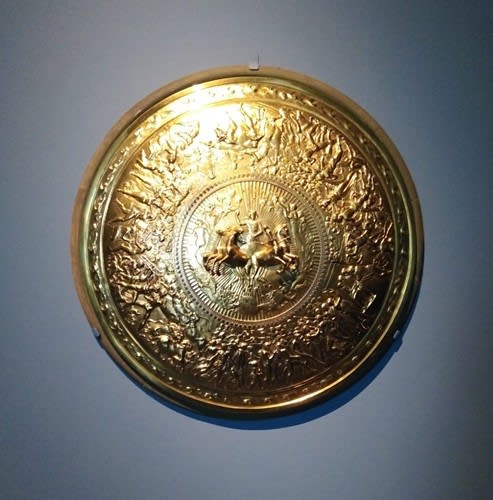
The most important action that Hephaestus takes in the Iliad is near the end of the epic. After the armor of Achilles is taken from the body of Patroclus, Hephaestus forges the Shield of Achilles at the request of Achilles’ divine mother, Thetis.

In one of the most celebrated sections of the epic, we are provided with an extended description of this shield. It features a vast panoramic view of both nature and the wide variety of human events. That so much emphasis is granted to these depictions of scenes from everyday life is significant…. Cumulatively, they represent an attempt to recreate the totality of human experiences.

Subscribe now

But the importance of the shield does not end there… Indeed, throughout the Iliad there are many “arming scenes,” wherein a character is dressed for war, and this sequence is essentially the ultimate “arming scene”. At this moment, the central heroic figure of the whole epic receives armor that reflects his true power. Not only that, but the length and detail of this scene signifies that the shield is a truly divine work of art as much as it is a divine shield.

Shield of Achilles
The Shield of Achilles by Rundell Bridge, 1822

That Hephaestus is able to create such a powerful and all-encompassing work of art is due to his particular and unusual connection to humanity. He is able to understand their experiences in a way that is truly remarkable and unusual for a god. It is only through these painful experiences that the Shield of Achilles can be forged.

Oh, poor Hephaestus… It is through his connection to humanity, and the requisite suffering that it entails, that he is able to create so much beauty and craftsmanship. He, unlike the other gods, uses his divine skills for the greater good of man. Perhaps the other deities… and indeed ourselves… can learn a bit from the old crippled smith.

- Enlace a artículo -

Más info en https://ift.tt/zKMP4Ys / Tfno. & WA 607725547 Centro MENADEL (Frasco Martín) Psicología Clínica y Tradicional en Mijas. #Menadel #Psicología #Clínica #Tradicional #MijasPueblo

*No suscribimos necesariamente las opiniones o artículos aquí compartidos. No todo es lo que parece.