
Dear Classical Wisdom Reader,
Something a little different today…
You see, I am a very happily married woman, despite being married to a writer. In the same vein as Aristophanes or Socrates, dear husband has a tendency stir hornets’ nest, poke meandering bears, and irritate other aggressors, like politicians and hypocrites…. but fortunately he always does it with his characteristic wit and charm (hence, still happily married).
Moreover, as a life long companion, we have traveled and discussed together all the great works that we dedicate our time to in these humbles pages. So while today’s piece—written by said husband, Joel Bowman—is a distinct departure from our usual Classical Wisdom fare, its inspiration from the ancient world is unmistakable. Bridging timeless lessons with the far more modern challenges we face today, Joel reveals just how closely the past still shadows the present.
So please enjoy a fascinating –and at times darkly humorous– meditation on debt, decline, and the eternal lessons history tries (in vain) to teach.
All the best,
Anya Leonard
Founder and Director
Classical Wisdom
On Wings of Wax
Joel Bowman with today’s Note From the End of the World: Syros, Greece...
“Avoid debt; it is a grievous plague upon the house.”
~ Hesiod, from Works and Days (c. 700 BC)
“Change is the only constant,” observed the pre-Socratic philosopher, Heraclitus, more than two and a half millennia ago.
Clever fellow, that ol’ Ephesian. But even if “no man ever steps in the same river twice,” history does tend to rhyme. The tale of sovereign debt defaults, that tragi-comic play in which Greece has earned a recurring, sometimes starring role, provides a useful example.
Dear readers will recognize the timely subject as Modern Man, blind to the lessons of history, marches down that all-too familiar road to serfdom. The latest, from USA Today...
The U.S. government’s gross national debt – the total amount of money owed its creditors and other financial obligations – hit a record high of more than $38 trillion in October, the Treasury Department reported.
That translates to about $111,000 of debt per person in the United States, says the Peter G. Peterson Foundation, a think tank on fiscal policy.
The debt, which jumped $1 trillion in just 82 days from its previous record of $37 trillion on Aug. 2, is expected to keep rising, according to the Congressional Budget Office.
The CBO’s long-term outlook predicts the debt, “boosted by sustained deficits, will grow far beyond any previously recorded level over the next 30 years.”
What does this portend for the fate of the American Empire? Let us return to our historical example...
Much editorial ink has been spilled describing the ongoing cycles of economic crisis in Greece, the jewel of the Aegean. (Our guess is that much more will be spilled before it is over… should that day ever actually arrive.) Certainly, shirking one’s debt is nothing new for the Hellens.
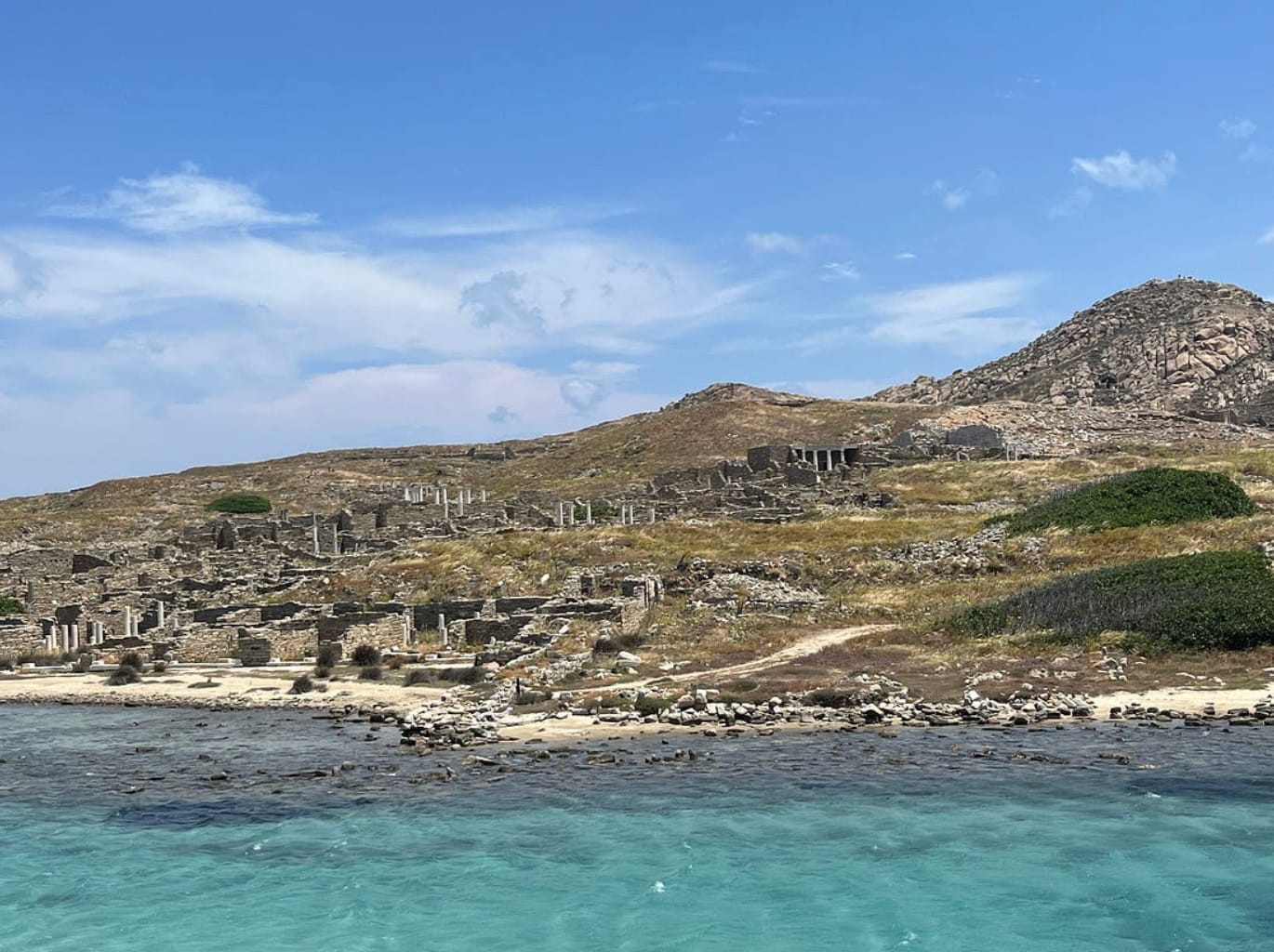
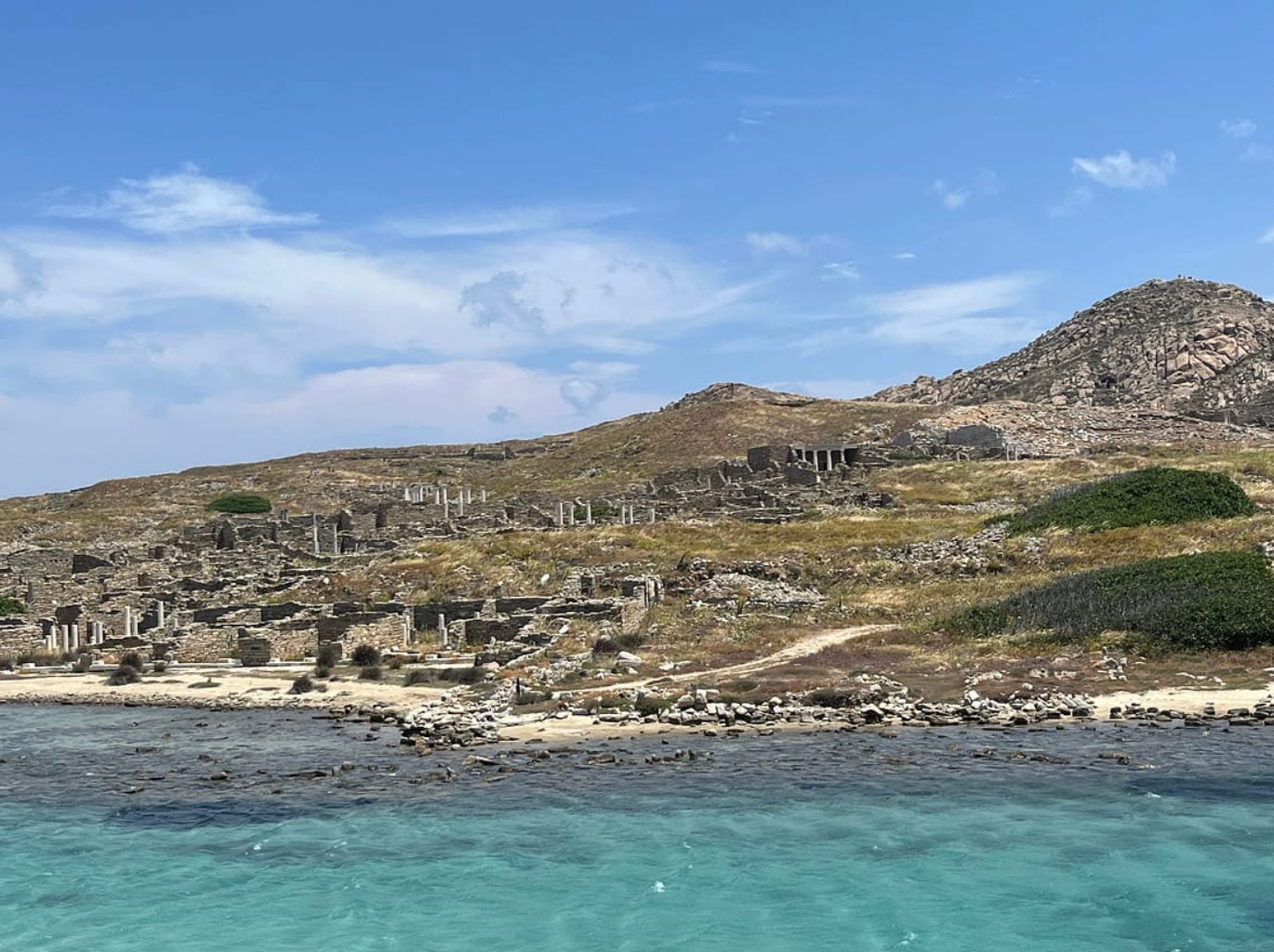
Indeed, history’s first recorded “sovereign debt default” occurred on the island of Delos, historical centerpiece of the Cyclades archipelago and mythological birthplace of Apollo. (We made a pilgrimage to the “floating island” earlier this year, as part of a surprise birthday celebration for Dear Wife, Anya Leonard, who runs the wildly popular Classical Wisdom Substack.)
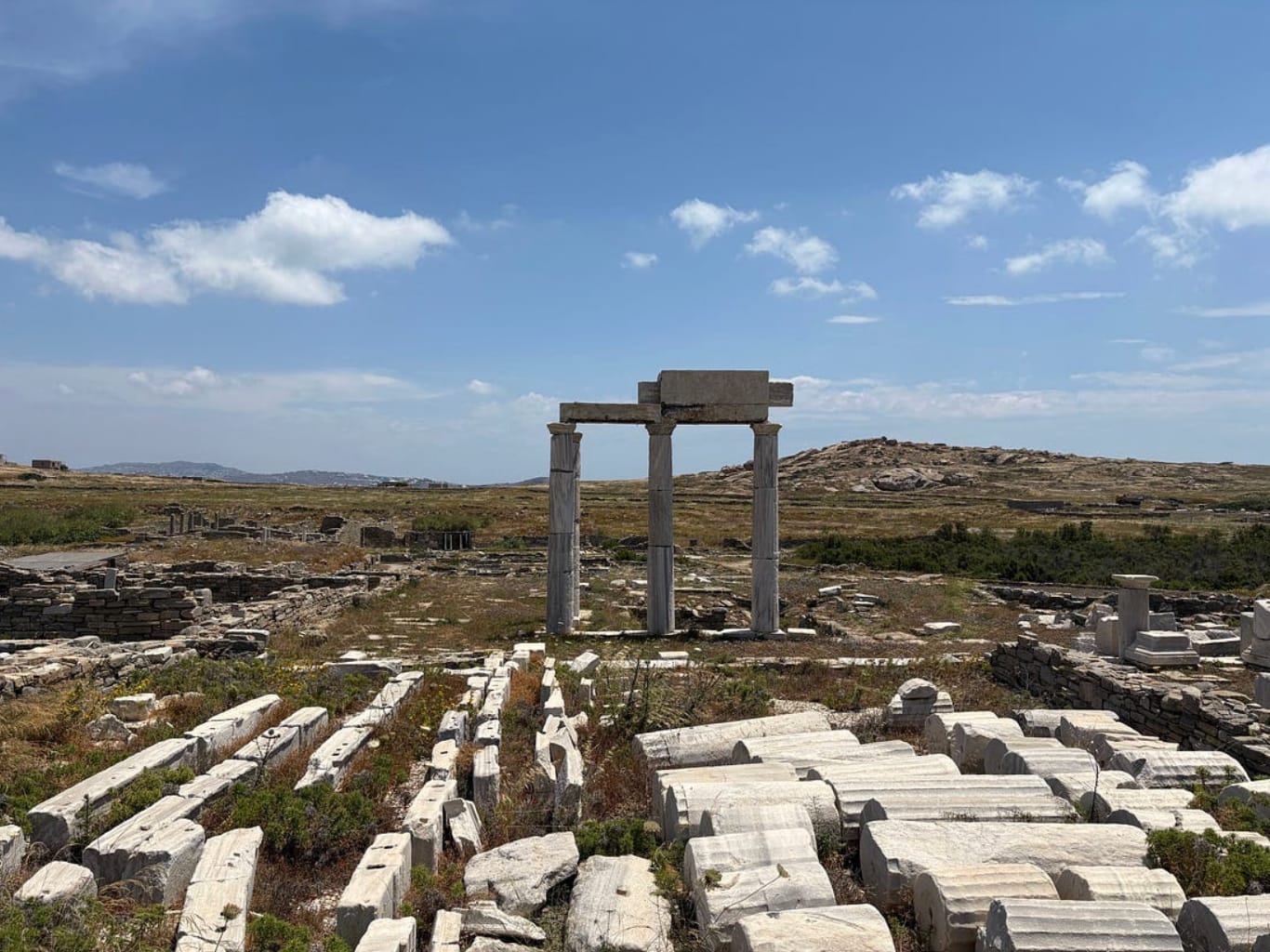
Historically, as today, the tiny island produced very little of real world value… thus making it the ideal meeting place for the bloviating congresses of the ancient Delian League. Leto, mythological daughter of Titans Coeus and Phoebe, beseeched the island while searching for a birthplace for her twins, Artemis and Apollo:
Delos, if you would be willing to be the abode of my son Phoebus Apollo and make him a rich temple -; for no other will touch you, as you will find: and I think you will never be rich in oxen and sheep, nor bear vintage nor yet produce plants abundantly. But if you have the temple of far-shooting Apollo, all men will bring you hecatombs and gather here, and incessant savour of rich sacrifice will always arise, and you will feed those who dwell in you from the hand of strangers; for truly your own soil is not rich.
~ Homeric Hymn to Delian Apollo 51-60
And so it was that, for a time, the Temple flourished… until the wealth residing therein became too alluring for the many hands grabbing at it.
In the years following the end of the Persian Wars, a dozen or so municipalities drew loans from the Temple of Delos, the Delian League capital where the vast treasures of the confederation of the Greek city-states were kept. But in 454 B.C., a few of the debtors came up short on their repayments. These defaults cost the temple dearly, inspiring Pericles to “relocate” the treasury to Athens.
Needless to say, the Hellens’ propensity for borrowing too much and repaying too little would not be bound by mere geography. Nor, it seems, by the passage of time.
The first default of the Modern Era occurred during the Greek War of Independence.
As America has spent the better part of this century discovering, military misadventures abroad can prove to be costly undertakings… even for the “winning” team.
And so it was that, while raging to throw off the yoke of Ottoman rule in 1824, the Greeks ran up debts of nearly half a million pounds… to which was added another 1.1 million pounds the following year. As the War of Independence descended into civil war, the loans went unpaid… all the while accruing interest. (It wasn’t until more than half a century later, in 1878, that the Greek government made good on the debt, which by then had reached the titanic sum of roughly 10 million pounds.)
Nevertheless, Greece did win her independence in the year 1832, an occasion she celebrated by promptly incurring still more debts, this time totaling around 60,000,000 francs, to the governments of Britain, France and Russia.
That’s about the time a curious historical figure by the name of Otto Friedrich Ludwig became King of Greece. Still a minor when bequeathed the throne, the young Bavarian found himself in the difficult position of having simultaneously to satisfy his restless constituents on one hand, who demanded continuous handouts and lavish social programs, and keeping his creditors appeased on the other. No easy task, not even for a great statesman, which, by many accounts, poor Otto was not.
In the words of historian Thomas Gallant, the ruling philhellene was “neither ruthless enough to be feared, nor compassionate enough to be loved, nor competent enough to be respected.”
Payments on the loans ceased in 1843, the same year popular rebellion found its way to the Palace of Athens. Otto’s own story ended in exile and death in the year 1862, 16 years before the loans were eventually repaid and the international capital markets again reopened to the country over which he had once ruled.
The river of time might have changed course and flow, but the waters were the same. As before, lenders and borrowers took to their queer, mutually destructive arrangement like drunks to an ouzo bottle. By 1893, debts having risen to familiarly unsustainable levels, the government once again suspended payments on external debt. Five years later, under growing foreign pressure, Greece found herself beholden to a kind of Old School “Austerity Bureau,” bearing the unimaginative title of the International Committee for Greek Debt Management.
Against all natural inclination, the government managed to keep its nose clean until the Great Depression when, in 1932, it joined a queue of other countries in the now-familiar default line. This was to be the longest of the five defaults of the Modern Era and would last until 1964, more than three decades.
All in all, the Greeks have found themselves in default more often than not since becoming an independent state. Economists Reinhart and Rogoff highlighted this ignominious fact in their book, This Time Is Different: Eight Centuries of Financial Folly. Between 1800 and the crisis of 2008, according to the authors, Greece spent just over half (50.6%) of her time either in outright default or rescheduling her debt.
Needless to say, it’s been a rough ride for the ol’ Greeks, from the Golden Age of Athens to the proverbial poor house.
But who knows? Maybe this time really is different? Maybe Greece will learn to live within her means? Maybe America will abandon her profligate ways? Maybe the feds – from Athens to DC – will ditch their fiat “money” and return instead to a gold standard?
Or maybe we’ll all fly off into a golden sunset... on wings made of wax.
Stay tuned for more Notes From the End of the World...
Cheers,
Joel Bowman
P.S. But lo! What is this? A modern government bucking the reliable trend of history? One that is actually paying down its debt... running budget surpluses... and living within its means?
Could it be?
From our perch down here in Buenos Aires, Argentina, we’re watching a most peculiar experiment unfolding before our very eyes... one you won’t likely hear told on the mainstream news...
Two years ago, the long-suffering Argentine voters did something that, as far as we know, has rarely been done in history, ancient or modern. That is, they voluntarily voted to downsize their government.
And just last month, having witnessed the breathtaking turnaround in their nation’s economy – in which inflation collapsed from ~300% annually to under ~30%... and economic growth U-turned from deeply negative to the most robust in the western world – the porteños doubled down, handing the “Liberty” party here a mandate to “keep cutting.”
We’re following the story, something of an historical anomaly, in our own Substack, Notes From the End of the World.
Please note, the commentary is not for the faint of heart, as we make a point of being “equal opportunity” when it comes to calling out scoundrel politicians on both sides of the aisle. (If you are easily offended... maybe skip this one.)
But if you’re interested in following along with what we’re calling, with characteristic understatement, “The Greatest Political Experiment of Our Age,” do feel free to join us for the ride.
Right now we’re offering a “rare as an honest congressman” discount... 30% Off for Thanksgiving Weekend Only.
So if you’re into Free Markets, Free Minds and Free People, there’s never been a better time than now to join us. Offer good until Midnight, Sunday 30th...
Más info en https://ift.tt/Y7pJnxs / Tfno. & WA 607725547 Centro MENADEL (Frasco Martín) Psicología Clínica y Tradicional en Mijas. #Menadel #Psicología #Clínica #Tradicional #MijasPueblo
*No suscribimos necesariamente las opiniones o artículos aquí compartidos. No todo es lo que parece.

No hay comentarios:
Publicar un comentario