
Dear Classical Wisdom Members,
An Important Notice before we begin: Today’s Event “How to Cope: ancient philosophies for enduring hardships” has been postponed until March 25th, 2026 due to a medical issue of our guest. If you registered, please check your email for more details.
Now… let us journey to the heart of the Tiburtine countryside…
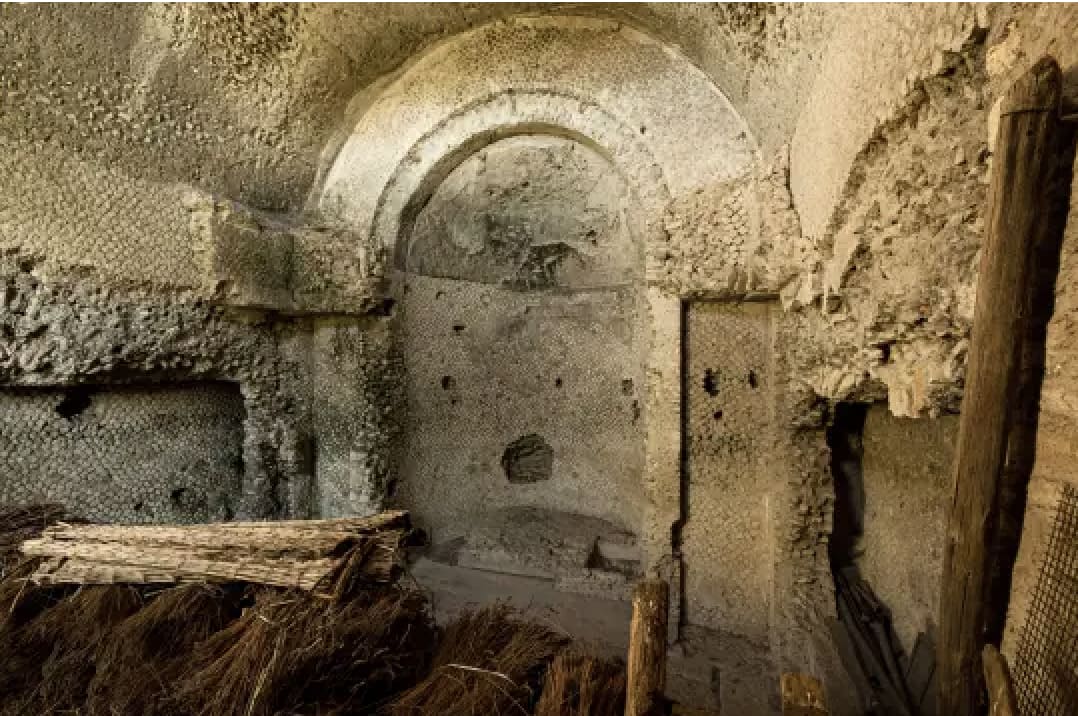
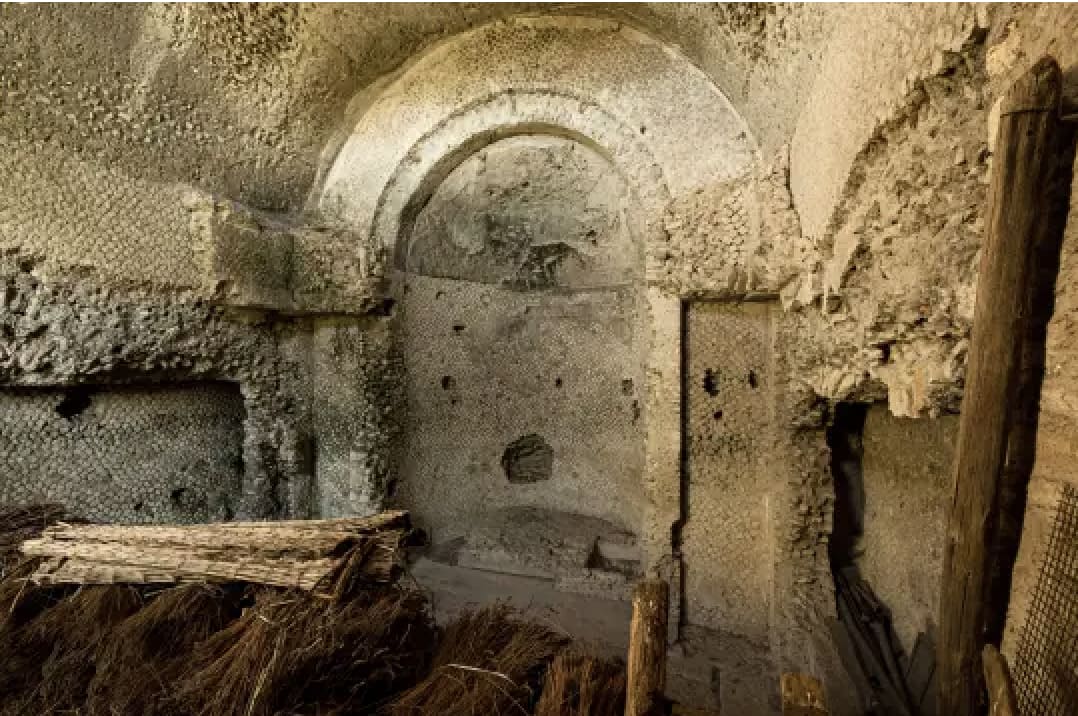
There, with a panoramic view of the historic town of Tivoli, lies the lovely church of St. Anthony of Padova, dated to 1485, as well as an ex-monastery surrounded by terraced gardens.
The Franciscan monks built these still standing structures on the Roman ruins believed to have belonged to none other than the great Poet of the Latin age of Literature: Horace.
The evidence of Horace’s era can be found in the lower level of the Villa, where a ‘Ninfeo’ or a monument consecrated to the nymphs, especially those of springs, still stands.
Of course, the region was beloved by Horace… as another villa, given to him by his patron, Maecenas, also bears the honor of his residence in nearby Licenza, Italy.
But enough of where Horace once eat his bread and rested his head…What of his life? His works? How did a man, descended from a slave, rise the ranks, command a legion, and join the glittering cirlce of Augustan poets?
Why was he one of the most influential Latin writer for many centuries and how did he come to define -right up until the 20th century- the idea of a ‘gentleman’?
Read on to enjoy today’s Member’s in-depth article on Horace’s extraordinary life as well as his immensely popular and powerful poetry…
And if you truly wish to discover one of Rome’s greatest poets and his place in the Golden Age of Latin literature, take this opportunity to read the originals!
In fact, we have a whole section dedicated to great author in our Essential Classics Hardback Anthology, a stunning collection of all the greatest ancient Greek and Roman texts in one spot.
I’m making sure to mention this today because the cut off date to receive in time for the holiday looms… indeed, if you want to give the gift of wisdom this festive season, make sure to get your copy before November 22nd.
Replace Doomscrolling with The Essential Classics and bring the ancients to your fingertips:
Many folks have asked for the table of contents - you can see all it below. Check out the poet’s Grass Is Always Greener on the Other Side, The Golden Mean and the Bore… all fantastic reads!
Make sure to get your copy at this price in time for the holidays!
Please note: Our hardback edition is currently only available at this price for US and UK readers. We hope the option to offer it further will become available soon. In the meantime, Classical Wisdom Members can enjoy the Ebook version.
Now, onto the Golden Poet of the Golden Age…
All the best,
Anya Leonard
Founder and Director
Classical Wisdom and Classical Wisdom Kids
Horace – Poet of the Golden Age
By Ed Whelan
“Mediocrity in poets has never been tolerated by either men, or gods, or booksellers.”
So wrote Horace, one of the most celebrated of all the Roman poets. He lived during the ‘Golden Age’ of Latin literature, which occurred in the last decades of the Roman Republic, and continued into the first century A.D. It was a time period when great writers such as Vergil, Livy, and others created masterpieces that have proven to be enormously influential…
And Quintus Horatius Flaccus (65-8 BC), better known as Horace, was no exception.
It is through this outstanding Latin lyric poet and satirist that we can enjoy a unique insight into Roman life and thought of the period. He also provided a vision of the world that continues to inspire readers to this day.
The life of Horace
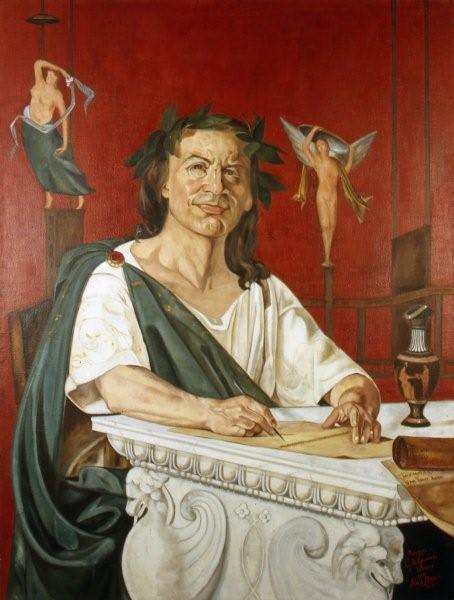
The poet was born to a freed slave who was probably originated from the highlands of central Italy. His father, whom Horace greatly respected, became a moderately successful businessman in Venusia. Horace’s family was affluent enough to send him to be educated in Rome and in about 46 BC the future poet travelled to Athens.
However, at this point his educational path took a turn. After the assassination of Julius Caesar, Greece was occupied by his assassins and so Horace joined the Republican army of Brutus and Cassius. While serving in the army, he became an officer, fought at the Battle of Philippi (42 BC) and commanded a legion. After the total defeat of Brutus and Cassius, Horace fled back to Italy.
He returned to discover that his father’s property had been confiscated by Octavian (later, better known as the first Roman Emperor, Augustus).
Más info en https://ift.tt/Q2emx17 / Tfno. & WA 607725547 Centro MENADEL (Frasco Martín) Psicología Clínica y Tradicional en Mijas. #Menadel #Psicología #Clínica #Tradicional #MijasPueblo
*No suscribimos necesariamente las opiniones o artículos aquí compartidos. No todo es lo que parece.

No hay comentarios:
Publicar un comentario