
Dear Classical Wisdom Reader,
We are doing something a little different today….
We are featuring an article by another substacker who runs a considerably more modern publication called Historical Snapshots. I asked for something ancient and, well, ancient it is.
In fact, he choose just about the most ancient you could get… right back to the very dawn of writing and the world’s very first published author.
So please enjoy this very ancient snapshot of the Akkadian priestess, Enheduanna.
All the best,
Anya Leonard
Founder and Director
Classical Wisdom
Classical Wisdom Members: This week we are bringing you extra insights from our own the ground investigations in Egypt. Check out yesterday’s issue on ancient Paint and discover just HOW colorful the ancient world was… If you aren’t a member yet, subscribe today to enjoy ALL our resources!
Enheduanna
Storytelling is one of the most profound aspects of humanity. For much of history, it has been done in spoken word and passed down similarly across generations...
But then came writing… And then the first known author... and her name was Enheduanna.
“I am Enheduanna. I am still the splendid high priestess!"
Enheduanna’s story begins sometime around 2300 BCE. While her birthplace is unknown, historians believe Enheduanna was born in Akkad, the capital of the Akkadian Empire. It was ruled by arguably the most influential person at the time, her father Sargon the Great who called himself “King of the World."
The title, while not quite humble, was not without rationale. Sargon had expanded his rule beyond Akkad and conquered much of Mesopotamia, including the Sumer region and the city of Ur in what is now southern Iraq. These campaigns are considered the creation of the world’s first empire.
To help unify these territories, Sargon appointed his daughter as High Priestess of the moon god Nanna, the patron deity of Ur. This move reflected Sargon's political wisdom because in Mesopotamia, religious and political power essentially existed as one. Cities were an extension of their patron deities, with temples at the center of civic life. Enheduanna mentions this in a hymn about Inanna, the goddess often described as the daughter of Nanna: “Good woman, inscrutable and radiant. Your rule extends from zenith to horizon.”
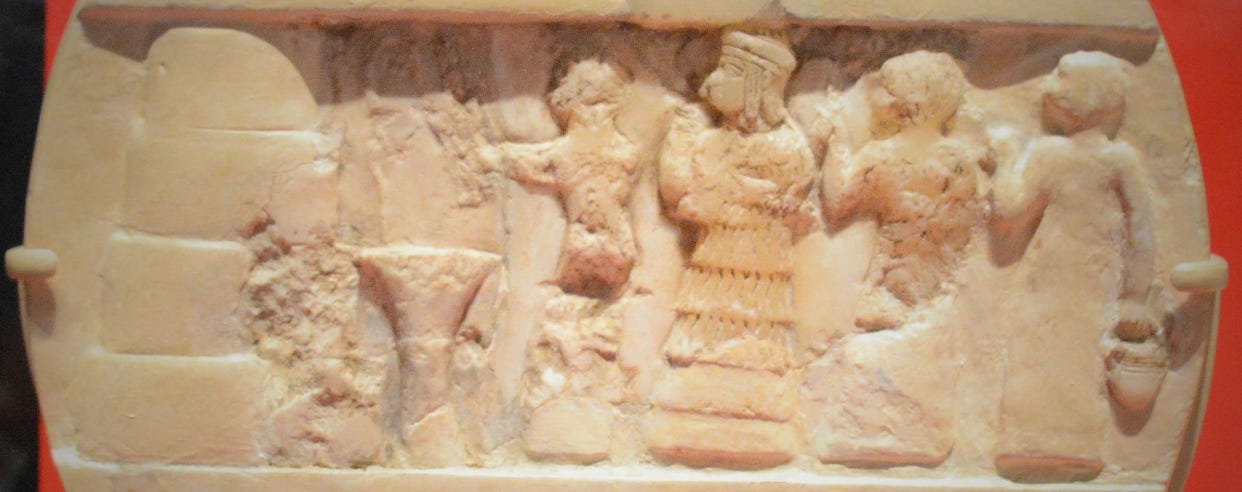
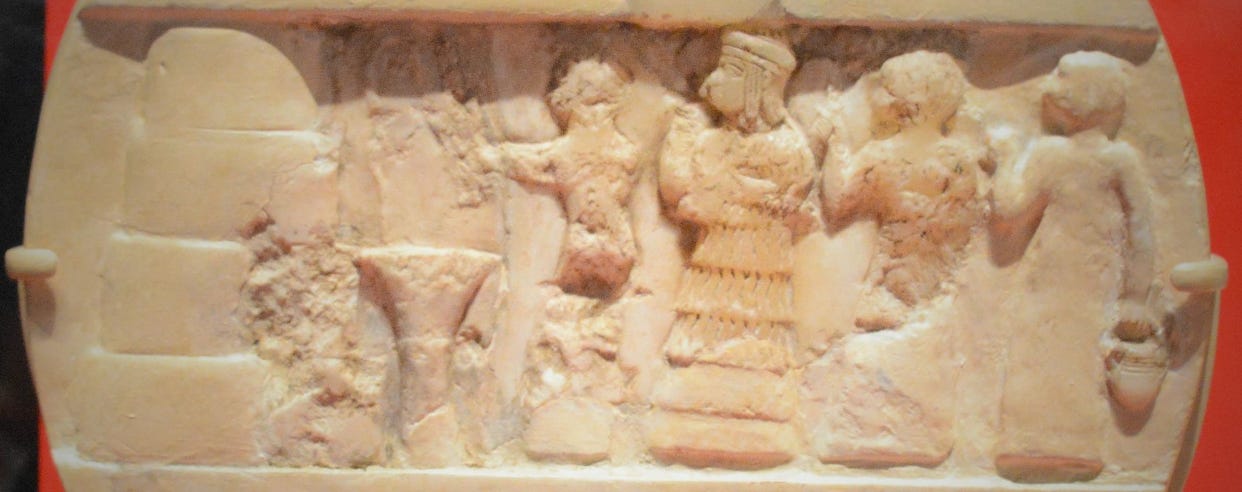
Sargon sought to assert control by placing Enheduanna into a revered Sumerian religious roles. In this regard, he was likely correct; Enheduanna's presence helped bridge the cultural divide between Akkad and Sumer. She spoke the Akkadian of her birth region, yet worshipped in Sumerian temples, honored Sumerian gods, and composed hymns in Sumerian verse. In doing so, she may have unified the regions and almost certainly help bring the cultures closer together, as her written words carved into clay tablets were distributed around the region.
What began as a political decision became something far more enduring…
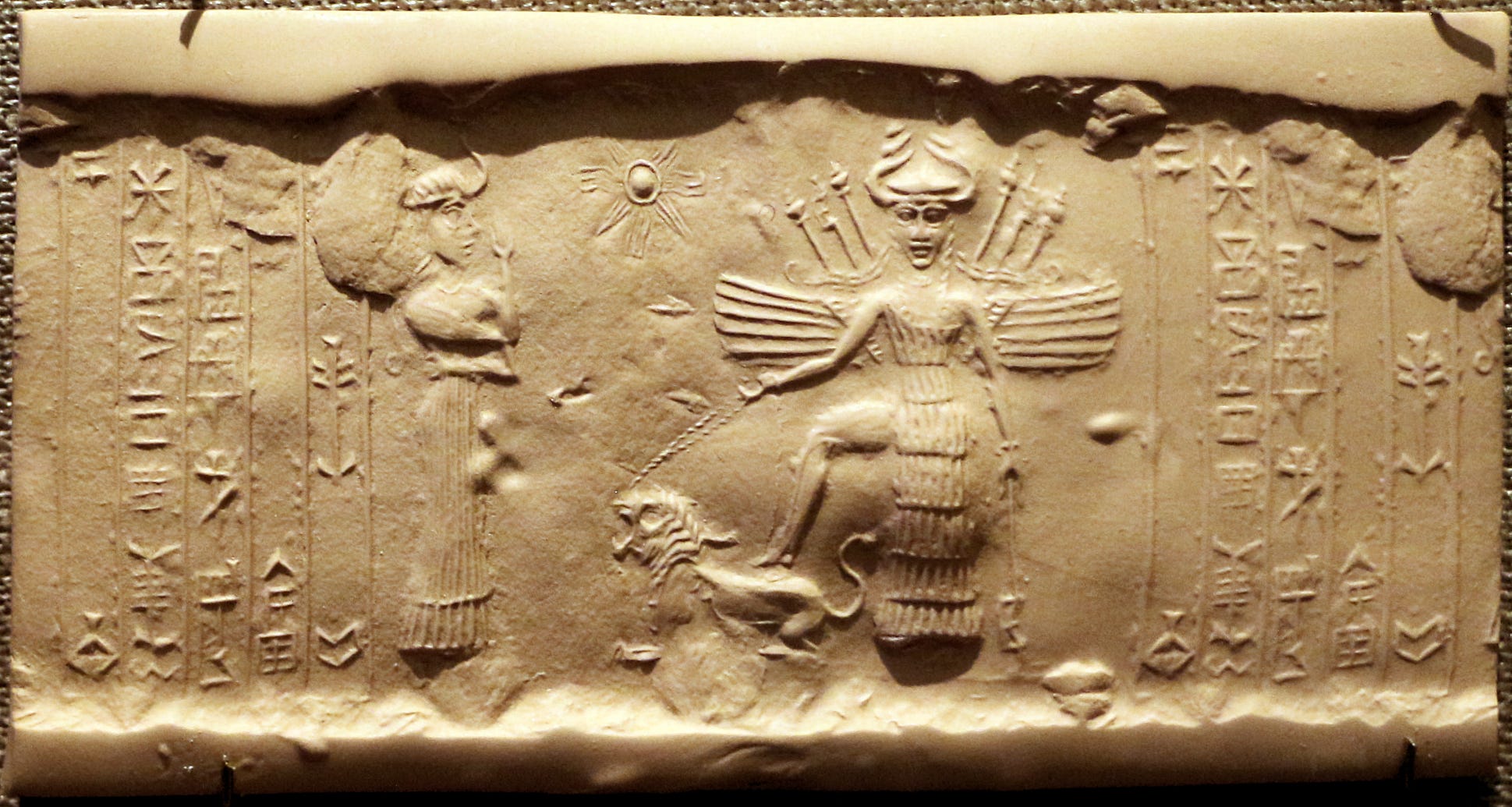
Though she holds an important distinction in history, little is known about Enheduanna's life. One of her poems does record a time of personal crisis, written after being ousted from her role, possibly during a local uprising. She describes this time, “I fled like a swallow swooping through a window. He took the crown of the high priestess from me.” And continues with, “Lovely lady of heaven. A queen astride a lion," about Inanna who comes to the rescue.
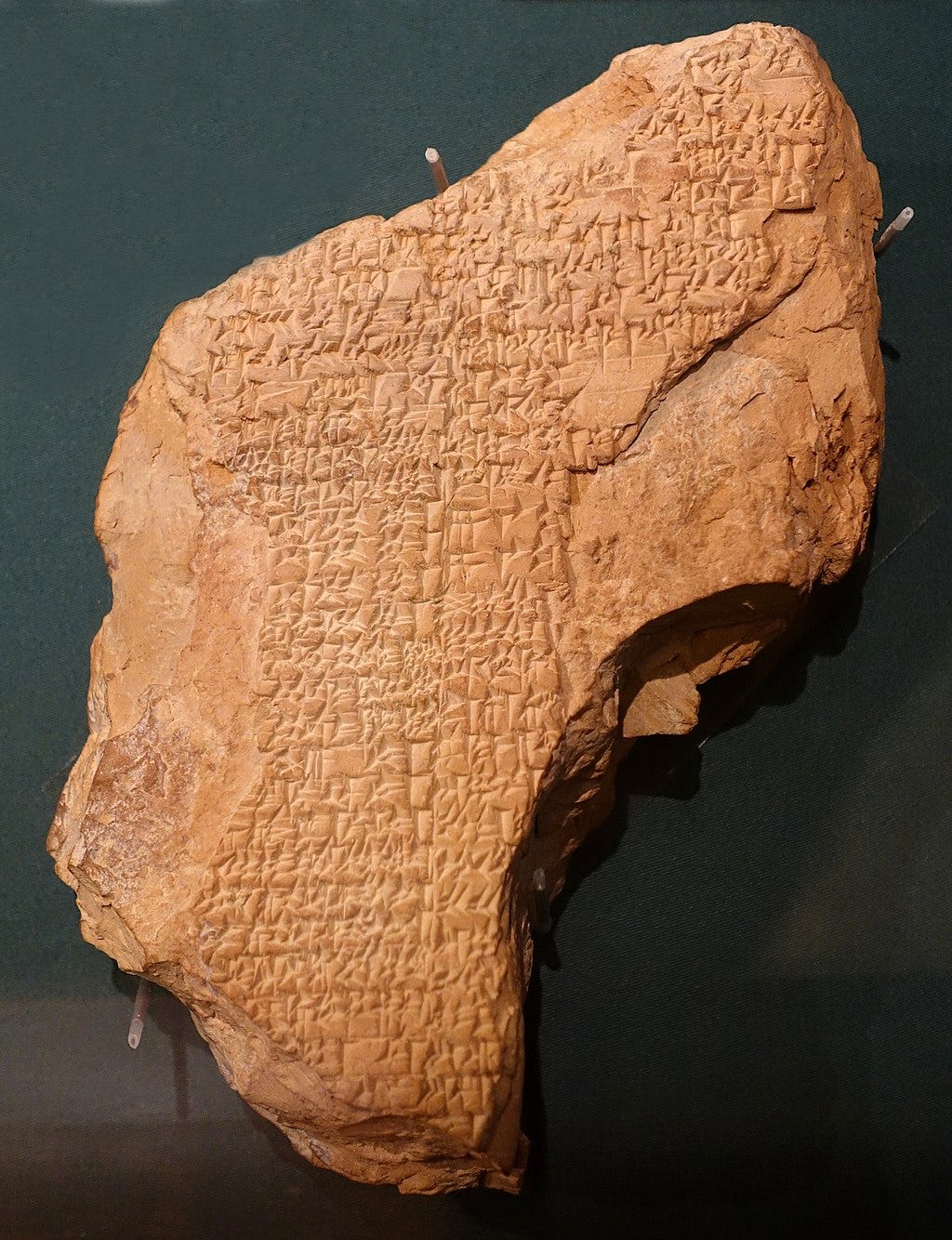
History also has no record of what Enheduanna looked like, how she laughed, or the sound of her voice when reading hymns. But we do know to some extent how she felt. Her words, like those mentioned above, are with us today after their discovery in archeological expeditions in the 1920s and 30s. Tone and story differ across the various hymns, but we can generally feel her strength and belief in the sacred and the self. Her hymns resonate vividly with awe and anguish.
Support the Classics ~ Subscribe Today
The following is one example of a poem written to Inanna:
"The pain filled
me, overwhelmed me.
Queen, lady! For you,
I have given birth to
it: what I sang to you
at dead of night, let
a lamenter repeat at
midday. For your
captive spouse and
your captive child,
your fury grows ever
greater, your heart
can find no rest."
Though many questions about her life remain, Enheduanna's words continue to live on long after she has passed.
Sources:
-
Draper, Ellen. “She Measures the Heavens and Outlines the Earth.” Lapham’s Quarterly, 21 Sept. 2021, https://www.laphamsquarterly.org/roundtable/she-measures-heavens-and-outlines-earth.
-
Ferrara, Enrica. “Enheduana: The Complete Poems of the World’s First Author.” Harvard Review, no. 59, 2021, https://www.harvardreview.org/book-review/enheduana-the-complete-poems-of-the-worlds-first-author/.
-
Jones, Sidney Babcock. “She Who Wrote: Enheduanna and Women of Mesopotamia.” The Morgan Library & Museum, 15 Mar. 2022, https://www.themorgan.org/blog/she-who-wrote-enheduanna-and-women-mesopotamia.
-
Lawler, Andrew. “Poet and Politician.” Archaeology, vol. 75, no. 6, Nov.–Dec. 2022, https://archaeology.org/issues/november-december-2022/features/akkadians-enheduanna-poet-politician/.
-
“Ur.” Wikipedia, Wikimedia Foundation, last modified 8 April 2024, https://en.wikipedia.org/wiki/Ur.
Más info en https://ift.tt/52MJCmG / Tfno. & WA 607725547 Centro MENADEL (Frasco Martín) Psicología Clínica y Tradicional en Mijas. #Menadel #Psicología #Clínica #Tradicional #MijasPueblo
*No suscribimos necesariamente las opiniones o artículos aquí compartidos. No todo es lo que parece.

No hay comentarios:
Publicar un comentario