
Dear Classical Wisdom Reader,
I think it's a record... in more ways than one.
Now I might be wrong on this, but I believe the oldest lyrics to feature in a hit rock song are in The Byrds’ 1960s hit, Turn! Turn! Turn! (To Everything There is a Season).
Taken from the Bible’s Book of Ecclesiastes (with a few minimal alterations), they offer life as a series of opposition:
A time to be born, a time to die
A time to plant, a time to reap
And of course,
A time of war, a time of peace
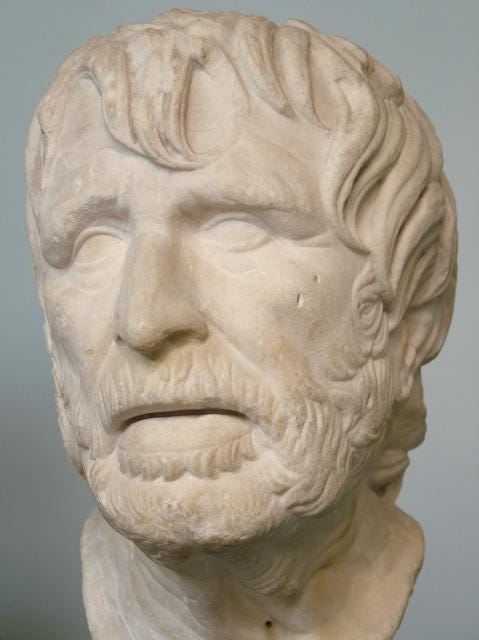
So in that spirit, while this week we've been looking at Homer, the poet of war, I thought it would be nice to round out the week with Hesiod, the poet of peace.
Hesiod was an ancient poet who was believed to be a contemporary of Homer. His poetry focused on both the difficulties and the dignity of work, and would influence generations of poets, such as Seamus Heaney.
He's also a key figure in our understanding of Greek mythology, with his work telling of the very origins of the Greek gods.
It’s all powerful stuff… It makes me wonder if there's any rock songs made from his words!
All the best,
Sean Kelly
Managing Editor
Classical Wisdom
Exclusive Excerpt Members can now access an exclusive excerpt from the highly anticipated new translation of Homer’s Odyssey by Daniel Mendelsohn!
Hesiod: The Poet of Peace
By Eldar Balta
Long before Herodotus fathered History and did his best to chronicle the past deeds of humankind, the true recorders of men and Gods were the ancient Greek poets, one of which was Hesiod.
Even though the exact time of his life is unknown, Herodotus’ estimation puts him (as well as Homer) around 400 years before Herodotus’ time, at circa 8th or 7th century BC.
It is hard to know the precise facts of Hesiod’s life, except what we know from his works. As such, we will delve into the poet of Agriculture and Peace through three important figures related to him.
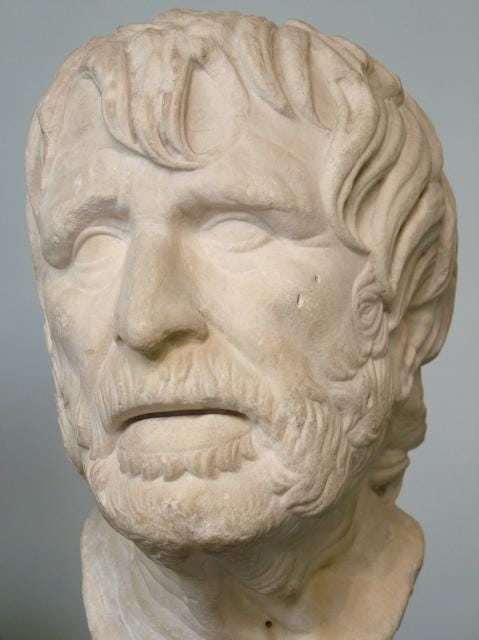
Hesiod’s Early Life
First one is his father, Dius. A native of Cyme in Aeolis (modern day western Turkey), Dius was a seafaring trader and farmer, and generally a poor man. He was forced to leave his native place and move to continental Greece, settling at Ascra near Thespiae in Boeotia (as explained by Hesiod in his “Works and Days“). Dius had two sons, Hesiod, our poet, and Perses, a loafer and prodigal descendant of a hardworking father. After their father died, his land was divided between the sons, but Perses kept the larger share by bribing the corrupt rulers of Thespiae.
It will be easy then to understand why Hesiod’s “Works and Days” revolved around not only myths and legends, but also two major moral precepts. Those are that labor is a universal virtue of Man and that he who is willing to work will always get by, both notions highly valued by the ancients. “Works and Days” also underlines advice and wisdom, emphasizing a life of honest labor, attacking laziness, corrupt rulers and the practice of injustice.
Hesiod and the Boeotian School
“Works and Days” also lays out the “Five Ages of Man”, the first extant account of the successive ages of mankind. At this point, we start noticing Hesiod’s didactic approach to poetry, chronology, and to an extent, history. The latter of which was, in comparison to Homer’s romanticized versions of past events, respected.
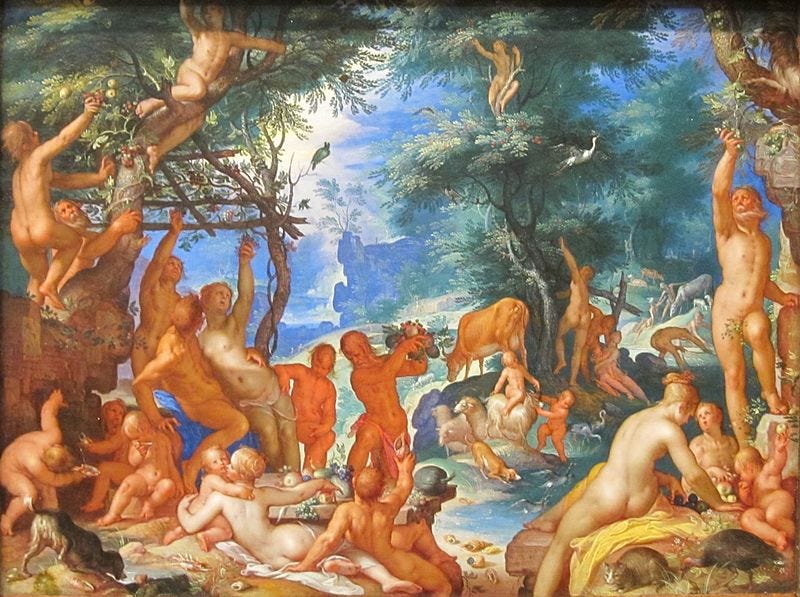
This method was later classified as the Boeotian School of epic poetry. And it was the reason, according to the historian Herodotus, why Hesiod’s retelling of the old stories in “Theogony” became, in spite of all the various different historical traditions, the definitive and accepted version that linked all Greeks in ancient times.
Ancient Rap Battle: Homer Vs. Hesiod
Homer is the third important figure of Hesiod’s, not life, but heritage. If Homer was Dr. Dre, Hesiod was Ice Cube. Homer was all about his poems. He added drama and huge characters, all while romanticizing ancient Greece to the point that every other poet wanted to do the same, with equal effect and celebrated consequences.
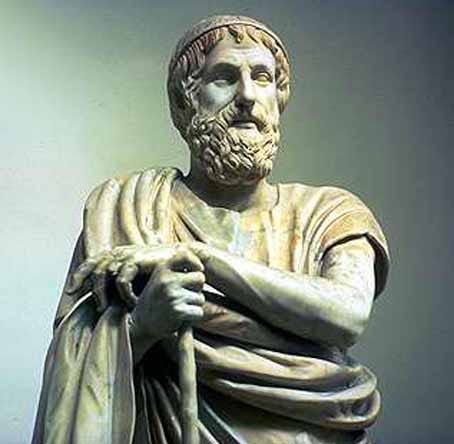
Hesiod, modest as he was, talked of ordinary life, the morality of human life, just systems and chronological order of events. Even at the moment of winning the tripod at the contest in Chalcis, Euboea, Hesiod only mentions in “Works and Days” that the only time he sailed in a ship was when he went from Aulis to Chalcis to take part in the funeral games for Amphidamas, a noble of Chalcis. Hesiod there was victorious and he dedicated the prize, a bronze tripod, to the Muses at Helicon. There was no mention of Homer.
But to realize how important both of these poets were to ancient Greece, one must look at the Legend of Certamen. It was a contest of wit and wisdom between Homer and Hesiod, where the latter emerged as the greatest. Even though there is no proof they even met each other, let alone confronted each other poetically at a contest, the fact that the legend exists is meaningful. Moreover, it is important to note why Hesiod was victorious at that apocryphal battle; his work on agriculture and peace is pronounced as more valuable than Homer’s tales of war and slaughter. And then and there, even if it was just a legend, the mic, or in this case the tripod, dropped.
Hesiod’s Death
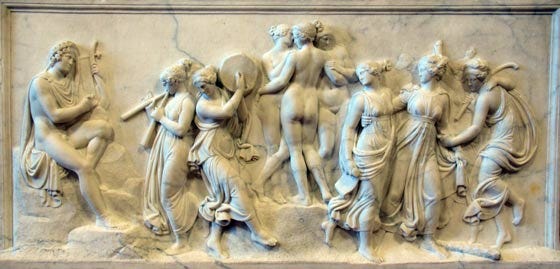
The third important figure known to be part of Hesiod’s biography is a woman. She was not the Muses of Helicon, the ones who inspired all of his works. It was also not the Pythia, the Delphic Oracle, priestess of Apollo, who warned warned Hesiod that he would die in Nemea, which caused him to flee to Locris where he was killed at the local temple to Nemean Zeus, and probably buried there. The fourth figure is the woman he fell in love with, seduced, and eventually was murdered by her brothers as a result. His body, it’s said, was cast into the sea was brought to the shore by dolphins and buried at Oenoe.
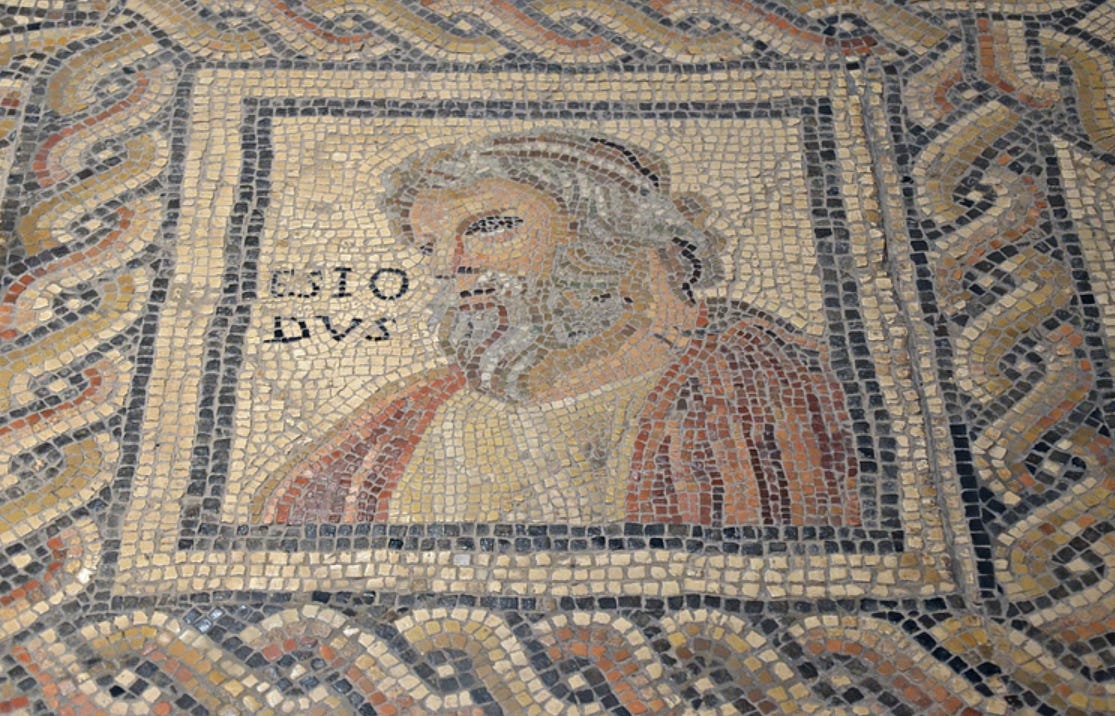
Here, we will end the story of Hesiod with a description of his final moments, an epigram by Alcaeus of Messene:
“When in the shady Locrian grove Hesiod lay dead,
the Nymphs washed his body with water from their own springs,
and heaped high his grave;
and thereon the goat-herds sprinkled offerings of milk mingled with yellow-honey:
such was the utterance of the nine Muses that he breathed forth,
that old man who had tasted of their pure springs.”
Más info en https://ift.tt/zsjfrIp / Tfno. & WA 607725547 Centro MENADEL (Frasco Martín) Psicología Clínica y Tradicional en Mijas. #Menadel #Psicología #Clínica #Tradicional #MijasPueblo
*No suscribimos necesariamente las opiniones o artículos aquí compartidos. No todo es lo que parece.

No hay comentarios:
Publicar un comentario