
Dear Classical Wisdom Member,
There are many popular misconceptions of the ancient world.
Stoicism isn’t about not feeling any feelings nor Epicureanism about instagramable food. Ancient theatre is most certainly not dry or boring and the ancient world wasn’t dominated by glimmering white temples and pale, marbled and alabaster artwork.
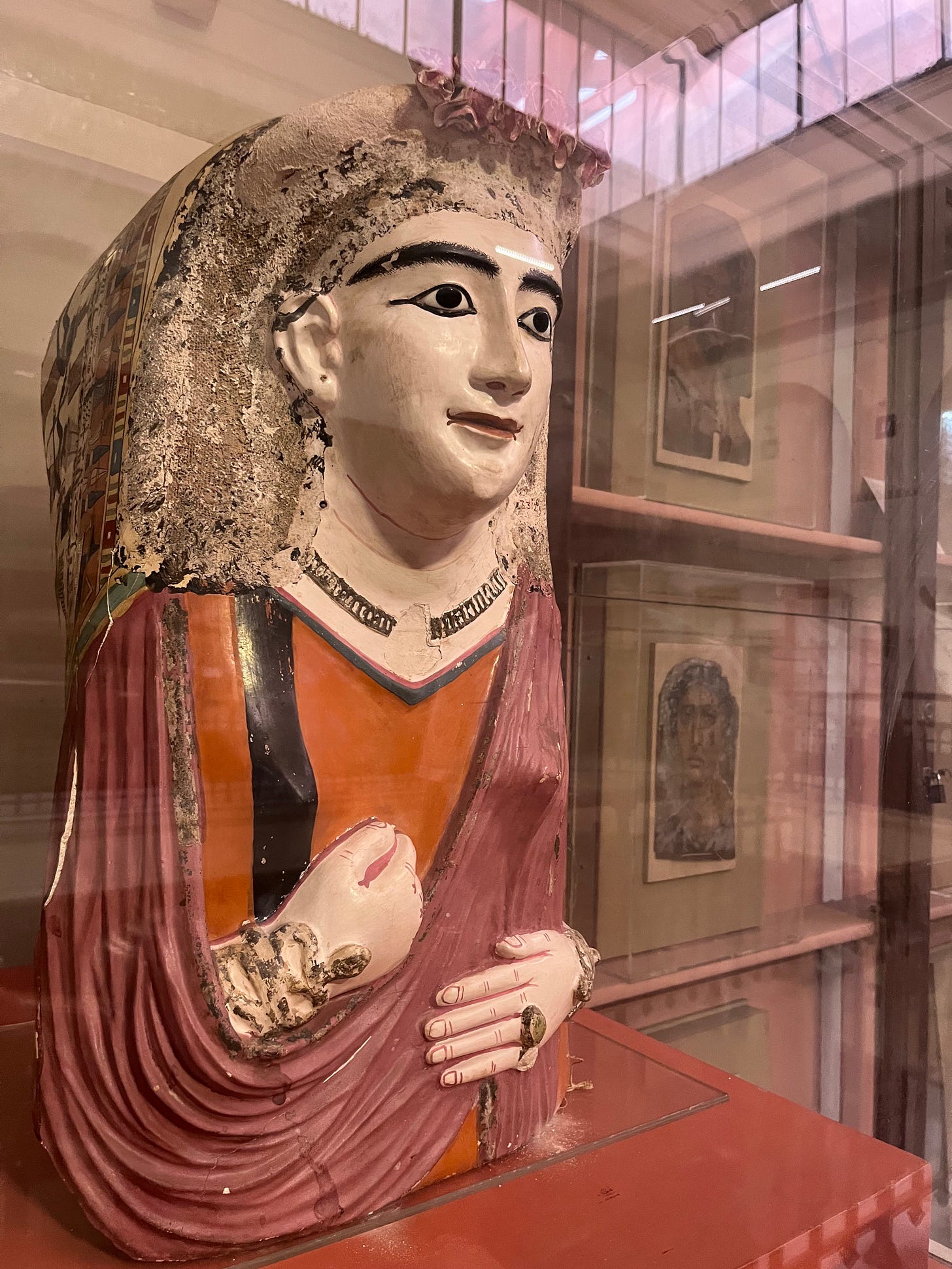
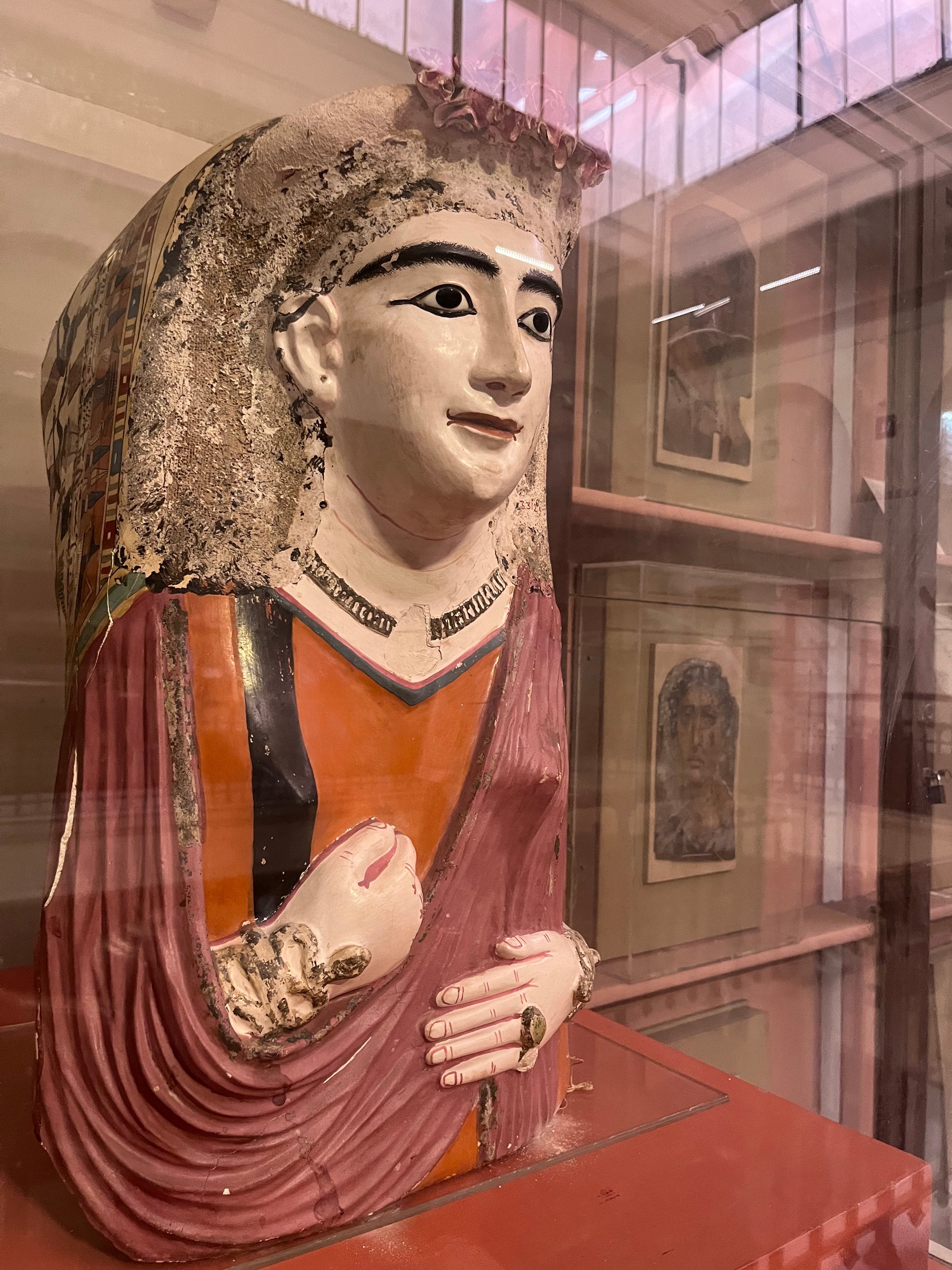
They were brightly painted and shockingly colorful.
Indeed, it was (and dare I say still is) such a common fallacy, one that was regularly reinforced by artists and poets from the ensuing centuries who imagined ancient scenes with their ‘modern’ remains. These show us the shapes, not the colors of the ancient world.
Discovering that the surviving structures and statues were once splendidly covered in blazing hues radically changes our entire perception of the ancients and opens our mind to a beautiful vivd and radiant world.
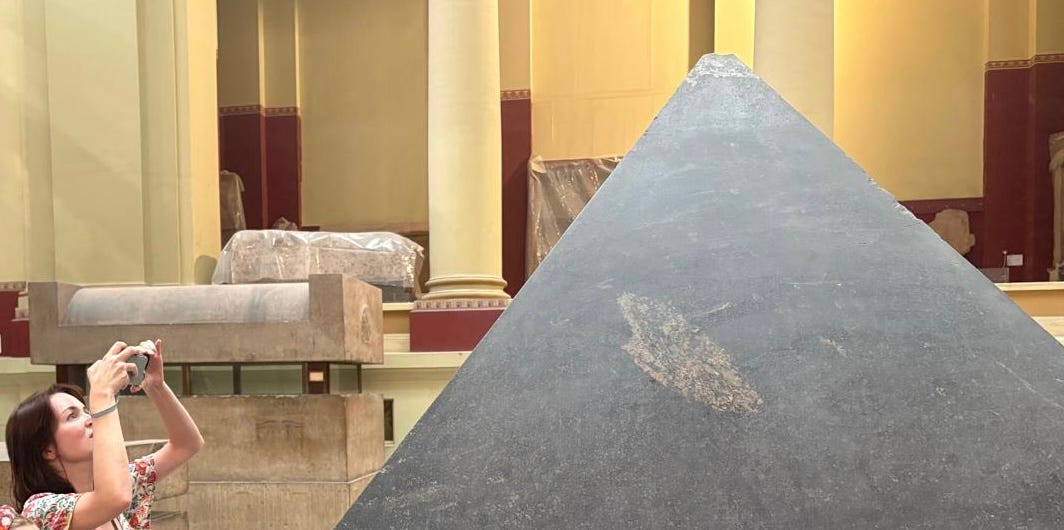
Indeed, I’ve just spent the last few days in the Cairo archeological museum admiring the myriad works, many of which still retain traces of their once dazzling past.
But how did the ancients get those intense and luminous colors? Read on to enjoy today’s article on the methods of the ancient artists and feel inspired to find more color in your life…
Classical Wisdom Members: You can also enjoy a full Classical Wisdom Litterae Issue, dedicated to ancient paint, below today’s article. Discover the remarkable mummy paintings found in the Fayum desert; antiquity’s most famous painter, Apelles; the Etruscans’ famous frescos and the stunning works currently being excavated in Pompeii.
NB: If you aren’t a member, make today the day! Support the classics AND enjoy all our resources… From our magazine and Ebook archives to new podcasts with professors and in-depth articles, we will bring the breadth and depth of the ancient world straight to your inbox. Join our growing community here:
Now, grab your spare ivory and some wax candles, it’s time to become an ancient artist!
All the best,
Anya Leonard
Founder and Director
Classical Wisdom
Burn Ivory, Melt Wax... just like the Ancient Artists
by Victoria Papale
The 5th century BC Greece was a time of change. The region was becoming more unified with the development of city states and the new democratic government in Athens was taking hold. Art, as well, evolved, mirroring these progressions. The techniques and imagery of Greek painting began to advance, as the profiled, non-emotional, flat representation of the human was replaced with the expressive frontal and ¾ portraiture. Moreover, depth and perspective came into play.
Realism was now the passion of the Greek artist.
But how were these artists accomplishing this great artistic revolution, and with what materials? Not easily and not with much. See, today’s artists have it made. They only need to purchase their materials at the local arts and craft store and viola! They can begin.
In antiquity, however, painters had to do a lot more.
Más info en https://ift.tt/aCwiPWs / Tfno. & WA 607725547 Centro MENADEL (Frasco Martín) Psicología Clínica y Tradicional en Mijas. #Menadel #Psicología #Clínica #Tradicional #MijasPueblo
*No suscribimos necesariamente las opiniones o artículos aquí compartidos. No todo es lo que parece.

No hay comentarios:
Publicar un comentario