

Dear Classical Wisdom Reader,
It really does seem like the Greek myths are everywhere in the modern world.
Or is it all just in my head?
Well, as we often remind people, up until the early 20th century, simply to be considered an educated person meant knowing your Greek and your Romans. And so the Classics have come to suffuse and surround so many different walks of life, from architecture to education.
And somewhere they are especially noticeable is in the history of psychoanalysis, in particular the work of Sigmund Freud.
So today’s article looks at how the ‘father of psychology’ used the ancient myths to explore some of the most significant and powerful aspects of human experience.
It turns out, the rich world of ancient mythology proved to be an especially fitting tool for exploring the complexities of human psychology…
And I promise, it really isn’t just in my head!
All the best,
Sean Kelly
Managing Editor
Classical Wisdom
Unlock EVERYTHING! By becoming a Member, you can support the Classics and gain FULL access to our archives of exclusive podcasts, e-books, magazines, in-depth articles and more!
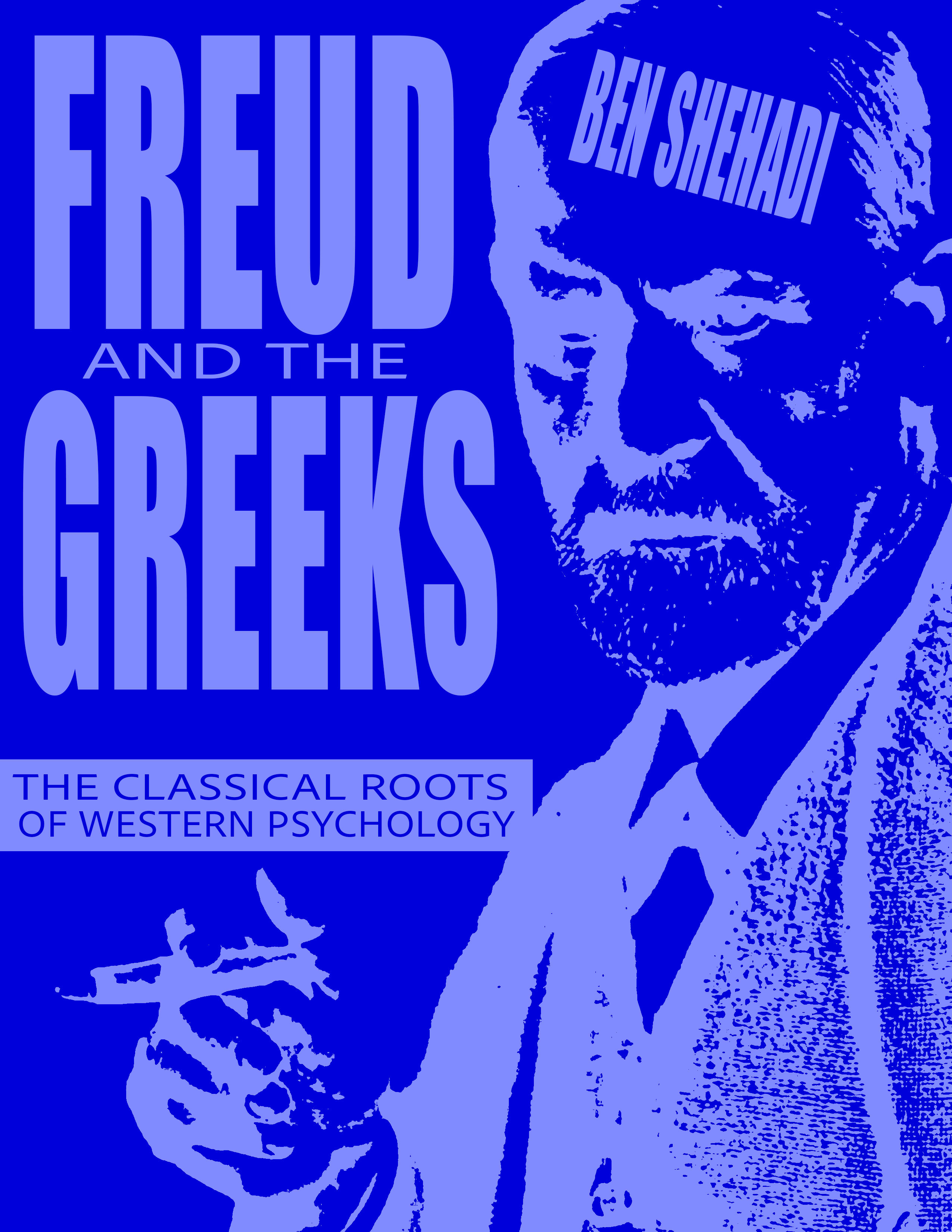
Freud and the Greeks: The Classical Roots of Western Psychology
by Ben Shehadi
Picture Freud in your head. Eccentric and obsessed with sexuality, the man’s appearance was every bit as iconic as his ideas. He had a fuzzy white beard, and a pair of black round glasses. Patients laid down on his famous paisley couch, while Freud listened and smoked his cigars. Thousands of antiquities decorated his study room, ranging from Egyptian artifacts to Greek vases.
After all, being the father of psychology (Greek for “study of the soul”), Freud was heavily inspired by the Greco-Roman classical tradition. Whether we realize it or not, we often speak about Freud’s ideas using the language of the Classics. Here are some of the most prominent examples…
Eros and Thanatos
Eros and Thanatos were two human instincts, one for love and another for death, according to Freud’s drive theory. Both of these mythological figures derive from Greek mythology, namely Hesiod’s Theogony.
Eros is the famous Greek god of love. We see him every February 14 on our Valentine cards: a winged, chubby boy, shooting arrows of romantic passion (more widely known by his Roman name, Cupid). Freud was famously obsessed with the role of sexuality on human behavior. He used this ancient Greek character, a primordial god from Hesiod’s Theogony, as a symbol of human desire for pleasure and connection with others.
Eros appears in several Greco-Roman myths, most famously the one with Psyche. The “Cupid and Psyche” appears in the second century work, The Golden Ass, but has even older roots. This myth influenced Carl Jung’s archetypal psychology, who interpreted it as an expression of unconscious romantic attraction.
In addition to love, people are also motivated by a so-called “death drive,” a human tendency toward self-destruction and suicide. To represent this, Freud used the mythical figure of Thanatos, a primordial death deity. Death is described in Hesiod’s Theogony, together with Sleep, as “children of the dark Night” with a spirit “pitiless as bronze” and “hateful even to the deathless gods.”
Oedipus
Oedipus Rex is one of the most famous tragedies from classical Athens. Written by Sophocles in 429 BC, it tells the story of Oedipus, the king of Thebes. Born to Laius and his wife Jocasta, the classical hero was abandoned as an infant, due to a prophecy that he would eventually murder his own father.
Plague strikes Thebes, forcing the inhabitants to answer a riddle by a mythical monster called the Sphinx.
“What is the creature that walks on four legs in the morning, two legs at noon, and three in evening?”
Oedipus, a clever man, correctly gives the answer: a human being, as a baby crawls on all fours towards the start of life, and an elderly person walks with a cane (functioning as a third leg) towards the end of life.
Inheriting the throne of Thebes, Oedipus begins to question his own parentage. Much to his horror, Oedipus learns that he had unwittingly murdered his biological father on the road to Thebes, and was now married to his own mother! Shockingly, the play ends with the striking scene of a bloody-eyed Oedipus, who gouges out his own eyes in remorse.
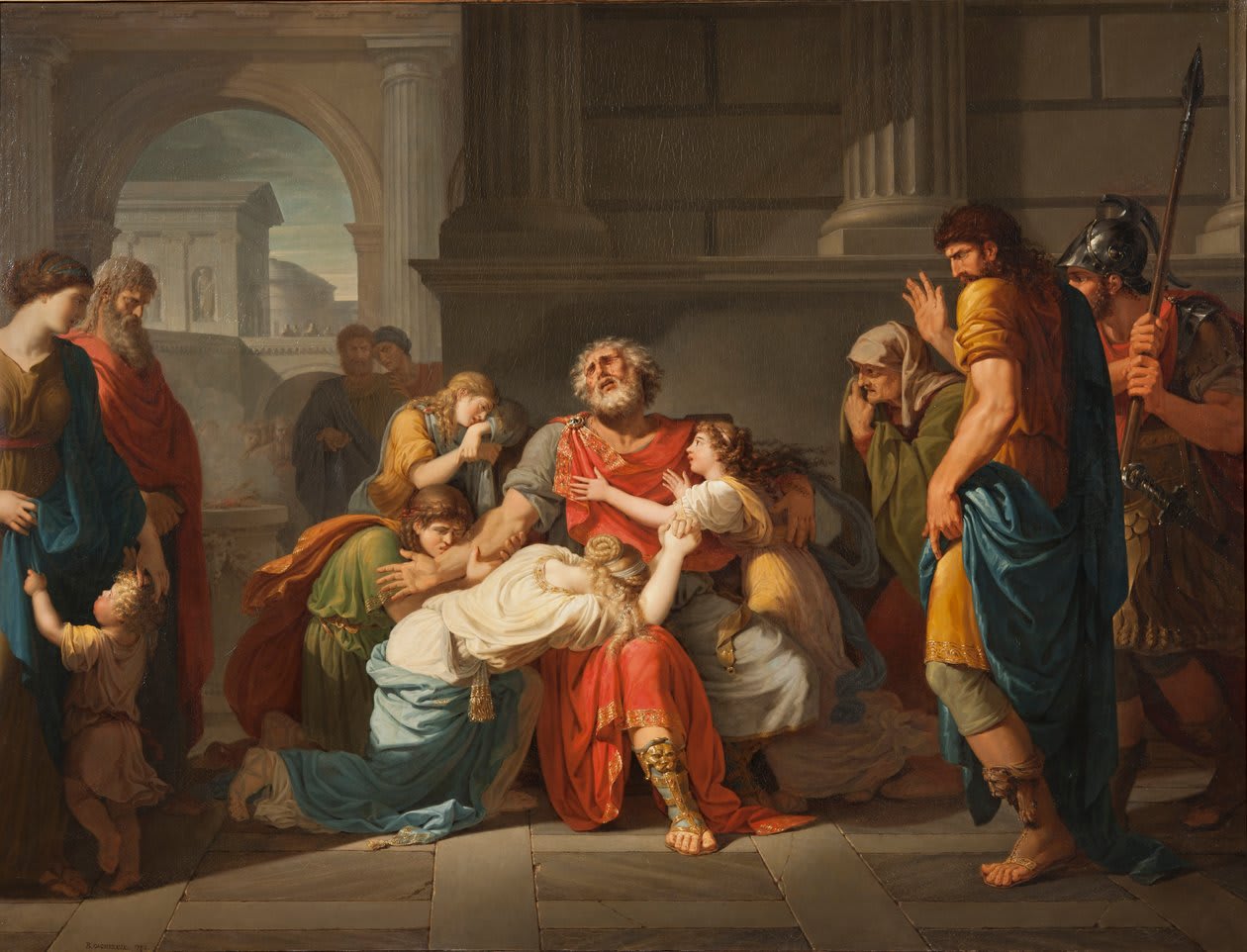
Freud was fascinated by the Oedipus myth, who saw it as an unconscious wish- fulfillment of sexual desires for one’s own mother. He called this the “Oedipus complex.”
Narcissus
In 1914, Sigmund Freud introduced the word “narcissism” into Western culture. The name comes from the myth of Narcissus, as told in Ovid’s Metamorphoses. According to Ovid’s story, there was once a handsome young man named Narcissus, who arrogantly rejected the romantic advances of all female lovers. When he rejected the nymph Echo, she cursed him before the gods. As punishment, the self-absorbed Narcissus fell in love with his own reflection in a pool of water, causing him to drown. Freud and his followers, such as Alfred Adler and Karen Horney, invoked the myth as a symbol of exaggerated, pathological self-love.
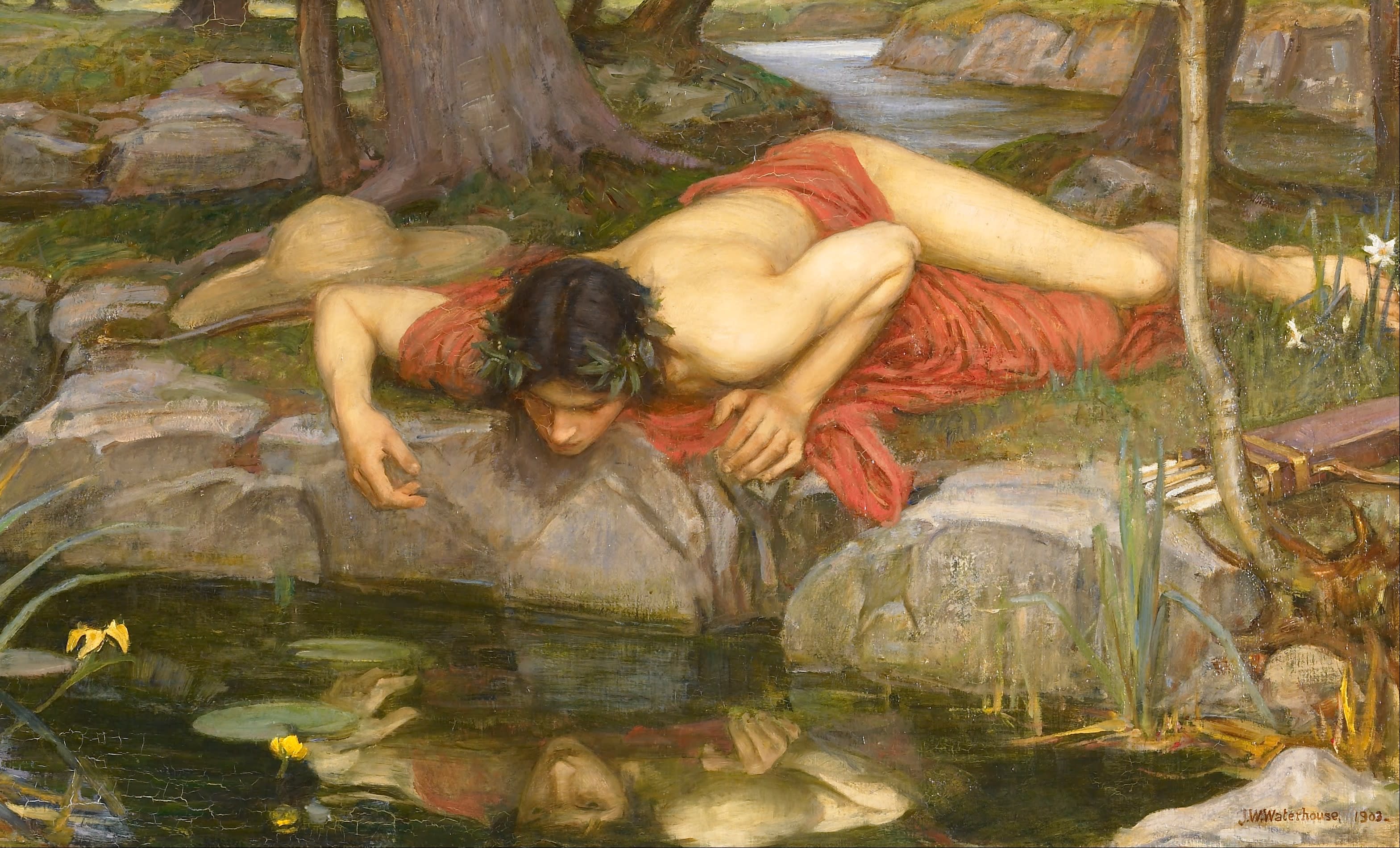
Ironically, such arrogant people are often “acting out” their feelings of inferiority, by trying to compensate for their own perceived weaknesses and deficiencies. This can be caused by many things, such as bad parenting or bullying at school. Nevertheless, the image of Narcissus staring at himself remains a powerful shorthand for this complex phenomenon.
Apollo and Dionysus
The “Apollonian and Dionysian” is a common dichotomy used in Western philosophy and literature, which represents the division between human reason and unconscious instinct.
The dichotomy itself originates from Nietzsche’s Birth of Tragedy, written in 1872. For Nietzsche, classical Athenian tragedy was a way for the Greeks to cope with the suffering of life. The Greek tradition produced two opposing ideals—Apollo and Dionysus—which represent two alternative responses to the existential problem of suffering.
In Nietzsche’s interpretation, Apollo represents civilization as a whole: the values of harmony, order, and logic. Dionysus represents the opposite of civilization: a set of disorderly values, characterized by chaos, individuality, lack of inhibition, ecstasy and emotion.
Seeking to redefine Western ethics, Nietzsche advocated for a return to a pre-Christian “master morality,” in which the strong freely dominated the weak. Dionysus was, for Nietzsche, a symbol of a defiantly optimistic attitude of life affirmation—without any restraints from traditional religion or morality.
In Freudian psychology, Apollo and Dionysus are understood in a similar way. Apollo represents reason, logic, and the conscious human mind: he is the ego. Dionysus, by contrast, represents absolute freedom and lack of social inhibition: he is the Greek god of wine, women and song, the Freudian id.
“Dionysus is the energy that shatters, in order to bring forth,” Joseph Campbell explained. Campbell, a literary professor influenced by Jungian psychology, wrote The Hero with a Thousand Faces (1949), which inspired the Star Wars series. In Campbell’s view, the Greek humanistic tradition embraced both Apollo and Dionysus as complementary aspects of a healthy human psyche.
Greek mythology remains the most enduring legacy of classical antiquity, and it is no surprise why. Through their deeply resonant images and stories, the Greeks laid the foundations of modern Western psychiatry. From the Greeks, as interpreted by Freud, we have unconsciously inherited our contemporary Western ideas about life and death, love and sexuality, passion and personality.
Reading these ancient stories, we learn a lot about human behavior, such as the effects of childhood trauma, the motivation for intimacy, and the gripping fear of death. They represent the earliest attempt by Western thinkers to rationally explain and understand human consciousness, including theories of personality and mental illness.
Whether it is the eroticism of Cupid’s arrow, the perverted pride of Narcissus, or the dysfunctional family dynamics of Oedipus, Greek mythology continues to offer unique insights into human psychology.
Más info en https://ift.tt/A7LXn1k / Tfno. & WA 607725547 Centro MENADEL (Frasco Martín) Psicología Clínica y Tradicional en Mijas. #Menadel #Psicología #Clínica #Tradicional #MijasPueblo
*No suscribimos necesariamente las opiniones o artículos aquí compartidos. No todo es lo que parece.

No hay comentarios:
Publicar un comentario