

Dear Classical Wisdom Reader,
This week, we’ve been looking up to the stars, and in to our souls…
And it turns out, you can see the Greek myths in both of them!
Yes, whether it’s the constellations above us, or the impulses of human psychology, Greek mythology has proven to be an esssential element in how we understand and explain the worlds outside us and within us…
And now is the time to prove your knowledge of it all! See if you can make it through this week’s edition of the Weekly Wisdom Quiz.
As always, all questions are based on articles and resources published this week here at Classical Wisdom. Of course, answers are available just below, alongside a roundup of this week’s resources.
Let’s go…
1. Which mythological musician was said to charm even stones and beasts with his lyre, and whose constellation now twinkles in the night sky?
A. Pythagoras
B. Orpheus
C. Apollo
D. Hermes
2. Which mythological figures did Freud use to symbolize the opposing human instincts of love and death?
A. Eros and Thanatos
B. Zeus and Hades
C. Apollo and Dionysus
D. Narcissus and Oedipus
3. What activity does Seneca offer as the only way to “truly live”?
A. Join the military
B. Cultivate pleasure
C. Study philosophy
D. Meditate daily
4. Why did Dionysus unleash the Bacchae upon Orpheus, according to one mythological variation?
A. Orpheus insulted his wine
B. Orpheus stole his sacred rites
C. Orpheus tried to marry one of his priestesses
D. Orpheus neglected to honor him in song
5. What dichotomy did Nietzsche use to explain the balance between reason and instinct in classical tragedy—later adopted by Freudian psychology?
A. Mind vs. Matter
B. Apollo vs. Dionysus
C. Order vs. Chaos
D. Zeus vs. Prometheus
6. Which Greek figure’s story is used by Freud to describe his theory of unconscious desire for one's mother and rivalry with the father?
A. Narcissus
B. Achilles
C. Oedipus
D. Heracles
7. What Roman emperor was Seneca famously a tutor and advisor to?
A. Julius Caesar
B. Augustus
C. Nero
D. Caligula
8. Which ancient Greek academic helped solidify the mythological identities of constellations like Lyra?
A. Eratosthenes
B. Homer
C. Socrates
D. Anaxagoras
Unlock the Wisdom Become a Member and gain FULL ACCESS to our archives of exclusive podcasts, e-books, magazines, in-depth articles and more!

Answers
-
B – Orpheus (Oh Muses, You Sound So Heavenly!)
-
A – Eros and Thanatos (Freud and the Greeks)
-
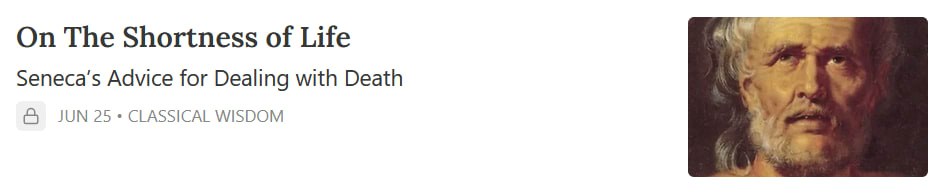
C – Study philosophy (On the Shortness of Life)
-
D – Orpheus neglected to honor him in song (Oh Muses, You Sound So Heavenly!)
-
B – Apollo vs. Dionysus (Freud and the Greeks)
-
C – Oedipus (Freud and the Greeks)
-
C – Nero (On the Shortness of Life)
-
A – Eratosthenes (Oh Muses, You Sound So Heavenly!)
The Wisdom Scale
📚 0–2 correct: Echo’s Shadow
Barely audible, but with reflection and reading, you may still sing.
🎵 3–5 correct: Lyre Apprentice
You can pluck a few notes, but the muses await your crescendo.
🏛️5–6 correct: Stoic Star-Gazer
Balancing reason, myth, and mortality? Orpheus would sing your praises.
🧠7-8 correct: Cosmic Sage
Congratulations: you’ve mastered the mind, the heavens, and the human condition.
So, how did it go? Feel free to let us know in the comments below!
Until next time…
All the best,
Sean Kelly
Managing Editor
Classical Wisdom
Más info en https://ift.tt/KW9ZoA1 / Tfno. & WA 607725547 Centro MENADEL (Frasco Martín) Psicología Clínica y Tradicional en Mijas. #Menadel #Psicología #Clínica #Tradicional #MijasPueblo
*No suscribimos necesariamente las opiniones o artículos aquí compartidos. No todo es lo que parece.

No hay comentarios:
Publicar un comentario