
Dear Classical Wisdom Reader,
It’s a little awkward telling Greeks that you are going to Macedonia. Of course you have to stipulate the modern delineation of North Macedonia, but even that brings narrowed eyes and furrowed brows. It’s better, we were advised, to say Skopje or specify the exact city or town... because frankly Macedonia and Greece have had a strained relationship since time immemorial.
Now, I’m not going to pretend I fully comprehend this undoubtedly complex situation (even a partial understanding would be generous!) But my elementary take is that historically “Macedonia” included a vast geographical area once claimed by Phillip II and Alexander the Great, a region that spread over several modern national borders. It is a rich cultural heritage that many share, but each wants to claim (primarily) for their own. This dispute is brought into sharp relief when it comes to the name itself. Who gets to call their land Macedonia? With so many contenders, it naturally becomes confusing...and tense.
Turns out Shakespeare was wrong... there is a lot in a name!
Fortunately this stalemate was resolved in February 2019 when The Republic of Macedonia became North Macedonia. It was literally a direction to peace.
But modern politics aside, the small mountainous landlocked country of the Macedonians is steeped in history, even before the famed empire of Philip II and Alexander the Great...
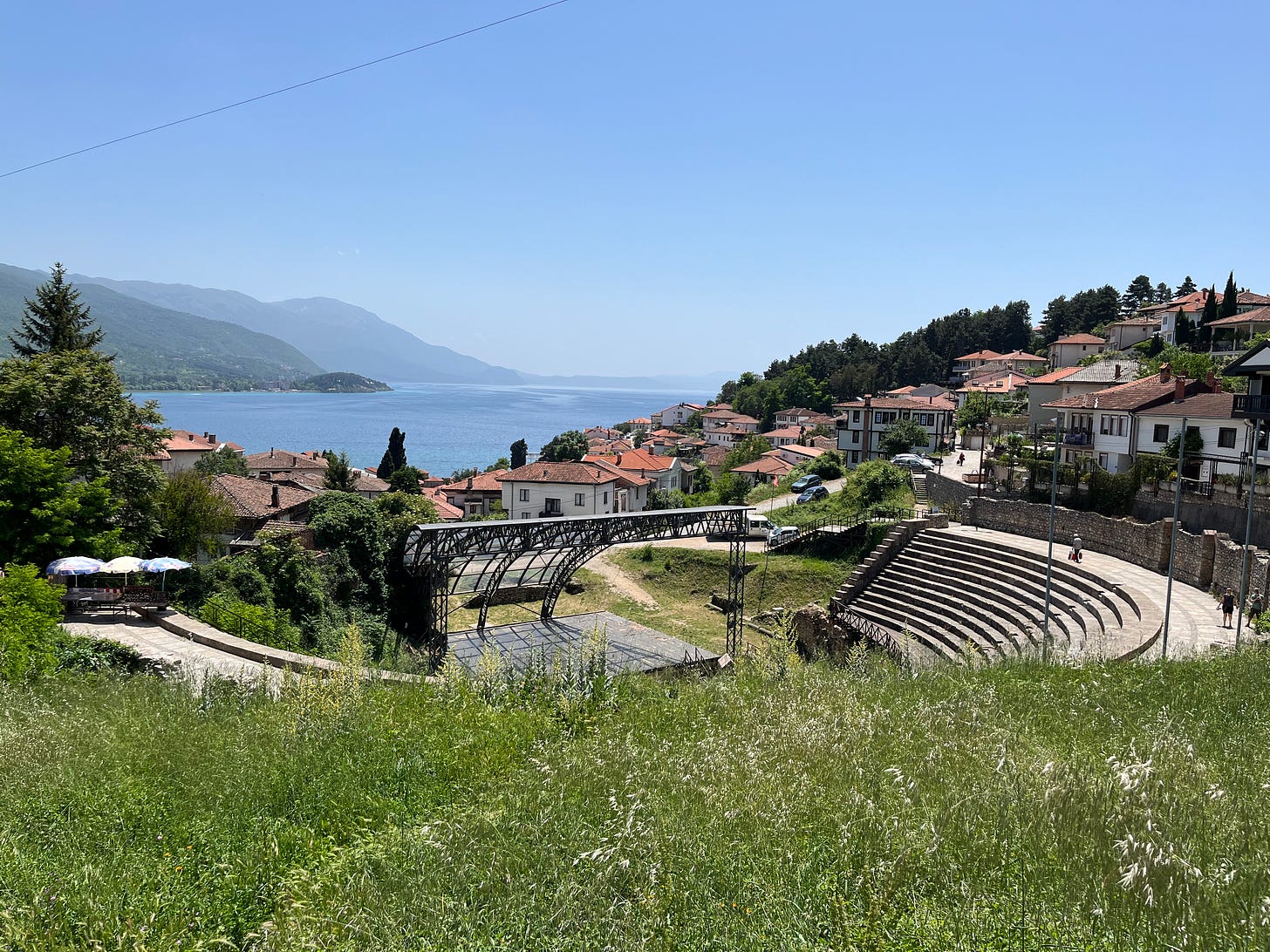
In fact, we have an ancient theater just outside our window here in the Jerusalem of the Balkans. Beautifully preserved from around 200 BC, this Hellenistic style theatre was hidden until the 1980s. After its period of drama, it became the location of gladiatorial games in the Roman era and then the site of Christian executions. The locals so disliked its changed purpose and buried it, and thus preserved it.
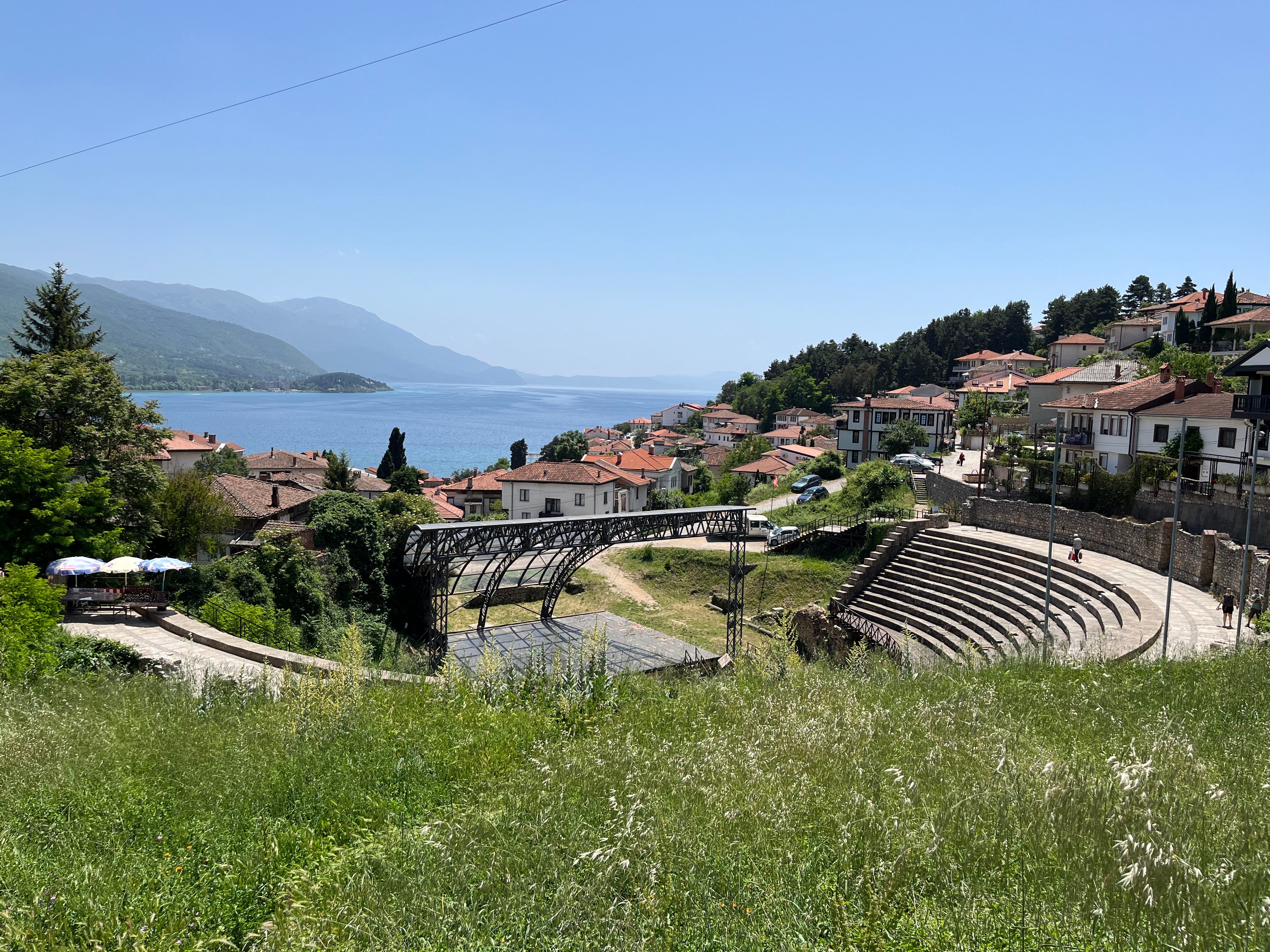
Of course that’s not the only history to be found here! While its centrality in Europe meant North Macedonia was always on the map (many of the most important Roman routes traversed the lands), its ancient tales are what really fascinates us... So today we’ll take a short journey into the history of Macedonia... before Alexander the Great, below.
All the best,
Anya Leonard
Founder and Director
Classical Wisdom
Join Classical Wisdom! Become a Member and access our Ebooks, Magazines, Podcasts and More. This week we will be releasing an exclusive podcast with Emily Hauser, author of Mythica… Her understanding of Calypso will make you rethink the entire Odyssey…
A Land of Horses and Kings
The ancient Macedonians were, by many accounts, a people of the earth. Their society was built not in marble temples, but on rugged plains and in fortified hilltop settlements. Their names were not sung in Homer’s verses, and their dialect, a northern cousin to the classical Attic Greek, was often mocked for its rustic tone. But what they lacked in prestige, they made up for in tenacity.
According to tradition, the Macedonian royal house, the Argead dynasty, traced its lineage to Heracles himself. This convenient link to divine blood served to both legitimize their rule and curry favor with their skeptical southern neighbors. Whether myth or propaganda, the tale persists: that three brothers of Argive descent ventured northward, settling at the foot of Mount Bermion, and thus the Kingdom of Macedonia was born.
By the time the historical record grows clearer, around the 7th century BCE, the Macedonian kings were already establishing a degree of centralized power unknown to many of the fragmented Greek poleis. They ruled a land rich in timber, minerals, and most valuably, horses. The Macedonians were famed for their cavalry, a distinction that would prove decisive in generations to come.
Between Worlds: Hellenic or Barbarian?
This, perhaps, is the most enduring question surrounding ancient Macedonia: were the Macedonians truly Greek?
It’s a debate that has echoed down through centuries, often colored by politics both ancient and modern. The Athenians, proud of their naval prowess and their democracy, scoffed at Macedonia’s monarchy. Demosthenes, the famous Athenian orator, famously derided Philip II as a “barbarian,” despite Philip’s own Hellenic education and fluency in Greek.
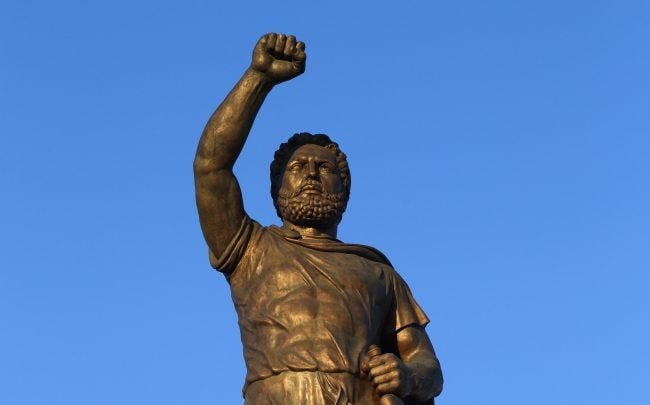
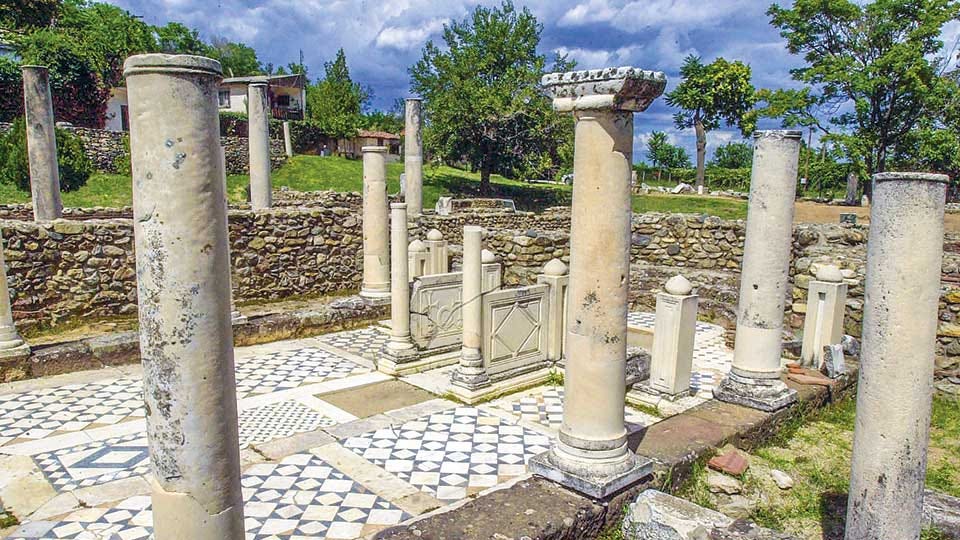
And yet, the Macedonian elite participated in the Olympic Games, which was open only to those of Greek heritage. They worshipped the Olympian gods, employed Greek tutors, and built Greek-style cities. The royal court held symposia filled with Homeric recitations and wine-fueled philosophical debates. It would be more accurate to say that Macedonia straddled two worlds: the refined culture of Hellas and the untamed dynamism of the tribal north.
This duality was not a weakness, but a strength. It gave Macedon a flexibility and resilience that many Greek city-states lacked. While Athens debated, Macedonia acted. While Sparta clung to its rigid tradition, Macedonia adapted.
The Rise of Philip II: A Genius in the Shadows
But it was not until the fourth century BCE that Macedonia truly began to emerge from the periphery of Greek politics. That emergence bore a name that would change the course of history: Philip II.
Philip ascended the throne in 359 BCE, at a time when Macedonia was fractured and weak. The Illyrians threatened from the west, internal factions warred for power, and the coffers of the kingdom were perilously empty. But Philip, young though he was, possessed a gift for both military and political strategy that transformed his kingdom in just a few short decades.
He reformed the army, replacing the traditional hoplite phalanx with a more flexible, longer-spear wielding version...the sarissa phalanx. He built siege engines, drilled his cavalry, and turned Macedonia into a military machine. Yet it was not through force alone that Philip triumphed. He was a master diplomat, marrying multiple times to secure alliances, bribing where he could not conquer, and isolating his enemies through clever treaties and calculated betrayals.
By the time of his assassination in 336 BCE, Philip had united all of Macedonia, subdued the fractious Greek city-states, and set the stage for his son, Alexander, to launch an invasion of Persia. But make no mistake: without Philip, there would have been no Alexander the Great.
Continue the History…
Discover the next chapter in our Classical Wisdom Ebook and delve into Alexander’s life, including the spectacular biographies of Diodorus Siculus, Plutarch, and Arrian; three different, fascinating, and wholly unique ancient sources that will give you the chance to feel, see, smell, and savor the flavors of Alexander’s influence, personality, and achievements.
This Ebook, along with our entire Ebook library is available for our Classical Wisdom Members. If you aren’t a member yet, join today and get FULL access to all our resources:
Más info en https://ift.tt/oDlqaKb / Tfno. & WA 607725547 Centro MENADEL (Frasco Martín) Psicología Clínica y Tradicional en Mijas. #Menadel #Psicología #Clínica #Tradicional #MijasPueblo
*No suscribimos necesariamente las opiniones o artículos aquí compartidos. No todo es lo que parece.

No hay comentarios:
Publicar un comentario