
Dear Classical Wisdom Reader,
It’s one of the oldest, most tantalizing questions in Western thought…the kind that ties philosophers in knots and makes poets quietly sigh.
Heraclitus hinted at it when he said we can’t step into the same river twice. Plato wrestled with it in the realm of forms. Centuries later, Hobbes and Locke took a crack at it, and today, neuroscientists, lawyers, and engineers still scratch their heads over it.
The question? What makes something -or someone- remain the same when everything about it changes?
Let’s start with a few familiar examples:
Imagine a beloved violin, played for decades, has its strings and bridge replaced, its neck reinforced, and its body revarnished….yet the owner insists it is still her violin. A vintage car restored piece by piece until not a single original bolt remains. Or the childhood home that has been rebuilt, renovated, and repainted so many times that nothing of the original foundation survives…yet it still feels like home.
So when does something cease to be what it once was?
This is where the Greeks come in, as they so often do, when questions get delightfully complicated.
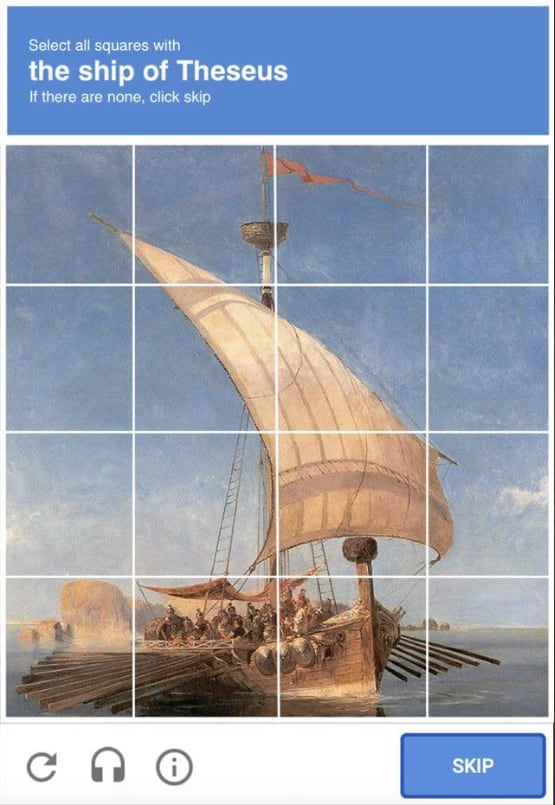
The historian, biographer, and all-around philosophical raconteur Plutarch captured this conundrum best with his story of the hero Theseus and his legendary ship.
“The ship wherein Theseus and the youth of Athens returned from Crete had thirty oars, and was preserved by the Athenians down even to the time of Demetrius Phalereus, for they took away the old planks as they decayed, putting in new and stronger timber in their places, insomuch that this ship became a standing example among the philosophers, for the logical question of things that grow; one side holding that the ship remained the same, and the other contending that it was not the same.”
— Plutarch, Theseus
Here’s the gist:
If, over time, every plank of the ship is replaced, is it still the Ship of Theseus? And if all the discarded parts were gathered and rebuilt into another vessel, which one would be the real ship?
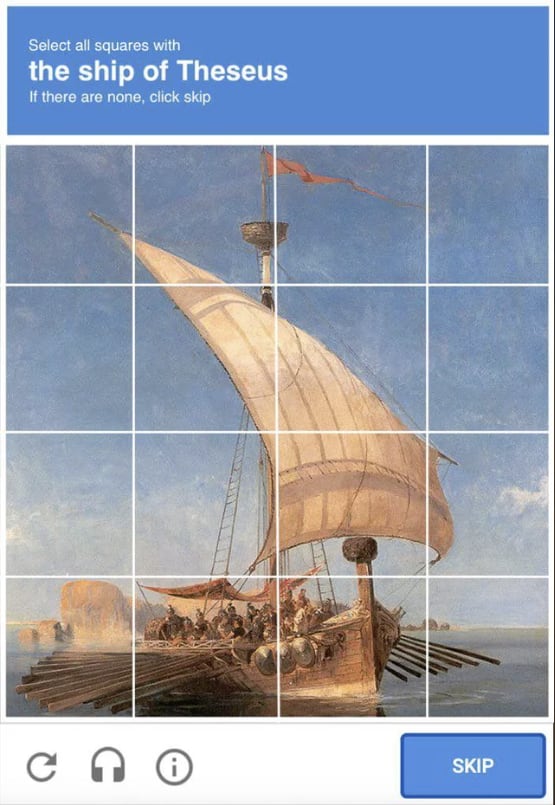
It’s a paradox that has sailed across the centuries, docking in the minds of philosophers, scientists, and anyone who’s ever stared too long in the mirror and thought, “Wait, is that still me?”
Because the implications stretch far beyond ships and planks. They touch law (when does a “restored” artifact stop being original?), technology (is your laptop the same after a hundred updates?), and biology, especially when we turn this thought experiment inward.
You, after all, are your own Ship of Theseus.
Every seven to ten years, nearly every cell in your body is replaced. Your tastes evolve, your beliefs shift, your memories fade and re-form. The person who read the start of this sentence is ever so slightly different from the one finishing it now.
So who, then, are you?
Are you your body, though it changes? Your thoughts, though they evolve? Your memories, which are notoriously unreliable? Or perhaps your continuity of consciousness… the thread that runs through time, holding together all your shifting selves like pearls on a string?
If so, then what happens when memory fades, or personality alters with age, or experiences transform the very core of your being?
So, once more, I ask you:
Who are you? What makes you YOU?
Is it the person you were yesterday? The one you will be tomorrow? Or the one right now… caught between who you were and who you’re becoming?
Comment below to add your own two cents:
I look forward to hearing from whichever version of you decides to answer.
Warm regards,
Anya Leonard
Founder and Director
Classical Wisdom
Treat your future self with present knowledge. Become a Classical Wisdom Member and let the wisdom of the ancients guide you:
Más info en https://ift.tt/Dlf6IzA / Tfno. & WA 607725547 Centro MENADEL (Frasco Martín) Psicología Clínica y Tradicional en Mijas. #Menadel #Psicología #Clínica #Tradicional #MijasPueblo
*No suscribimos necesariamente las opiniones o artículos aquí compartidos. No todo es lo que parece.

No hay comentarios:
Publicar un comentario