
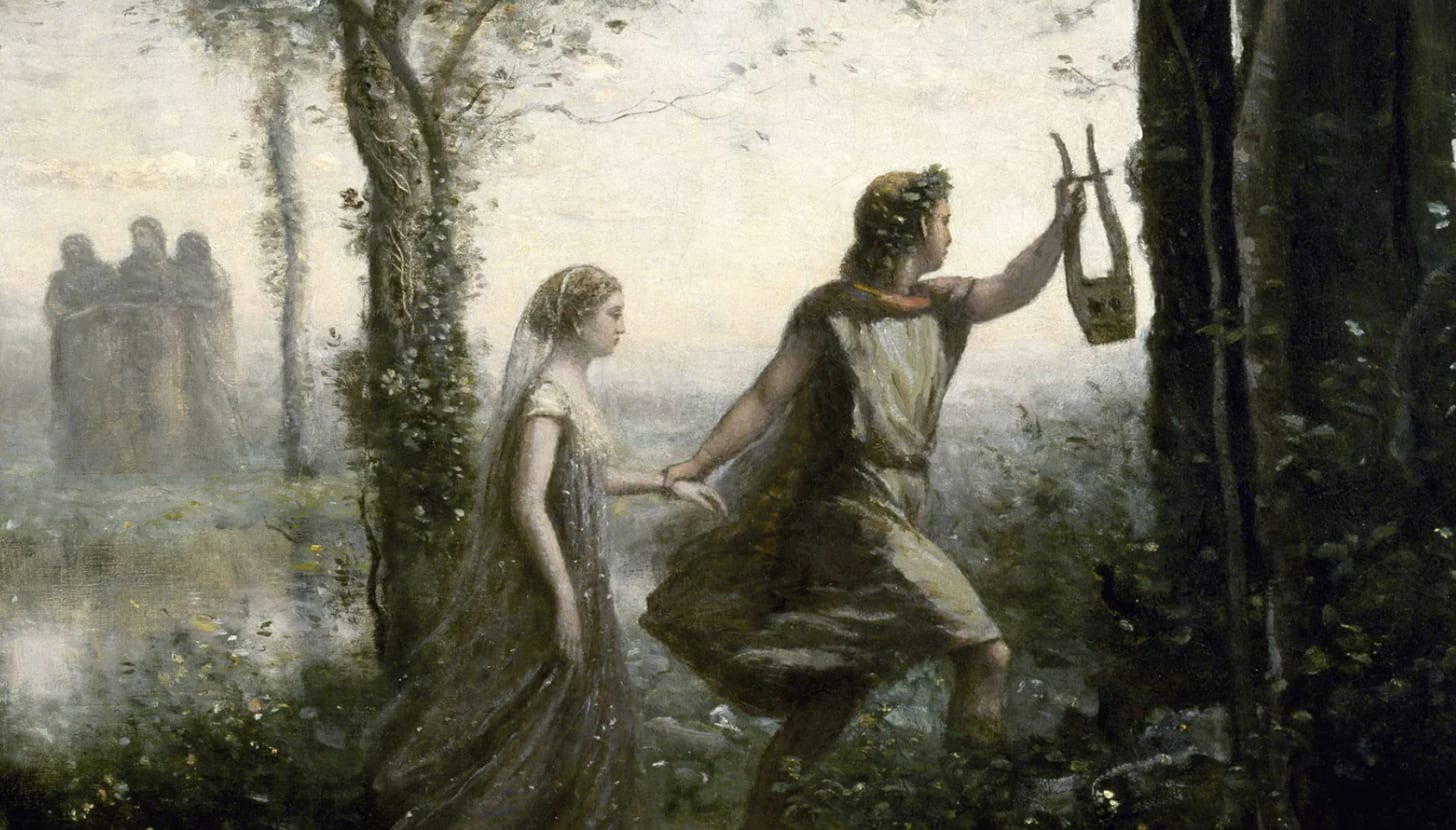
Dear Classical Wisdom Reader,
Why do we keep returning to the old stories?
In an age of science and reason, why do we still find ourselves haunted and inspired by myths told thousands of years ago?
The ancients understood something we too often forget, that to understand human nature, we must look not only to history or psychology, but to myth. Myths are the mirrors of the soul; they reveal what logic alone cannot. They speak to the fragile contradictions that make us human... love and loss, hope and despair, beauty and destruction entwined.
Among these timeless tales, few are as piercingly human as the story of Orpheus and Eurydice. It is a myth that reaches across the centuries, whispering to anyone who has ever loved and lost, to anyone who has looked back when they shouldn’t have.
Read on for one of the most epic, tragic and influential stories from the ancient world. A tale that inspired countless artists, musicians and writers throughout the centuries, it is a myth that has and will always resonate...
All the best,
Anya Leonard
Founder and Director
Classical Wisdom
Don’t lose the love of wisdom! Rescue the classics from the depths of obscurity and become a Classical Wisdom Member to enjoy our vast and growing resources. Enjoy our in-depth articles, ebook library, magazine archives and more:
The Tragic Love Story of Orpheus and Eurydice
by Ed Whelan, Contributing Writer, Classical Wisdom
The tale of Orpheus and Eurydice is one of the most haunting love stories ever told — a timeless myth that has captivated hearts for millennia. It’s a story of beauty and sorrow, of divine music and mortal frailty, of love that dared to defy death itself.
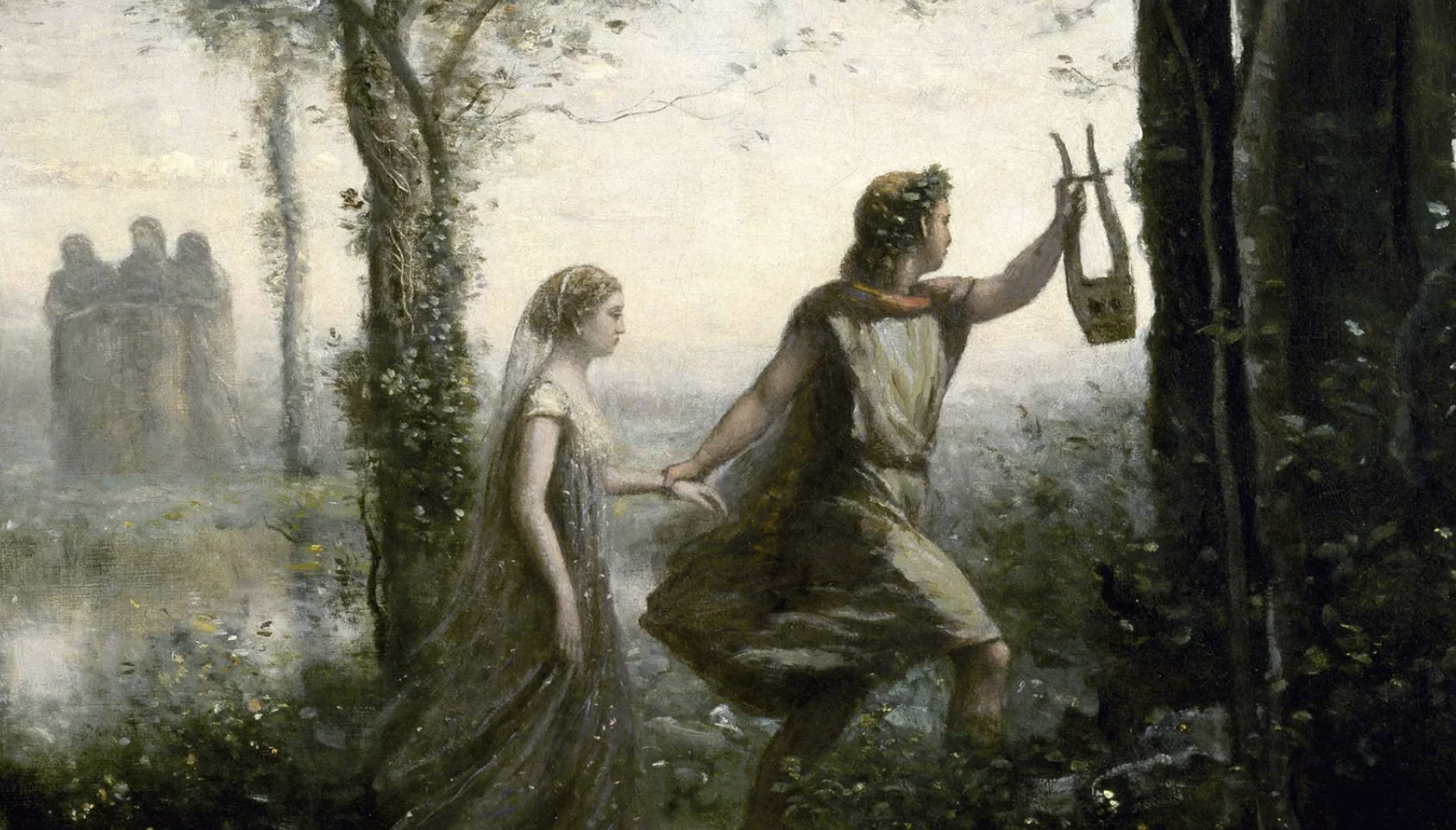
Orpheus was no ordinary man. Some said he hailed from Thrace, others from Arcadia. His name is absent from Homer and Hesiod, yet his legend grew larger than life. He was the archetypal poet and musician, a figure so gifted that even the trees bent closer to hear him play.
It was said that Apollo, god of music, was his father, and Calliope, the Muse of epic poetry, his mother. With divine blood in his veins, Orpheus perfected the art of the lyre, his melodies so enchanting they could charm the birds from the sky and soothe the hearts of gods and mortals alike.
Some myths place him among Jason’s Argonauts, where his music drowned out the deadly songs of the Sirens, saving his comrades from certain doom. Through his art, Orpheus embodied the purest union of poetry, music, and divine inspiration, a symbol of the creative soul itself.
The Love of Orpheus and Eurydice
Eurydice was a wood nymph, a spirit of the forest, radiant and free. One golden day, as Orpheus played alone in the woods, his music drifted through the trees and found her. The moment she heard it, she was lost; she fell in love before she even saw him.
When Orpheus laid eyes upon her, the feeling was mutual and immediate. They married soon after, their hearts bound by an unshakable passion. Yet at their wedding, the god of marriage whispered a dark prophecy: their union would not last long.
And so it was.
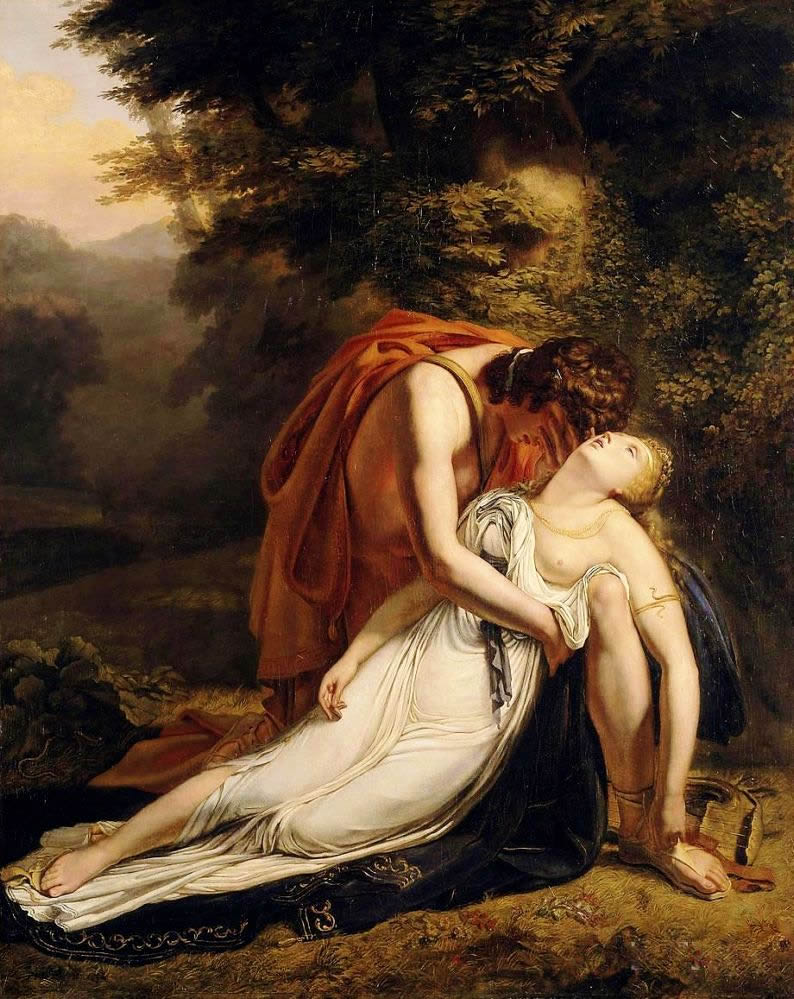
One day, as Eurydice danced among the nymphs, tragedy struck. A serpent hidden in the grass bit her ankle. With one cry, she fell, and her spirit fled to the shadowed depths of Hades’ realm.
Orpheus was inconsolable. His lyre fell silent, his songs turned to grief.
Descent into the Underworld
Unable to bear their separation, Orpheus begged his divine father, Apollo, for help. Moved by his son’s anguish, Apollo pleaded with Hades, the lord of the Underworld, to show mercy.
When Orpheus descended into that dark kingdom, he did not bring weapons... only his lyre. He sang a song so sorrowful, so full of yearning, that even the spirits of the dead wept. Persephone herself, queen of the Underworld, was moved to pity.
Hades granted him a single chance: Eurydice could return with him... on one condition. Orpheus must not look back at her until they had both reached the light of the living world.
It seemed simple. But love, as always, makes fools of us all.
The Second Death of Eurydice
Through the caverns of the dead they walked... Orpheus ahead, Eurydice’s footsteps faint behind him. The path wound upward, dimly lit by the growing light of day.
At last, Orpheus glimpsed the mouth of the cave. His heart leapt. Just a few more steps.. and then doubt struck him. What if Hades had deceived him? What if Eurydice wasn’t really there?
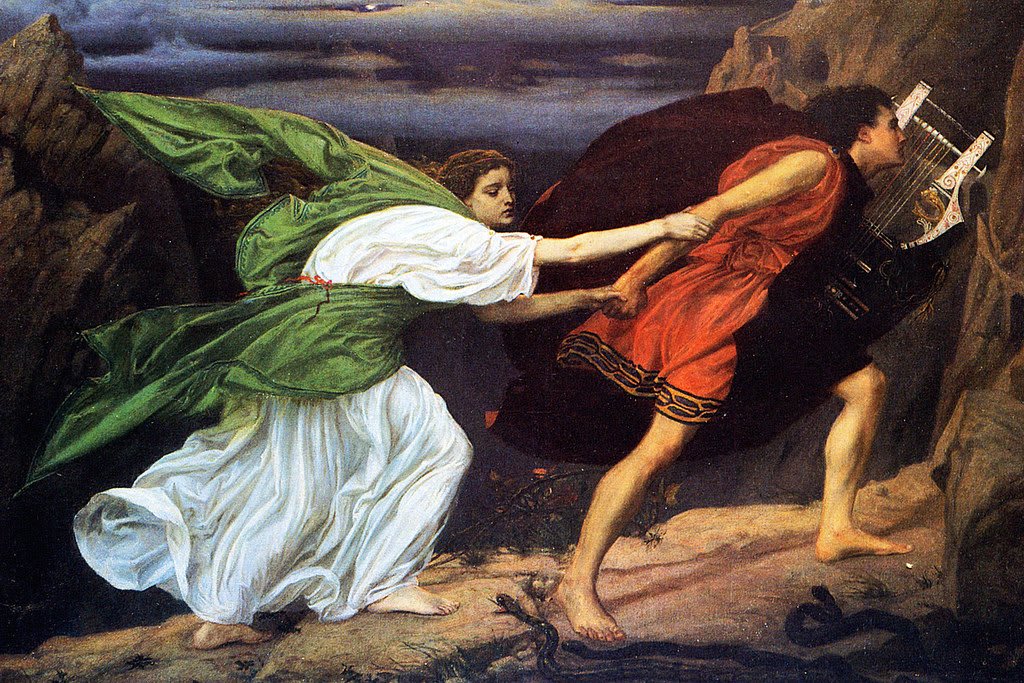
Unable to resist, he turned.
For a single instant, he saw her, pale, beautiful, reaching for him, before she was pulled back into darkness forever.
Her final whisper drifted through the shadows: “Farewell.”
Orpheus stood frozen, his soul torn apart. He had lost her twice: once to death, and once to his own weakness.
The Lonely End of Orpheus
Few mortals ever returned from the land of the dead, but Orpheus was one of them. Yet he no longer belonged among the living. He wandered aimlessly, his songs filled with sorrow, his lyre echoing the voice of the woman he could never hold again.
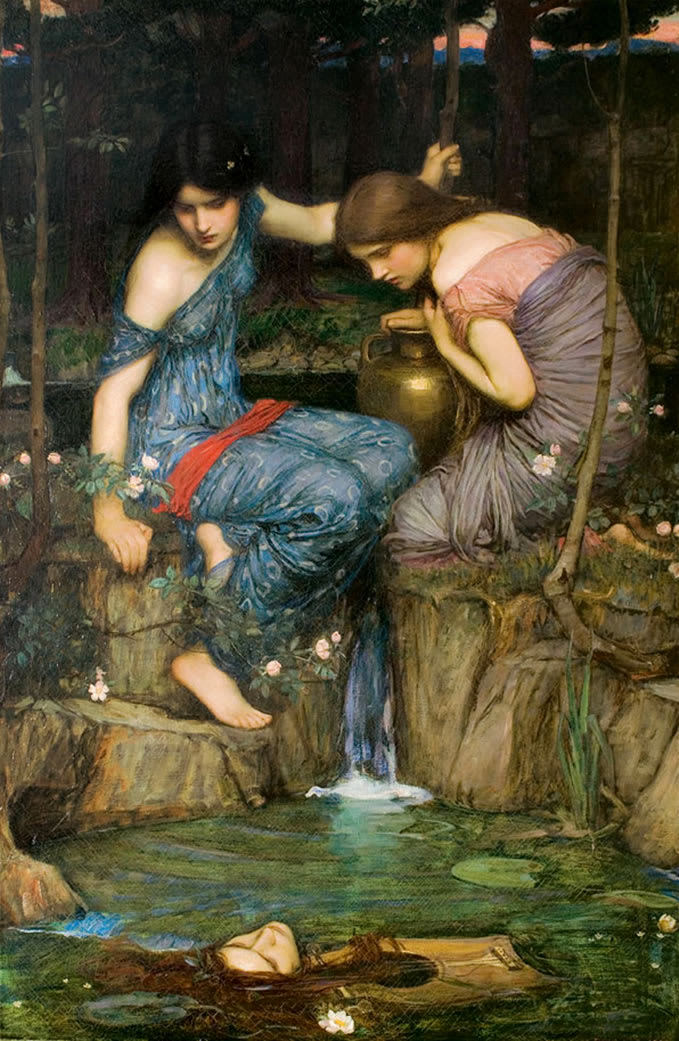
In time, his life met a violent end. Some say he was torn apart by the Maenads, the frenzied followers of Dionysus, for scorning their love. As his lifeless head floated down the river, it still sang, calling out Eurydice’s name.
The Meaning of the Myth
At its heart, the myth of Orpheus and Eurydice teaches a harsh lesson: the will of the gods must be obeyed completely. Orpheus’ one act of disobedience, his single, fatal glance, cost him the love of his life.
But beyond that, the story has deeper echoes. Some see in it reflections of the cult of Persephone, or the mystery religion of Orphism, which sought to explain the cycle of death and rebirth. Orpheus himself was said to be a prophet and reformer, a bringer of divine truth through art and music.
Find more meaning in MYTH… Become a Classical Wisdom Member and let the wisdom of the ancients guide you:
The Eternal Legacy
From Ovid’s Metamorphoses to Vergil’s Georgics, the story of Orpheus and Eurydice has inspired countless poets, painters, and composers. During the Renaissance and Baroque eras, it gave birth to operas such as Gluck’s Orfeo ed Euridice (1762) and later inspired Stravinsky’s ballet Orpheus.
Modern writers and artists continue to draw from its eternal well. Rilke, Jean Cocteau, even Neil Gaiman in The Sandman each retold it in their own way.
And why not? It has everything: music, gods, love, loss, and the fragile beauty of human hope.
In the end, it reminds us of a simple, devastating truth: no power, not even music or love, can conquer death completely. But both can make its shadow beautiful.
Classical Wisdom Members:
You can read the original story in Ovid’s Metamorphoses here:
Más info en https://ift.tt/WlAvUp1 / Tfno. & WA 607725547 Centro MENADEL (Frasco Martín) Psicología Clínica y Tradicional en Mijas. #Menadel #Psicología #Clínica #Tradicional #MijasPueblo
*No suscribimos necesariamente las opiniones o artículos aquí compartidos. No todo es lo que parece.

No hay comentarios:
Publicar un comentario