
Dear Classical Wisdom Reader,
What do you get when you mix divine rivalry, civic pride, and a splash of olive oil? Athens, apparently.
According to legend, the city’s name was decided in what can only be described as the ancient world’s version of X-factor. Poseidon shows up with his mighty trident, smashes the earth, and proudly unveils a saltwater spring. Athena, meanwhile, plants an olive tree and wins the crowd. Athens is hers, and Poseidon presumably storms off to sulk in the sea.
But Athena didn’t just give Athens its name. She became its symbol, its protector, and, perhaps most importantly, its brand. Her image crowned the Parthenon, her festivals filled the streets, and her colossal golden statue towered over the city like a divine reminder that Athens wasn’t just any city; it was the city. Culture, power, philosophy, democracy… all under her watchful gaze.
Of course, symbols are tricky things. When Athens rose, Athena gleamed. When Athens fell, battered, beaten, and stripped of its walls by Sparta, that same statue became a little… awkward. It’s a bit like putting up a “World Champions Forever” banner the year before your team spectacularly loses. Even gods, it turns out, can become embarrassing.
But that’s why Athena’s story is so interesting. Beneath the myths and marble is something deeply human. We still pour our hopes into symbols, still tell ourselves grand stories, still cling to ideas that define who we are... until, suddenly, they don’t.
Athens’ devotion to Athena reveals a truth: identity is fragile, power is fleeting, and sometimes even divine protection has an expiration date…
All the best,
Anya Leonard
Founder and Director
Classical Wisdom
Wisdom doesn’t have an expiration date. Become a Classical Wisdom Member and let the ancients guide you:
The Athenian Athena
By Ben Potter
Anyone with an interest in the classical Greek world may well have been intrigued, possibly confused, by the relationship between the goddess Athena and the ancient centre of democracy, philosophy and theatre, Athens.
As Walter Burkett said in his excellent book, Greek Religion: “whether the goddess is named after the city or the city after the goddess is an ancient dispute”. One, unfortunately, which is impossible to resolve.
However, an ancient tourist would have needed to look no further than the pediments of the mighty Parthenon to see evidence of Athena’s importance to the city.
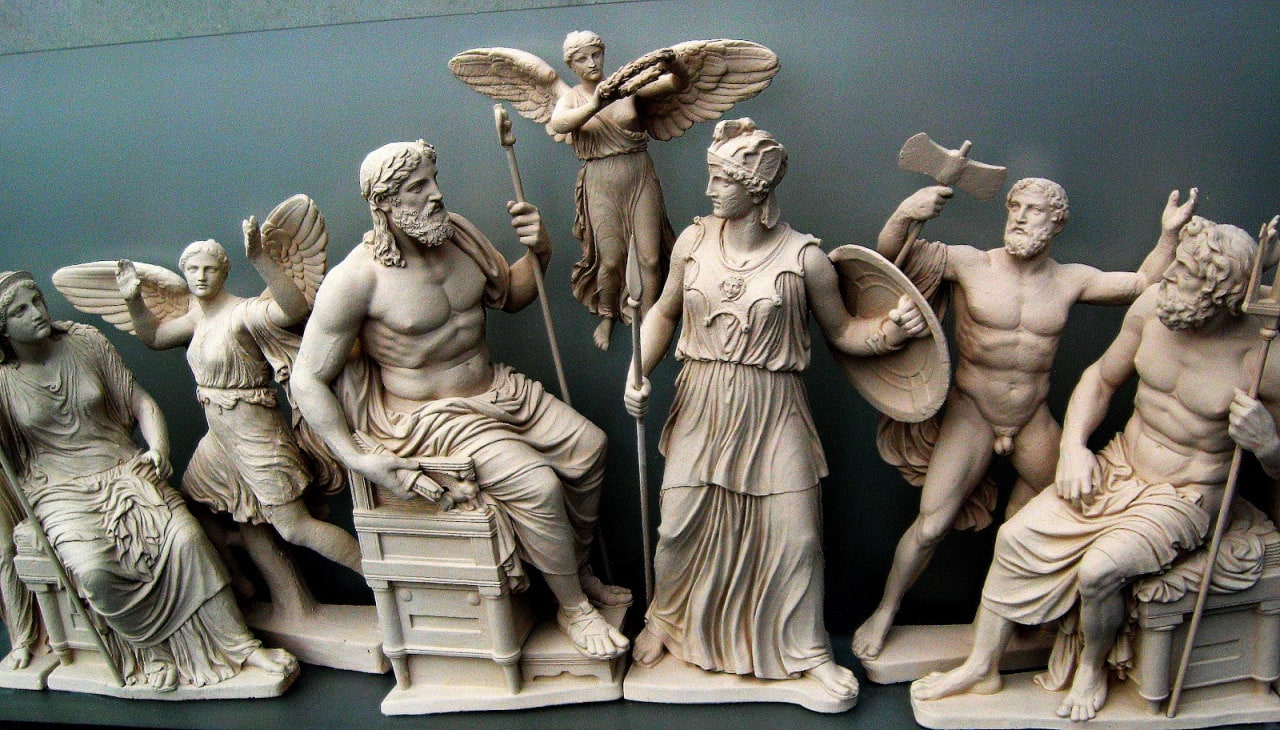
The East pediment shows her motherless birth, straight from the head of Zeus. The myth goes that the King of the Gods, complaining of a headache, had his skull cracked open by Hephaistos‘ mighty hammer and out popped Athena, fully grown and clad in armor.
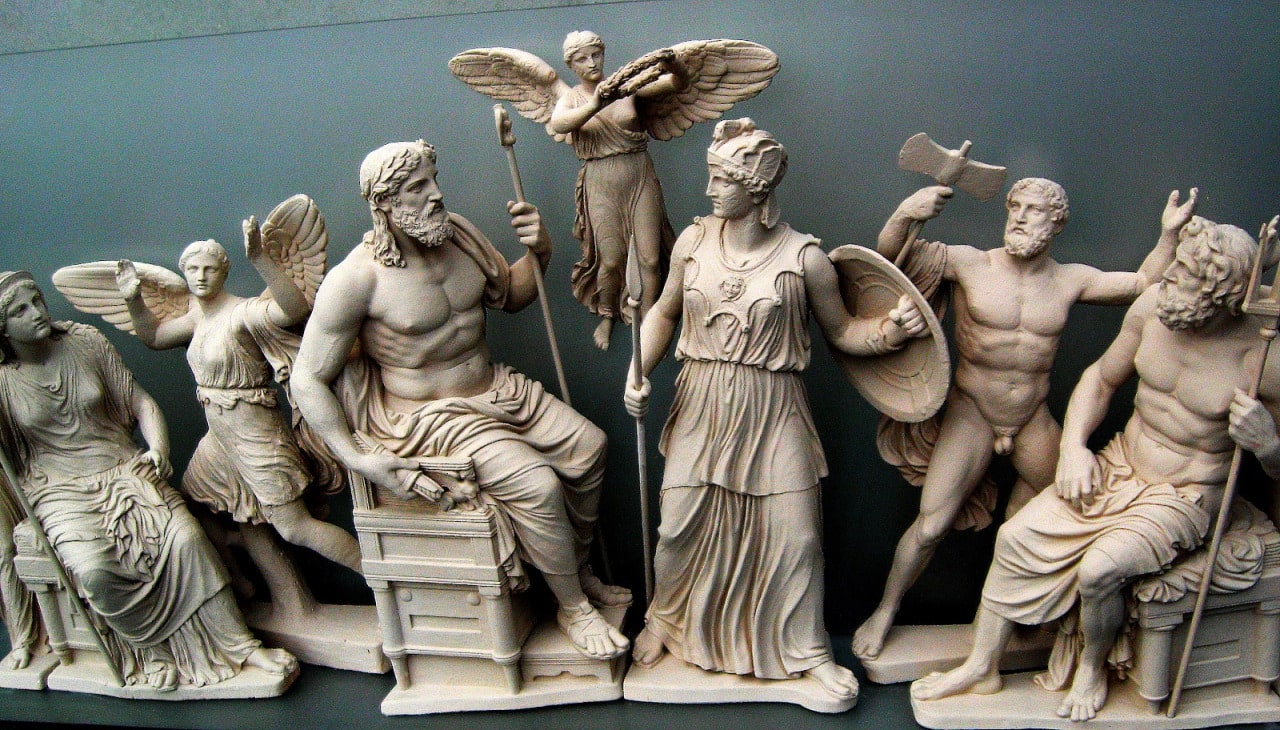
The West pediment depicts an early edition of Athens’ Got Talent (or whatever the devil the young people watch) with a competition between Athena and the sea-god Poseidon to win the honor of becoming the city’s patron deity by performing a beneficial miracle.
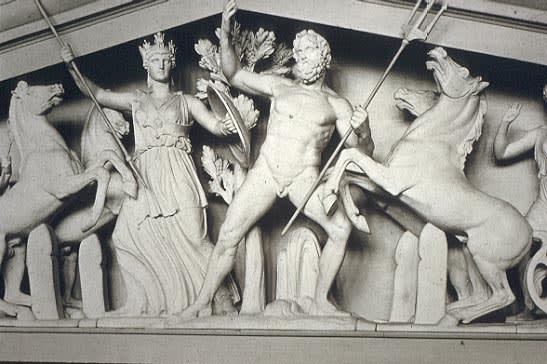
Poseidon created a salt water spring after striking his trident into the ground, to which Athena responded by producing an olive tree that is still visible on the Acropolis today.
Another myth explains that Athena triumphed over Poseidon because all the women, who made up a majority, voted for her and all the men for the sea-god. From this point on men decided women were not allowed to take part in elections. This fanciful, if amusing, tale of sour-grapes and misogyny is thought to have been a later introduction (i.e. during the democracy).
As well as her role as the patron deity, Athena also contributed to the ancient lineage of the city.
She was said to have been pursued by skull-cracker Hephaistos who, with the trademark chivalry of the ancient gods, attempted to rape her of her virginity. However he spilt his seed on the ground and from it Erecthonius, the mythological ancient king of Athens was born. Athena then became foster mother to the baby and brought him up on the Acropolis.
Whilst such stories may seem whimsical, sometimes fay, to us, the power of the physical imagery of Athena cannot be underestimated.
It was one of the key factors by which Peisistratus became tyrant c.557/6 BC. According to Terry Buckley:
“He dressed up a stunningly beautiful six-foot woman in full armor; it was then claimed through messengers that she was Athena…and that she herself in her chariot was delivering Peisistratus to her own Acropolis to take over the rule of Athens’.
Although it is highly unlikely that the people of Athens truly believed Athena had come to Earth and was standing next to a politician in a chariot, the symbolism of the stunt and the association to the goddess seemed to endear Peisistratus to many.
Thus, ‘I am driven with a mission from God’ is as timelessly effective as it is unoriginal.
The most significant role Athena played as the patron deity was her contribution in the Panathenaia, a huge, annual festival of religious devotion and national pride; a Christmas Day and 4th of July rolled into one.
Falling on Athena’s birthday (28th day of Hekatombaion), the vast scale of the festival is recorded on the 175-yard long frieze of the Parthenon and includes animals for sacrifice, metics (resident foreigners), musicians, infantry, cavalry, craftsmen, priests and ordinary Athenians marching by deme (parish).
Athletic competition was also a part of the festivities and, here again, we see the influence of Athena. The special olive oil that was given to the victors was presented in a vessel that had the goddess on one side and the chosen discipline of the victorious athlete on the other.
Over 1400 amphorae (or type of container/vase) of this sort were produced every year in time for the Panathenaia.
The celebration took place on a much larger scale every fourth year. As part of the Grand Panathenaia, a huge peplos (tunic) was placed on the 39 foot statue of Athena Parthenos, situated inside the Parthenon. Outside the temple, this elegance was starkly contrasted as Athena’s birth was re-enacted in a grisly ritual where a bull’s head was smashed open, though presumably without an armored cow jumping out.
This huge chryselephantine (gold and ivory) statue of Athena Parthenos is worth further comment. Containing 2400 lbs of gold, it was built between 447 and 438 BC, at a time when the Greeks had just resisted invasion against the mighty Persian army.
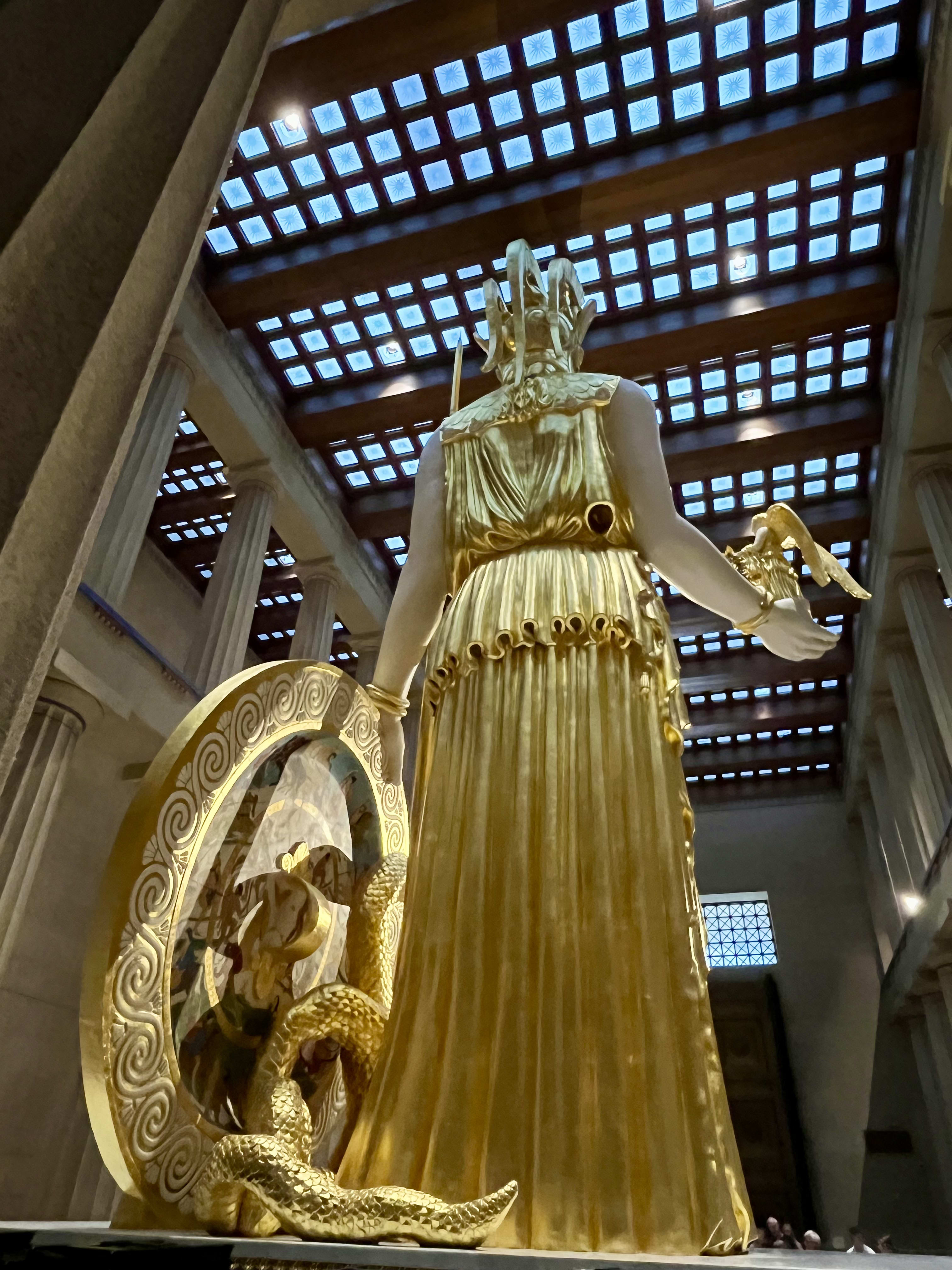
Thus, Athens was leading the world not only in terms of power, but also in culture; the finest thinkers, playwrights and scientists were either emerging from Athens or making an intellectual pilgrimage there. The grandeur and pomp of the Athena Parthenos was fitting, not only for the time, but for the thanks the citizens owed their patron protectress.
However, when the tables turned, it would have looked at best foolish and embarrassing, and at worst mocking and damning.
Don’t Turn Your Back on the Ancients… Become a Classical Wisdom Member and Learn from them instead:
During the latter part of the 5th century, Athens suffered a humiliating defeat in the Peloponnesian War against Sparta, not only sustaining huge casualties, but being transformed from the leaders of progressive thought and democracy to a second-rate power. The victorious Spartans even forced the Athenians to suffer the emasculating humiliation of having their protective city walls taken down.
As often happens when people feel god has abandoned them, they abandon god. However, in this instance, it seems Athenians abandoned the over-sized, suddenly incongruous sculpture, rather than the goddess herself.
The statue still remained a great work of art and a massive tourist attraction (there were at least 300 ancient replicas), but, as Andrew Stewart commented: “it swiftly lost its religious significance to all but a tiny minority… after 404 BC the Athena Parthenos became a museum piece”.
Astoundingly, there is a full-size replica of the mighty effigy in Nashville, Tennessee which boasts extraordinary attention to detail. The main difference being there is no documented evidence the original was made of gypsum and fiberglass.
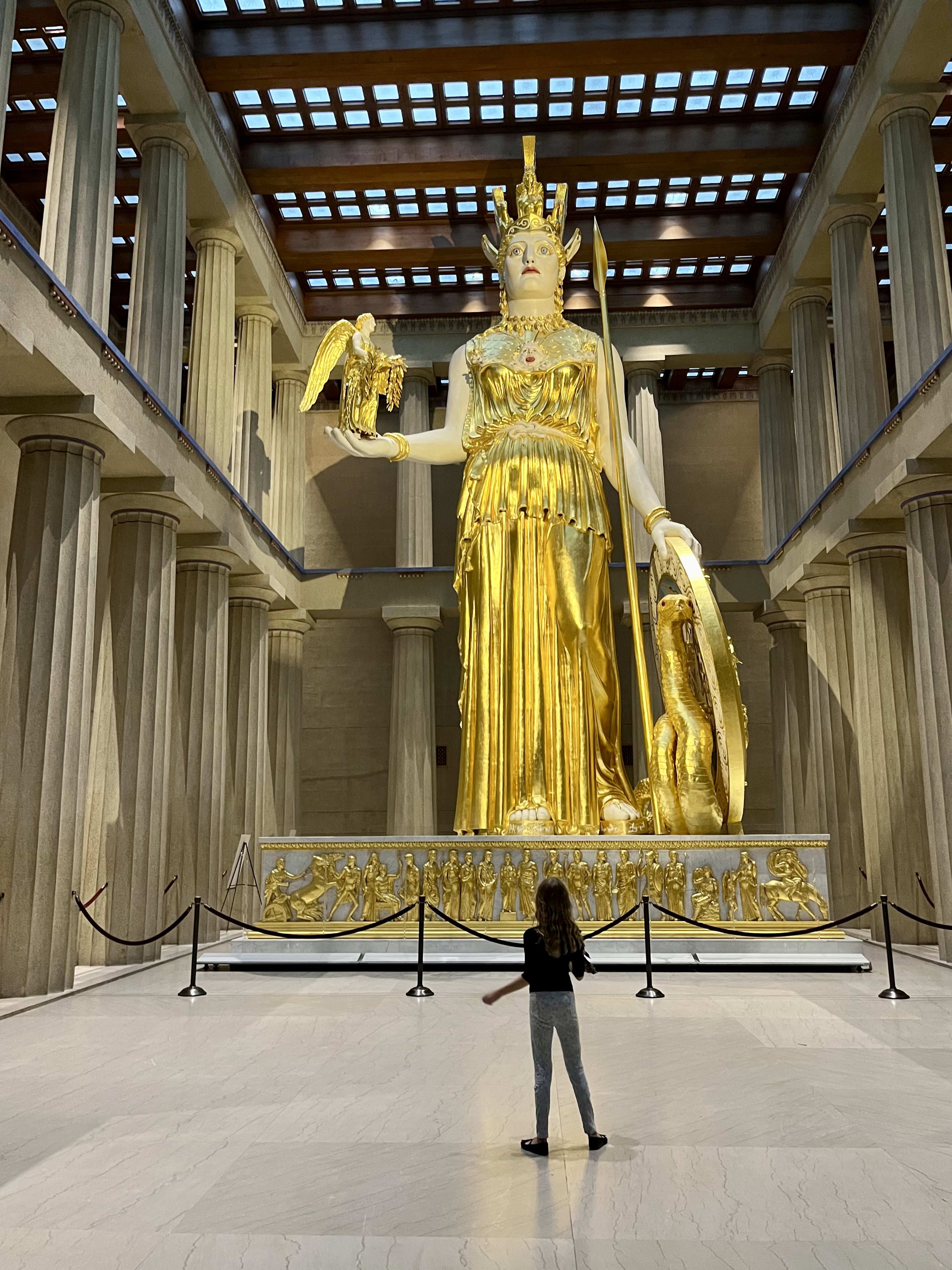
Despite her elevated status as patron, Athena was not totally dominant in religious worship in Athens. The Eleusinian mysteries were (rather ironically) among the best known of all the Athenian cults and primarily paid homage to Demeter.
Also, the erection over the Agora of the Hephaisteion in the 440s BC gives great and towering status to the would-be assailant of Athena. What may have been doubly galling to Athena fans is that this building was made to honor the blacksmiths for their role in the Persian Wars, despite Athena being sacred to metal-workers.
Some say Socrates (executed for impiety) and men like him were bringing into question the very existence or importance of the gods. Whilst of all the extant Athenian tragedies, only The Ajax of Sophocles casts Athena in a role of any importance.
Who was Ajax? And why was his tale so tragic?
Despite these aberrations, there seems little doubt that Athena was ever-present in the psyche of the Athenians and there was certainly enough good-will in the bank to maintain for her a place of prominence within the polis.
Although she had many sub-roles within society: being sacred to maidens, weavers, carpenters, oil manufacturers, and blacksmiths, combined with her reverential position as the goddess of eyesight, wisdom and warfare, it is the historical, nationalistic and social links that make her such an important figure as patron.
Certainly being responsible for the year’s biggest knees-up is something that would cause even the staunchest unbeliever to rejoice in her worship.
After all, piety is all well and good, but a party is usually better.
Más info en https://ift.tt/WFZmo3t / Tfno. & WA 607725547 Centro MENADEL (Frasco Martín) Psicología Clínica y Tradicional en Mijas. #Menadel #Psicología #Clínica #Tradicional #MijasPueblo
*No suscribimos necesariamente las opiniones o artículos aquí compartidos. No todo es lo que parece.

No hay comentarios:
Publicar un comentario