
Dear Classical Wisdom Reader,
“Where are you from?”
It’s the first question at parties, in Ubers, even among airport security lines.
It’s a question that, truth be told, is very difficult for me. As a ‘third culture kid’, my answer is dependent on how much time I have available...and how well I want to know the person. A cab driver will hear “I was born in Norway”... the potential new friend or colleague might be treated (or perhaps tortured) to the longer tale.
And I know I’m not the only one. I see an increasing number of kids and adults who live where they weren’t born, whose parents and lineage traverse the globe and whose future progeny will grow up in another state, country or hemisphere.
So what does that mean for our sense of belonging? How are we to understand where we are... from?
Regular readers of this humble page will no doubt know that, once more, this is not a new issue (despite it feeling so very modern). In fact, if you were to bump into the ancient Greek philosopher Diogenes on the street, complete with grubby cloak, unwashed hair, lantern in hand, and ask him where he’s from... you would be met with a wry grin. Instead of a city, a region, perhaps a proud declaration of Athens or Corinth, Diogenes would reply:
“I am a citizen of the world.”
It’s not an idea held solely by philosophy’s strangest cynic. Perhaps more famously, the Stoics believed we could stretch our sense of belonging until it wrapped around the entire human race. No passports, no checkpoints, just one great community under the sun. John Lennon would approve.
And while that might sound idealistic (or impossible after a few minutes on social media), it’s also oddly refreshing. After all, maybe being a “world citizen” isn’t about abandoning our roots, but about expanding our branches.
So… were Diogenes and the Stoics onto something? Or is it just a good, but improbably, soundbite? Dive in, and decide for yourself.
All the best,
Anya Leonard
Founder and Director
Classical Wisdom
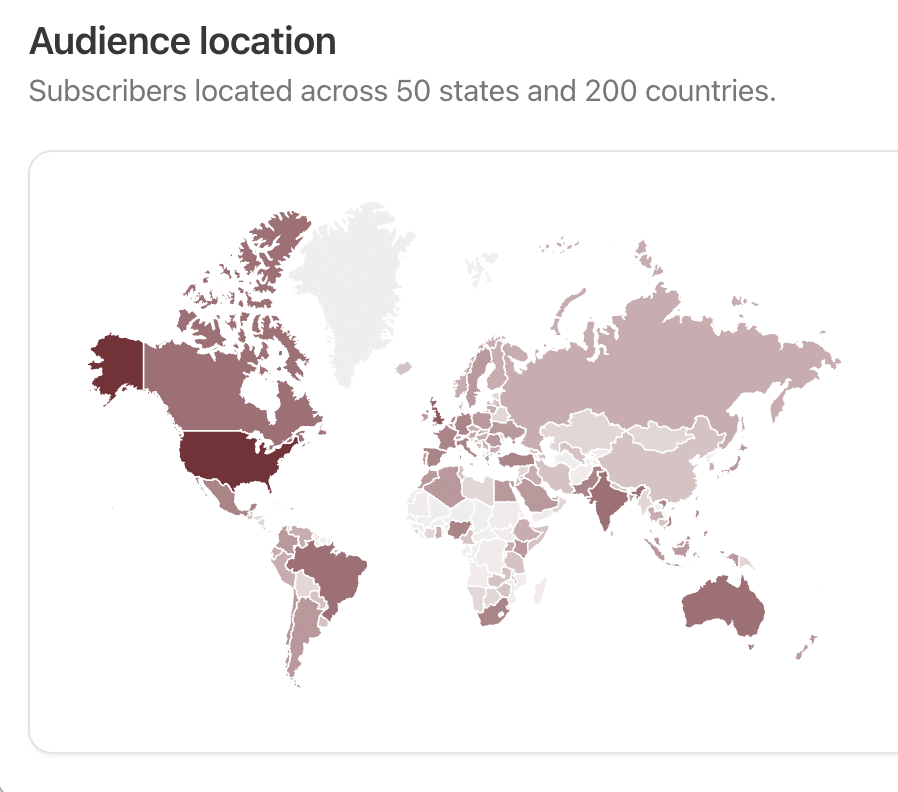
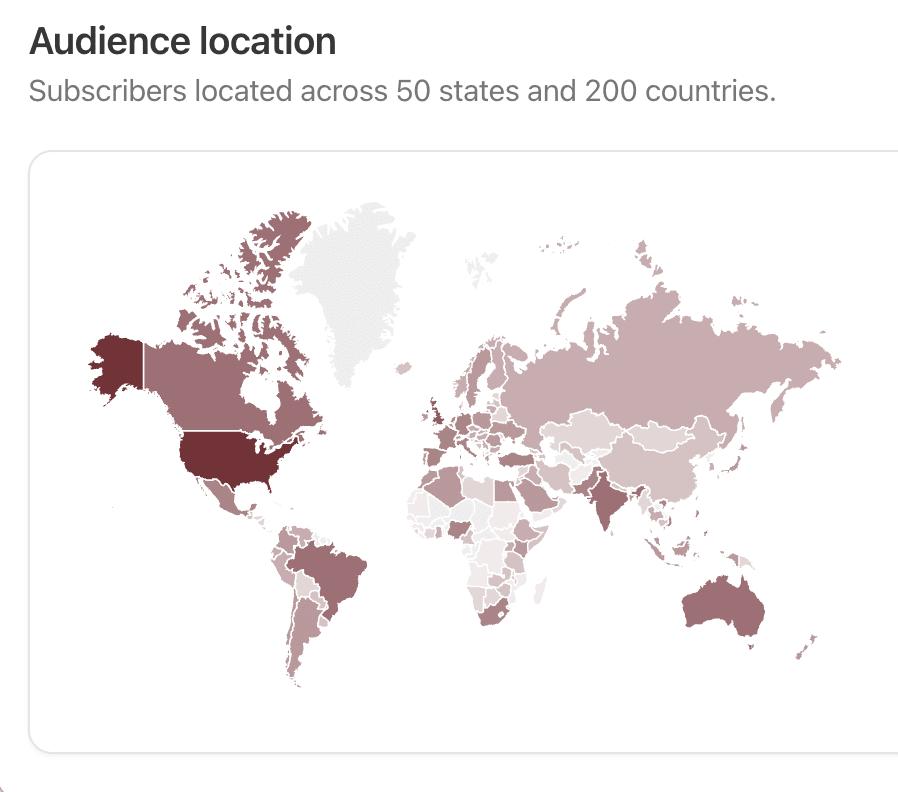
P.S. I want to take a quick moment to say THANK YOU to our fantastic community and especially our members. Found in all 50 states and throughout 200 countries, the love of ancient history is truly a universal endeavor.
If you aren’t already part of our growing community, become a free or paid subscriber to enjoy the wisdom of the past:
How to Be a Citizen of the World
By Alex Barrientos
The term ‘cosmopolitan’ is derived from the Greek kosmou politês, which roughly translates to ‘world citizen.’
The notion of what it means to be a cosmopolitan was probably best expressed in a response often attributed to Diogenes the Cynic who, when asked where he came from, responded, “I am a citizen of the world.”
Cosmopolitanism, a concept that finds its deepest roots in the arguments of the Stoic philosophers, conceives of the whole of mankind as citizens belonging to a single human community. Such a concept seems to be more and more relevant when we discuss the challenges that face us in the 21st century.
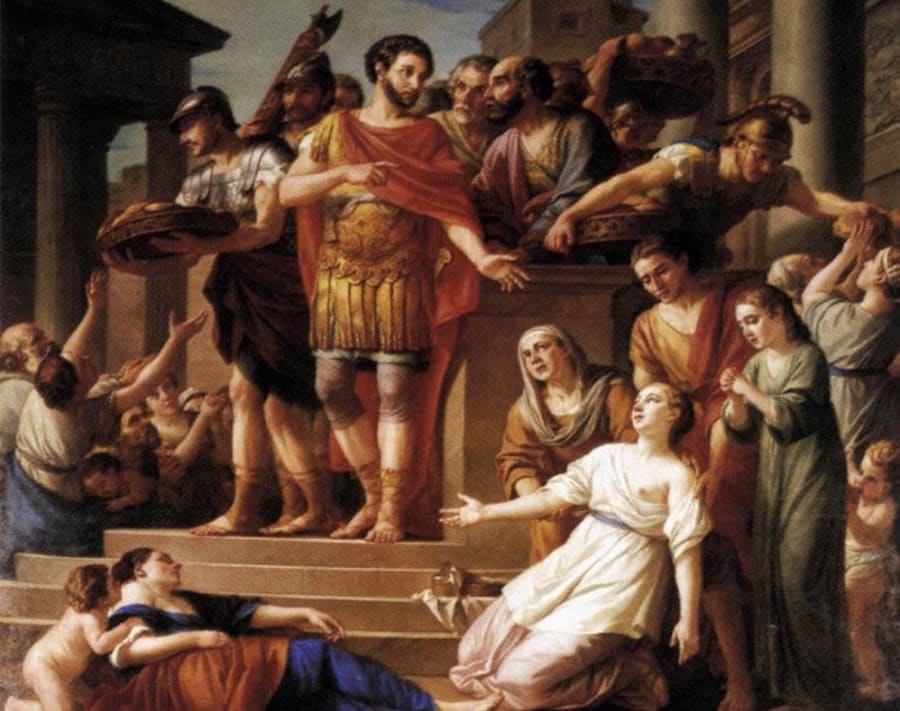
In this increasingly interconnected world of ours, the distinctions made between our responsibilities to fellow citizens and distant others are being blurred, and what properly falls within the scope of our moral concern seems in need of expansion.
Seneca, in his De Otio, wrote that,
[E]ach of us dwell, in effect, in two communities – the local community of our birth, and the community of human argument and aspiration that ‘is truly great and truly common, in which we look neither to this corner nor to that, but measure the boundaries of our nation by the sun.
It is to this “truly great and truly common” community that we truly belong.
For the Stoics this meant that moral obligation could not be founded on accidental factors such as where we happen to be born. It was, rather, our common humanity and the traits that define us as a species that serve as the foundation for our moral obligations.
As Martha Nussbaum put it, the Stoic view was that, “We should recognize humanity wherever it occurs, and give its fundamental ingredients, reason and moral capacity, our first allegiance and respect.”
That’s all fine and dandy, you might say, but is it really possible to see ourselves as citizens of the world? Is it really possible to show equal moral concern for distant others as we do now for our compatriots?
Well, the Stoics thought it was, or at least thought that we should.
Becoming Cosmopolitans
So how do we go about cultivating such cosmopolitan sentiments in ourselves? The Stoics had two techniques: 1) conceiving of the world as a single body and 2) taking a view from above.
1) The world as a single body
Regarding the first one, Nussbaum mentions that it was a favored exercise of the Stoic philosophers to “conceive of the entire world of human beings as a single body, its many people as so many limbs.”
Marcus Aurelius often used this example as a reason for cooperation with one another, writing that, “We are born for cooperation, like feet, like hands, like eyelids, like the rows of the upper and lower teeth.” And just as these body parts,
[W]ere made for a particular purpose, and fulfill their proper nature by acting in accordance with their own constitution, so man was made to do good: and whenever he does something good or otherwise contributory to the common interest, he has done what he was designed for, and inherits his own.
Nussbaum argues that this sense of cooperation is especially important for humanity as it moves through the 21st century—as we come to realize that “we live in a world in which the destinies of nations are closely intertwined with respect to basic goods and survival itself.”
2) Taking a view from above
The second method that can aid us is what Aurelius referred to as “[taking] a view from above.” This view allows us to see the many trivialities that divide us as human beings.
Looking from above, there are no borders, no flags, no promised land—the planet and all that exists on it is seen in its unity, and squabbles over religion, politics, and national pride begin to seem absurd.
Enjoy Classics beyond borders… Join our worldwide ancient history loving community today:
Literally taking a view from above, as detailed in reports by astronauts from their actual experiences of seeing the earth from space, can have quite an effect.
This experience is referred to as “The Overview Effect.” In their Declaration of Vision and Principles, The Overview Institute describes The Overview Effect as follows:
It refers to the experience of seeing firsthand the reality of the Earth in space, which is immediately understood to be a tiny, fragile ball of life, hanging in the void, shielded and nourished by a paper-thin atmosphere. From space, the astronauts tell us, national boundaries vanish, the conflicts that divide us become less important and the need to create a planetary society with the united will to protect this “pale blue dot” becomes both obvious and imperative.
Yet, you don’t need to be an astronaut in order to experience this… Photos of Earth taken from outer space, such as those taken by the Apollo missions or Voyager 1’s “Pale Blue Dot” photo, captured 4 billion miles away from Earth, instill a sense of awe and humility in the observer.
So much so that Carl Sagan wrote a book inspired by the latter of these images. In it he famously and beautifully wrote,
There is perhaps no better demonstration of the folly of human conceits than this distant image of our tiny world. To me, it underscores our responsibility to deal more kindly with one another, and to preserve and cherish the pale blue dot, the only home we’ve ever known.
In this passage Sagan demonstrates the kind of sentiment and attitude that can be gained by taking a view from above.
What’s the verdict?
Is it really this simple? Do these two methods for cultivating cosmopolitanism do the trick?
Maybe you’re skeptical.
Maybe you think that we are so naturally tribal that we are not capable of anything beyond nationalism or national loyalties.
Or, maybe you think there is something important about our more local affiliations that cosmopolitanism dangerously overlooks.
There are plenty of objections one could make, and plenty have been made.
We’re certainly not going to wake up tomorrow and all become cosmopolitans! If adopting such a view of the world and of others is at all possible, it will certainly take some effort.
Perhaps the Stoics were wrong, or simply naïve. Yet, perhaps the Stoic arguments for cosmopolitanism have something to offer this increasingly interconnected world of ours.
Whether their view is to be seen as plausible or preferable, I leave to you to decide, dear reader.
Más info en https://ift.tt/ZjWKtYJ / Tfno. & WA 607725547 Centro MENADEL (Frasco Martín) Psicología Clínica y Tradicional en Mijas. #Menadel #Psicología #Clínica #Tradicional #MijasPueblo
*No suscribimos necesariamente las opiniones o artículos aquí compartidos. No todo es lo que parece.

No hay comentarios:
Publicar un comentario