
Dear Classical Wisdom Reader,
I guess there’s big names and small names…
And I really think both are worth looking at.
Socrates, of course, casts a massive shadow over the history of philosophy (more on that later)… but his pupils went on to develop their own, separate legacies too.
The semi-Socratics (as they’re known) are a broad group, encompassing multiple different schools of philosophy. Yet each represents some distilled aspect of Socrates’ teachings, developed over the years to have a distinct identity of its own.
While they may not have had the influence of Socrates himself, they’re each fascinating and rewarding philosophies in themselves.
So today we’re looking at some of these smaller names of the ancient world… but if you want to know more about the BIG names, we have an exciting opportunity for you.
Our much loved course The Essential Greeks is enrolling now!
This is your chance to discover (or re-discover) the lives and works of some of history’s most important and influential thinkers and writers, including Socrates, Plato, Aristotle, Homer, Sophocles, Herodotus, and more.
Taught across six weeks though a combination of videos, live webinars, quizzes (and more), it’s a fantastic way to go in-depth into the culture and key texts of ancient Greece.
Whether you’re a complete newcomer or a long time lover of the world of the Classics, I can honestly say you’ll find it a fascinating and eye-opening experience.
Class starts on October 15th. You can sign up HERE.
To make things even better, if you enrol now, you’ll get $50 off.
We hope to see you there!
So I guess, after all, you can be a student of Socrates too…
All the best,
Sean Kelly
Managing Editor
Classical Wisdom
Philosophy’s Forgotten Chapter: The Semi-Socratics
by Van Bryan
You may be wondering, who are the semi-Socratics? Allow me to paint a picture for you.
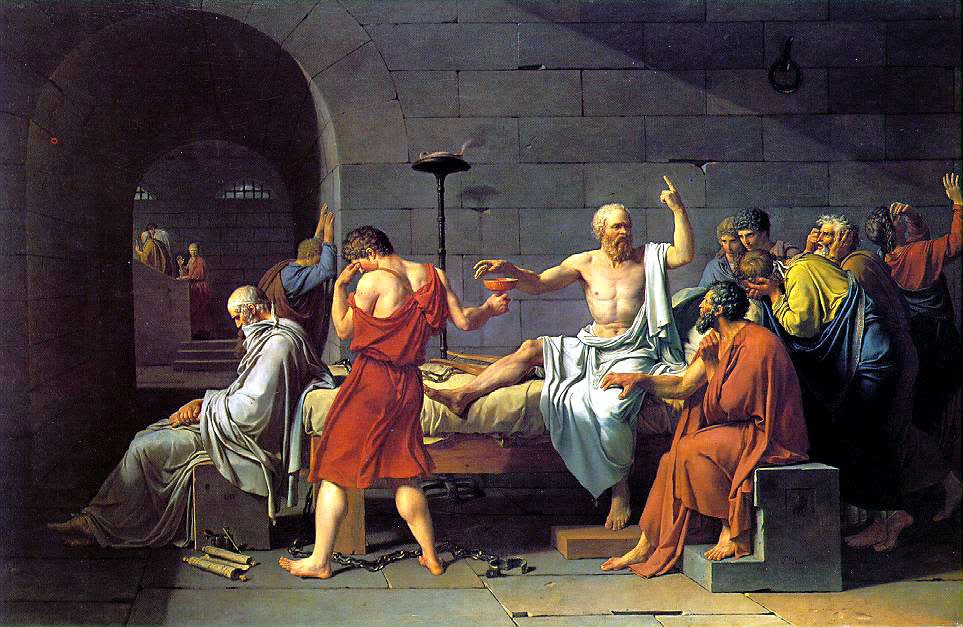
The year is 399 BC and Socrates, the man known as “the Father of Western Philosophy” is to be executed. What of his crimes? He has been found guilty of corrupting the youth and believing in strange gods. After a brief trial, which was immortalized by Plato within his Apology, Socrates is sentenced to death and willingly drinks hemlock poison. He dies in a small prison cell, surrounded by his friends and acolytes.
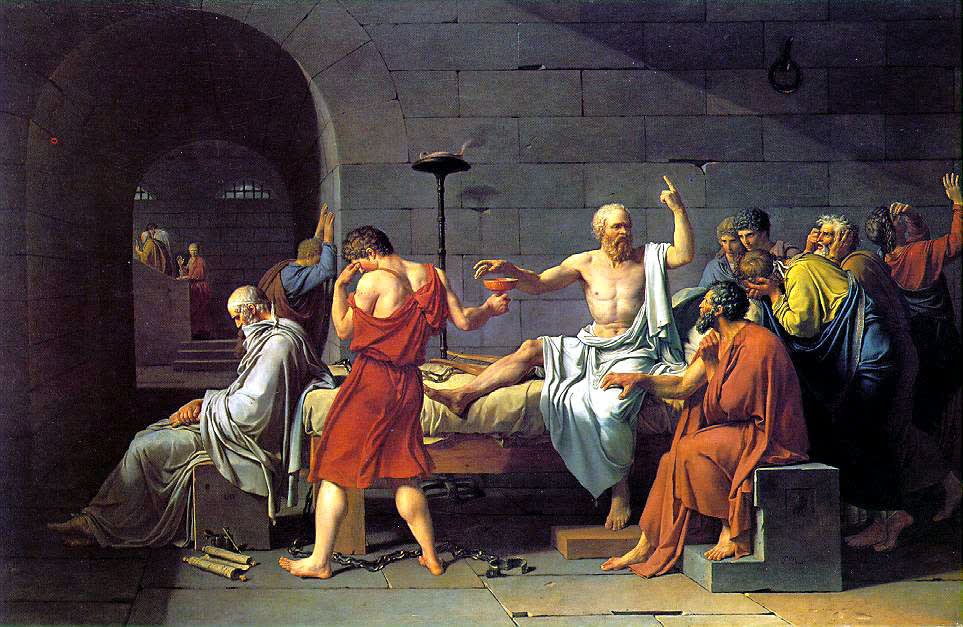
With Socrates’ body quickly becoming cold, a question arises: Now what?
While the Father of Western Philosophy did die in the year 399 BC, many of Socrates’ disciples would live for several more years. They would spend their time cultivating and developing new schools of thought that were intended to build upon the Socratic lessons that they had learned.
When classicists talk of Socratic disciples, we immediately think of Plato and his contributions following the death of Socrates. So profound were Plato’s ideas, so remarkable in their scope and implications that it is easy to just assume that Plato was the only follower of Socrates who ever did anything of note in the field of philosophy.
Believe it or not, there were other thinkers, influenced by Socrates, who went out and, for better or worse, planted their flag within the intellectual landscape of classical Greece. I say “for better or worse” because while Plato is often considered to have appropriately encapsulated Socratic thought, capturing all the intricate details while making sense of seemingly contradictory arguments, Socrates’ other followers started with core Socratic concepts and pushed them to extremes.
That isn’t to say that these semi-Socratic schools were “wrong”. However, Socrates was a large and many-sided personality whose teachings were composed of many divergent truths. Upon his death, it would seem that Socrates’ teachings were split into their component parts and his disciples latched onto certain precepts that suited their particular disposition and worked them to their logical extremes.
And so, following the death of the Father of Western Philosophy, several of these one-sided schools of thought arose in ancient Athens. Each of them claimed to truly represent the principles of Socratic philosophy.
The Cynics were one such school of thought. Founded by Antisthenes, a pupil of Socrates, the Cynics latched not onto Socrates the philosopher or Socrates the intellectual, but became infatuated with Socrates as a man of independent character.
“Virtue is sufficient for happiness, and for virtue nothing is requisite but the strength of Socrates.”- Antisthenes (The Lives and Opinions of Eminent Philosophers)
Reflecting his own teachings, Socrates was often uninterested in material possessions. He did not accept payment for his teachings, believing that wisdom and the prospect of knowledge was reward enough in itself. His disregard for applause, treasures, or the opinion of others was simply a byproduct of his unique lifestyle. They were not ends in themselves.
The Cynics, however, interpreted this to mean that independence from earthly pleasures was the goal and end of life. Virtue alone is important, and all that is required of a virtuous man is to live contently without the distractions of this world.
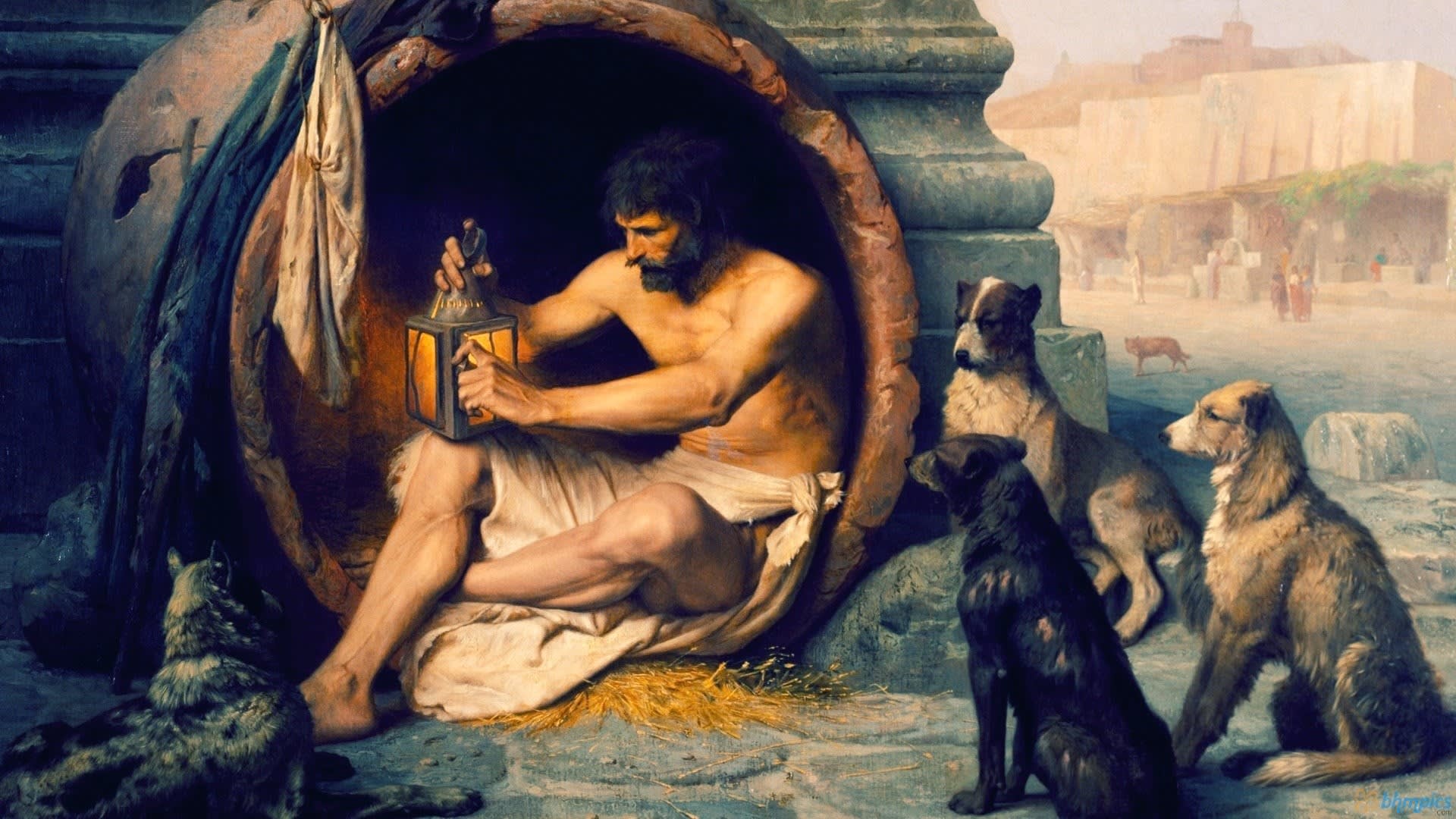
The Cynics often refused to live in homes, opting instead to survive as vagrants. It was said that Diogenes of Sinope, perhaps the most famous Cynic, lived in a large ceramic jar in the Athenian Agora. The Cynics flouted public opinion, and often engaged in indecent acts in the public square to demonstrate their indifference to societal norms.
The Cyrenaics, named for the hometown of their founder Aristippus of Cyrene, also concluded that virtue alone was important. Their definition of virtue, however, robbed it of any real meaning.
Socrates claimed that the virtuous life was choice worthy because it would make us happy. This does not necessarily mean that Socrates did not recognize our duty to do right for its own sake, even if it was not specifically advantageous for us. However, he was never clear on these points. Aristippus, following Socrates’ thinking to extremes, came to a hedonistic conception of virtue.
If luxury were ugly, it would not be found at the feasts of the gods.”- Aristippus (The Lives and Opinions of Eminent Philosophers)
The Cyrenaics, like Socrates, advocated that the sole aim of life was virtue. However, the Cyrenaics went one step further and claimed that the sole aim of virtue is our own advantage. Aristippus took this to mean that pleasure was, believe it or not, a virtue.
As a consequence of this thinking, the Cyrenaics lived a life of hedonistic pleasures. It is not just in our best interest to seek out wine, luxury, food, and sex, it is also our responsibility as morally responsible citizens!
Euclid of Megara, not to be confused with the mathematician of the same name, is our final semi-Socratic philosopher.
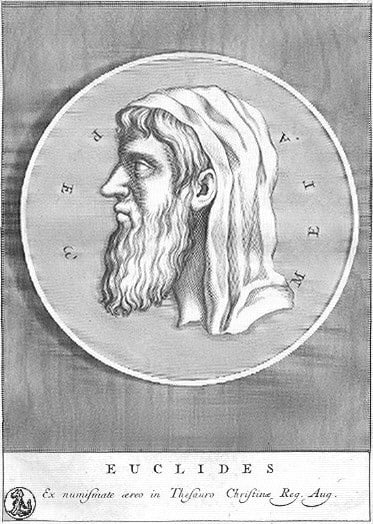
In order to understand Euclid’s philosophy, we must understand that Socrates did claim that virtue was the sole aim of life. But what is virtue? Socrates seems to tell us that virtue is knowledge. This leads us to the question: knowledge of what? Certainly virtue is not the knowledge of mathematics, astronomy, or biology. Some would suggest that virtue is knowledge of the ethical sciences, of morality.
Some of you may already be realizing the trouble with that suggestion. We would essentially be saying that virtue is the knowledge of virtue!
In truth, Socrates did not mean that virtue was the knowledge of virtue. Rather, he intended to tell us that virtue DEPENDED on the knowledge of virtue. To live virtuously, we must be educated in that which is virtuous. When we see it this way, we realize that Socrates was not arguing in circles at all.
Again, this was not always clear. So when Euclid of Megara put himself to considering the question of virtue, he actually borrowed a piece of philosophy from Parmenides to make sense of things. Euclid combined the philosophies of Socrates and Parmenides and created what would be known as the Megarian school of thought.
The Megarians believed that virtue was a knowledge and acceptance of the One Absolute Being. What does that mean exactly?
Essentially, the Megarians, with the help of Parmenides, claimed that all of reality has existed and continues to exist forever. There is no such thing as coming into being or change. Any change we might perceive is illusion cast over us by our senses.
All that exists is eternal, indivisible Being.
If the central concept of Socratic philosophy was The Good, and the central precept of Parmenidean philosophy was Being, Euclid now combined them and identified The Good as Being. Being, The Good, God, Divinity, these are all merely different names for the same thing.
What of other virtues? Virtues like benevolence, temperance, and prudence are merely different names for the one true virtue, knowledge of Being.
As I mentioned before, there is probably a reason you have never heard of the semi-Socratics. They aren’t Socrates, and they might not be the next best things either. They exist, however, as an interesting chapter in the history of philosophy. It is a chapter that not everybody gets to read.
Más info en https://ift.tt/N7xnF3b / Tfno. & WA 607725547 Centro MENADEL (Frasco Martín) Psicología Clínica y Tradicional en Mijas. #Menadel #Psicología #Clínica #Tradicional #MijasPueblo
*No suscribimos necesariamente las opiniones o artículos aquí compartidos. No todo es lo que parece.

No hay comentarios:
Publicar un comentario