
Dear Classical Wisdom Reader,
There’s a song I keep hearing on the radio, everywhere I go these days.
And one of its opening lines always jumps out at me: “Not even poetry can fix this”.
(After some quick Googling, I discovered it's by Irish singer-songwriter Dermot Kennedy, and cheerfully titled ‘Funeral’).
I suppose the line keeps sticking out to me because, well, it makes me wonder what exactly we expect to get out of poetry.
And, it turns out, (as with a great many things) the ancients asked the question long before us.
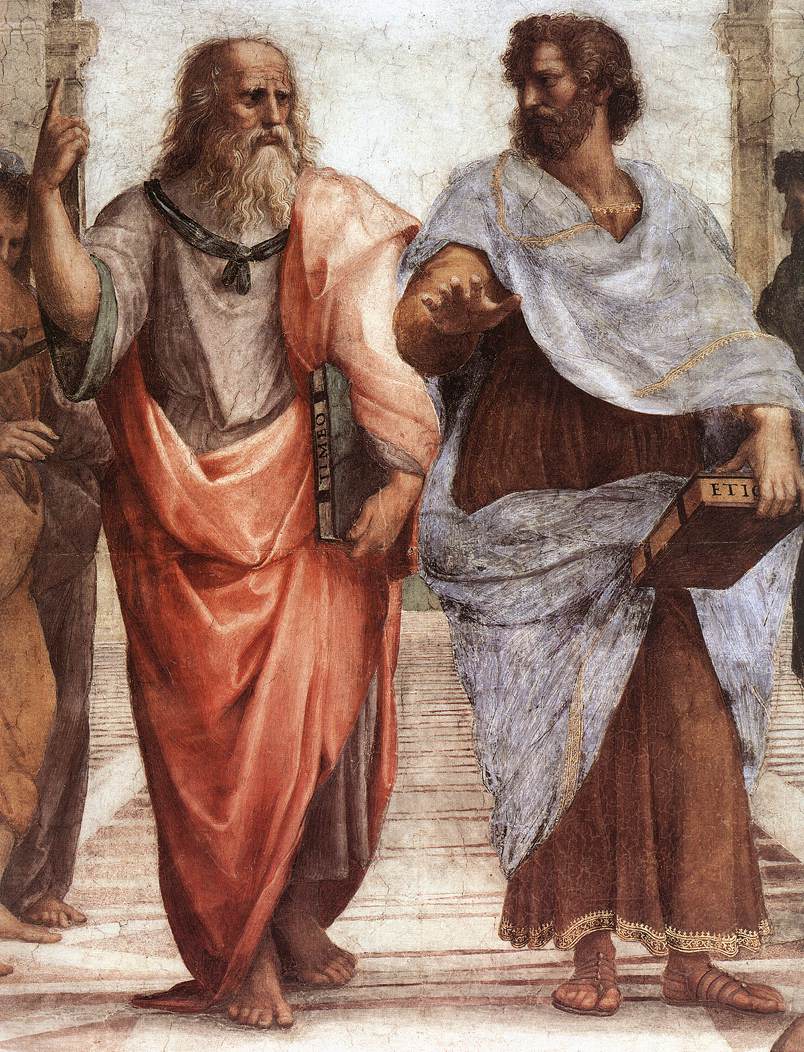
You might not realize, but the issue of whether or not poetry can be useful (or even moral) was a point of contention for two of the great philosophers of ancient Greece: Plato, and his former pupil, Aristotle.
Across two of their most celebrated respective works, Plato’s Republic and Aristotle's Poetics, they each present very different views regarding poetry.
So read on below to discover how and why teacher and student disagreed, and find out for yourself who YOU think has got it right.
But first…
Plato and Aristotle are just two of the ancient writers we'll be looking at in The Essential Greeks, our much-loved video course.
Through a combination of videos, live webinars, quizzes and more, we’ll be looking at the lives and works of some of the greatest writers and philosophers the world has ever seen.
Better yet, if you sign up today, you will get 10% off the full price.
Class starts May 5th. So don’t miss out: enroll today!
Enroll Here Today ~ Get 10% Off!
We hope to see you there.
All the best,
Sean Kelly
Managing Editor
Classical Wisdom
Can Poetry ‘Fix’ Us? Ask Plato and Aristotle
Written by Visnja Bojovic
Sometimes, students and teachers really disagree.
It is highly probable, for instance, that Aristotle’s Poetics (his treatise on drama and literary theory) was written in response to Plato’s criticism of poetry.
Plato objected that poetry plays on the emotions and thus undermines the highest part of our soul, the part that should at all times be in control: Reason. Aristotle cunningly showed, using the notion of ‘catharsis’, that while poetry does indeed play on the emotions, it does so in a way that actually enhances our reasoning!
Along with catharsis, Aristotle developed another very important concept that actually uses Plato’s arguments own against him.
Consider Plato’s famous Allegory of the Cave. Roughly put, the main message is that the world detected by our senses is a “shadow”, a mere copy of an immaterial world of eternal Forms that are incomprehensible to us. This world of Forms consists of abstract, perfect, unchanging concepts or ideals that transcend time and space, and which constitute the true nature of reality. Therefore, what is accessible to human beings is merely a misrepresentation of reality, a ‘mimesis’ (μίμησις) of these pure Forms.
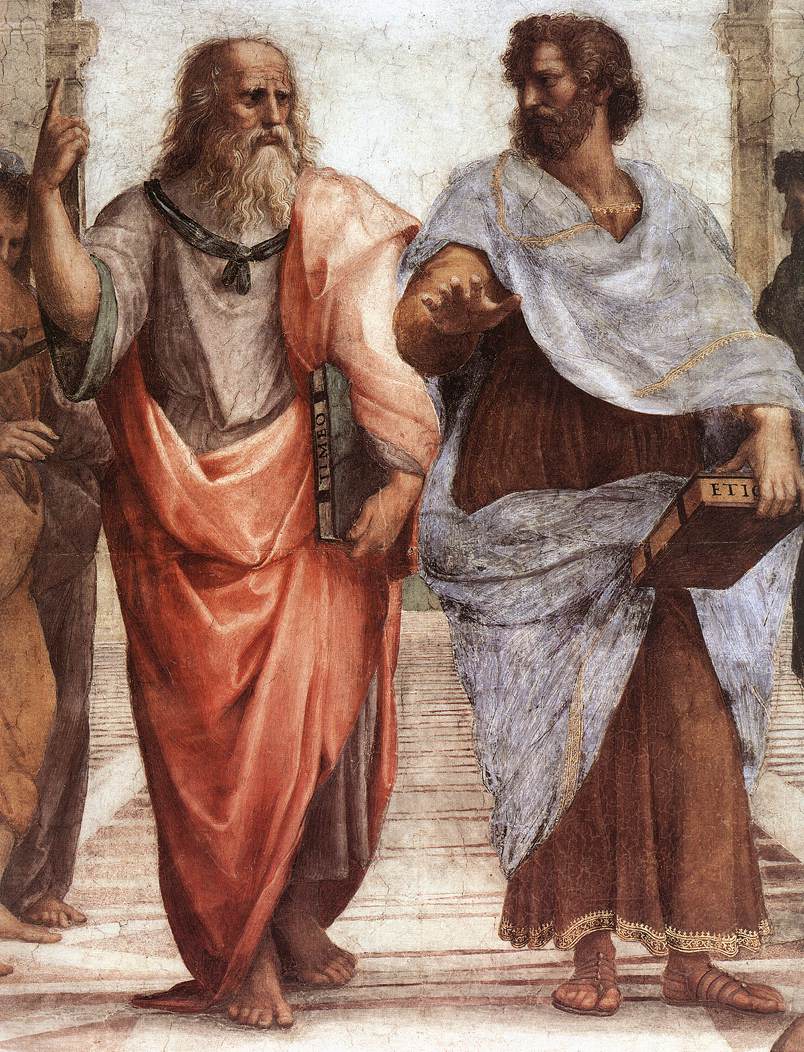
Now, if the world we encounter through our senses is already merely a copy or imitation of reality, then anything that imitates this imitation would be even farther removed from the truth! Poetry is one such imitation of an imitation. Because it imitates and relies on the world of the senses for its material, it takes us even further away from the truth, and thus nothing good can come from it.
“…I said that poetry, and in general the mimetic art, produces a product that is far removed from truth in the accomplishment of its task, and associates with the part in us that is remote from intelligence, and is its companion and friend for no sound and true purpose.” “By all means,” said he. “Mimetic art, then, is an inferior thing cohabiting with an inferior and engendering inferior offspring.” (Plat, Rep, 10.603 a-b)
Diplomatic as always, Aristotle accepted part of Plato’s theory, agreeing that art is a form of imitation. He even accepted Plato’s division of storytelling according to the different types of mimesis employed in it. Yet he did not agree that mimesis is bad in and of itself. Quite the opposite!
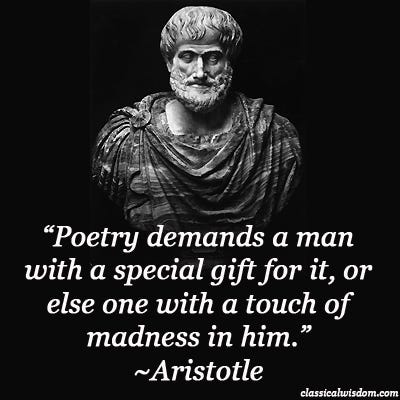
Aristotle argued that imitation is completely natural for human beings, and a necessary way of learning:
From childhood a man has an instinct for representation, and in this respect, differs from the other animals that he is far more imitative and learns his first lessons by representing things. And then there is the enjoyment people always get from representations. What happens in actual experience proves this, for we enjoy looking at accurate likenesses of things which are themselves painful to see, obscene beasts, for instance, and corpses. The reason is this: Learning things gives great pleasure not only to philosophers but also in the same way to all other men, though they share this pleasure only to a small degree. The reason why we enjoy seeing likenesses is that, as we look, we learn and infer what each is, for instance, “that is so and so.”
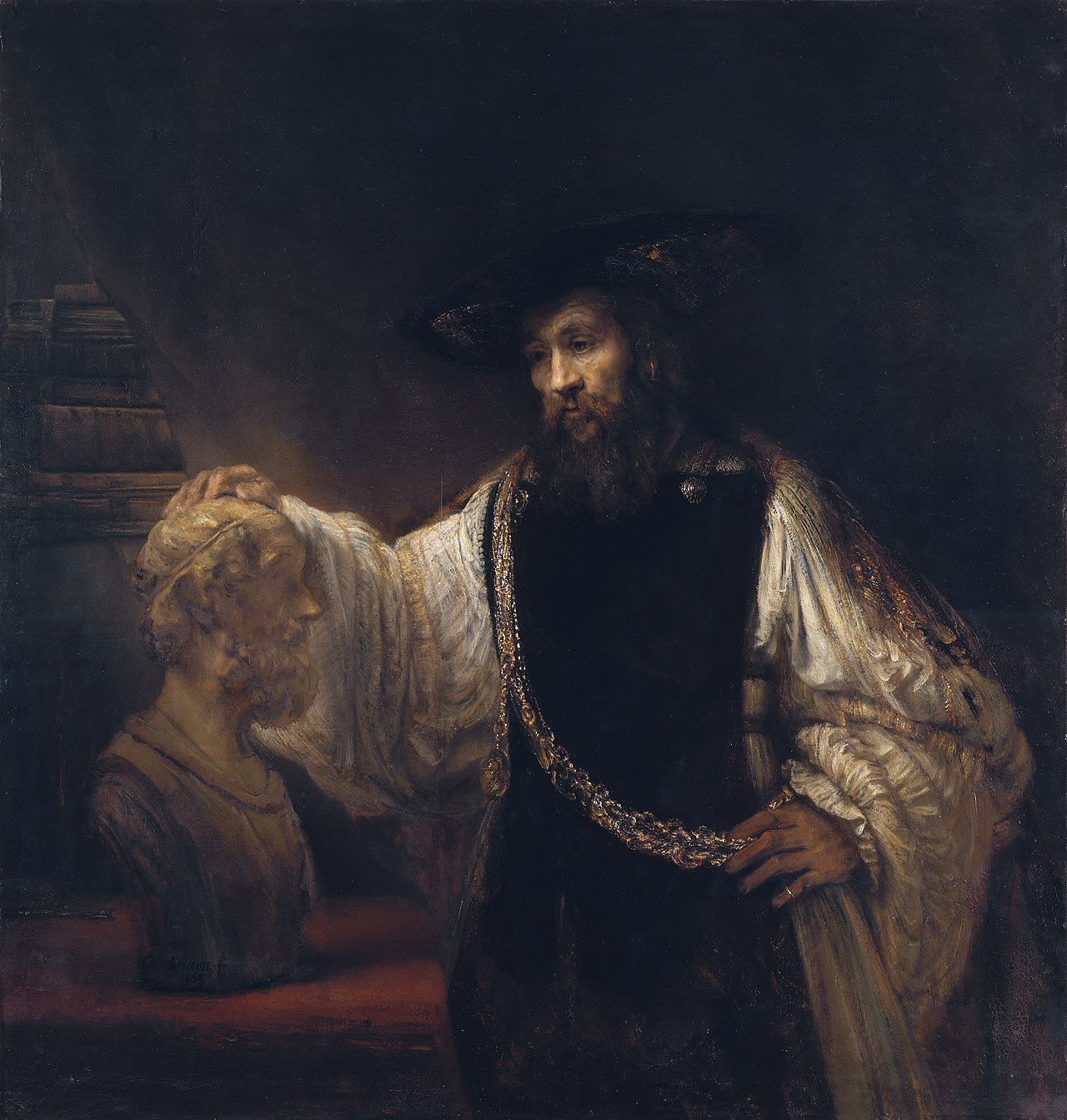
Thus, for Aristotle, imitation is inherent in human nature and plays an essential role in the formation of knowledge. Mimesis represents the crucial link between pleasure and learning because the audience enjoys learning while watching the results of mimesis. The thing represented to us through mimesis helps us learn and makes it enjoyable. Mimesis does not, as Plato thought, take away from knowledge and the search for truth.
Take a Deeper Dive Become a Member to go deeper into the world of the Classics with exclusive podcasts, e-books, in-depth articles and more!
Aristotle’s Poetics, small though it is, managed to shape literary theory for centuries and continues to do so. Today, we are all Aristotelians when it comes to art. I know I’m not the only one who has left a movie theatre feeling as though I’ve learned a valuable lesson, or who has watched a TV show and related some part of it to a struggle in my own life. In short, anyone who believes that lessons about life can be learned through epics, tragedies, and comedies alike is an Aristotelian when it comes to art.
Aristotle had a knack for turning the teachings of his mentor against him. We now see that he did this with catharsis and with mimesis. Judging from the fact that Aristotle’s arguments in the Poetics prevailed over Plato’s criticism of poetry, are we to think that Aristotle does indeed have the better argument? Living in an era where emotion seems to reign over reason, should we be more open to sharing Plato’s concerns about poetry and other arts that play on our emotions?
Does it lead us out of the cave and into the light, or is it just one of the many chains that shackle us to the cave wall, leaving us only with shadows?
The verdict? Like a great poem, I leave that open to interpretation.
Más info en https://ift.tt/XqmVMKz / Tfno. & WA 607725547 Centro MENADEL (Frasco Martín) Psicología Clínica y Tradicional en Mijas. #Menadel #Psicología #Clínica #Tradicional #MijasPueblo
*No suscribimos necesariamente las opiniones o artículos aquí compartidos. No todo es lo que parece.

No hay comentarios:
Publicar un comentario