

God's Grandeur
The world is charged with the grandeur of God. It will flame out, like shining from shook foil; It gathers to a greatness, like the ooze of oil Crushed. Why do men then now not reck his rod? Generations have trod, have trod, have trod; And all is seared with trade; bleared, smeared with toil; And wears man's smudge & shares man's smell: the soil Is bare now, nor can foot feel, being shod. And for all this, nature is never spent; There lives the dearest freshness deep down things; And though the last lights off the black West went Oh, morning, at the brown brink eastward, springs- Because the Holy Ghost over the bent World broods with warm breast & with ah! bright wings.
— (Gerard Manley Hopkins)
Let me begin with a question. Can there be a ’metaphysics of modernity’? I mean, isn't the very phrase a contradiction in terms? Isn't metaphysics, as the philosophy of being, above all distinction of time and place, age and nation? And isn't modernity bound to the wheel of time, changing from day to day, or at least from year to year?
Yes, there is indeed a conceptual opposition. But we have to take both concepts, that of ‘metaphysics’ and that of ‘modernity’, as they are here and now, in this point of time anel place. However much metaphysicians may pride themselves on rising, like the windhover, above the particularities that hem in our humanity, they remain human beings. ‘A man's a man for all that’. And however much moderns may pride themselves on remaining, like the hedgehog, on or even under the ground, there come times when even they feel like soaring into the air.
Nowadays, who can read the metaphysics of Aristotle without being aware that here is a Greek thinker of the 4th Century BC, bound in by all the circumstances of his age and nation? Much as we may admire his thought, especially the initial saying of his that all philosophy begins in wonder, we would never put it in the same words nowadays. It is all so dated. Even Plato is dated. And yes, I dare say it, even Shakespeare is dated.
But modernity, too, let us remember, is dated — in its very concept. Nowadays we even have to speak of ‘postmodern’, seeing that ‘modern’ has already slipped into the past; and ‘postmodern’ too, is showing signs of following suit. Such are what we call ‘signs of the times’. Yet with all this process of changing time, there are undoubtedly some things and persons and concepts that change more than others. And the metaphysics of Aristotle and Plato, the poetry of Dante and the drama of Shakespeare, may be counted among those less susceptible to that process.
And so I come to the third element of my title, ‘Hopkins’. Or rather,the poetry of Hopkins. He lived and died in the Victorian era, born wellafter Queen Victoria came to the English throne and dying well beforeshe ended her glorious reign. And while he lived, his poetry remainedunknown. So it can hardly be termed ‘Victorian’. Considering that thebulk of his poems were published at the end of the First World War, hedeserves the epithet of ‘modern’ no less than T.S. Eliot. And another
epithet fit to describe the poetry of both poets is ‘metaphysical’.
Having spent many years in the study of both Plato and Aristotle, not to mention Aquinas, I can affirm that poetry is no less metaphysical than philosophical prose. Prose of its nature tends to be discursive, proceeding from one consideration to another in a conversational manner — as is the nature of ‘dialogue’ or ‘discourse’. But poetry is impatient of such slow, sedative rationation. It jumps to conclusions in a moment, in the twinkling of an eye. Philosophy may, as Aristotle says, begin in wonder, but poetry has its beginning and end, and all the space between, in wonder.
For so Hopkins says, jumping from the outset of his poem to the heart of the matter, more surely than Aquinas ever did, ‘The world is charged with the grandeur of God.’ He doesn't need to know if God exists, or at least to prove God's existence to any doubters of his acquaintance. He simply takes it for granted, as the authors of the Bible take it for granted, that God is. In Him is the beginning and end of being, the rationale of metaphysics. He is the eternal I AM, or I AM WHO AM, or I AM WHO I AM; and that is all there need be said of Him, or of metaphysics.
God, as Aristotle’s unmoved mover, is at once circumference and center, at once heart of this little microcosm that is myself and heart of that great macrocosm that is the world. And what is more, is ‘charged’.
And so Hopkins jumps up from the world around him — or as he says
in another poem, ‘I walk, lift up, lift up heart, eyes’ — to what he findspresent and powerful in it all, ‘the grandeur of God’. In everything, hesees, with the eyes of faith and philosophy, he recognizes something
great, something grand, something glorious; and that, as Aquinas would say, when all is said and done, allowing for all particularities of place and time and circumstance, ‘that is God’. He is in all, as the being of all being, and yet he is above all, as not contained or comprehended by anything or anyone.
That is, in Ignatian terms of points for meditation, Hopkins's first point ‘The world is charged with the grandeur of God’. He moves in his wondering thought from the world around him to the grandeur of God in and above both the world and himself. He moves as it were from the point at the center of his vision, the little point of himself as he looks around, to the circumference of the world and to that other center both of the world and of himself. For God, as Aristotle’s unmoved mover, is at once circumference and center, at once heart of this little microcosm that is myself and heart of that great macrocosm that is the world. And what is more, is ‘charged’. Not just present or passively existing — as if anything can exist merely passively, when all existence (as Aristotle puts it) is energy, energeia — but actively pervading, imparting life, vigour, electricity.
All things in the world not just reveal his presence, or somehow show forth that presence to those who look for it: they proclaim His Presence. Or rather, that Presence is active in them, charges them with being, clamours in them, cries out like Wisdom in the streets. Again, as Hopkins also says of the stars at night, ‘Look at the stars! Look, look up at the skies!’ He can hardly contain his excitement; or rather, he feels as if it is the stars that cannot contain their excitement. They are longing to be seen, or rather to show forth the divine activity they have within themselves.
That is indeed their very essence, the being that dwells in all things.That is their purpose, their function in life, or what Aristotle would call
their telos — and what we make more learned, and more mystifying, by calling it ‘teleology’. It is their very selves, contained in their names. As Hopkins again says — like Shakespeare, he is always saying the same thing over and over again: ‘Each mortal thing does one thing and the same; deals out that being indoors each one dwells; selves — goes itself; myself it speaks and spells, crying What I do is me: For that I came.’ It is an intuition of being he can never sufficiently emphasize!
Or what does Shakespeare say to this effect? In one of his sonnets heasks, ‘Why write I still all one, ever the same?’ It is as if he has made his own the motto of Queen Elizabeth, ‘Semper idem’. True, in all his poems and plays there is endless variety; but the poet is always coming back to the same affirmation of self-being, ‘I am that I am’— almost as if in himself he has found the name of God himself. And so the heart's core of all his work is to be found in the moving reply of Cordelia (‘heart of Lear’) to her father's word of recognition: ‘And so I am, I am!’ Or take the words of another great poet-philosopher of modern times, G.K. Chesterton, who, in his book Orthodoxy, writes:
‘The repetition in Nature seemed sometimes to be an excited repetition, like that of an angry schoolmaster saying the same thing over and over again. The grass seemed signaling to me with all its fingers at once; the crowded stars seemed bent on being understood. The sun would make me see him if he rose a thousand times. The recurrences of the universe rose to the maddening rhythm of an incantation, and I began to see an idea’.
The world of nature all round us is so ‘charged with the grandeur of God’; and we human beings are so stupid, so deaf, dumb and blind, so unaware of it all.
So dumb! And so I come to Hopkins's second point in his deep poetic meditation. It is a kind of antithesis to his opening thesis. If ‘the world is charged with the grandeur of God’, he asks with another kind of wonder, or rather puzzlement, bewilderment, amazement, ‘Why do men then now not reck his rod’? Why are men so deaf, dumb and blind? Why are they everything that our modern political correctness forbids us to say about them?
God found fault even with the angels; and we have to be on our guard, even in the Garden of Eden, for snakes lurking in the grass.
For there are two worlds we have to distinguish in our poetical philosophy, even at the peril of being accused of dualism. There is, on the one hand, the world of nature, where everything seems to come directly from the hands of the Creator, everything seems to be as He originally made it — everything seems to be in its pristine state of purity. Though, notice, I insist on saying seems — we cannot be sure. For God found fault even with the angels; and we have to be on our guard, even in the Garden of Eden, for snakes lurking in the grass.
There is, on the other hand, the world of men, or the world as wehave made it over the ages. In some respects we may say we haven't
done such a bad job. The pyramids, the stones of Stonehenge, the Parthenon, the Colosseum, the great Gothic cathedrals, the palace of Versailles, Buckingham Palace, even ordinary domestic architecture right up till the year 1800. How beautiful, how graceful, how wonderful it all is! And then there is the varying music of the world to go with it. And all that has been written in world literature, poetry and drama. "What a piece of work is man!" we exclaim, with Hamlet. And yet, on consideration, after all, "Man delights not me!"
Yes, what a mess we have made of it all, and of ourselves! And not least in this our modern, or postmodern age! Why do we insist on modernity, when so soon we get tired of it and insist on our postmodernity instead? And then we aren't even content with being postmodern, but must needs call ourselves ‘post-postmodern’. It sounds so like Shaw's spoof on super-humanity (only he meant his words to be taken seriously). ‘By higher and higher organization man must become superman, and superman super-superman, and so on’. It all reminds me of nothing so much as the way we keep on changing the terms to be used for water-closets, employing euphemism after euphemism, though the reality remains the same, and the very words come to stink even more than the reality!
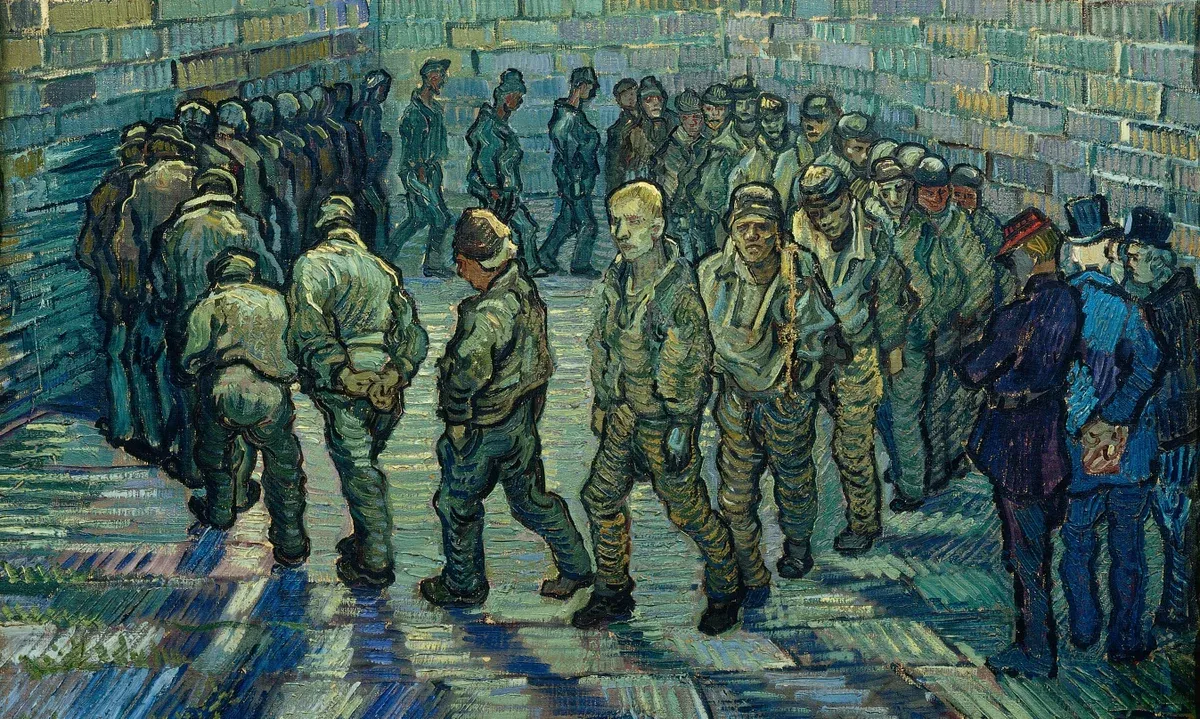
And so, Hopkins continues, ‘Generations have trod, have trod, have
trod.’ Ever so wearily, with such fatigue, such boredom, such utter disgust — till we turn it all into a modern metaphysic called existentialism, dignifying itself with the sacred name of existence, while degrading and secularizing that existence. And so, continues the poet, ‘all is seared with trade; bleared, smeared with toil; and wears man’s smudge and shares man’s smell: the soil is bare now, nor can foot feel, being shod.’
Think of all the wars … And think of all the economic progress achieved within that time, so as to concentrate all the wealth of the world in a few rich hands and to leave more people than ever before in the direst poverty! Of what can we now boast? Man delights not me!
Yes, as Hamlet continues in the same vein, ‘How weary, stale, flat and
unprofitable seem to me all the uses of the world.’ And again, ‘Fie on't, o fie! Tis an unweeded garden that grows to seed.’ Yes, there are these two aspects of man in the world: the one ideal, looking on man with hero-worship , as a kind of god; and the other real, laying emphasis on what Hamlet again calls ‘this harsh world’.
Least of all in this postmodern world can we human beings take any pride in our past achievements, when we limit our view to thetwentieth century. No wonder we no longer wish to be called ‘modern’ but prefer ‘postmodern’ or rather ‘post-postmodern’! Yet however much we change our self-description, with euphemism on euphemism, the reality remains — and it stinks! Think of all the wars, whether on a world-wide scale or within nations, that have taken place over the past century, assisted by all the achievements of science! And think of all the economic progress achieved within that time, so as to concentrate all the wealth of the world in a few rich hands and to leave more people than ever before in the direst poverty! Of what can we now boast? Man delights not me! So what is there left for us to do but to rub our noses in the dust, in
grovelling pessimism, like Shakespeare's Timon of Athens, misanthropes, haters of mankind? Is that Hopkins's conclusion, seeming to proceed straight out of his antithesis? No, not at all. He still has a third point for his Ignatian meditation, a third stage in his Aristotelian syllogism, or rather a third step in his Hegelian dialectic: a synthesis arising not simply out of his antithesis, but out of a conflict or controversy between his original thesis and the opposed antithesis. Or in Thomistic terms, it may be compared to the morning knowledge of the angels in the works of creation, arising out of a conflict between their preceding evening knowledge and the super-induced nocturnal knowledge of those who said, ‘We will not serve!’
Simply stated, it is the faith that ‘There lives the dearest freshness deep down things’. Even in the darkness of night, as it moves into the gloom of pre-dawn, even in the cold of winter, as all plants seem to have shrunk into their parent roots, even in the depths of death and decay, as our forebears have gone the way of all flesh, never to return to the world of the living, even in all this, we may believe, hoping (like Abraham) against hope, ‘there lives the dearest freshness’. We do not have to wait for the daffodils, or the crocuses, or even for the snowdrops to appear above the hard surface of the ground. We have but to remember what has been before, and what will presumably be again. Such is the power of that being which dwells indoors each one.
…a light which doesn't just emerge gradually from the horizon, as if somehow bashfully afraid of the antecedent night: it jumps up, it leaps up, it springs up with all the energy of childhood.
Such is the third point of the poet, and it is a point of light gleaming in
the darkness — like the light of a candle as recalled by the lady Portia on her return to the hall of Belmont. ‘How far that little candle throws his beams! So shines a good deed in a naughty world!’ And the same may be said of the good words in a poem like ‘God's Grandeur’. Only, notice! The light is not just that of a candle, or a lamp, or an electric torch, but it points to the approaching light of the rising Sun, appearing out of the East, or what Hopkins calls ‘the brown brink eastward’. And this is a light which doesn't just emerge gradually from the horizon, as if somehow bashfully afraid of the antecedent night: it jumps up, it leaps up, it springs up with all the energy of childhood. It can't be kept down, it is irrepressible, uncontrollable, bursting with all the vigour of existence which we may call resurrection.
And what is more, if we may add yet a fourth point to Hopkins's meditation, or a code to his sonnet or piece of music, it serves to renew in us our lost sense of wonder. ‘The world is charged with the grandeur of God’ — how wonderful! But, ‘generations have trod, have trod, have trod’ — trampled everything underfoot, filling all with weariness, sadness, depression, leaving no room for wonder except a black bewilderment. Yet now ‘There lives the dearest freshness deep down things’ — a freshness that we still believe to be present, even if we have to hope against hope. For after the night comes the dawn, and after the winter comes the spring, and after death comes the new life of resurrection.
Nor is this merely left on a level of faith: the sun does rise in the morning, the spring does appear after the winter, new generations are born in place of the old generations that pass away. Why?

Because, the poet answers, ‘the Holy Ghost over the bent world broods with warm breast & with ah! Bright wings’. There, behind the bent world, the world of men bent on getting their own way at the expense of everything else, there the Holy ghost is still at work, still energetic and energizing, with tender breast and outspread wings, in the symbol of the rising sun. There he is present and active. Or rather, there HE IS!And the poet feels as if he sees him, with an exclamation of wonder:
‘ah!’ Or as he also says in his other long poem of ‘The Wreck’, ‘Strike
you the sight of it? Look at it loom there! Thing that she ... There then!’ Evidently, words cannot express the reality, or if words, then words punctuated with silence. Everything that has gone before, in the darkness of night, in the cold of winter, in the death and decay of generation after generation, is but a preparation for his manifestation of light, warmth and life. And the words themselves expressive of lamentation lead up to this exclamation of joy and wonder, ‘ah!’
And here, in this ‘ah!’ of wonder, uttered by Hopkins in the last line of ’God's Grandeur’, one may recognize both his metaphysics, in the strict, if old-fashioned Aristotelian sense, and his modernity.
It is just what I find year after year with my Japanese students, who
find the English language, not the least the language of Hopkins in particular, so difficult. ‘The world is charged with the grandeur of God’ — what is ‘charged’? And what is ‘grandeur’? So out come the dictionaries, in search of these two words. Then the question, ‘Why do men then now not reck his rod?’ And again out come the dictionaries, this time for ‘reck’ and ‘rod’. Such simple monosyllables, yet even for them the dictionary isn't so helpful. Then, ‘there lives the dearest freshness deep down things’. But what has ‘dear’ got to do with ‘freshness’, and where is the preposition after the adverbial ‘deep down’? So many difficulties, at least for Japanese students, with not a few left over even for native English speakers! At last, however, comes the ‘ah!’ of wonder; and at last here is a word that even, or especially, Japanese students can identify with and make their own. And so for them there appears a new dimension of metaphysical light, the light of meaning out of the darkness of incomprehension!
And here, in this ‘ah!’ of wonder, uttered by Hopkins in the last line
of ’God's Grandeur’, one may recognize both his metaphysics, in thestrict, if old-fashioned Aristotelian sense, and his modernity, or even
postmodernity, appealing to the very latest generation of readers today. It is almost like the rising of a new sun, and the sudden exclamation of wonder it evokes from one who has got up early enough to appreciate it once again, ‘ah!’ And again, ‘ah!’
There is nothing more to be said.
Más info en https://ift.tt/iTQ1JD3 / Tfno. & WA 607725547 Centro MENADEL (Frasco Martín) Psicología Clínica y Tradicional en Mijas. #Menadel #Psicología #Clínica #Tradicional #MijasPueblo
*No suscribimos necesariamente las opiniones o artículos aquí compartidos. No todo es lo que parece.

No hay comentarios:
Publicar un comentario