
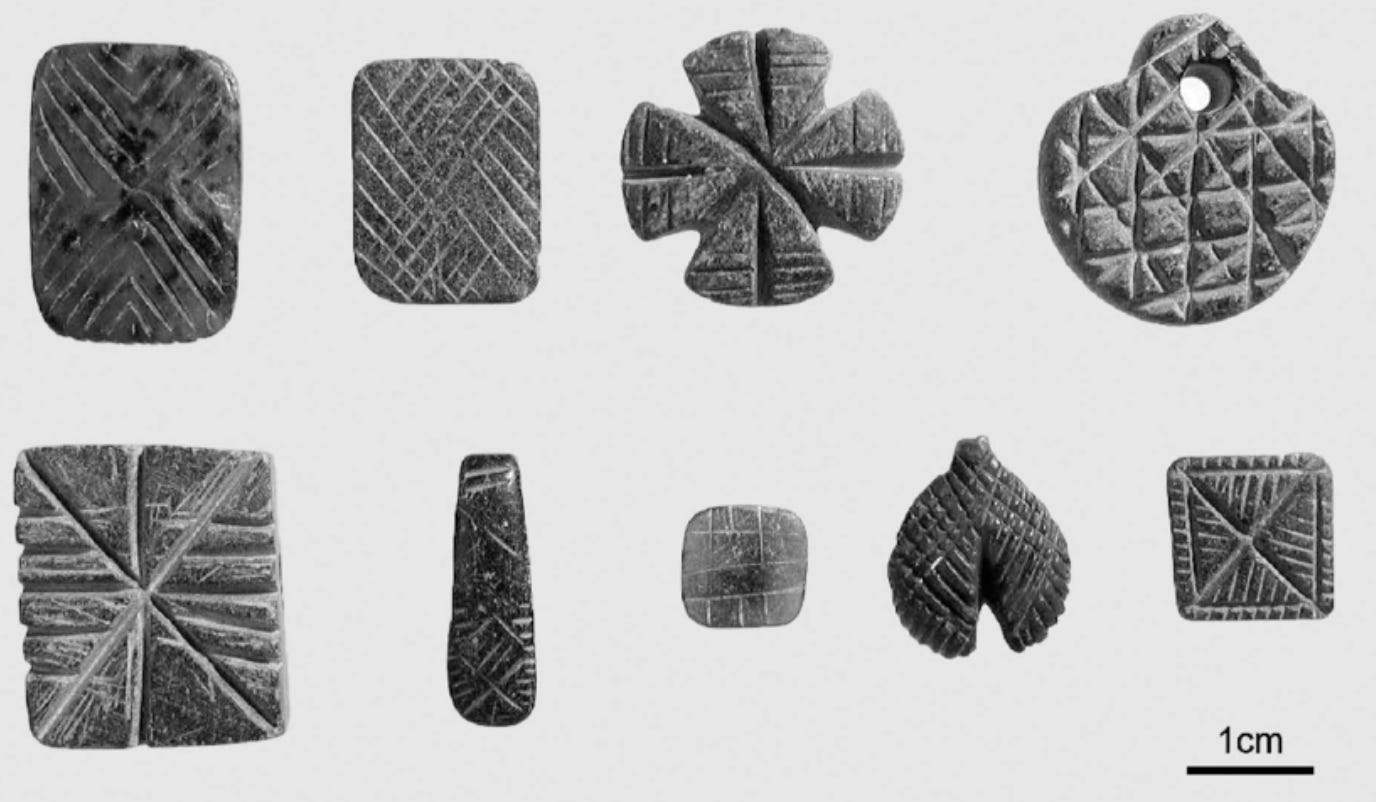
<p><img src="https://substackcdn.com/image/fetch/$s_!k2Ea!,f_auto,q_auto:good,fl_progressive:steep/https%3A%2F%2Fsubstack-post-media.s3.amazonaws.com%2Fpublic%2Fimages%2F24ecbd53-4e43-4bc5-a276-a35a6d9928f7_1376x802.png"></p><p><span>Dear Classical Wisdom Reader,</span></p><p><span>It’s a problem that is as old as civilization itself: How do you know something is authentic?</span></p><p><span>Today, when we try to establish something as genuine, we use signatures, passwords, facial recognition, two-factor authentication as well as those infuriating codes that make you go in virtual circles.</span></p><p><span>The ancient world had the same problem, though of course it took a different shape.</span></p><p><span>How do you prove a shipment of goods hasn’t been tampered with? How can you show a document is official? Or that the a person giving an order, especially an important one, has the authority to do so?</span></p><p><span>Their solution was remarkably elegant... and it didn’t even involve the Bitcoin blockchain!</span></p><p><span>Instead, it was a tiny carved object, pressed into clay.</span></p><p><span>But what is really fascinating about this small, practical answer to a very human problem is that it actually became much larger... surviving thousands of years, spanning empires and crossing cultures... leaving behind a fantastic (and revealing) archeological trail.</span></p><p><span>In today’s Members article, </span><span></span><span>, Antonia Edwards-Freshwater, follows seals across the ages...</span></p><p><span>All the best,<br>Anya Leonard</span></p><p><span>Founder and Director</span></p><p><span>Classical Wisdom</span></p><div><div><div><p><strong>Enjoy the Full Experience! Become a Classical Wisdom Member to access all our articles, Classical Wisdom Litterae Issues, as well as our extensive Ebook Library:</strong></p></div><div><div></div><div></div></div></div></div><p></p><h1><span>Sealed Across an Empire: How Mesopotamian Sealing Practice Shaped the Hellenistic World</span></h1><p><em><span>By Antonia Edwards-Freshwater</span></em></p><p><span>Empires get remembered for the things that they destroy.</span></p><p><span>Yet the successors of Alexander the Great did </span><em><span>not</span></em><span> destroy everything that ancient Mesopotamia had put in place; they just took it over. They kept the Mesopotamian archives and systems, because a working bureaucracy is too valuable to destroy.</span></p><p><span>And they kept the idea of </span><em><span>seals</span></em><span>.</span></p><p><span>The cylinder seal is a small carved stone, rolled across wet clay to leave a continuous, personalized design. Evolved out of the earlier stamp seal, it is one of Mesopotamia’s oldest bureaucratic inventions: used from around 3500 BC at </span><em><span>Uruk </span></em><span>to authenticate documents, close storerooms, and mark ownership of goods in transit.</span></p><p><span>For roughly three thousand years, from the first Halaf stamps at Domuztepe and Sabi Abyad at around 6000 BC, through to the rise of Mesopotamia’s first cities, the stamp seal was the only sealing technology the region had. It was refined, and relied upon by generation after generation of farmers, herders, and villagers long before anyone had built a major city, invented writing, or needed a more complicated system. It was a mature, trusted piece of technology in its own right.</span></p><p><span>This was, until around 3500 BC when the cylinder seal appeared at </span><em><span>Uruk.</span></em><span> </span></p>
<p>
<a href="https://classicalwisdom.substack.com/p/the-tiny-invention-that-outlived">
Read more
</a>
</p>
<p><a href="https://classicalwisdom.substack.com/p/the-tiny-invention-that-outlived" target="_blank">- Enlace a artículo -</a></p>
<p>Más info en https://ift.tt/fv1mkOR / Tfno. & WA 607725547 Centro MENADEL (Frasco Martín) Psicología Clínica y Tradicional en Mijas.
#Menadel #Psicología #Clínica #Tradicional #MijasPueblo</p>
<p>*No suscribimos necesariamente las opiniones o artículos aquí compartidos. No todo es lo que parece.</p>

No hay comentarios:
Publicar un comentario