
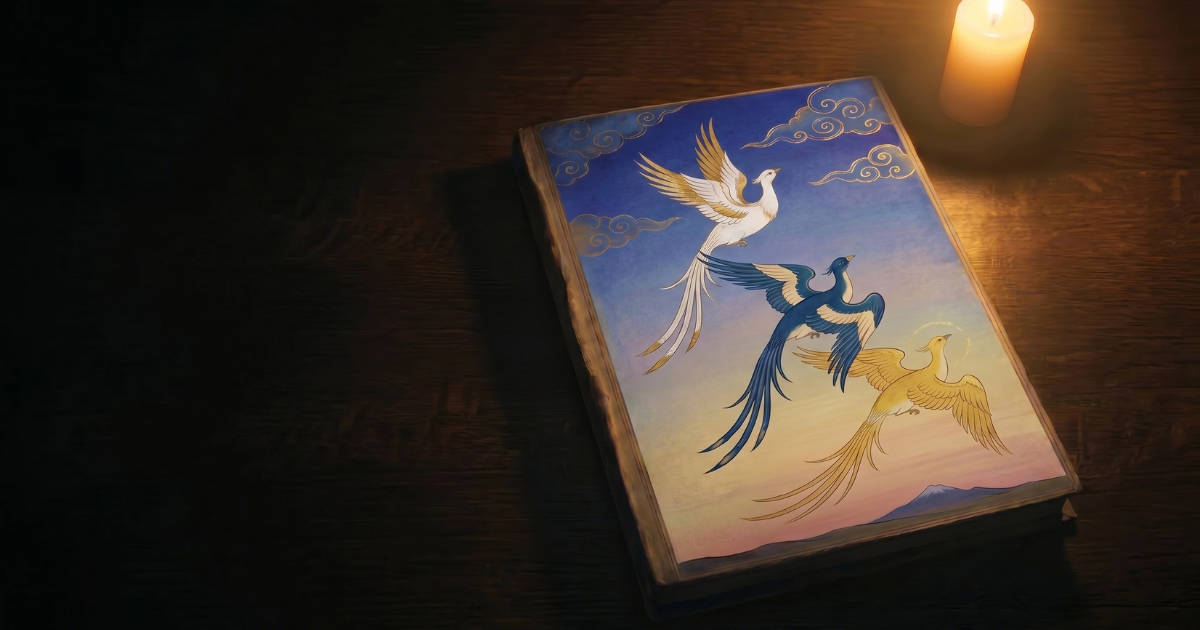
<div><div><iframe allowfullscreen="allowfullscreen" src="https://www.youtube-nocookie.com/embed/7WBZi81TCnI?rel=0&autoplay=0&showinfo=0&enablejsapi=0" frameborder="0" width="728" height="409"></iframe></div></div><h3>The Ecstatic Sayings of Ruzbihan Baqli · Sharh-e Shathiyat · Part 4</h3><p><em>The Secret Discourses of the Sufis</em></p><div><hr></div><p>Part Three ended on a question. The unnamed <em>subtle thing</em> had been brought out of nothingness, given a soul, sent the First Intellect as a messenger, and addressed by the One who had brought it forth. The address built across seventeen rhetorical questions and ended on the eighteenth:</p><div><div><div><p>Spiritualrelief's Substack is a reader-supported publication. To receive new posts and support my work, consider becoming a free or paid subscriber.</p></div><div><div></div><div></div></div></div></div><blockquote><p><em>Am I not your Lord?</em></p></blockquote><p>The chapter broke there. The spirits had not yet answered.</p><p>Part Four is the answer they gave, and what came of it.</p><p>The chapter does three things across §29 to §34. First, the spirits answer — and immediately ask for more, the way Moses asked for more on the mountain. Second, they get more than they asked for: the theophany of pre-eternity falls on them, the mountain shatters, and they are annihilated in the divine eye. Third, when they are brought back, they discover they have been changed. Each one has fallen into a different light of the divine attributes, and become a different kind of seer.</p><p>The chapter closes on three short lines about three birds. Those three lines have been quoted, defended, attacked, defended again, and quoted some more by every major Sufi writer for the next thousand years. They are the closing image of the cosmological poem, and they are the structural pivot of the entire <em>Sharh-e Shathiyat</em> — because the rest of the book will be Ruzbihan defending the three Sufis who said exactly what these three birds sing.</p><p>What follows is the chapter, in our translation from the Persian, set down with as little commentary as possible.</p><p>Read slowly.</p><div><hr></div><h3>On the Going-Forth of the Holy Spirits — Continued</h3><p>Then, in the wilderness of pre-eternity, the light of the light of the attribute came forth in the description of yearning, and was made manifest in the quality of love — <em>“He loves them”</em> — the attribute came. Then, from the soul, action arose. When the sweetness of the address of love reached the soul, the intoxication of love appeared. The lost-ones found the One-they-had-been-seeking. All said:</p><blockquote><p><em>Yes!</em></p></blockquote><p>They became the ones who said: <em>“Yes — they said: yes!”</em> And they became seekers of the bride of pre-eternity. From the head of intoxication, with the light of address, they were not content. Like Moses, they wanted the witnessing of the very-eye of all. They said:</p><blockquote><p><em>Lord, show me, that I might gaze upon thee!</em></p></blockquote><p>The Reality-of-realities said:</p><blockquote><p><em>To find the depth — you cannot see me.</em></p></blockquote><p>The very-eye of majesty made its theophany from dominion to kingdom. It marked the mountains of the actions. They were told: <em>“Look at the mountain!”</em> The spirits, having found their perfection, saw with the eye of the lights of grandeur. All became drunk and annihilated in the very-eye of God. <em>“Moses fell down in a swoon.”</em></p><div><hr></div><p>When the theophany passed over them for that single moment, intimacy brought them into the place of sobering. Those wine-drinkers of the wine of pre-eternity rubbed the embarrassed hand on the face of shame, crying <em>“I have turned to you!”</em> and shaking with much-grieving.</p><p>Then again, the freshness of the action — the silver of intimacy — from the east of the theophany at the dawn-time of the morning of the attribute, brought into the world of intimacy. In the wilderness of holiness, the field of glory blossomed. On the face of the gardens of <em>Be!</em> — Spring and the sweet-herbs — the unveilings of the standards opened the curtains of light.</p><p>In every flower, the union of the bridal-chamber of <em>I</em>; in every hyacinth, the convent of the dervishes of love; the lily of beauty became the dwelling of the nightingale of perfection. The shadow of the Tuba-tree of pre-eternity — full of the light of the Spring — the nightingales’ <em>“I am the Real!”</em> sounded; on the rivulets of the spring of pre-eternity, the hoopoes of the spirits drank the water-of-life of <em>Glory-be-to-Him!</em></p><p>From this, in the banquet of Solomon-of-oneness, from the head of intoxication, they became wearers of the crown of being. With the unseen-tongue of the human-intellect, in the holy nest beyond the Throne and the Footstool, they said:</p><blockquote><p><em>You have encompassed what we have not encompassed!</em></p></blockquote><div><hr></div><p>The parrots of the secrets became the wearers-of-the-cloak of the lights of grandeur. The soul of the soul became the interpreter of every soul. They came as messengers of the witnessings, the spies of the inmost depths. The intellect was scattered in that meadow of <em>Glory!</em>, that holy bird among tulip-bed and rose-garden, into pure contemplation. From the sea of pre-eternity, from the rivulets of the attribute, each one drank wine from the drinking-place of the very-eye of union.</p><p><em>“Each people knew their drinking-place.”</em></p><div><hr></div><h3>The Taxonomy of the Spirits</h3><p>Some fell into the drinking-place of the address — and from the dwelling-places of the address, became veil-keepers of the sciences of speech. In every science and address and word, they saw a root from the roots of pre-eternity. They became spies of the heart, scrutinizers of the unseen.</p><p>Some fell into the light of the actions. From there, on every door of being, they became lovers; and in the place of confusion of unification, with the tongue of resemblance-making, they spoke.</p><p>Some fell into the lights — they became the niche and the lamp of prophecy.</p><p>Some fell into the secrets of pre-eternity, until their breast became the springs of unknown-knowledge.</p><p>Some fell into the knowledge of pre-eternity. They spoke the trace of measure, by the indication of lordship, with the close-attendants of servanthood.</p><p>Some fell into the wisdom of the Pre-Eternal Pre-Eternity, until they came to know the inwardnesses of the actions. They became the philosophers.</p><p>Some fell into the light of omnipotence. To every imperfect one, they came as perfection. To every powerlessness, they came as power. From this they showed-forth signs of unknown-action, until in the magic of Harut and Marut they became Samiri.</p><p>Some fell into the very reality of the life of pre-eternity. In every breath, with every soul, they became the lost-one and the sleeping-intellect, becoming Israfil and Jesus.</p><p>Some fell into the light of the very-eye of pre-eternity. From there, they became Moses-like in unveiling.</p><p>Some fell into the light of the candle of pre-eternity, until in the witnessing of the presence of the pre-eternal address — without intermediaries — they heard, and made manifest the hidden-treasures of the secrets of the Essence.</p><p>Some fell into the sea of the pre-eternal words. With the tongue of the limit, without speech, they sang of the pre-eternal.</p><p>Some fell into the very-eye of will. They became contented in contentment, and willing-by-the-pre-eternal-will, until they were addressed: <em>“Be!”</em></p><div><hr></div><p>Some fell into the description of the Essence. From there, the mirror of the attributes came to them, without the trace of contingency.</p><p>Some fell into the light of beauty. They became the heads of the wineshop in love.</p><p>Some fell into the light of majesty. Without the trace of knowledge, they became the cup-bearers of the secret of the pre-eternal.</p><p>Some of those fell into beauty within beauty. From there, like Abraham, they became expanded in expansion.</p><p>Some fell into the very-eye of perfection, and in perfection became perfect, until — like the Beloved — they became the ones who say: <em>“I am not like any of you!”</em></p><p>Some fell into the floodings. From there, from Sinai, they fell down — annihilated — in the theophany.</p><p>Some fell into the dominions. From there they became effaced in the very-eye of <em>eye</em>.</p><p>Some fell into pre-eternity itself. With the tongue of self-subsistence, they said of themselves: <em>“Pre-eternal!”</em></p><p>Some fell into everlastingness. From there, without harm of contingents, they became <em>abiding</em> in <em>subsistence</em>.</p><div><hr></div><h3>The Three Birds</h3><blockquote><p>The bird of divestment sang <em>“There is no god but God.”</em></p><p>The bird of unification said <em>“I am the Real!”</em></p><p>The bird of holiness said <em>“Glory be to me!”</em></p></blockquote><div><hr></div><p>When they rose up out of the garden of the New-Year of contemplation, on the wing of pre-eternities, they passed by into the eternity-of-the-eternities. With the Real, in the Reality, they became companions. From him, <em>here-here</em> (now-now), they took up the hand-clasping-of-allegiance.</p><p>These birds of <em>Lahut</em> — the divine domain — brought the secret of <em>Lahut</em> into the dwelling-place of <em>Nasut</em> — the human domain. With the soul of <em>Lahut</em>, in the tongue of <em>Nasut</em>, they spoke. They themselves spoke, and from themselves they spoke, and with themselves they spoke. Their words came forth from the Real, the bride.</p><p>That bride went back to the bridal-chamber of nearness, and herself became hidden, and made manifest. Those drunken ones of the prison spoke. Only the drunk ones could hear.</p><p>Ah — for the Real in their tongue spoke the secrets of the everlasting; and in the mirror of mankind made manifest the beauty of the Lord-of-Majesty —</p><blockquote><p><em>for they spoke of the Real by the Real.</em></p></blockquote><div><hr></div><h3>End of Part 4</h3><p>The cosmological chapter closes here.</p><p>The three birds at the end name what every major figure of the early Sufi tradition will be killed or excommunicated for saying:</p><p>The bird of divestment — <em>There is no god but God</em> — is the shahada, the Muslim profession of faith, the line every Muslim recites. But here it is the song of <em>spirits</em>, and it carries a different weight than it does in the mosque.</p><p>The bird of unification — <em>I am the Real</em> — is what al-Hallaj said in Baghdad in the early tenth century and was killed for, in 922 CE. <em>Ana al-Haqq</em>.</p><p>The bird of holiness — <em>Glory be to me</em> — is what Bayazid al-Bistami said in Nishapur in the ninth century, and was driven out of his town for. <em>Subhani</em>.</p><p>The third chapter of the <em>Sharh</em> — <em>Part 5</em> in our series — will begin Ruzbihan’s defense of these spirits and what they said. Why their words were not blasphemy but transmission. Why the people who killed them and the people who killed others like them were wrong. The catalog of the persecution of the saints, from Adam to Hallaj.</p><p>Until then, sit with the three birds.</p><div><hr></div><p><em>Translated from the Persian by James King for SpiritualRelief, working from Henri Corbin’s critical edition (Bibliothèque Iranienne, Tehran 1981).</em></p><p><em>The video version of this chapter — read aloud, set to music — is on the SpiritualRelief YouTube channel. Subscribe here to read each part as it lands.</em></p><div><div><div><p>Spiritualrelief's Substack is a reader-supported publication. To receive new posts and support my work, consider becoming a free or paid subscriber.</p></div><div><div></div><div></div></div></div></div>
<p><a href="https://spiritualrelief.substack.com/p/the-three-birds" target="_blank">- Enlace a artículo -</a></p>
<p>Más info en https://ift.tt/TxA4CUW / Tfno. & WA 607725547 Centro MENADEL (Frasco Martín) Psicología Clínica y Tradicional en Mijas.
#Menadel #Psicología #Clínica #Tradicional #MijasPueblo</p>
<p>*No suscribimos necesariamente las opiniones o artículos aquí compartidos. No todo es lo que parece.</p>

No hay comentarios:
Publicar un comentario