
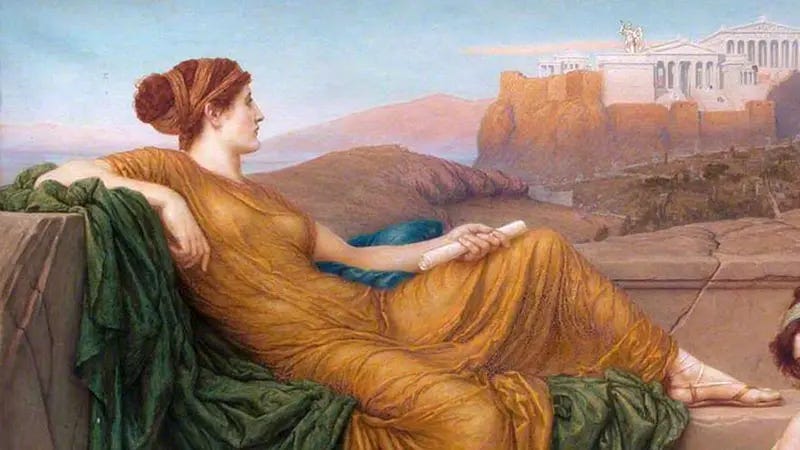
<p><span>Dear Classical Wisdom Reader,</span></p><p><span>It’s certainly a trend I can get behind... Over the last century or so, more and more historians and classicists have been taking a second look at important figures from the past. Reexamining the literary tradition and cross-referencing it with archaeological evidence, they are attempting to parse the truth from the story.</span></p><p><span>Can they determine whether the version we think we know is the </span><em><span>real</span></em><span> one?</span></p><p><span>If we are truly honest, there probably is no single </span><em><span>real</span></em><span> version...or, if there is, we may never know it. But often, a fresh set of eyes can reveal a completely different tale, while also exposing the biases of the writers who shaped the stories we inherited.</span></p><p><span>This has happened plenty of times to all sorts of men from the ancient world, from grand emperors like Nero to slaves and gladiators like Spartacus, and even to the warriors of celebrated city-states such as Thebes or Sparta!</span></p><p><span>But some might venture that it has happened even more often to the myriad women of the ancient world, many of whom have been warped into villains, flattened into caricatures, or slandered as sexually immoral.</span></p><p><span>Now, I’m not saying all these ancient ladies were actually angelic...or that some of them didn’t deserve the harsh treatment they received. I suspect people will be debating the morality of Rome’s first empress, Livia, for as long as her name is known.</span></p><p><span>However, there appears to be an even wider chasm between fact and fiction when it comes to foreign women. After all, they already fall outside so many familiar norms and customs, particularly in the eyes of the Greek and Roman writers describing them... You can see how they would become easy prey for defamation and misrepresentation.</span></p><p><span>(And I’m not saying that just because I’ve almost always been a foreign woman!)</span></p><p><span>Few women demonstrate this problem quite as well as Aspasia of Miletus. A foreign woman at the very heart of classical Athens, she became the partner of its most powerful statesman and was associated with some of its greatest intellectual figures. Ancient writers credited her with remarkable powers of rhetoric and even connected her with Socrates himself.</span></p><p><span>Yet those same ancient traditions give us a very different Aspasia as well: a courtesan (or worse) accused of sexual impropriety and blamed for exerting a dangerous influence over powerful men.</span></p><p><span>So who was the </span><em><span>real</span></em><span> Aspasia?</span></p><p><span>Today, we will look at a woman whose importance </span><em><span>may</span></em><span> have been absolutely extraordinary...a woman said to have influenced both the philosopher Socrates and the great statesman Pericles...</span></p><p><span>...or perhaps not.</span></p><p><span>Read our Member’s In-depth article to discover the history of Aspasia and decide for yourself whether she was really all that they say she was ...</span></p><p><span>All the best,</span></p><p><span>Anya Leonard</span></p><p><span>Founder and Director</span></p><p><span>Classical Wisdom</span></p><p><span>P.S. A quick note to say a BIG THANK YOU to our wonderful Classical Wisdom community, especially our fantastic members who make all this possible. Your commitment and patronage to the Classics helps bring these ancient lessons to modern minds… </span></p><p><span>Moreover, you continue contribute to this wonderful group just by reading, liking, commenting each week! Thank you! </span></p><p><strong>Not a member?</strong> Take a moment to check out our subscription options so that you can be a part of our wonderful community AND access all our resources, from exclusive podcasts with professors to members in-depth articles (like today’s exploration on Aspasia). Check it out:</p><p><a href="https://classicalwisdom.substack.com/subscribe?"><span>Subscribe now</span></a></p><h1><span>In Search of Aspasia</span></h1><p><em><span>By Mary Naples, author of </span><a href="https://www.amazon.com/Unsung-Heroes-Women-Ancient-World/dp/B0D49228ZD">Unsung Heroes: Women of the Ancient World</a></em></p><div><p><span>“</span><em><span>The greatest glory of a woman is to be least talked about among men, whether for good or for bad” - </span></em><span>Pericles’</span><em><span> Funeral Oration,</span></em><span> Thucydides</span></p></div><p><span>Most scholars of the ancient world would likely agree that the only certainty regarding antiquity is its inherent uncertainty. Perhaps no individual exemplifies this paradox more than Aspasia of Miletus (470-400 BCE), a female philosopher known primarily as a rhetorician, dialectician, and philosophical educator as well as partner to the prominent 5th-century BCE Athenian statesman, Pericles.</span></p><p><span>Much of what has been attributed to Aspasia comes to us through the filtered lens of writers whose accounts reflect the gendered biases of the day. </span></p><div><figure><a href="https://substackcdn.com/image/fetch/%24s_!kQJ1!,f_auto,q_auto:good,fl_progressive:steep/https%3A%2F%2Fsubstack-post-media.s3.amazonaws.com%2Fpublic%2Fimages%2Fd3133f29-2c1a-45de-bba1-7daa0108f1cb_800x450.webp"></a><div><a href="https://substackcdn.com/image/fetch/%24s_!kQJ1!,f_auto,q_auto:good,fl_progressive:steep/https%3A%2F%2Fsubstack-post-media.s3.amazonaws.com%2Fpublic%2Fimages%2Fd3133f29-2c1a-45de-bba1-7daa0108f1cb_800x450.webp"></a><source type="image/webp"><a href="https://substackcdn.com/image/fetch/%24s_!kQJ1!,f_auto,q_auto:good,fl_progressive:steep/https%3A%2F%2Fsubstack-post-media.s3.amazonaws.com%2Fpublic%2Fimages%2Fd3133f29-2c1a-45de-bba1-7daa0108f1cb_800x450.webp"><img src="https://substackcdn.com/image/fetch/%24s_!kQJ1!,w_1456,c_limit,f_auto,q_auto:good,fl_progressive:steep/https%3A%2F%2Fsubstack-post-media.s3.amazonaws.com%2Fpublic%2Fimages%2Fd3133f29-2c1a-45de-bba1-7daa0108f1cb_800x450.webp" width="800" height="450" alt=""></a></source><a href="https://substackcdn.com/image/fetch/%24s_!kQJ1!,f_auto,q_auto:good,fl_progressive:steep/https%3A%2F%2Fsubstack-post-media.s3.amazonaws.com%2Fpublic%2Fimages%2Fd3133f29-2c1a-45de-bba1-7daa0108f1cb_800x450.webp"></a><div><a href="https://substackcdn.com/image/fetch/%24s_!kQJ1!,f_auto,q_auto:good,fl_progressive:steep/https%3A%2F%2Fsubstack-post-media.s3.amazonaws.com%2Fpublic%2Fimages%2Fd3133f29-2c1a-45de-bba1-7daa0108f1cb_800x450.webp"></a><div><a href="https://substackcdn.com/image/fetch/%24s_!kQJ1!,f_auto,q_auto:good,fl_progressive:steep/https%3A%2F%2Fsubstack-post-media.s3.amazonaws.com%2Fpublic%2Fimages%2Fd3133f29-2c1a-45de-bba1-7daa0108f1cb_800x450.webp"></a></div><a href="https://substackcdn.com/image/fetch/%24s_!kQJ1!,f_auto,q_auto:good,fl_progressive:steep/https%3A%2F%2Fsubstack-post-media.s3.amazonaws.com%2Fpublic%2Fimages%2Fd3133f29-2c1a-45de-bba1-7daa0108f1cb_800x450.webp"></a></div><a href="https://substackcdn.com/image/fetch/%24s_!kQJ1!,f_auto,q_auto:good,fl_progressive:steep/https%3A%2F%2Fsubstack-post-media.s3.amazonaws.com%2Fpublic%2Fimages%2Fd3133f29-2c1a-45de-bba1-7daa0108f1cb_800x450.webp"></a></div><a href="https://substackcdn.com/image/fetch/%24s_!kQJ1!,f_auto,q_auto:good,fl_progressive:steep/https%3A%2F%2Fsubstack-post-media.s3.amazonaws.com%2Fpublic%2Fimages%2Fd3133f29-2c1a-45de-bba1-7daa0108f1cb_800x450.webp"></a><figcaption>“Aspasia on the Pnyx” by Henry Holiday, 1888.</figcaption></figure></div><p><span>Over the years, historians have frequently regarded these slanted narratives as established truths; yet, can ancient chroniclers, many of whom were comedic playwrights parodying Aspasia, have accurately recounted the life of a powerful woman without inherent bias?</span></p><p><span>So who was the </span><em><span>real</span></em><span> Aspasia? </span></p><p><span>While in a committed sixteen-year live-in relationship with Pericles, could she have been a courtesan running a brothel, as some authors insist? </span></p><p><span>In another sphere, was she a teacher to the incomparable philosopher Socrates? </span></p><p><span>And as Plato records in the same Socratic dialogue, did she assist Pericles compose his renowned funeral speech?</span></p><p><span>Though many today contend she wrote essays and treatises, like Socrates, she did not leave behind any writing. Stitched from whole cloth, Aspasia’s purported life </span></p>
<p>
<a href="https://classicalwisdom.substack.com/p/who-was-the-real-aspasia">
Read more
</a>
</p>
<p><a href="https://classicalwisdom.substack.com/p/who-was-the-real-aspasia" target="_blank">- Enlace a artículo -</a></p>
<p>Más info en https://ift.tt/tIOhlVF / Tfno. & WA 607725547 Centro MENADEL (Frasco Martín) Psicología Clínica y Tradicional en Mijas.
#Menadel #Psicología #Clínica #Tradicional #MijasPueblo</p>
<p>*No suscribimos necesariamente las opiniones o artículos aquí compartidos. No todo es lo que parece.</p>

No hay comentarios:
Publicar un comentario