
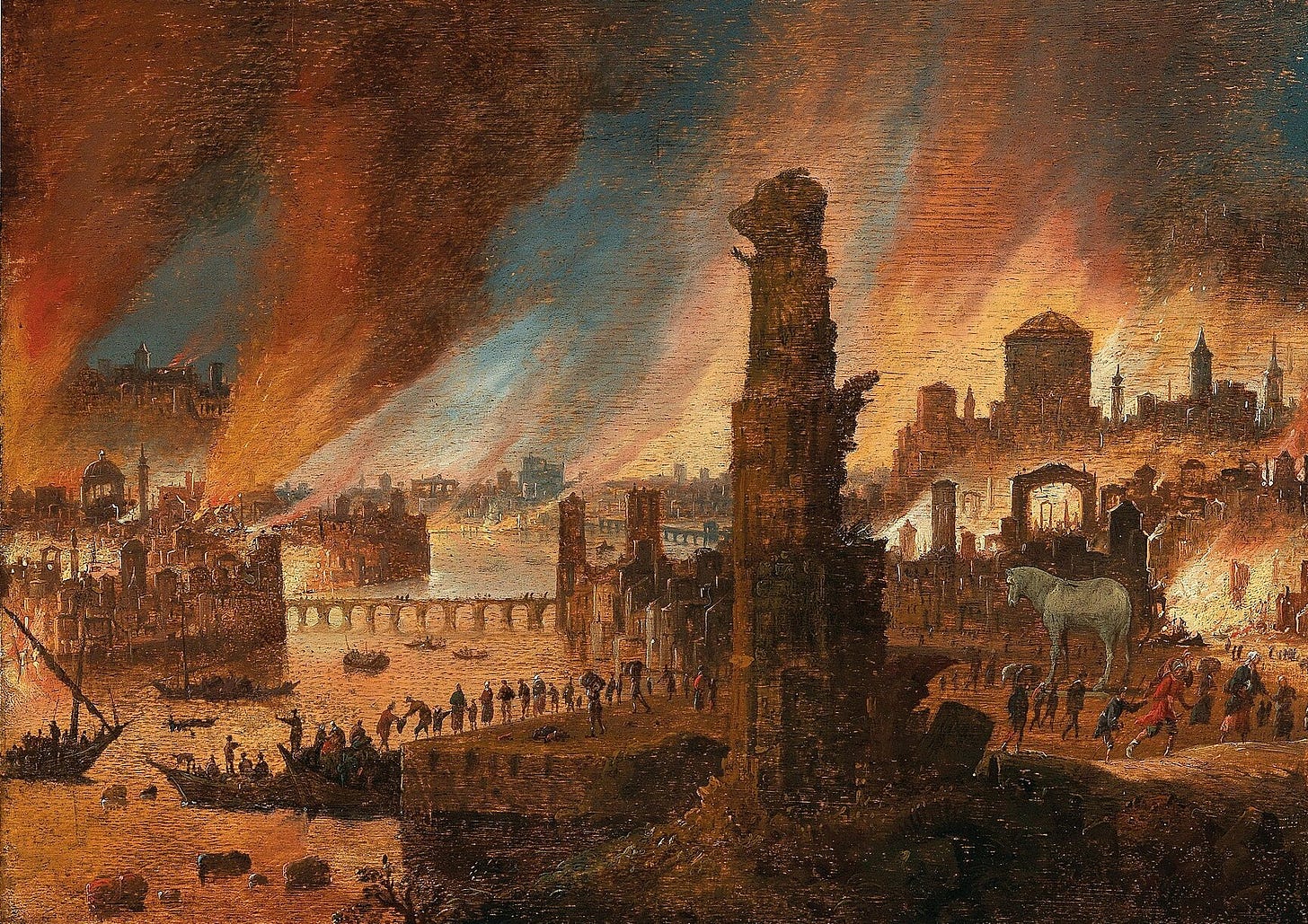
<p><span>Dear Classical Wisdom Member,</span></p><p><span>For more than 2,500 years, people have argued over one deceptively simple question:</span></p><p><strong><span>Did the Trojan War actually happen?</span></strong></p><p><span>Finding Troy, of course, was the first big step... but did it prove that the battle between the Trojans and the Greeks ever took place?</span></p><p><span>The answer is much more fascinating than a straightforward yes or no...</span></p><p><span>Beneath the legends of Achilles, Hector, and the Wooden Horse lies the seeds of historicity, a trail of archaeological discoveries, ancient diplomatic records, and tantalizing clues that have transformed our understanding of the Late Bronze Age...</span></p><p><span>In this month’s feature article, Petros Koutoupis takes us through the evidence piece by piece, separating what we know from what we merely hope to be true.</span></p><p><strong><span>Classical Wisdom Members:</span></strong><span> You can also enjoy our </span><em><span>Classical Wisdom Litterae</span></em><span> Magazine, dedicated to the Trojan War, below as well. From </span><em><span>Kleos</span></em><span> and </span><em><span>Thumos</span></em><span> to the lesser known, but incredibly important cast of characters, we continue the journey with a special collection of articles dedicated to the War and the world behind Homer’s epic.</span></p><p><span>All the best,</span></p><p><span>Anya Leonard<br>Founder and Director</span></p><p>Discover the real history and archeology behind the fantastic myths and epics... Become a Classical Wisdom Subscriber to access the full article, as well as our <em>Classical Wisdom Litterae</em> Magazine, below.</p><p><strong>Don’t miss out on the ancients! Subscribe today:</strong></p><p><a href="https://classicalwisdom.substack.com/subscribe?"><span>Subscribe now</span></a></p><div><hr></div><h1>Was There Ever A Trojan War? That is the question.</h1><p><em><span>By</span></em><span> </span><em><span></span></em>, <em><a href="https://www.diggingupthepast.net/">Digging up the Past</a></em><a href="https://www.diggingupthepast.net/"> </a></p><p><span>Was there ever a Trojan War? Sure, we found Troy, but what about the legendary battle fought between Greeks and Trojans...did it actually happen?</span></p><p><span>This question continues to go unanswered by the academic and archaeological world. If we read Homer and the later composed Epic Cycle, the literature would say that it did indeed occur, but what does archaeology have to say on this matter? While my hopeless romantic side wants to believe in Homer’s tale, we need to consider all of the facts, and before we do that, we need to sit through a quick history lesson.</span></p><div><figure><a href="https://substackcdn.com/image/fetch/%24s_!fSlA!,f_auto,q_auto:good,fl_progressive:steep/https%3A%2F%2Fsubstack-post-media.s3.amazonaws.com%2Fpublic%2Fimages%2Fa7518e4c-a4d0-4f84-96be-069aa40923e6_1724x1218.jpeg"></a><div><a href="https://substackcdn.com/image/fetch/%24s_!fSlA!,f_auto,q_auto:good,fl_progressive:steep/https%3A%2F%2Fsubstack-post-media.s3.amazonaws.com%2Fpublic%2Fimages%2Fa7518e4c-a4d0-4f84-96be-069aa40923e6_1724x1218.jpeg"></a><source type="image/webp"><a href="https://substackcdn.com/image/fetch/%24s_!fSlA!,f_auto,q_auto:good,fl_progressive:steep/https%3A%2F%2Fsubstack-post-media.s3.amazonaws.com%2Fpublic%2Fimages%2Fa7518e4c-a4d0-4f84-96be-069aa40923e6_1724x1218.jpeg"><img src="https://substackcdn.com/image/fetch/%24s_!fSlA!,w_1456,c_limit,f_auto,q_auto:good,fl_progressive:steep/https%3A%2F%2Fsubstack-post-media.s3.amazonaws.com%2Fpublic%2Fimages%2Fa7518e4c-a4d0-4f84-96be-069aa40923e6_1724x1218.jpeg" width="1724" height="1218" alt=""></a></source><a href="https://substackcdn.com/image/fetch/%24s_!fSlA!,f_auto,q_auto:good,fl_progressive:steep/https%3A%2F%2Fsubstack-post-media.s3.amazonaws.com%2Fpublic%2Fimages%2Fa7518e4c-a4d0-4f84-96be-069aa40923e6_1724x1218.jpeg"></a><div><a href="https://substackcdn.com/image/fetch/%24s_!fSlA!,f_auto,q_auto:good,fl_progressive:steep/https%3A%2F%2Fsubstack-post-media.s3.amazonaws.com%2Fpublic%2Fimages%2Fa7518e4c-a4d0-4f84-96be-069aa40923e6_1724x1218.jpeg"></a><div><a href="https://substackcdn.com/image/fetch/%24s_!fSlA!,f_auto,q_auto:good,fl_progressive:steep/https%3A%2F%2Fsubstack-post-media.s3.amazonaws.com%2Fpublic%2Fimages%2Fa7518e4c-a4d0-4f84-96be-069aa40923e6_1724x1218.jpeg"></a></div><a href="https://substackcdn.com/image/fetch/%24s_!fSlA!,f_auto,q_auto:good,fl_progressive:steep/https%3A%2F%2Fsubstack-post-media.s3.amazonaws.com%2Fpublic%2Fimages%2Fa7518e4c-a4d0-4f84-96be-069aa40923e6_1724x1218.jpeg"></a></div><a href="https://substackcdn.com/image/fetch/%24s_!fSlA!,f_auto,q_auto:good,fl_progressive:steep/https%3A%2F%2Fsubstack-post-media.s3.amazonaws.com%2Fpublic%2Fimages%2Fa7518e4c-a4d0-4f84-96be-069aa40923e6_1724x1218.jpeg"></a></div><a href="https://substackcdn.com/image/fetch/%24s_!fSlA!,f_auto,q_auto:good,fl_progressive:steep/https%3A%2F%2Fsubstack-post-media.s3.amazonaws.com%2Fpublic%2Fimages%2Fa7518e4c-a4d0-4f84-96be-069aa40923e6_1724x1218.jpeg"></a><figcaption>The Burning of Troy (detail), by Dirck Verhaert, 1680</figcaption></figure></div><p><span>Before the nineteenth century many scholars regarded the Trojan War as little more than legend. Homer’s poems were admired as literature, but few believed they preserved the memory of a real Bronze Age city. That changed dramatically when one determined amateur set out to discover whether Homer’s city had really existed.</span></p><p><strong><span>Who was Heinrich Schliemann?</span></strong></p><p><span>Heinrich Schliemann, a wealthy entrepreneur by profession, spent his early retirement years discovering and excavating the sites of Troy at modern-day Hisarlik, Turkey, and Mycenae in the north-eastern part of the Peloponnese, Greece, during the late 19th century CE; albeit through unorthodox and disastrous methods.</span></p><p><span>He was not a trained archaeologist. Schliemann was just a simple man with a passion for Homer. In 1868, he befriended the American vice-consul to Turkey, Frank Calvert, who himself believed that the legendary city of Troy lay beneath the Classical Greco-Roman ruins at Hisarlik. Calvert had the location and Schliemann, the money.</span></p><p><span>The digging commenced and would continue for years. What would be discovered was a complex multilayered city that existed from the Early Bronze Age and would eventually be abandoned during the Iron Age. Each layer would meet its end in some form or another, be it earthquake or war, giving way to resettlement and new construction.</span></p><div><div><div><p><strong>Bring layers to your life… with the classics! Enjoy ancient wisdom for modern minds… whether it be philosophy, mythology, history or archeology. We have you covered:</strong></p></div><div><div></div><div></div></div></div></div><p></p><p><strong><span>The Many Cities of Troy</span></strong></p><p><span>Archaeologists eventually organized these successive settlements into numbered layers, beginning with Troy I, the earliest city, and continuing through Troy IX, the Roman-period remains. As excavation techniques improved, several of these major layers were further divided into sub-phases, allowing archaeologists to identify more precisely when each settlement flourished and how it came to an end.</span></p><div><figure><a href="https://substackcdn.com/image/fetch/%24s_!KDbo!,f_auto,q_auto:good,fl_progressive:steep/https%3A%2F%2Fsubstack-post-media.s3.amazonaws.com%2Fpublic%2Fimages%2F2bd4d5da-cf5f-41c2-b051-49ad5e0feb6d_1031x692.png"></a><div><a href="https://substackcdn.com/image/fetch/%24s_!KDbo!,f_auto,q_auto:good,fl_progressive:steep/https%3A%2F%2Fsubstack-post-media.s3.amazonaws.com%2Fpublic%2Fimages%2F2bd4d5da-cf5f-41c2-b051-49ad5e0feb6d_1031x692.png"></a><source type="image/webp"><a href="https://substackcdn.com/image/fetch/%24s_!KDbo!,f_auto,q_auto:good,fl_progressive:steep/https%3A%2F%2Fsubstack-post-media.s3.amazonaws.com%2Fpublic%2Fimages%2F2bd4d5da-cf5f-41c2-b051-49ad5e0feb6d_1031x692.png"><img src="https://substackcdn.com/image/fetch/%24s_!KDbo!,w_1456,c_limit,f_auto,q_auto:good,fl_progressive:steep/https%3A%2F%2Fsubstack-post-media.s3.amazonaws.com%2Fpublic%2Fimages%2F2bd4d5da-cf5f-41c2-b051-49ad5e0feb6d_1031x692.png" width="1031" height="692" alt=""></a></source><a href="https://substackcdn.com/image/fetch/%24s_!KDbo!,f_auto,q_auto:good,fl_progressive:steep/https%3A%2F%2Fsubstack-post-media.s3.amazonaws.com%2Fpublic%2Fimages%2F2bd4d5da-cf5f-41c2-b051-49ad5e0feb6d_1031x692.png"></a><div><a href="https://substackcdn.com/image/fetch/%24s_!KDbo!,f_auto,q_auto:good,fl_progressive:steep/https%3A%2F%2Fsubstack-post-media.s3.amazonaws.com%2Fpublic%2Fimages%2F2bd4d5da-cf5f-41c2-b051-49ad5e0feb6d_1031x692.png"></a><div><a href="https://substackcdn.com/image/fetch/%24s_!KDbo!,f_auto,q_auto:good,fl_progressive:steep/https%3A%2F%2Fsubstack-post-media.s3.amazonaws.com%2Fpublic%2Fimages%2F2bd4d5da-cf5f-41c2-b051-49ad5e0feb6d_1031x692.png"></a></div><a href="https://substackcdn.com/image/fetch/%24s_!KDbo!,f_auto,q_auto:good,fl_progressive:steep/https%3A%2F%2Fsubstack-post-media.s3.amazonaws.com%2Fpublic%2Fimages%2F2bd4d5da-cf5f-41c2-b051-49ad5e0feb6d_1031x692.png"></a></div><a href="https://substackcdn.com/image/fetch/%24s_!KDbo!,f_auto,q_auto:good,fl_progressive:steep/https%3A%2F%2Fsubstack-post-media.s3.amazonaws.com%2Fpublic%2Fimages%2F2bd4d5da-cf5f-41c2-b051-49ad5e0feb6d_1031x692.png"></a></div><a href="https://substackcdn.com/image/fetch/%24s_!KDbo!,f_auto,q_auto:good,fl_progressive:steep/https%3A%2F%2Fsubstack-post-media.s3.amazonaws.com%2Fpublic%2Fimages%2F2bd4d5da-cf5f-41c2-b051-49ad5e0feb6d_1031x692.png"></a></figure></div><p><span>During Heinrich Schliemann’s excavations and the excavations by others that followed, identifying Homer’s Troy became problematic. For instance, Troy Level VI matched Homer’s descriptions of a large and wealthy city with massive, sloping walls circling the citadel, but Level VIh was destroyed by an earthquake around 1300 BCE.</span></p><p><span>Troy Level VIIa (1230 - 1190/80 BCE) didn’t seem as grand as the one described by Homer but did, however, fall to war. It also showcased evidence for a possible siege in which many had to live in uncomfortable and cramped conditions for some time before eventually succumbing to their captors.</span></p><p><span>It is unclear as to whether the opponents of Troy VIIa were Mycenaean Greeks or another group of Aegean peoples.</span></p><p><a href="https://classicalwisdom.substack.com/p/did-the-trojan-war-really-happen?utm_source=substack&utm_medium=email&utm_content=share&action=share"><span>Share</span></a></p><p><span>Archaeologists have uncovered bronze arrowheads of Aegean type within the destruction layer, suggesting that attackers from across the Aegean were involved. The difficulty is that such weapons were not exclusive to the Mycenaeans, making it impossible to identify the attackers with certainty. While the evidence points toward an Aegean force, it does not conclusively prove that it was the Mycenaean Greeks described by Homer.</span></p><p><strong><span>Looking Beyond Troy</span></strong></p><p><span>Excavations at the site continued into the early 21st century CE. With each excavation, the site would reveal more clues, although there still remained too many questions. We needed to look elsewhere.</span></p><p><span>Archaeology could tell us how Troy lived and died, but not who its allies and enemies were. To answer those questions, scholars turned to the written records of neighboring civilizations.</span></p><p>To the east, the Hittite Empire<strong> </strong>ruled over most of Anatolia, centered at Hattusa, near modern-day Boğazkale (formerly, Boğazköy), Turkey. Discovered within the ruins of the mighty Hittite citadel were piles of baked tablets, each written in a cuneiform script, but in what was at the time an undeciphered language… </p>
<p>
<a href="https://classicalwisdom.substack.com/p/did-the-trojan-war-really-happen">
Read more
</a>
</p>
<p><a href="https://classicalwisdom.substack.com/p/did-the-trojan-war-really-happen" target="_blank">- Enlace a artículo -</a></p>
<p>Más info en https://ift.tt/wTq4sY2 / Tfno. & WA 607725547 Centro MENADEL (Frasco Martín) Psicología Clínica y Tradicional en Mijas.
#Menadel #Psicología #Clínica #Tradicional #MijasPueblo</p>
<p>*No suscribimos necesariamente las opiniones o artículos aquí compartidos. No todo es lo que parece.</p>

No hay comentarios:
Publicar un comentario