
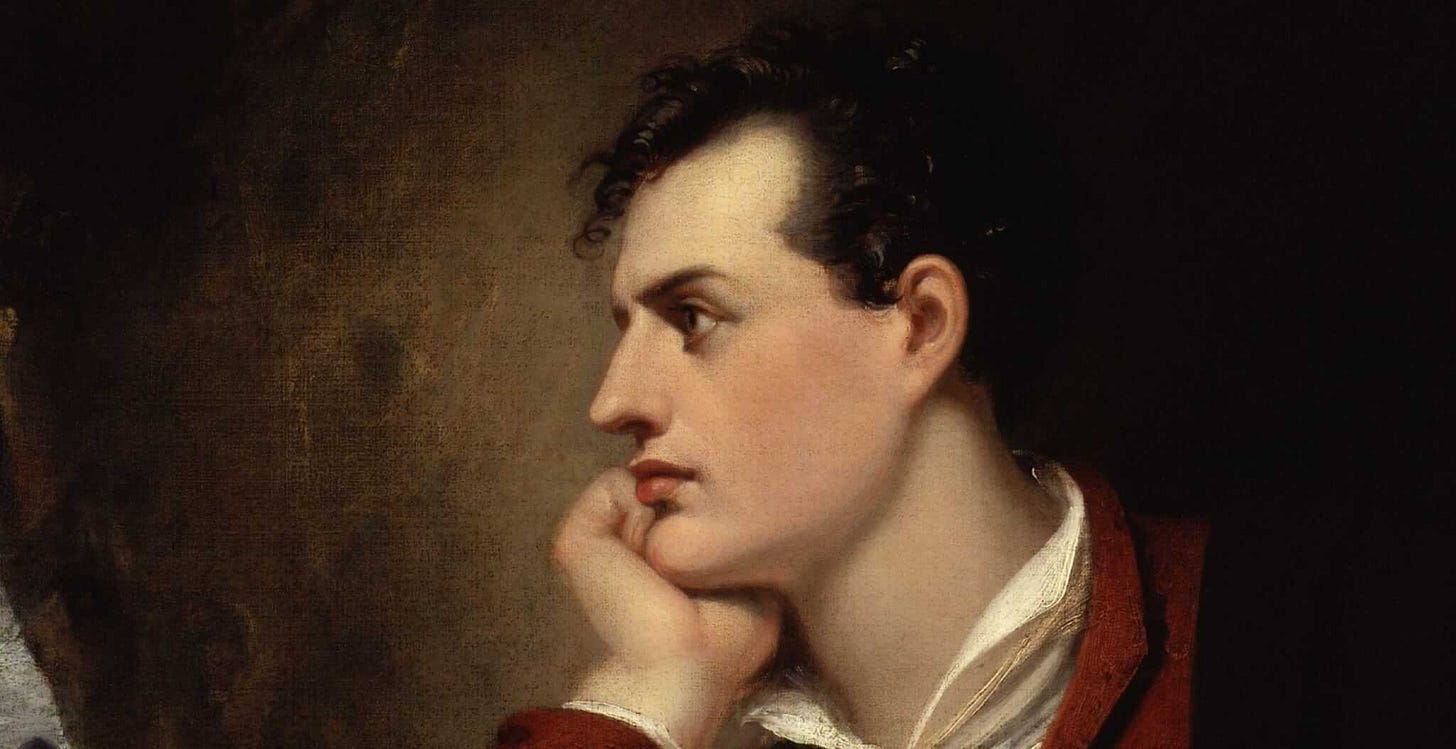
<p><span>Dear Classical Wisdom Member,</span></p><p><span>I really struggled with today’s article. I have contemplated it, worried about it, and have discussed it to no end. It has consumed much of my mind...and our dinner table conversation...to which my poor husband and dear daughter can attest.</span></p><p><span>And it’s not only because it is such a controversial topic.</span></p><p><span>You see, a few weeks back our regular contributor, </span><span></span><span>, having recently returned from a trip to Athens, wrote </span><a href="https://classicalwisdom.substack.com/p/did-athena-curse-lord-elgin"><span>an impassioned article about the Parthenon </span></a><span>Marbles. Immediately after publication, I received an email from the classical archaeologist </span><em><span>Dr Mario Trabucco della Torretta</span></em><span>, wishing to submit a counterpoint.</span></p><p><span>As someone who has spent years advocating that we suspend judgment, open our minds to both sides of an argument, and practice steel-manning our positions, I eagerly welcomed the opportunity to put my words into action. </span></p><p><span>(After all, who are we </span><em><span>really</span></em><span> if not the sum of our actions?)</span></p><p><span>However, when reading the first submission, I realized that parts of it ventured into aspects of modern Greek politics and cultural history that sit well outside my own expertise. As I am not well versed in either the cultural or social significance of many of the people and events discussed, particularly for our Greek readers, I felt uncomfortable publishing it as it stood.</span></p><p><span>Much to Mario’s credit, and very much to my gratitude, we went back and forth through many versions, trying to find a compromise that got to the heart of his argument while still maintaining the style in which he wished to make it.</span></p><p><span>But what began as an ongoing conversation about the history of the Parthenon Marbles gradually evolved into a completely different philosophical discussion:</span></p><p><strong><span>How should we make our point?</span></strong></p><p><span>Is being intellectually challenged the same as being emotionally provoked? Do we need to be pushed beyond our comfort zone, to be shaken into paying attention? Can persuasion be achieved through hard facts alone, or does it require rhetoric as well? And how should we examine the evidence before us?</span></p><p><a href="https://classicalwisdom.substack.com/p/the-parthenon-marbles-a-counterpoint?utm_source=substack&utm_medium=email&utm_content=share&action=share"><span>Share</span></a></p><p><span>Well, this was a rich vein of thought indeed!</span></p><p><span>And I would certainly be remiss in my </span><em><span>Classical Wisdom</span></em><span> duties if I did not invite you, dear reader, into that conversation. So it was with </span><em><span>this</span></em><span> framing in mind that I decided to publish Mario’s article below.</span></p><p><span>Now, I would like to add one caveat. Mario and I did not ultimately come to complete agreement, so I am publishing his latest revision together with the following editorial note:</span></p><blockquote><p><strong><span>Editor’s Note:</span></strong><span> The Parthenon Marbles inspire passionate, and often deeply personal, debate, not least because of what the Parthenon represents to Greece and to the wider classical world. Classical Wisdom has previously published arguments in favor of their return. But an intellectual conversation is richer when we are willing to seriously consider arguments with which we may disagree. With that in mind, classical archaeologist Dr Mario Trabucco della Torretta presents a counterpoint. </span><strong><span>His conclusions and interpretations are his own, and we offer them here in the spirit of open inquiry</span></strong><span>: not as the final word, but as another perspective for our readers to consider, question and discuss.</span></p></blockquote><p><span>So... with that said, I invite you to delve into today’s article and join the discussion below...not only about the fate of the Parthenon Marbles, but also about the nature of debate itself.</span></p><p><span>All the best,</span></p><p><span>Anya Leonard</span></p><p><span>Founder and Director</span></p><p><span>Classical Wisdom</span></p><div><hr></div><p><strong>Of course the very best way to get to the heart of any discussion is to live it …</strong> Journey to the Parthenon with famed philosopher Angie Hobbs to discover the ancient world, to understand the history, culture and ideas that have shaped generations. </p><p>This April 2027, we invite you to join us on the Blue Zephyr to sail the wine dark seas from Turkey to Greece. Together we will explore the island of Pythagoras and the hometown of Heraclitus, as well as the birthplace of the twins Apollo and Artemis. We’ll marvel at Parian marble, walk the Venetian town in Syros, and celebrate in the domain of Dionysius. It is an opportunity to fully immerse yourself in the Classics! </p><p><strong>Check out our exciting itinerary and expert guide here:</strong></p><p><a href="https://classicalwisdom.com/wp-content/uploads/2026/07/v07.-CLWI_A-Journey-Through-Greece-and-Turkey_Apr.12-22-2027_Blue-Zephyr.pdf"><span>Join Us for the Journey</span></a></p><div><hr></div><h1><strong><span>Historical Truth is an Odyssey</span></strong></h1><p><em><span>Dr Mario Trabucco della Torretta</span></em></p><p><span>While we are all mesmerised by the new Nolan retelling of the tale of Odysseus, the debate rages on matters of historical truth, the limits of storytelling, and poetic licence.</span></p><p><span>Hollywood’s most cerebral director is a natural match for literature’s most cerebral hero, especially when we consider Odysseus in his role of narrator of his own adventures to an audience thirsting for adventure. The central section of the </span><em><span>Odyssey</span></em><span> — Books 9 to 12, in which Odysseus recounts to the Phaeacians his encounters with Cyclopes, sirens, enchantresses, and winds in a bag — is not, on any careful reading, a factual account.</span></p><p><span>Homer signals as much at the very outset: the hero’s crew was destroyed, he tells us, because they heedlessly devoured the sun-god’s cattle. But that is strikingly different from what Odysseus says happened. The two accounts contradict each other, and Homer’s comes first.</span></p><p><span>By the time Odysseus opens his mouth to the court of Alcinous, the alert reader has already been told that what follows is not the whole truth. Juvenal, writing in the early second century AD, identified the mechanism precisely: Odysseus stirred his listeners to anger and laughter alike as a </span><em><span>mendax aretalogus</span></em><span> — a lying virtue-signaller, to use a translation our own age might find disconcertingly contemporary — before naming the decisive reason he could get away with it.</span></p><p><em><span>The Ithacan’s tale was all his own, with none to bear him witness.</span></em></p><p><span>No surviving companions, no contradicting testimony, no check on the account except the credulity of his hosts. Lucian was blunter still: the Phaeacians were simple folk, and Odysseus fooled them to the top of their bent.</span></p><p><span>Odysseus is not merely the founding hero of Western literature. He is its founding unreliable narrator. And the particular form of his unreliability turns out to illuminate, with uncomfortable precision, two centuries of the most consequential cultural argument in the modern world.</span></p><div><hr></div><p><span>Consider another captivating narrator: Byron.</span></p><p><span>Lord Byron — poet, philhellene, and the most eloquent prosecutor of Lord Elgin ever to take the stand — is routinely invoked as a kind of disinterested moral witness: the conscience of the age, catching a Scottish earl red-handed on the Acropolis. It is a flattering role, and Byron, never a man to undersell himself, was happy to play the part of the hero-narrator.</span></p><div><figure><a href="https://substackcdn.com/image/fetch/%24s_!b42p!,f_auto,q_auto:good,fl_progressive:steep/https%3A%2F%2Fsubstack-post-media.s3.amazonaws.com%2Fpublic%2Fimages%2F9d61046d-6a30-41f8-9c24-89f0eb54d813_2048x1053.jpeg"></a><div><a href="https://substackcdn.com/image/fetch/%24s_!b42p!,f_auto,q_auto:good,fl_progressive:steep/https%3A%2F%2Fsubstack-post-media.s3.amazonaws.com%2Fpublic%2Fimages%2F9d61046d-6a30-41f8-9c24-89f0eb54d813_2048x1053.jpeg"></a><source type="image/webp"><a href="https://substackcdn.com/image/fetch/%24s_!b42p!,f_auto,q_auto:good,fl_progressive:steep/https%3A%2F%2Fsubstack-post-media.s3.amazonaws.com%2Fpublic%2Fimages%2F9d61046d-6a30-41f8-9c24-89f0eb54d813_2048x1053.jpeg"><img src="https://substackcdn.com/image/fetch/%24s_!b42p!,w_1456,c_limit,f_auto,q_auto:good,fl_progressive:steep/https%3A%2F%2Fsubstack-post-media.s3.amazonaws.com%2Fpublic%2Fimages%2F9d61046d-6a30-41f8-9c24-89f0eb54d813_2048x1053.jpeg" width="1456" height="749" alt=""></a></source><a href="https://substackcdn.com/image/fetch/%24s_!b42p!,f_auto,q_auto:good,fl_progressive:steep/https%3A%2F%2Fsubstack-post-media.s3.amazonaws.com%2Fpublic%2Fimages%2F9d61046d-6a30-41f8-9c24-89f0eb54d813_2048x1053.jpeg"></a><div><a href="https://substackcdn.com/image/fetch/%24s_!b42p!,f_auto,q_auto:good,fl_progressive:steep/https%3A%2F%2Fsubstack-post-media.s3.amazonaws.com%2Fpublic%2Fimages%2F9d61046d-6a30-41f8-9c24-89f0eb54d813_2048x1053.jpeg"></a><div><a href="https://substackcdn.com/image/fetch/%24s_!b42p!,f_auto,q_auto:good,fl_progressive:steep/https%3A%2F%2Fsubstack-post-media.s3.amazonaws.com%2Fpublic%2Fimages%2F9d61046d-6a30-41f8-9c24-89f0eb54d813_2048x1053.jpeg"></a></div><a href="https://substackcdn.com/image/fetch/%24s_!b42p!,f_auto,q_auto:good,fl_progressive:steep/https%3A%2F%2Fsubstack-post-media.s3.amazonaws.com%2Fpublic%2Fimages%2F9d61046d-6a30-41f8-9c24-89f0eb54d813_2048x1053.jpeg"></a></div><a href="https://substackcdn.com/image/fetch/%24s_!b42p!,f_auto,q_auto:good,fl_progressive:steep/https%3A%2F%2Fsubstack-post-media.s3.amazonaws.com%2Fpublic%2Fimages%2F9d61046d-6a30-41f8-9c24-89f0eb54d813_2048x1053.jpeg"></a></div><a href="https://substackcdn.com/image/fetch/%24s_!b42p!,f_auto,q_auto:good,fl_progressive:steep/https%3A%2F%2Fsubstack-post-media.s3.amazonaws.com%2Fpublic%2Fimages%2F9d61046d-6a30-41f8-9c24-89f0eb54d813_2048x1053.jpeg"></a><figcaption>Lord Byron was ‘Mad, bad and dangerous to know’ according to Lady Caroline Lamb</figcaption></figure></div><p><span>But no part of his tale survives contact with the actual history of those events, or, for that matter, with Byron’s own candid words about himself.</span></p>
<p>
<a href="https://classicalwisdom.substack.com/p/the-parthenon-marbles-a-counterpoint">
Read more
</a>
</p>
<p><a href="https://classicalwisdom.substack.com/p/the-parthenon-marbles-a-counterpoint" target="_blank">- Enlace a artículo -</a></p>
<p>Más info en https://ift.tt/gksCGyQ / Tfno. & WA 607725547 Centro MENADEL (Frasco Martín) Psicología Clínica y Tradicional en Mijas.
#Menadel #Psicología #Clínica #Tradicional #MijasPueblo</p>
<p>*No suscribimos necesariamente las opiniones o artículos aquí compartidos. No todo es lo que parece.</p>

No hay comentarios:
Publicar un comentario